
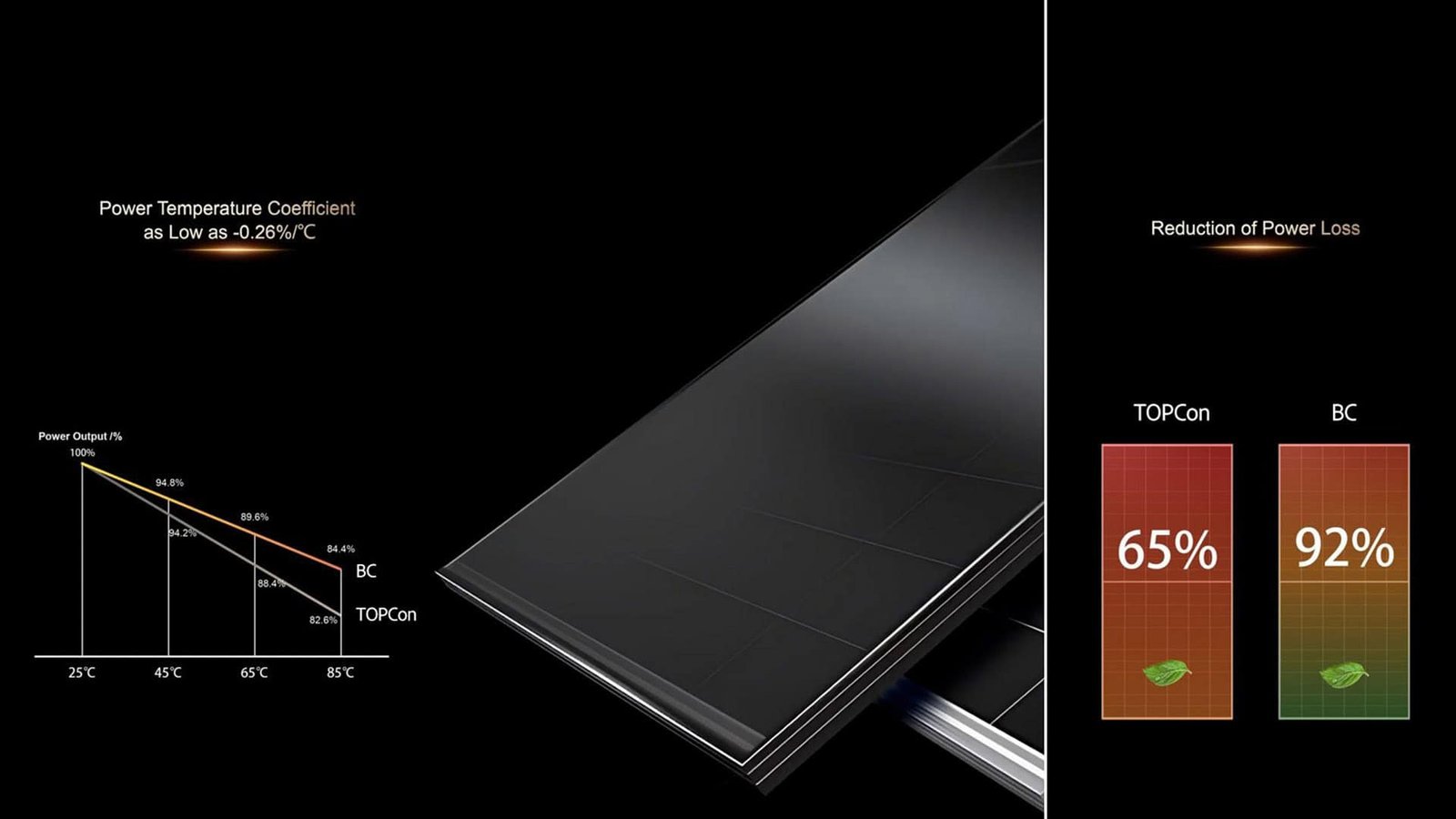
🌞 Understanding Solar Module Procurement in Today’s Market
The global solar market is experiencing significant change. Module prices have dropped considerably in wholesale markets since 2023, but procurement has become more complex. For buyers, understanding voltage configurations, regional pricing dynamics, and supplier capabilities is essential.
This guide clarifies what matters most: how to select the right voltage for your application, what pricing looks like across different markets, why lightweight solar panels create advantages, and how to find reliable suppliers who can customize solar modules to your specifications.
Important Note: Solar pricing is highly volatile and changes rapidly due to tariffs, supply chain shifts, and policy changes. The regional pricing data in this guide reflects wholesale market conditions as of Q3 2025. Always request current quotations for your specific project and destination.
⚡ Why Voltage Configuration (12V / 24V / 48V) Determines System Success
When solar panels are labeled 12V, 24V, or 48V, that refers to their nominal output voltage and how they integrate into a complete system. According to industry standard specifications, choosing the right voltage affects everything from component compatibility to installation costs and long-term efficiency.
12 Volt Solar Panels: Small Systems and Specialty Applications
Technical Overview:
- Nominal voltage: 12V (actual Vmp: 17–18V)
- Typical power range: 50W–200W per solar panel
- Cell configuration: 30–36 cells
- Open circuit voltage (Voc): 20–22V
Best Applications:
- RV and marine installations
- Portable power systems
- Remote monitoring stations
- Small off-grid cabins
- Battery charging systems
- Telecom backup power
Key Considerations:
When comparing 12 volt solar panel price across suppliers, expect some premium over higher voltage equivalents. Production volumes for 12V panels are lower, which affects manufacturing economics. However, for small-scale applications, 12V photovoltaic panels offer simplicity and wide component availability.
The advantage lies in straightforward system design. Most portable power equipment, recreational vehicles, and marine applications use 12V battery banks. Using 12V photovoltaic panels eliminates the need for voltage conversion complexity.
24 Volt Solar Panels: The Practical Middle Ground
Technical Overview:
- Nominal voltage: 24V (actual Vmp: 34–36V)
- Typical power range: 200W–500W per panel
- Cell configuration: 60–72 cells
- Open circuit voltage (Voc): 40–45V
Best Applications:
- Residential off-grid systems (3–10kW)
- Small commercial installations
- Rural electrification projects
- Hybrid battery systems
- Agricultural operations
- Medium-scale telecom sites
System Benefits:
The 24 volt solar panel typically offers better value than 12V configurations while maintaining reasonable system complexity. This voltage represents a sweet spot for many projects.
Lower current flow compared to 12V systems means reduced energy loss in cables. You can use smaller wire gauges over longer distances without a significant voltage drop. For installers, this translates to lower material costs and easier cable management.
Component availability is excellent. Most quality charge controllers and inverters support 24V operation. The voltage is high enough for efficiency but not so high that it creates safety concerns for smaller installations.

48 Volt Solar Panels: Maximum Efficiency for Larger Projects
Best Applications:
- Commercial rooftop installations
- Off-grid microgrids (10kW and above)
- Utility-scale edge projects
- Large telecom installations
- Industrial backup systems
- Grid-tied residential systems
Cost Optimization:
The 48 volt solar panel price often delivers optimal economics at scale. Beyond the module cost itself, 48V systems reduce balance-of-system expenses significantly.
Higher voltage means lower current for the same power output. This fundamental relationship (Power = Voltage × Current) creates cascading benefits:
- Smaller conductor sizes reduce copper costs
- Lower current means less resistive loss
- DC switching equipment can be lighter-duty
- Inverters operate more efficiently
- Voltage drop over distance is minimized
For commercial projects and larger residential installations, these savings in wire, conduit, and labor often exceed any premium in panel pricing.
Selecting the Right Voltage for Your Project
| System Size | Application Type | Recommended Voltage | Key Advantage |
|---|---|---|---|
| Under 1kW | Portable, RV, marine | 12V | Simple design, wide compatibility |
| 1–3kW | Small off-grid, remote | 24V | Cost-efficiency balance |
| 3–10kW | Residential, small commercial | 24V or 48V | Match existing infrastructure |
| 10kW+ | Commercial, industrial | 48V | Maximum efficiency |
| Grid-tied | Any size | 48V+ | Inverter requirements |
Critical Compatibility Points:
- Inverter and charge controller voltage range
- Battery bank configuration
- Cable sizing and cost considerations
- Expansion plans for future capacity
- Local electrical codes and standards
Note: When comparing 12V, 24V, and 48V panel pricing, remember that price per watt is only one factor. Total system costs (wiring, components, installation) often favor higher voltages for larger systems.
💰 Global Module Pricing: Regional Market Overview
Understanding regional pricing variations helps in competitive procurement and budget planning. Here’s the current landscape for standard crystalline PV modules as of Q3 2025.
Price Ranges by Region (Sep. 2025)
| Region / Market | Typical Price Range | Notes |
|---|---|---|
| Asia-Pacific (China exports) | USD 0.085–0.090/W | FOB pricing |
| Australia (delivered) | ~USD 0.09–0.10/W | Includes delivery |
| India (non-DCR modules) | ~USD 0.14–0.15/W | Higher due to import restrictions |
| Europe (delivered) | ~USD 0.084–0.088/W | May include export tax rebate clauses |
| Latin America | USD 0.08–0.09/W | FOB pricing |
| Middle East | USD 0.085–0.090/W | Bulk procurement pricing |
| United States | ~USD 0.27–0.30/W | Includes duties, tariffs, logistics |
Note: These are ballpark ranges for standard crystalline PV modules. Specialty PV modules such as BC, or flexible types, typically command premiums.
Key Market Observations
China’s internal spot markets show module prices (TOPCon, n-type) hovering around USD 0.09–0.11/W in recent tenders. Exporters face margin pressure as policy changes, particularly export tax rebate adjustments, influence pricing strategies.
According to analysis by Clean Energy Associates, US tariffs and Anti-Dumping/Countervailing Duty (AD/CVD) assessments can inflate the base FOB module cost by 91–286% in some cases. This dramatic variation underscores the importance of understanding total landed cost, not just factory pricing.
Understanding Price Quotes
When evaluating quotes—whether for 12 volt solar panel price, 24 volt solar panel price, or 48 volt solar panel price—always clarify the terms:
FOB (Free on Board)
You pay for and arrange shipping from the departure port
CIF (Cost, Insurance, Freight)
Seller pays shipping to destination port, you handle customs
DDP (Delivered Duty Paid)
Seller handles everything including customs and delivery
A USD 0.09/W FOB quote might become USD 0.20/W DDP after freight, duties, and handling. Without clarifying terms, you can’t compare quotes accurately.
Export tax rebates (commonly 9% for PV modules from China) should be contractually addressed. Some suppliers build these into pricing; others pass them through separately.
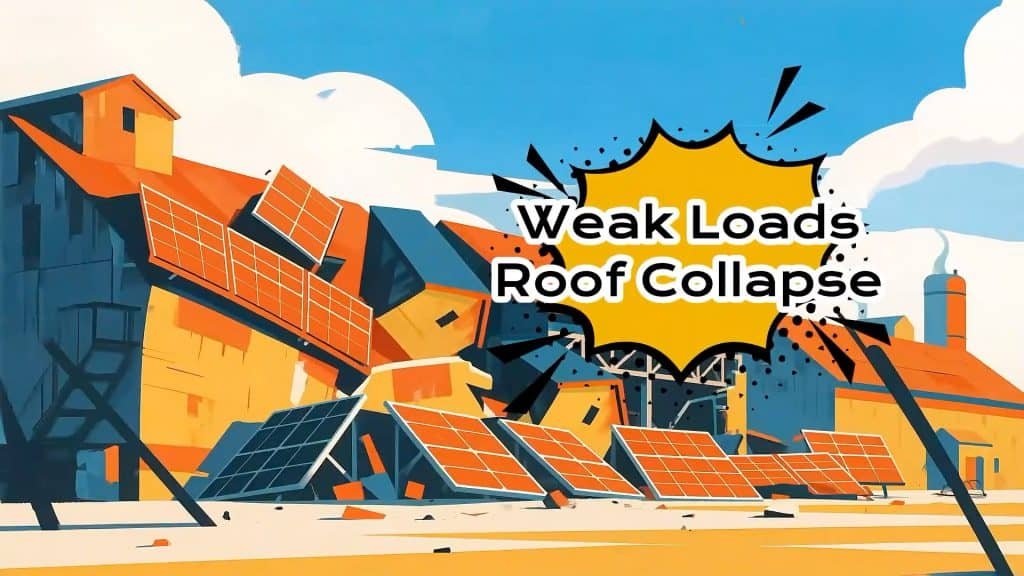
🪶 Why the Lightest Solar Panels Create Competitive Advantages
Weight reduction in solar modules isn’t just convenient—it creates tangible economic benefits across the supply chain and installation process.
The Impact of Module Weight
Traditional crystalline panels weigh 18–22kg each. For a 100kW project using 400W solar panels, that’s approximately 5 metric tons of panels alone. This weight affects:
📦 Shipping Economics
Lower weight means lower freight costs, especially for airfreight or volume-constrained shipping.
👷 Installation Efficiency
Lighter solar panels reduce crew fatigue and safety risks. Installation teams move faster.
🏗️ Structural Requirements
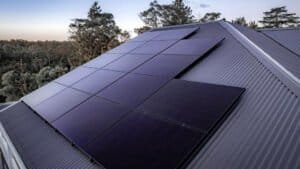
Many rooftops have weight restrictions. Lightweight solar panels open new opportunities.
🔄 Supply Chain Handling
Every movement is easier and safer with lighter PV modules from warehouse to installation.
Lightweight Solar Panel Technologies
Ultra-Thin Rigid Solar Panels
These eliminate heavy aluminum frames while maintaining structural integrity. Weight reductions of 40–50% are achievable. For example, some manufacturers have developed frameless designs where a standard 450W solar panel weighing approximately 22kg can be reduced to 8.9–12kg—roughly half the weight.
For project developers, this opens up:
- More rooftop opportunities (older buildings, weight-restricted structures)
- Lower shipping costs per watt
- Faster installation (reduced crew fatigue, improved safety)
- Reduced structural reinforcement requirements
Semi-Flexible Solar Panels
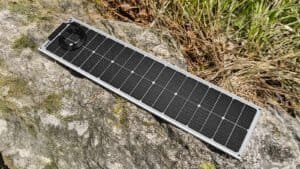
With bend radii up to 240 degrees, these work on curved surfaces. Typical weight: 3–5kg for 150–200W solar panels. Ideal for RVs, boats, trailers, and temporary installations where conforming to surface curvature matters.
These solar panels use advanced polymer backsheets or thin-film technologies that allow flexibility while maintaining adequate power output. Efficiency typically ranges from 18–22%, which is a reasonable trade-off for applications where weight and conformability are priorities.
When to Specify Lightweight PV Modules
Strong Case Scenarios:
- Rooftops with structural weight limitations
- Multi-story installations with lifting challenges
- Remote or difficult-access locations
- Mobile and vehicle applications
- Rapid deployment requirements
- Markets with high freight costs
Consider Standard Soalr Panels When:
- Ground-mount utility projects (weight less critical)
- Maximum efficiency per area is priority
- Budget constraints are primary concern
- Long-term stationary installation
Performance Consideration: Lightweight solar panels may sacrifice some efficiency for portability. Traditional rigid panels achieve 20–25% efficiency, while lightweight alternatives typically deliver 18–22%. However, for applications where weight matters, the trade-off often makes perfect sense when you factor in reduced shipping, installation, and structural costs.
🛒 Comparing Solar Panel Purchase Options
Finding the best place to purchase solar panels depends on project size, customization needs, and technical requirements. Three primary channels serve different purposes.
| Purchase Option | Best For | Key Strengths | Limitations |
|---|---|---|---|
| Online Marketplaces | Sample orders, testing | Quick browsing, low MOQ, immediate availability | Limited customization, quality risks |
| Regional Wholesalers | Mid-scale projects | Local stock, faster delivery, regional support | Price premiums, limited range |
| Direct from Manufacturer | Large projects, custom specs | Best pricing, full customization, direct support | Higher MOQ, logistics complexity |
Critical Questions for Any Supplier
Customization Capability:
- Can you build to specific voltages (12V, 24V, 48V) and wattages?
- Do you offer lightweight or specialty solar modules?
- What’s your production capacity and lead time?
Quality Assurance:
- What certifications do you hold? (IEC, TÜV, UL, CE)
- Describe your quality control process
- What warranty terms do you provide?
Pricing Transparency:
- Are quotes FOB, CIF, or DDP?
- How do you handle export rebates and duties?
- What payment terms are available?

⭐ Why Couleenergy for Custom Solar Panel Manufacturing
When seeking the best place to purchase solar panels with custom specifications, manufacturing capability matters more than catalog selection.
Custom Voltage and Power Configurations
Couleenergy specializes in building panels to your exact requirements:
12V Solar Modules
- 5W to 200W custom configurations
- Optimized cell matching for stable output
- Perfect for RV, marine, and portable applications
24V Solar Modules
- 200W to 500W range
- Ideal for residential off-grid and small commercial
- Compatible with wide range of components
48V Solar Modules
- 400W to 600W+ high-power designs
- Optimized for commercial and utility
- Maximum system efficiency
Custom Specifications
- Non-standard wattages
- Custom dimensions
- Specialized voltage outputs
Lightweight and Specialty Module Capabilities
Understanding that different applications demand different solutions, Couleenergy offers:
- Lightweight Rigid Solar Panels: Significant weight reduction while maintaining structural integrity and performance—ideal for weight-restricted rooftops and installations where handling ease matters
- Flexible Solar Modules: For curved surfaces, mobile applications, or temporary installations with custom bend specifications
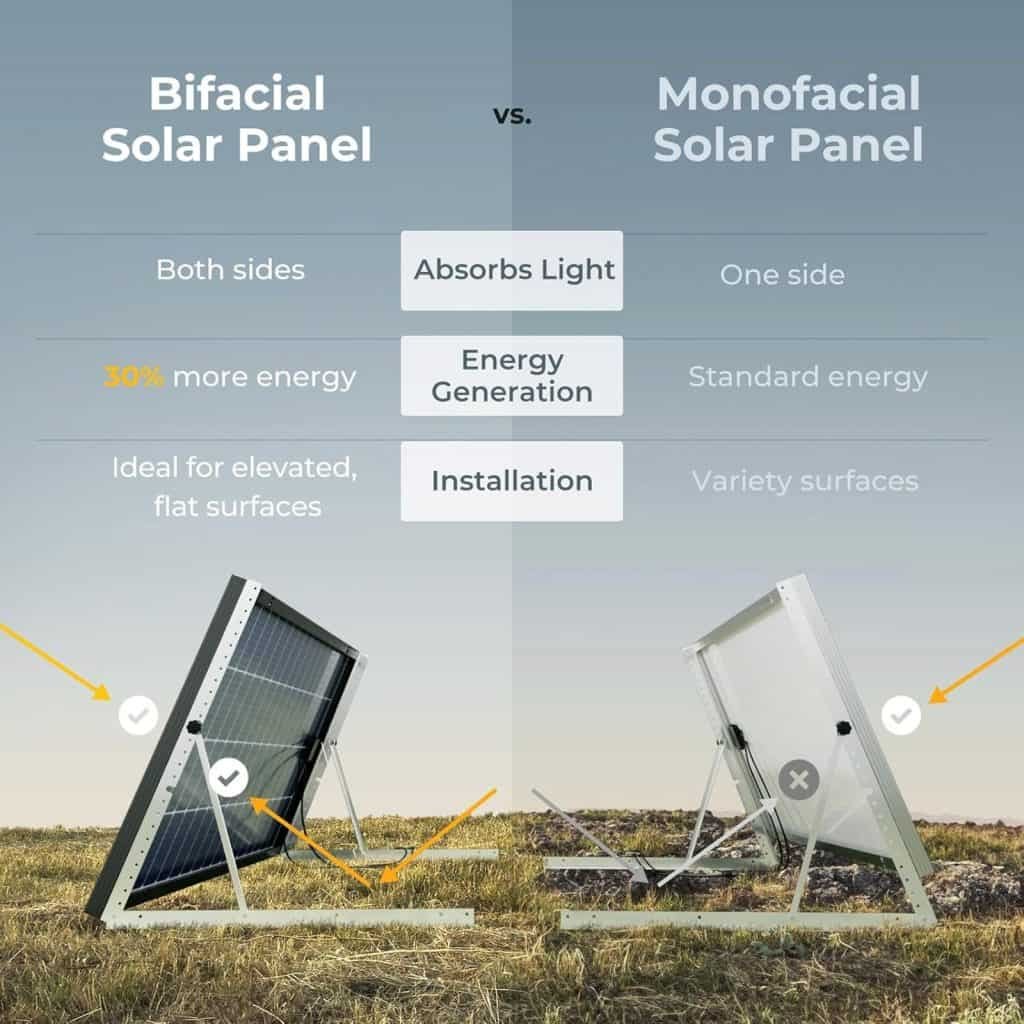
- Bifacial Options: When ground reflectance or elevated mounting creates opportunity for additional energy capture
- Form Factor Flexibility: Custom dimensions, frame designs, or frameless configurations to suit your installation requirements
Manufacturing Quality and Reliability
Our production facilities deliver consistent quality through rigorous testing and quality control at every stage. We maintain stable output, manage supply chain risks, and prioritize on-time delivery for projects of all scales.
Production Capability
Scalable from small custom orders to large project volumes with flexible scheduling to match your timeline
Quality Process
Incoming material inspection, in-line monitoring, final testing, and comprehensive performance verification
Partnership Approach
Pre-order consultation, production updates, technical support, and post-delivery assistance
Transparent Pricing
Detailed quotations clarifying every cost component with no hidden fees or surprise charges
Why Manufacturing Flexibility Matters
Standard catalog solar panels work for many projects, but custom manufacturing capabilities become essential when you need:
- Non-standard voltages to match existing battery systems
- Specific dimensions to maximize limited roof space
- Lightweight designs for structural limitations
- Custom power ratings for system optimization
- Specialized certifications for specific markets
Couleenergy’s manufacturing approach means you’re not limited to off-the-shelf solutions. We work with your specifications to deliver panels that match your project requirements precisely.
📋 How to Request Your Custom Quote
Solar pricing depends heavily on your specific requirements. Generic pricing doesn’t help with real project planning. Here’s how to get a detailed quotation tailored to your needs.
What to Include in Your Request
Technical Requirements:
- Voltage specification (12V, 24V, 48V, or custom)
- Desired wattage per panel
- Quantity needed (initial order and projected volume)
- Any form factor or dimension requirements
- Special features (lightweight, flexible, bifacial, etc.)
Project Context:
- Application type (residential, commercial, off-grid, mobile, etc.)
- Destination location (country and port/city)
- Required delivery timeframe
- Preferred trade terms (FOB, CIF, DDP)
- Required certifications for your market
Our Response Process
Step 1: Initial Review (24–48 hours)
We’ll review your requirements and confirm we can meet your specifications.
Step 2: Detailed Quotation (1–5 business days)
You’ll receive comprehensive pricing breakdown including module cost, freight estimates, and trade term options.
Step 3: Technical Consultation (as needed)
Our team can provide voltage recommendations, system design suggestions, and optimization advice.
Step 4: Sample Testing (recommended)
For first orders or large projects, we recommend sample panel testing to verify quality and performance.
Contact Couleenergy Today
Email: info@couleenergy.com
Phone: +1 737 702 0119
✅ Making Informed Decisions in Solar Procurement
The solar market in 2025 presents both opportunities and complexity. Module prices continue declining in many markets, but tariffs, logistics, and quality variations create procurement challenges that require careful navigation.
Successful solar sourcing means looking beyond headline numbers. Whether evaluating 12 volt solar panel price, 24 volt solar panel price, or 48 volt solar panel price, consider total landed cost, supplier reliability, customization capability, and long-term support.
The best place to purchase solar panels aligns with your project needs. For custom configurations, specialized voltages, lightweight requirements, or large-scale projects, working directly with manufacturers who can customize to your exact specifications delivers the best value.
When evaluating solar panel purchase options, prioritize suppliers who provide transparent pricing, offer customization flexibility, demonstrate manufacturing quality, maintain reliable delivery, and support your project from inquiry through installation.
For projects requiring the lightest solar panels, non-standard voltages, or custom configurations, direct manufacturer relationships eliminate middleman markups while providing technical support and specification flexibility your projects demand.
References & Further Reading
This guide incorporates data and insights from authoritative industry sources:
- EnergySage: Solar Panel Costs Hit Record Lows in 2024 – Residential pricing trends and market analysis
- PV Magazine: Solar Panel Import Tariffs Increase US Module Prices – Comprehensive tariff impact analysis by Clean Energy Associates
- Renogy: 12V, 24V, or 48V Solar Power System Guide – Technical specifications and voltage selection guidance
- Rinnovabili: Photovoltaic Module Prices 2025 – European market pricing data from pvXchange Trading


 English
  Español
  Français
  Deutsch
  Русский
  العربية