Towards a Solar-Powered Planet

Inspire Change

Solar Panel Fire Testing- BROOF t1, t2, t3, t4 Standards Explained

Solar Panel Fire Testing: BROOF t1, t2, t3, t4 Standards Explained

BROOF certification opens European markets—but only if you get the right test. Testing to Germany’s t1 standard won’t satisfy UK’s t4 requirements, and substituting even one component voids your entire certification. This strategic guide helps manufacturers, installers, and distributors choose the correct test method, partner with accredited laboratories, and protect their certification investment.

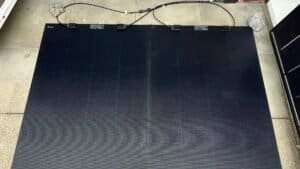
Will Back-Contact Solar Dominate by 2030, Custom Size All Black BC PV Panels

Will Back-Contact Solar Panels Really Dominate by 2030? The Truth Behind the Bold Predictions

Should your business adopt back-contact solar now, or wait until after the 2028 patent cliff? This strategic analysis examines both sides: risks of premature investment versus opportunity costs of delayed adoption. Includes ROI calculations, decision timeline mapped to fiscal cycles, and technology selection framework comparing BC versus TOPCon for different applications and project types.

Why Back-Contact Solar Technology Matters in 2026

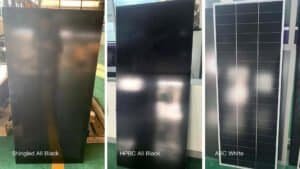
HPBC vs ABC: The Complete Back-Contact Technology Comparison

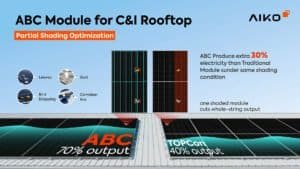
Both LONGi HPBC and AIKO ABC represent cutting-edge back-contact solar technology. LONGi holds the world record at 25.4% efficiency with documented low-light advantages ideal for cloudy climates. AIKO delivers superior aesthetics with 93.5% cell coverage and silver-free cost stability. Your optimal choice depends on climate conditions, shading scenarios, and specific project requirements. Professional assessment recommended.

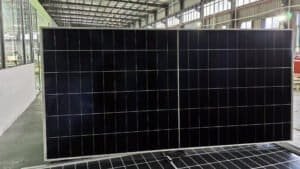
HPBC Modules with Excellent Low-light Performance, Capturing More Energy During Challenging Conditions

How Back-Contact Solar Panels Perform in Low Light: Real Data from Field Testing

Independent field testing reveals back-contact solar panels deliver 2.8-3.2% more energy in cloudy conditions compared to TOPCon. Researchers in Qinghai Province monitored BC modules for a full month, finding 3.16% advantages on overcast days. For distributors and project developers in northern climates, this performance edge translates to meaningful ROI improvements over 30-year system lifetimes.

HPBC Bipolar Hybrid Passivation Technology Boost Solar Panel Efficiency and Power Generation

How Bipolar Hybrid Passivation Delivers 2-10% More Energy Yield in Real-World Conditions

Solar projects demand maximum ROI over 25-30 years. Bipolar hybrid passivation technology delivers 2-10% more energy in typical field conditions through advanced passivation and back-contact design. With 670W modules, superior temperature performance (-0.26%/°C), and industry-leading degradation rates, this technology offers measurable advantages for space-constrained installations and challenging environments where every kilowatt-hour counts.

China VAT Elimination 2026: Solar Panel Pricing & Strategies

Chinese Solar Panel Prices: Your 2026 Strategic Procurement Guide

Not every buyer should rush to procure before April 1. We’ve developed three distinct strategies matched to different circumstances: accelerated procurement for confirmed Q2-Q3 projects, phased approaches for large buyers managing portfolio risk, and post-stabilization timing for flexible schedules. Each includes execution playbooks, contract templates, supplier evaluation criteria, and quality control checklists. Choose based on your situation.

get quote for n type topcon bifacial modules with poe epe

EPE vs POE for TOPCon Solar Panels: The 2026 Buyer’s Guide to Avoiding Catastrophic Failures

Dual-glass TOPCon modules demand superior encapsulation to prevent moisture ingress and PID degradation. This technical guide examines POE and EPE encapsulants through the lens of recent UNSW research showing 55% power loss from poor formulations versus 6% from quality materials. Includes decision matrix for coastal, tropical, and desert installations, plus supplier verification criteria for HALS-based POE and tier-1 EPE.

How Back Contact Solar Cells Eliminate Microcrack and Thermal Stress Failures

How Back Contact Solar Cells Eliminate Microcrack and Thermal Stress Failures

Microcracks and thermal stress are among the leading causes of long-term solar panel failure. Back contact solar cells solve this problem by removing front-side metal contacts—the main source of stress concentration. The result is fewer cracks, reduced hot spots, and panels that maintain performance for decades in demanding environments.

en_USEnglish