
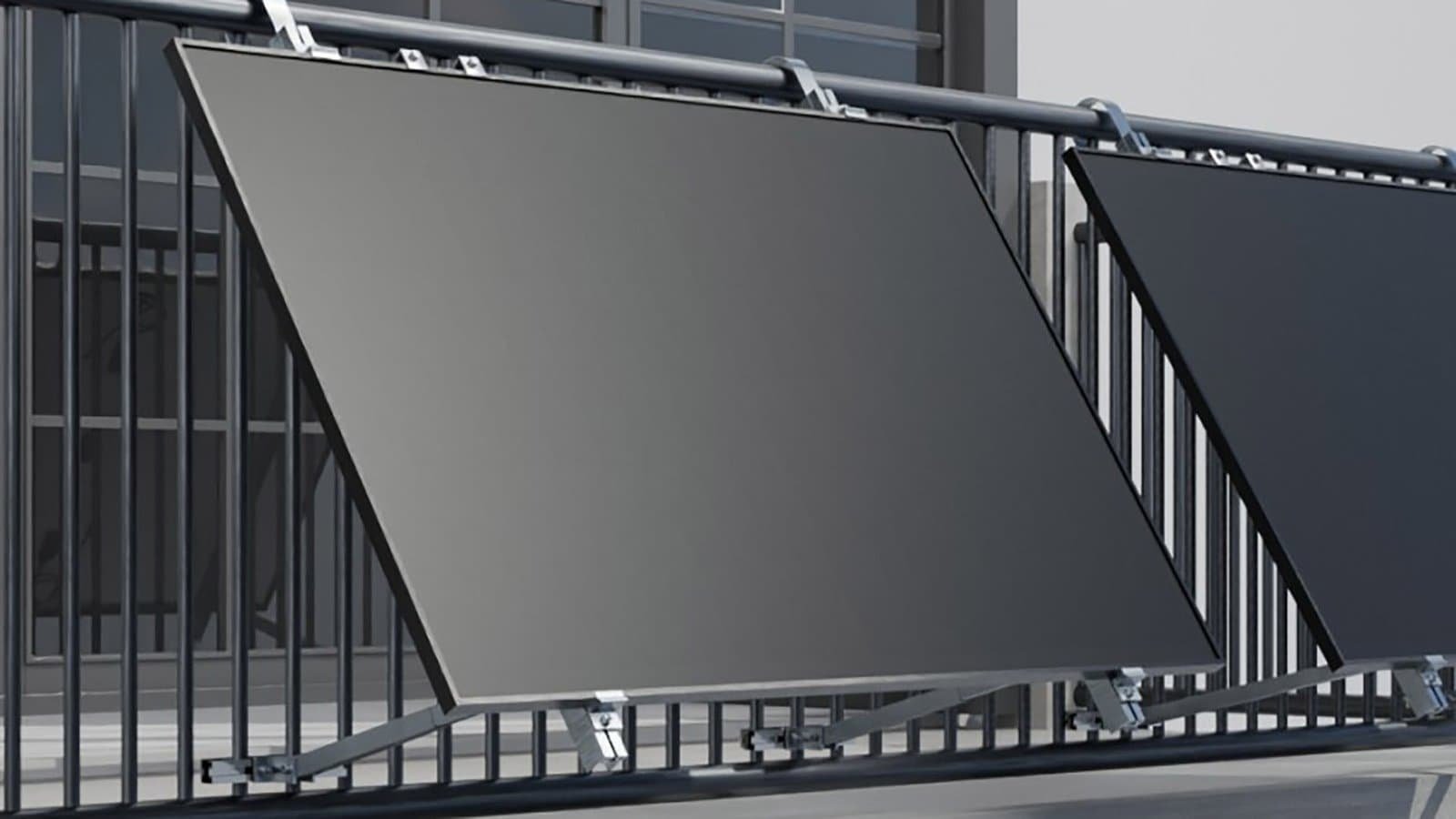
The balcony solar market is growing fast — especially in Europe. Finding a supplier is easy. Finding the right one takes more work. This guide shows you exactly what to look for.
Germany’s Balkonkraftwerk movement has gone mainstream. The Netherlands, Austria, and France are following. More than one million balcony PV systems are now registered in Germany alone — a figure the market crossed in June 2025, doubling from a year earlier.[10] Urban renters want plug-and-play solar, and they want it to look good. That means back-contact (BC) technology: no visible front gridlines, sleek all-black surfaces, and serious output in tight spaces.
For OEM buyers and importers, the challenge is separating genuine BC panel makers from factories that simply relabel standard TOPCon modules. This guide cuts through the noise.
1. Cell Technology — Know What You’re Actually Buying
Not all “premium” solar panels are equal. The balcony segment has evolved from budget PERC cells to N-type and back-contact architectures. Understanding the spectrum helps you match product to market.
| Cell Technology | Module Efficiency | OEM Tier | Best Application |
|---|---|---|---|
| PERC | 20–21% | Budget | Entry-level volume OEM |
| TOPCon | 22–23.5% | Mid-range | Balanced cost-performance |
| HJT | 22.5–24% | Mid-High | Low degradation, premium |
| HPBC 2.0 (LONGi) | Up to 24.8%[1] | Premium | Shade tolerance, low-light yield |
| ABC (Aiko) | ≥25.2%[2] | Premium | Highest efficiency, full-black aesthetics |
| BC Flexible | 22–23% | Specialty | Balcony, curved rail, lightweight |
HPBC 2.0 vs. ABC — What’s the Difference?
Both technologies move all electrical contacts to the rear of the cell. Both use N-type silicon, so neither suffers from light-induced degradation. But they differ in important ways.
HPBC 2.0 (LONGi’s Hi-MO X10) features a built-in soft-breakdown shading optimizer. In independent CPVT testing certified by TÜV Rheinland, HPBC 2.0 modules lost only 10.15% of output when 50% of a cell was shaded — versus 36.48% for comparable TOPCon panels.[3] That’s a major advantage for balcony installations, where railing shadows are a daily reality.
ABC (Aiko’s INFINITE series) takes a different approach. It removes all front-side metal contacts entirely, giving the panel a 100% active light-receiving surface. The result: up to 680–685 W from a standard 72-cell format, mass-production module efficiency above 25% — the highest in the world as of early 2026 — and the most seamless all-black aesthetic available.[2] Cell-gap-free overlap soldering adds another 1.6% active area compared to conventional module construction.
Both share the same temperature coefficient (−0.26%/°C) and the same annual degradation rate (0.35%/yr from Year 2).[4] Choose HPBC 2.0 for partial-shade environments. Choose ABC when maximum power output or premium aesthetics are the priority.
2. Certifications — The Non-Negotiable Baseline
A beautiful panel without the right certifications cannot be legally sold in your target market. Check these before anything else.
| Market | Required Certifications |
|---|---|
| EU (all countries) | IEC 61215, IEC 61730,[8] CE marking, RoHS compliance, WEEE registration |
| Germany (balcony PV) | Above + DIN VDE V 0126-95:2025-12 (Vornorm)[5] — Schuko ≤960 Wp DC;[6] certified energy feed-in connector (e.g., Wieland RST20i3) ≤2,000 Wp;[7] inverter AC output ≤800 W (VDE-AR-N 4105)[6] |
| Premium EU buyers | TÜV Rheinland or TÜV SÜD lab reports; Solar Keymark |
| United States | UL 61730, UL 790 Fire Class A (roof installations) |
| United Kingdom | UKCA marking + IEC standards |
🔑 Critical for 2026: Germany’s DIN VDE V 0126-95 (Vornorm, published December 2025) is the world’s first dedicated product standard for plug-in solar devices.[5] It formally permits Schuko plug connections up to 960 Wp DC and sets a separate 800 W AC inverter output ceiling. Manufacturers certified to this standard now hold a clear legal advantage in Europe’s largest balcony PV market.
Important note on storage-integrated systems: DIN VDE V 0126-95 currently covers module-plus-inverter systems only. Plug-in solar devices with integrated battery storage fall outside its scope — a separate standard is under development by committee DKE/K 373.[9] OEM buyers building bundled battery kits should verify compliance requirements separately before market launch.
Always ask for the full test report number, then verify it directly with the issuing laboratory (TÜV Rheinland, TÜV SÜD, VDE, TÜV NORD, or Intertek). Certificates can be forged or expired.
3. Physical Requirements for Balcony Applications
Balcony railings aren’t rooftops. Standard 2-metre glass panels are too heavy, too rigid, and too large. Your supplier must understand these constraints from the start.
- Weight: Railing load limits are typically 30–50 kg/m². Look for modules under 4–5 kg for flexible formats, or under 15 kg for compact rigid panels.
- Thickness: Ultra-slim profiles (2.1–3.0 mm for flexible; 25–32 mm for framed) allow discreet installation.
- Power output: Under the German DIN VDE standard, Schuko-connected systems stay at or below 960 Wp DC — while the inverter AC output is separately capped at 800 W.[6] Most balcony panels range from 200 W to 600 W.
- Flexibility: ETFE-coated flexible panels can curve around rounded railings. Ask for the minimum bending radius specification.
- Frameless or frameless-compatible: Frame edges catch wind load and add weight. Frameless designs reduce both.
- Full-black aesthetics: BC and HPBC modules deliver the gridline-free front surface that European consumers prefer in visible locations.
- Installation simplicity: Some balcony systems mount via cable ties in under two minutes without tools — a strong selling point for renter-focused products.
4. Evaluating OEM and ODM Capabilities
Most Chinese solar factories list “OEM available” in their Alibaba profile. That phrase means very different things from one factory to the next. Ask precise questions.
OEM vs. ODM — Know the Distinction
OEM means you provide the specification and the factory manufactures to it. ODM means the factory co-develops a novel design with you — preferred when you need a unique form factor or proprietary junction box layout that doesn’t exist on the shelf.
Key Questions for Any OEM Supplier
- MOQ: What is the minimum for prototyping? Serious OEM factories offer small prototype runs (10–50 units) before scaling. Walk away from factories that demand container volumes on first orders.
- Customization depth: Can they change cell layout, backsheet color, junction box placement, cable length, connector type, and branding labeling independently?
- Sample lead time: Best-in-class OEM factories deliver physical samples within 5–7 working days.
- Bulk lead time: Typical bulk orders: 15–20 working days. Flag any factory quoting under 10 days for large volumes without explanation.
- Warranty documentation: Can they provide a co-branded or private-label 25-year power output warranty document that meets your market’s legal requirements?
- Business license verification: The license must include “Module R&D and Production” — not just “Sales.” Trading companies often pose as manufacturers.
5. Factory Audit Checklist
Before committing to a large OEM order, conduct a structured audit. If you can’t visit in person, hire a third-party audit firm operating in China.
- Production infrastructure: Automated lamination lines, humidity-controlled cleanroom for cell handling, EL (electroluminescence) tester, IV curve tracer.
- Quality management: ISO 9001 certification (check the scope and renewal date), CAPA records, in-process defect tracking.
- Cell sourcing: Are they using Grade A cells from Tier 1 suppliers (LONGi, Aiko, Tongwei)? Ask to see cell incoming quality control (IQC) reports.
- Encapsulant specification: POE encapsulant outperforms standard EVA for moisture resistance and long-term PID prevention, especially in humid European climates.
- Serial number traceability: Every module should carry a traceable serial number linked to the manufacturer’s warranty portal.
- Export compliance: Confirm customs export license, HS code familiarity, and experience with EU/US import documentation.
- Third-party lab test reports: Request original TÜV, VDE, or Intertek reports — then verify the report number online or by phone with the issuing lab.
6. Top Balcony Solar Panel Manufacturers & BC Module OEM Suppliers in China
Tier 1 — Large-Scale BC Technology Leaders
These companies develop the core BC cell technologies that downstream OEM manufacturers build upon.
Tier 1 · Cell Tech
LONGi Green Energy (Xi’an)
Creator of HPBC 2.0 (Hi-MO X10). Module efficiency up to 24.8%,[1] with TÜV SÜD PID-p certification and TÜV Rheinland anti-shading A+ rating.[3] Targeting approximately 50 GW of HPBC 2.0 module production capacity by end-2025. HPBC cells are widely adopted by downstream OEM flexible panel manufacturers. High MOQ for direct OEM orders.
Tier 1 · Cell Tech
Aiko Solar (listed: Shanghai; manufacturing: Guangdong)
Inventor of ABC (All Back Contact) technology. ABC INFINITE achieves ≥25.2% module efficiency[2] and up to 685 W — the highest mass-production output globally as of 2026. Zero front metallisation delivers the cleanest full-black aesthetic available. UL 790 Fire Class A certified; EUPD Top Brand PV Italy 2026. Strong OEM partnership programs for distributors.
Tier 2 — Balcony-Specialized & OEM-Focused Manufacturers
These factories specifically design for balcony PV applications, with lower MOQs and faster OEM turnaround.
Balcony Specialist
Suntech (Shenzhen/Wuxi)
Showcased its STP200F-DT64-P BC flexible module at SNEC 2025 — 200 W, 3 kg, 2.14 mm thin, designed for curved railing surfaces. Also offers an integrated micro-storage and microinverter system (STP-A0103, 1 kWh LiFePO4, 300 W AC output). Good EU market brand recognition and competitive OEM programs.
Lightweight Flexible
Polyshine Solar
Unveiled a next-generation lightweight flexible balcony module at The Smarter E Europe 2025. TÜV NORD certified to Category 17+ hurricane wind loads. Tool-free cable-tie installation — one person, one module, two minutes. Particularly well-suited for EU private-label OEM programs targeting apartment renters.
Low-MOQ OEM
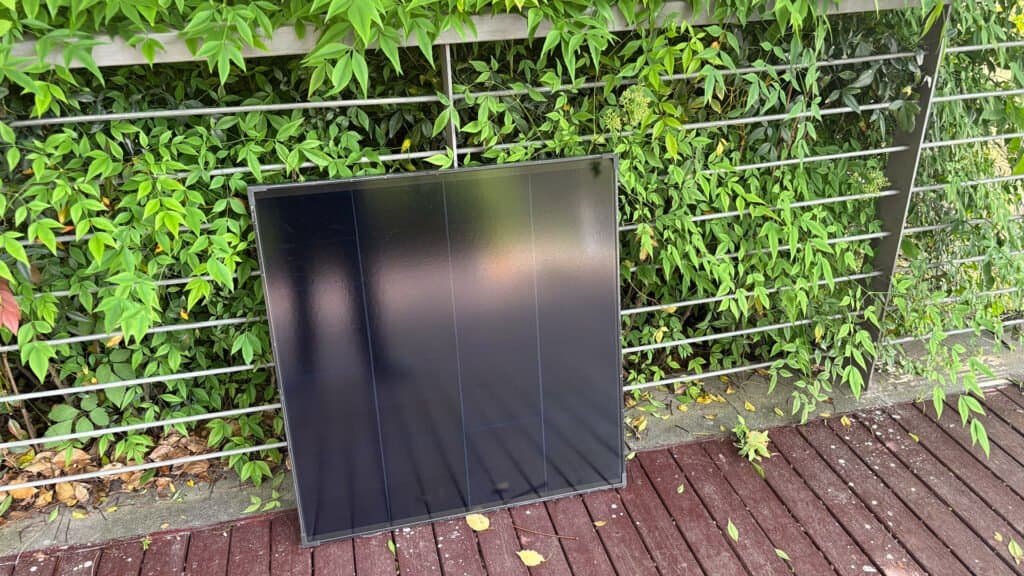
Couleenergy — Ningbo Coulee Tech Co., Ltd.
A Zhejiang-based specialist in flexible, semi-flexible, and BC (HPBC) solar panels for balcony, RV, marine, and off-grid applications. IEC 61730 certified with MST 17 standard compliance.[8] Offers dual-glass HPBC modules and ETFE flexible panels from 20W to 710W+. In-house engineering, full OEM/ODM customization (size, shape, wattage, backsheet color, connector type), low-MOQ prototyping, and global export capability. The right fit for foreign trade buyers who need small batches, exact specifications, and responsive engineering support.
BC Vertical Integration
Gokin Solar (Zhuhai, Guangdong)
A Chinese wafer manufacturer that expanded into BC modules with vertically integrated production from wafer to finished panel. Its GK-3-54HGFb residential module offers 480–500 W with efficiencies between 23.5% and 24.5%, IEC 61215:2021 and IEC 61730:2023 certified by TÜV Rheinland, for 1,500 V DC systems.[11] The vertical integration gives OEM buyers a cost efficiency advantage on larger orders.
Tip for EU OEM buyers: For private-label balcony products targeting Germany or the Netherlands, ask specifically which suppliers can certify products to DIN VDE V 0126-95:2025-12.[5] This is now a competitive differentiator in the German market and will likely become the EU-wide baseline within the next two to three years.
7. Your 5-Step OEM Sourcing Process
1 Define Your Technical Specification
Before contacting any factory, document your cell technology, power range, form factor (rigid/flexible/frameless), certifications needed, target market, branding approach, and prototype vs. bulk MOQ. Vague briefs produce vague quotes.
2 Verify Manufacturer Credentials
Request IEC/CE/TÜV test reports and verify each report number directly with the issuing lab. Confirm ISO 9001 certification scope. Check that the business license includes actual module production, not just sales. Ask for references from current EU export clients.
3 Request Physical Samples
Never finalize specifications from a datasheet alone. Request samples (5–7 working days for qualified OEM factories), then conduct EL imaging, IV curve testing, and visual inspection. Check that all labels match your destination country’s regulatory requirements.
4 Negotiate OEM Contract Terms
Key clauses: tooling ownership for custom molds or frames; warranty liability distribution; NDA for proprietary designs; market exclusivity (if needed); delivery penalty provisions for off-spec or late product. Don’t skip the NDA — especially if you’re developing a new form factor.
5 Confirm Market Compliance
Double-check that the final production sample carries the correct CE mark, module spec label, safety labels, and — for the German market — DIN VDE V 0126-95 compliance documentation before authorizing bulk production.
8. Market Trends Shaping Balcony Solar in 2026
The balcony PV segment is moving quickly. Here are the forces reshaping the supply and demand landscape right now.
- 🏛️ Regulatory clarity in Germany
The DIN VDE V 0126-95:2025-12 (Vornorm), effective December 2025, is the world’s first dedicated product standard for plug-in solar devices.[5] It removes the legal ambiguity around Schuko plug connections that had slowed adoption. With Germany surpassing one million registered balcony PV systems in 2025,[10] certified suppliers now hold a clear competitive advantage in Europe’s largest market for this product. - ⚡ BC technology going mainstream in flexible formats
Back-contact cells — once found only in premium rooftop panels — are now being integrated into ultra-thin, ETFE-coated flexible modules specifically designed for balcony railings. This is a genuine product differentiation opportunity for OEM brands targeting premium EU consumers. - 🔋 Integrated system demand rising
Leading manufacturers are bundling flexible BC panels with compact LiFePO4 micro-storage units and microinverters into single-SKU balcony power stations. OEM buyers who can offer complete systems — not just panels — are capturing higher margin and stronger customer loyalty. Note that DIN VDE V 0126-95 does not yet cover storage-integrated systems; a separate standard is in development.[9] - 🏙️ Full-black aesthetics becoming standard expectation
European urban consumers in premium segments now expect full-black modules as a baseline. BC technology’s gridline-free front surface is the only way to genuinely deliver this — and buyers are increasingly able to spot the difference between a true all-black BC panel and a standard panel with a black backsheet. - 🌍 Policy frameworks accelerating demand
Germany, Austria, the Netherlands, and France have all introduced renter-friendly regulatory frameworks and simplified registration for plug-in solar. This is creating sustained demand for export-ready, compliance-certified balcony PV products — and a growing opportunity for foreign trade professionals who can move quickly with the right sourcing partnerships.
Final Thoughts — How to Make the Right Choice
Three things ultimately determine whether you’ve found the right balcony solar panel manufacturer.
First, cell technology authenticity. Is it genuinely BC, HPBC 2.0, or ABC — or is it rebranded TOPCon? Ask for the cell supplier name. Verify it. Tier 1 BC cells come from LONGi, Aiko, and a handful of others. Know your supply chain.
Second, certification completeness. IEC 61215 and IEC 61730[8] are the floor, not the ceiling. For the German market in 2026, DIN VDE V 0126-95 compliance — covering both the 960 Wp DC module limit and the 800 W AC inverter ceiling[6] — is becoming the minimum expected by serious distributors and installation partners.
Third, OEM flexibility and responsiveness. The right factory is one that understands your market, offers meaningful customization, can prototype fast, and has engineers who actually answer questions — not just sales staff who say yes to everything and disappear.
The manufacturers listed in this guide represent a range of scale and specialization. Smaller, niche OEM-focused suppliers like Couleenergy offer something the Tier 1 giants can’t: low-MOQ custom work, direct engineering access, and genuine flexibility on specifications. That’s often exactly what a foreign trade buyer launching a new private-label balcony brand actually needs.
Footnotes
- LONGi Hi-MO X10 (HPBC 2.0): 670 W peak power, 24.8% module efficiency, 26.6% cell efficiency. Confirmed across all EU regional launch announcements (DACH, UK, Spain/Portugal, Italy, 2024–2025).
https://www.longi.com/eu/news/hi-mo-x10-dach-launch/ - Aiko ABC INFINITE: mass-production module efficiency ≥25.2%; 72-cell format up to 680–685 W; 1.6% active area gain from cell-gap-free overlap soldering. Confirmed at WFES 2026 (January 2026) and on Aiko’s official About Us page (“average mass production efficiency breaking through 27.3% for cells and 25% for modules”).
https://www.prnewswire.com/news-releases/abc-module-debut-at-2026-wfes-aiko-pioneers-the-new-era-of-25-value-302663300.html · https://aikosolar.com/en/about-us/ - HPBC 2.0 shading performance: TÜV Rheinland anti-shading A+ certification and CPVT test data — 10.15% power loss (HPBC 2.0) vs. 36.48% (TOPCon) under 50% cell-shading conditions. Referenced in LONGi’s official EU product introduction.
https://www.longi.com/eu/news/hi-mo-x10-introduction-europe/ - LONGi Hi-MO X10 long-term performance: temperature coefficient −0.26%/°C (0.03 pp better than TOPCon); Year-1 degradation ≤1%; annual degradation 0.35%/yr from Year 2; 88.85% power retention at Year 30. Source: official 30-year product and power warranty documentation.
https://eu.longi.com/hi-mo-X10 - DIN VDE V 0126-95 VDE V 0126-95:2025-12 — world’s first product standard for plug-in solar devices. Published December 2025 by DKE after eight years of standardization work. Designated a Vornorm (preliminary standard); international harmonization via IEC/TC 82 is ongoing. Applies to complete system (module + inverter + plug), not individual components.
https://www.vde.com/en/press/press-releases/first-product-standard-for-plug-in-solar-devices · https://www.solarwirtschaft.de/en/2025/12/17/din-vde-worlds-first-standard-for-plug-in-solar-devices/ - DIN VDE V 0126-95 sets two independent limits: (1) DC module power ≤960 Wp for Schuko plug; (2) AC inverter feed-in output ≤800 W, also mandated by Germany’s Solarpaket I and VDE-AR-N 4105. These are separate ceilings — both must be met simultaneously.
https://www.heise.de/en/news/Schuko-plug-officially-solar-compatible-DIN-for-balcony-power-plants-is-ready-11078947.html · https://www.adac.de/news/balkonkraftwerke-din-norm/ - For DC module power between 960 Wp and 2,000 Wp, DIN VDE V 0126-95 requires a certified energy feed-in connector (Energiesteckvorrichtungsstecker). Wieland RST20i3 is the most common example; the standard does not mandate a specific brand. The 2,000 Wp ceiling is also the legal maximum under Solarpaket I.
https://balkon.solar/news/2025/11/22/what-does-the-new-german-plug-in-pv-norm-say/ - IEC 61215 (design qualification and type approval for crystalline silicon PV modules) and IEC 61730 (module safety qualification — electrical shock, fire, and mechanical hazard prevention) are the two mandatory international standards for EU and most global market access. They are typically tested and certified together.
https://insights.tuv.com/blog/how-to-achieve-revised-iec61215-iec-61730 - DIN VDE V 0126-95:2025-12 explicitly excludes plug-in solar devices with integrated energy storage from its scope. Committee DKE/K 373 has begun planning a separate standard part for storage-integrated systems; IEC/TC 82 has expressed interest in eventual international adoption.
https://www.vde.com/en/press/press-releases/first-product-standard-for-plug-in-solar-devices - Germany surpassed one million registered balcony PV systems in June 2025, per BSW-Solar estimates based on Bundesnetzagentur Marktstammdatenregister data. From January to April 2025 alone, approximately 135,000 new systems were commissioned — a 36% year-on-year increase.
https://taiyangnews.info/markets/balcony-solar-exceeds-1million-installations-germany - Gokin Solar GK-3-54HGFb: 480–500 W, 23.5–24.5% efficiency, 108-cell N-type BC, all-black single-glass, IEC 61215:2021 and IEC 61730:2023 certified by TÜV Rheinland, 1,500 V DC, 25-year product warranty, 30-year power warranty. Launched at Global BC Eco Summit, Guangzhou, December 2025.
https://www.pv-magazine.com/2025/12/15/gokin-solar-launches-new-back-contact-solar-module-series/
Ready to Source BC Modules or Flexible HPBC Panels?
Couleenergy manufactures custom dual-glass and ETFE flexible modules on both HPBC 2.0 and ABC platforms. Specify your cell type, wattage, construction, and branding — we handle the rest.
📧 info@couleenergy.com
📞 +1 737 702 0119



 English
  Español
  Français
  Deutsch
  Русский
  العربية