

A diode is designed to let current flow in one direction. If you are familiar with plumbing, a diode is an electrical equivalent to a check valve. There are two purposes of diodes in a solar electric system — bypass diodes and blocking diodes. The same type of diode is generally used for both, a Schottky barrier diode.

Understanding Bypass Diodes
Bypass diodes are used to reduce the power loss of solar panels’ experience due to shading. Current flows from high to low voltage when a solar panel has cells that are partially shaded. The current is then forced through the low-voltage shaded cells. This causes the solar panel to heat up and have some power loss. Those shaded solar cells become consumers of electricity instead of producers.
Bypass diodes inside a junction box of a solar panel provide a low resistance path for the current go around a series of solar cells that have been shaded. The diode is wired in parallel with the cells. Because electricity takes the path of least resistance, it’s easier for the current to go through the diode than through the shaded cells, so it does. This minimizes heat gain and reduces current loss.
Modern Solar Panels and Bypass Diodes
Most solar panels have bypass diodes built in these days, so you don’t have to worry about that anymore. However, if you have multiple solar panels wired together in series, and you consistently have shading on one or more of the solar panels, wiring a bypass diode in parallel across the shaded panel can prevent the current from being forced back through the shaded panel and cause it to heat and lose power. So it acts the same as the internal bypass diodes, but bypasses the entire panel instead of the individual cells.

Understanding Blocking Diodes
Blocking diodes are used to prevent your batteries from discharging backward through your solar panels at night. Again, current flows from high to low voltage. During a sunny day, the voltage of a solar panel will be higher than the voltage of a deep cycle battery, so current will naturally flow from the panel to the battery.
At night, if the solar panel is connected directly to a battery, without a charge controller, the voltage of the solar panel is going to be lower than the voltage of the battery, so there is a possibility of some backward flow, pulling power out of the battery. It won’t be as much as the flow during the day, but there may be some. As a result, in the days before charge controllers, people would put a blocking diode in series between the battery and the solar panel, only allowing power to go into the battery.
Modern Solutions and Considerations
Nowadays, most solar systems have a charge controller between the solar panel and the battery. And this charge controller prevents this backflow of electricity, eliminating the need for a blocking diode. However, there still may be some instances when a blocking diode may be helpful:

Multiple Parallel Strings
If you have multiple parallel strings of solar panels that get shaded at different times, a blocking diode in series will help prevent the power from the sunny string being forced back up through the shaded string. This is common on sailboats, with a solar panel on both the port and the starboard sides. Depending on your tack, one of the solar panels may be completely shaded, and the other completely sunny.
Important Considerations
There are some disadvantages to using blocking diodes:
- There is a slight voltage loss through a diode (about 0.5 volts)
- You’ll always be losing a little bit of power through it
- A better, although admittedly more expensive solution, is to have a separate charge controller for each string or panel
Hybrid Systems
Another example of a blocking diode use is in a hybrid wind and solar system that may have the power coming from two different sources at two different voltages. Depending on the controllers used, a blocking diode may be useful to help direct the current to the batteries, nowhere else.
Installation Precautions
When installing blocking diodes, remember to:
- Be careful where you put the diode in the system
- Avoid placing it in a bidirectional spot, like where the current flows both into the battery and out to the inverter
- Make sure the diode is designed for the right voltage and current to handle the flow through it
We hope the above information has been helpful. Thanks for your time!
Set It, Forget It, Enjoy the Glow
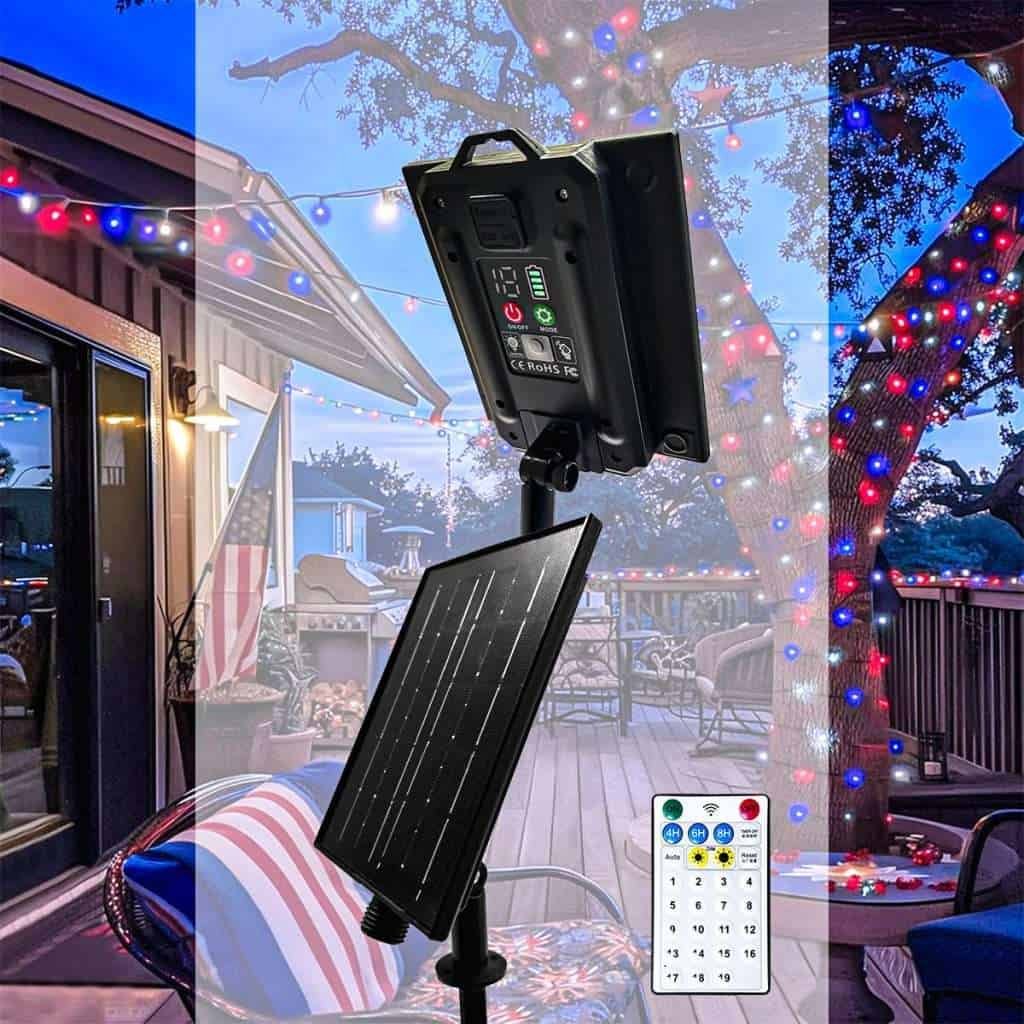
Why struggle with outdoor lighting when you can go solar? Couleelight Solar Battery Box does all the work for you!
✔ Charges by day, shines all night
✔ Weatherproof & built to last
✔ Remote control & 19 lighting modes
✔ No wiring, no hassle—just plug & play!
💡 Make your garden, patio, or event sparkle! Find more details.



 English
  Español
  Français
  Deutsch
  Русский
  العربية