
Overview
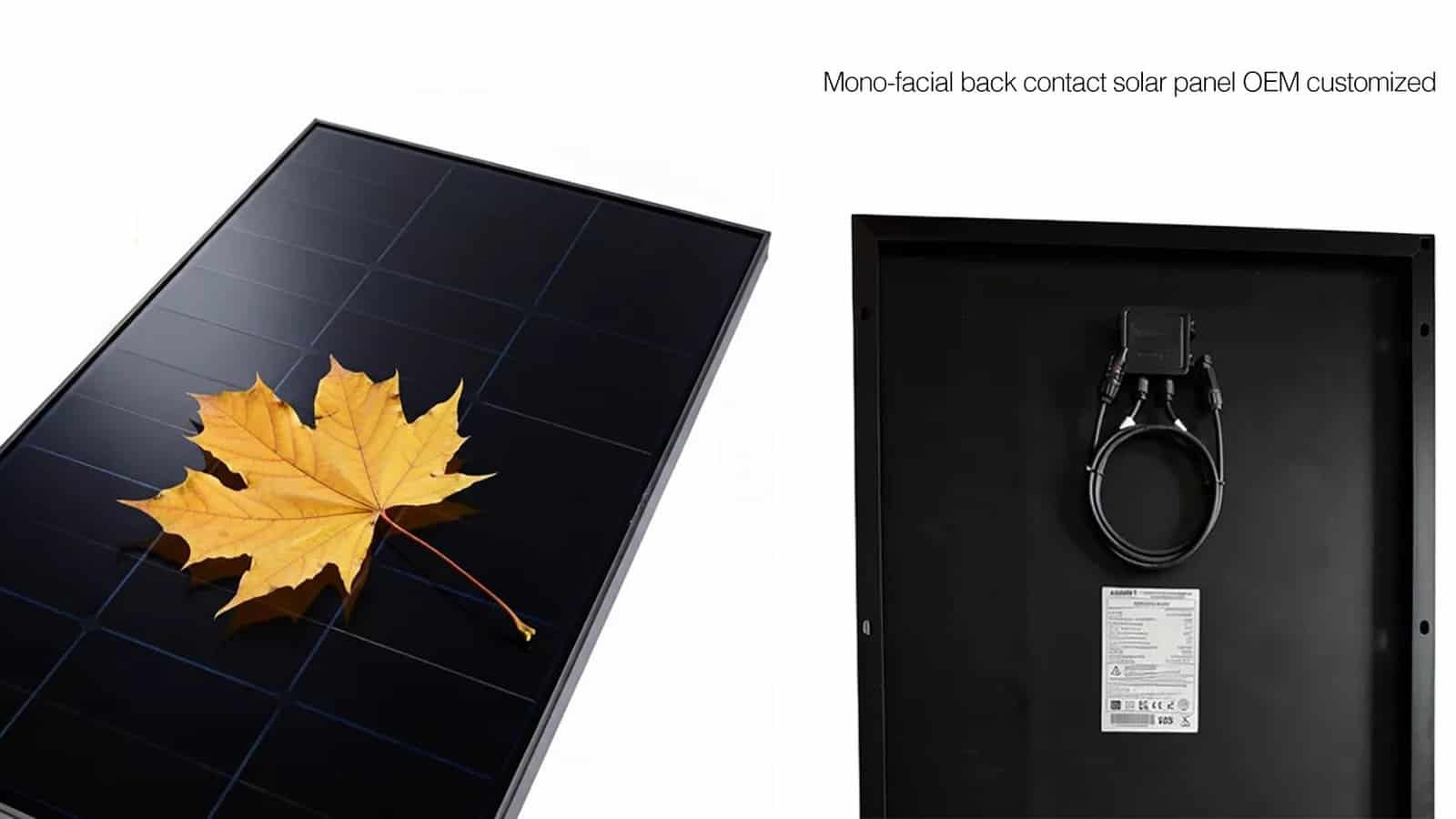
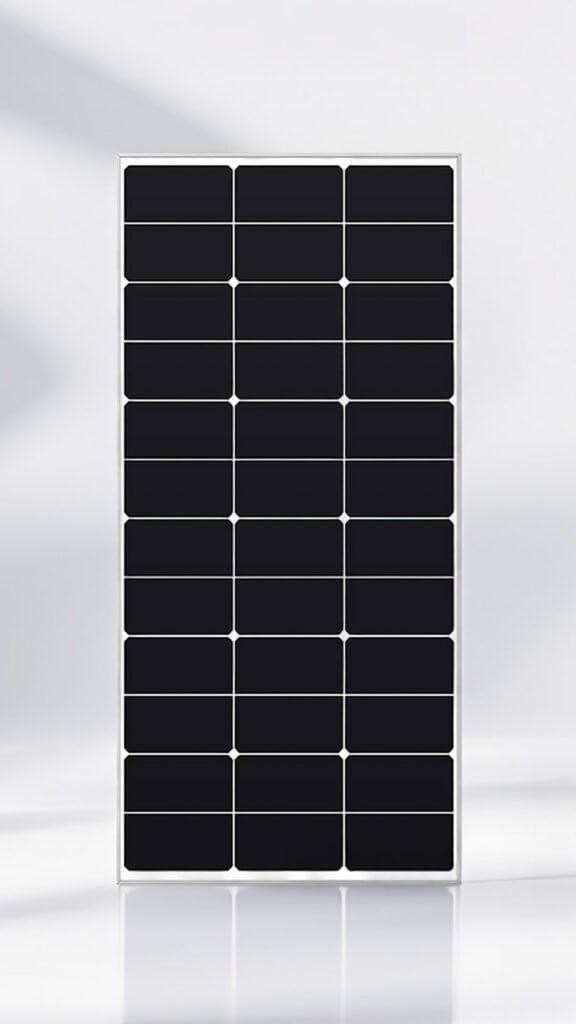
Space is the enemy of every off-grid power system. Every square foot has to earn its keep, and that’s exactly the problem the CLM-150MBC was built to solve. This 150W, 12V rigid glass module uses back contact (BC) solar cell technology, moving the electrical contacts to the rear of the cell instead of the front. There are no busbars and no grid lines in the way — just one continuous surface of silicon doing what silicon does best: catching light.
Three things follow from that design choice, and they’re the three things distributors and installers actually ask about. More power from a smaller footprint. A cleaner, all-black finish. And output that holds up better when part of the array falls into shadow. Couleenergy engineers the CLM-150MBC for ground-mount arrays, marine deck installations, farm and agricultural equipment, and any other rigid-surface 12V charging setup where space is tight and looks still matter.
Why Back Contact Solves Real Buyer Problems
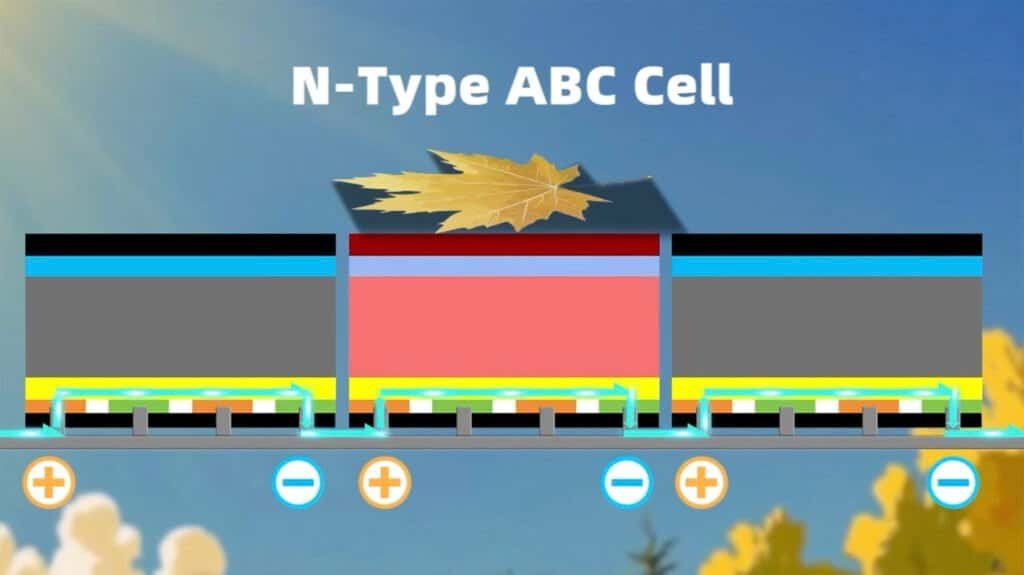
Every CLM-150MBC ships with HPBC cells as the standard configuration. Need something different? ABC and TBC are available too. Rather than locking every buyer into one fixed cell architecture, Couleenergy matches the platform to the application.
1 | Partial shading loss. A shadow from a mast, vent, or antenna shouldn’t tank your output — but on a conventional busbar panel, it often does. Back contact cells handle this differently. A 2026 TÜV NORD simulation study found that a single shaded BC cell loses just 12.9% of its power, versus 33.9% for a comparable TOPCon cell.1 That edge holds strong when three or fewer cells are shaded across a substring; push past four, and the two technologies start converging toward similar losses, both around 50%.1 So yes, it’s a real, measurable advantage — just not a blanket immunity to every shading scenario you’ll encounter in the field. |
2 | Low-light and cloudy-day output. No front-side metal means no light lost to shadow-casting grid lines. The payoff shows up at dawn, dusk, and on overcast days, when every extra percentage point of captured light counts. |
3 | Aesthetics for visible installations. A yacht deck is not the place for a panel covered in metal grid lines. Back contact’s uniform black surface reads as part of the design, not a bolt-on afterthought — and for a lot of buyers, that’s what actually closes the sale. |
4 | Long-term stability. Most back contact cells are built on n-type silicon, which resists potential-induced degradation (PID) noticeably better than standard p-type PERC. Combine that with solid encapsulation, and you get a module that degrades gradually over decades instead of dropping off a cliff in year three. |
5 | Matching the cell to the job. Think of HPBC as the reliable default: proven, efficient, built for mainstream deployment. ABC trades a bit of that for cost-optimized volume manufacturing. TBC is the newcomer — TOPCon passivation applied to a back contact structure — still moving from pilot lines to full-scale production. All three sit on the same CLM-150MBC platform, and Couleenergy picks the right one based on where the module is headed and what it needs to compete on. |
Customization: Couleenergy’s Core Strength
Getting the cell right is only step one. The real differentiator is what happens next — Couleenergy’s OEM and ODM program lets buyers shape nearly every other part of the product:
| ✓ Cell platform selection: HPBC (standard), ABC, or TBC |
| ✓ Frame color — silver, black, or matched to an existing brand lineup |
| ✓ Custom sizing, voltage, and power output built to slot into an existing catalog |
| ✓ Custom logo, labeling, and packaging for private-label distribution |
| ✓ Cable length and connector configuration |
| ✓ Low-MOQ trial runs, so distributors can test a new market before committing to a full container |
The result: solar brands and installers get to launch a genuinely differentiated product without ever having to build a factory of their own.
Supply, MOQ & Lead Time
| Minimum Order Quantity | 100 pieces |
| Annual Production Capacity | 500 MW |
| Lead Time | ~20 working days for container orders; ~4 weeks for samples |
Key Specifications
Certifications and Warranty
| ✓ | IEC 61215 and IEC 61730 certified for design qualification and safety |
| ✓ | ISO 9001:2015 certified manufacturing quality management system4 |
| ✓ | 12-year product workmanship warranty |
| ✓ | 25-year linear power output performance warranty |
A note on fire rating: the CLM-150MBC carries an IEC 61730 Class C fire rating, which is standard for ground-mount and non-building installations. Most jurisdictions require Class A for residential or commercial rooftop and building-integrated projects.3 Planning a rooftop deployment? Confirm local code requirements with Couleenergy first, or ask about SKUs built to a higher fire class.
Applications
Think ground-mount solar arrays, marine deck installations, farm and agricultural equipment, off-grid battery charging — the kinds of non-building applications where a Class C fire rating is exactly what’s expected.
As a rigid glass module, the CLM-150MBC isn’t built for curved or roll-formed surfaces; for those, Couleenergy’s flexible ETFE line is the better fit. And if you’re eyeing a building rooftop or building-integrated project, check fire class requirements with Couleenergy before you specify.
Contact Couleenergy
For OEM/ODM quotes, custom specifications, or distributor pricing, contact the Couleenergy technical sales team.
| Email: info@couleenergy.com |
| Phone: +1 737 702 0119 |
| Website: couleenergy.com |
1. TÜV NORD simulation study on BC vs. TOPCon partial shading performance, reported in pv magazine Global, July 2026. pv-magazine.com
2. IEC 61215 baseline hail test (25mm/23m/s) and enhanced hail test tiers, as summarized by WINAICO. winaico.com
3. IEC 61730-2 fire class definitions (Class A/B/C) and rooftop applicability, as summarized by Heaven Green Energy. heavengreenenergy.com
4. ISO 9001:2015 is the current certifiable edition as of mid-2026; the next revision remains in draft at ISO/TC 176. iso.org




 English
  Español
  Français
  Deutsch
  Русский
  العربية