
| Modelo | CLM-080ME |
|---|---|
| Célula solar | HPBC/ABC |
| Dimensiones LxAnxAl | 990 × 407 × 4 mm, personalizable |
| Peso | 2,4 kg |
| Vaso | ETFE de primera calidad |
| Pmáx | 80 vatios |
| Vmp | 25,2 V |
| Diablillo | 3.18A |
| Vocabulario | 28,8 V |
| Isc | 3.38A |
| Caja de conexiones | ≧ Clasificación IP67, 1~2 diodos |
| Conectores y cables | MC4, 4,0 mm², 90 cm, longitud personalizable |
| Temperatura de funcionamiento | -40℃ ~ +85℃ |
| Clasificación máxima de fusibles en serie | 10A |
| Voltaje máximo del sistema | 1000 V CC |
| Piezas en CTN/Palet/40HQ | Confirmado al realizar el pedido. |
| Garantía del producto | 3 años |
| Garantía de rendimiento | 10 años |
| Certificados y normas | IEC 61215 y IEC 61730 |
| Color del marco | Sin marco |
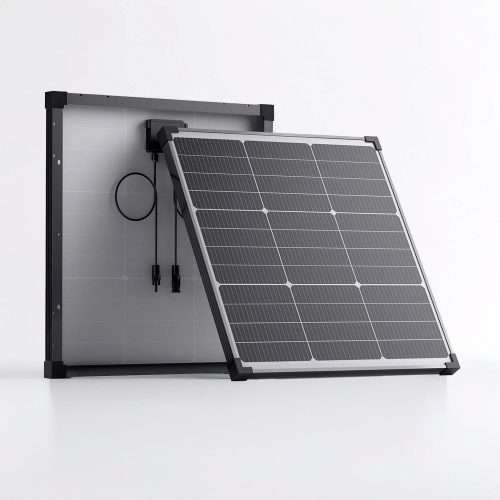
Panel solar transitable de 80 W para uso marino y vehículos recreativos, semirrígido y ligero.
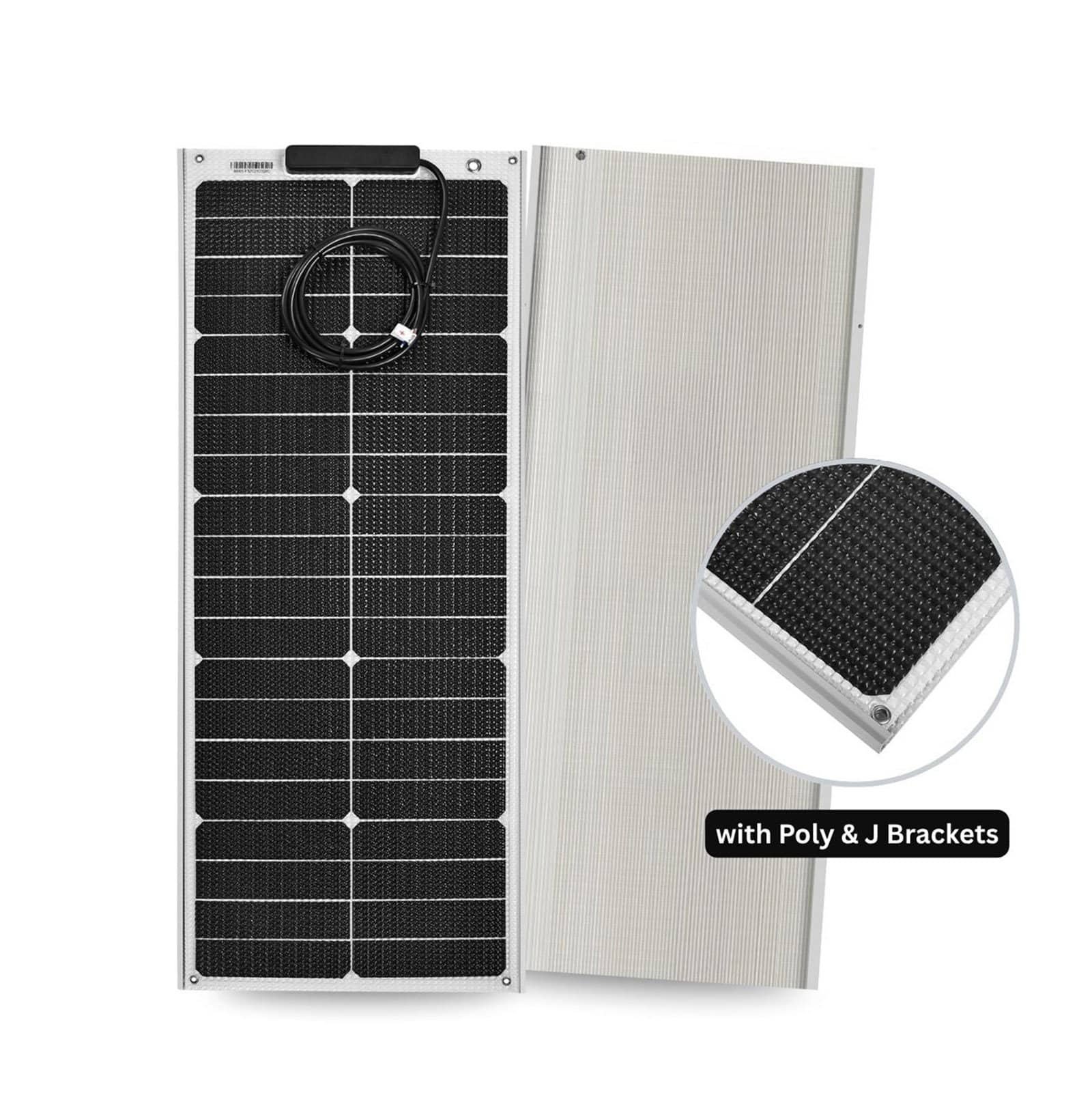
Este panel solar transitable de 80 W se envía en un laminado sin marco de 4 mm que se apila de forma compacta y es ideal para canales de instalación en embarcaciones, vehículos recreativos y sistemas aislados, donde los módulos de vidrio con marco no llegan. Está construido con 40 celdas de contacto posterior de corte de cuarto de pulgada, con una potencia aproximada de 198 W/m². La lámina frontal de ETFE y la placa de soporte estructural distribuyen el tránsito peatonal a lo largo del laminado en lugar de concentrarlo en una sola celda. Con solo 4 mm de grosor y aproximadamente 2,4 kg de peso, ofrece dimensiones y voltaje personalizables.
$0.88
Precio: $0.39 ~ $0.88 | Stock >2000000 vatios
Cantidad mínima de pedido: 100 unidades
Panel solar semirrígido transitable de 80 W con dimensiones de 990 × 407 × 4 mm: una tira estrecha diseñada para cubiertas laterales, techos de cabina y los huecos entre las rejillas de ventilación del techo, donde un módulo de vidrio con marco no cabe. Celdas de contacto posterior, lámina frontal de ETFE, placa de soporte estructural. El tamaño, la potencia, el voltaje y el montaje son configurables a través del programa OEM/ODM de Couleenergy. Cantidad mínima de pedido: 100 unidades.
El CLM-080ME es un panel solar semirrígido transitable de 80 W para aplicaciones marinas, de vehículos recreativos, balcones y fabricantes de equipos originales (OEM). Mide 990 × 407 × 4 mm y pesa alrededor de 2,4 kg, aproximadamente una sexta parte del grosor de un módulo de vidrio con marco y cerca de la mitad del peso por metro cuadrado.
Este formato existe para solucionar un problema. En un barco o una furgoneta, la superficie útil rara vez es un rectángulo perfecto. Suele ser una franja entre una escotilla y una barandilla, un tramo de cubierta lateral o una banda de techo sobrante tras las rejillas de ventilación y la baca. Un panel con marco de mayor capacidad que este no ofrece ninguna utilidad en esa zona, porque no encaja.
¿Qué te ofrece un tamaño de 990 × 407 mm?
Cuarenta células de contacto posterior de corte radial se ubican en dos columnas dentro del laminado. Esto equivale a unos 198 vatios por metro cuadrado, la misma densidad de potencia que paneles transitables dos o tres veces más grandes, en una superficie que no interfiere con los obstáculos.
Dividir cada celda en cuatro también reduce la corriente que transporta cada pieza. La pérdida resistiva aumenta con el cuadrado de la corriente, por lo que dividirla en cuatro elimina la mayor parte de la pérdida de cableado que, de otro modo, se produciría en un módulo estrecho.
| Potencia nominal | 80 W |
| Densidad de potencia | ~198 W/m² (eficiencia del módulo ~19,9%) |
| Huella | 990 × 407 mm (0,403 m²) |
| Espesor | 4 mm, sin marco |
| Peso | ~2,4 kg (~6 kg/m², frente a 10–12,5 kg/m² para vidrio con marco) |
Cómo se construye el panel
Un módulo de vidrio cumple dos funciones a la vez: genera energía y protege las celdas. Si se separan esas funciones, el panel se vuelve más ligero sin debilitarse.
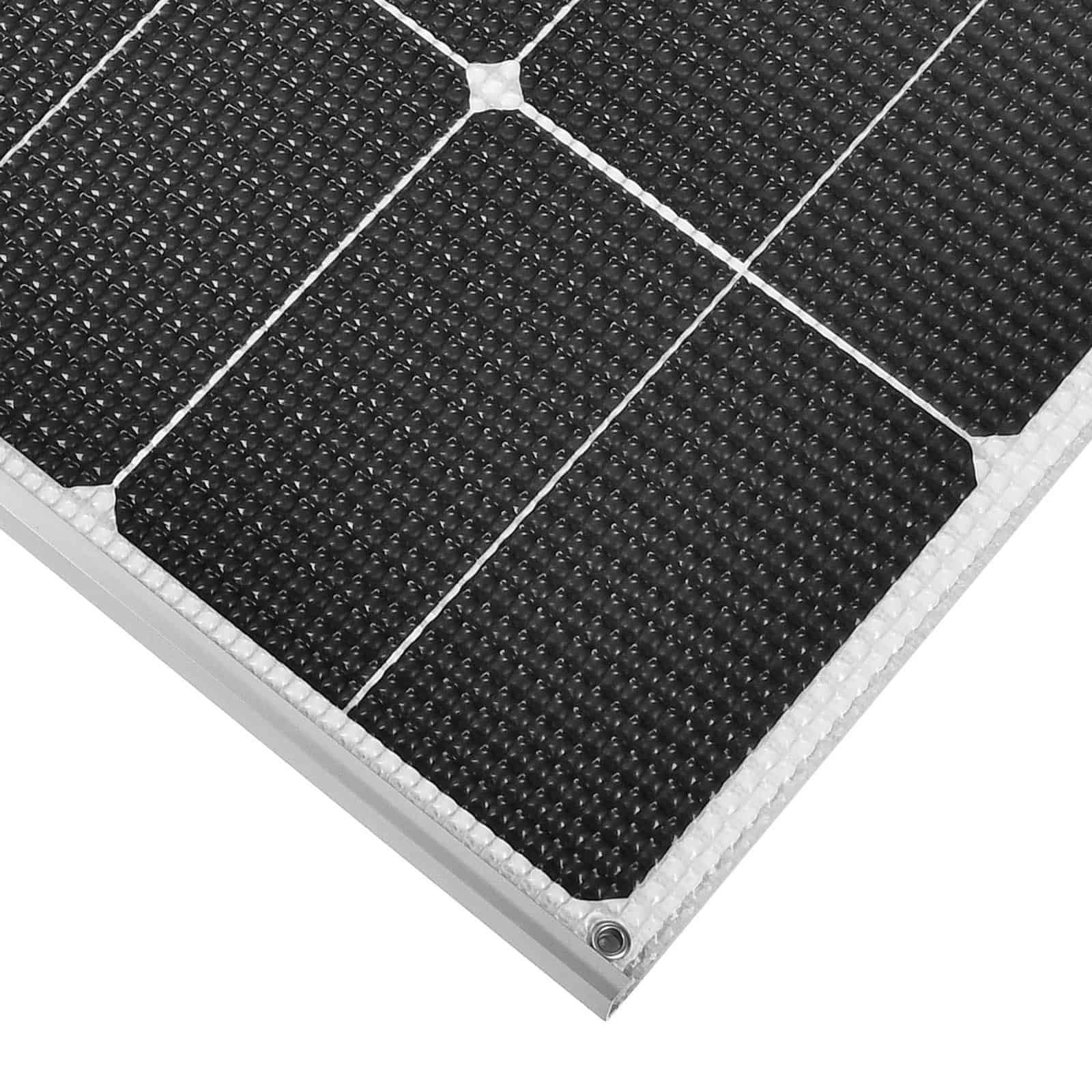
- Lámina frontal de ETFE — Una película de fluoropolímero texturizada con alta transmisión de luz, fuerte resistencia a los rayos UV y una superficie que repele la sal y la suciedad. La textura también proporciona mayor agarre al caminar.
- Encapsulante — sella y amortigua el plano celular.
- Células de contacto posterior — HPBC o ABC, con una eficiencia de celda superior a 25,2%, sin barras colectoras frontales que den sombra a la oblea.
- Placa de soporte estructural — la capa que permite caminar sobre el panel. Distribuye la carga puntual a lo largo del laminado, de modo que ninguna celda individual soporta la presión.
Sin esa placa, un panel de ETFE es un panel flexible con una lámina frontal más rígida, y aun así se agrietará al pisarlo. La placa marca la diferencia. Puede elegir el material:
| compuesto de fibra de vidrio | Rigidez y peso equilibrados. La opción por defecto para cubiertas curvas y trabajos generales en embarcaciones o vehículos recreativos. |
| fibra de carbono | Máxima rigidez por kilogramo. Para cubiertas donde el peso es un factor crítico y embarcaciones de alto rendimiento. |
| Lámina de aluminio | Muy rígido, pesado, distribuye bien el calor. Adecuado para montaje plano. |
| Núcleo compuesto | Ligero y moderadamente rígido. Adecuado para programas de gran volumen con presupuestos ajustados. |
¿Se puede caminar sobre ella?
Sí, pero con una condición que conviene aclarar, ya que ninguna norma internacional define el término "transitable a pie".“
Apoyada uniformemente sobre un sustrato sólido, la placa de soporte distribuye el peso entre numerosas celdas, lo que permite caminar con normalidad sobre calzado de suela blanda. Sin embargo, si se coloca el mismo panel sobre un hueco, la pisada se convierte en una carga de flexión, lo que supone un caso diferente y mucho más exigente.
Por lo tanto, la carga que soportará una configuración transitable depende de la placa de soporte y de la superficie que se encuentra debajo. Indíquenos el tipo de sustrato al realizar su consulta y le confirmaremos el valor para su proyecto, en lugar de proporcionarle una cifra general que podría no ser aplicable.
Controlador de carga: utilice MPPT, no PWM.
Con una tensión máxima de 25,2 V, este panel no es un panel PWM. Un controlador PWM reduce la corriente del conjunto al voltaje de la batería, lo que en este caso significa aproximadamente 3,4 A a unos 13,6 V, cerca de 46 W recolectados de un módulo de 80 W.
Un controlador MPPT convierte el exceso de voltaje en corriente de carga adicional. Utilice uno.
| Banco de baterías de 12 V | Un panel conectado a un controlador MPPT. Buen margen de seguridad incluso en altas temperaturas. |
| Banco de baterías de 24 V | Dos paneles en serie (~50 V a máxima potencia). |
| Banco de baterías de 48 V | Cuatro paneles en serie. Compruebe la tensión de circuito abierto (Voc) en clima frío comparándola con el límite de entrada de su controlador. |
| Se requiere PWM de 12 V | Reconfiguramos el conteo de la serie a un Vmp cercano a 18 V. Indíquelo en su consulta. |
Un solo panel no cargará un banco de 24 V. El calor reduce el Vmp a unos 22 V en una plataforma conectada a tierra, por debajo del voltaje al que absorbe un banco de 24 V, y los controladores MPPT de tipo reductor disminuyen el voltaje en lugar de aumentarlo.
Opciones de montaje
Los pasacables de esquina son estándar. El método de montaje afecta tanto al esfuerzo de instalación como a la temperatura de funcionamiento, ya que un panel adherido pierde flujo de aire trasero.
| Adhesión adhesiva | Perfil más bajo y la opción habitual para superficies peatonales. Genera más calor; su eliminación es difícil. |
| Soporte o riel | Mantiene una cámara de aire, funciona a menor temperatura y es fácil de mantener. Además, aumenta la altura. |
| Arandelas con separadores | Trayectoria intermedia: cierto flujo de aire, altura moderada, fácil de retirar. |
Las células de contacto posterior pierden aproximadamente 2,61 TP3T de potencia por cada 10 °C de aumento de temperatura, lo cual es mejor que los tipos de células convencionales, pero no inmunes. Donde sea posible, deje un espacio de aire.
Rendimiento en sombra parcial
Las celdas de contacto posterior se degradan gradualmente bajo polarización inversa, por lo que una celda sombreada permite el paso de corriente en lugar de obstruir el circuito. Esto ayuda a contrarrestar las finas sombras en movimiento típicas de una cubierta aparejada: una driza, un estay, una antena, un cable de barandilla.
La ventaja tiene un límite medido. Las pruebas independientes la sitúan en torno a tres celdas sombreadas; más allá de eso, las celdas de contacto posterior y las convencionales se comportan de forma similar. Un brazo extendido a lo largo del panel es un problema de diodo de derivación y de diseño, no de tecnología de celdas. Nuestra guía para rendimiento de sombreado en diferentes tipos de celdas cubre la evidencia.
Aplicaciones típicas
- Marina — superestructuras de veleros, cubiertas laterales, techos rígidos de catamaranes, cubiertas de cabina, embarcaciones auxiliares y equipos de muelle.
- Conversión de autocaravanas, furgonetas camper y furgonetas — Franjas en el techo entre las rejillas de ventilación, los aires acondicionados y las estructuras; carga suplementaria junto con conjuntos de baterías más grandes.
- Balcón y fachada — paneles montados sobre barandillas y repisas estrechas donde el peso del vidrio supone un problema estructural.
- Vehículos especiales — Carrocerías de servicio, remolques, unidades refrigeradas y equipos móviles con techos curvos o estrechos.
- productos OEM — Armarios para exteriores, estaciones de telemetría y sensores, unidades de alimentación portátiles, equipos con integración solar.
Qué podemos personalizar
La configuración anterior es una compilación de referencia. Casi nada en ella es fijo.
| Dimensiones y forma | Adaptado al espacio disponible para su instalación. Disponibles con contornos no rectangulares y radios de esquina. |
| Fuerza | Configurado según la disposición de las celdas y la cobertura dentro de su área de influencia. |
| Voltaje | El número de series debe coincidir con el de su controlador o banco de baterías. |
| Placa de soporte | Núcleo de fibra de vidrio, fibra de carbono, aluminio o material compuesto. |
| Características de montaje | Posiciones de ojales, bordes adheridos, provisiones para soportes o rieles. |
| Caja de conexiones y cables | Posición de salida, longitud del cable, tipo de conector, perfil de la caja. |
| Diodos de derivación | 1–2, determinados por el patrón de sombreado y el diseño. |
| Apariencia | Lámina posterior negra, blanca o transparente. Con o sin marca. |
Pedidos, muestras y asistencia
Envíanos cuatro datos para que podamos empezar: la superficie de montaje y sus dimensiones exactas, la tensión objetivo, el modelo del controlador y la potencia deseada.
Antes de la fabricación, recibirá un plano acotado y una especificación eléctrica prevista. Las muestras se fabrican siguiendo el plano aprobado y se validan según el uso real del producto: montaje, carga, exposición a la intemperie y pruebas de corrosión salina para aplicaciones marinas. Solo entonces se inicia la producción piloto.
| Cantidad mínima de pedido | 100 piezas |
| Muestreo | Disponible antes de la producción piloto; el plazo de entrega se confirma previa consulta. |
| Marca blanca | Numeración de serie personalizada, logotipos impresos y embalaje de marca a partir del volumen piloto. |
| Garantía del producto | 3 años |
| Garantía de rendimiento | 10 años |
| Mercados atendidos | América del Norte y Europa, además de programas OEM a nivel mundial. |
Para distribuidores y revendedores
Hay dos puntos importantes si su objetivo es la reventa en lugar de la instalación.
Sin cristales rotos, sin reclamaciones por roturas. Los paneles agrietados son una de las reclamaciones por daños más comunes en el transporte de paneles solares, y suelen aparecer después de que se haya firmado la recepción del contenedor. Un laminado de ETFE sin fibra de vidrio elimina este tipo de fallo.
Un comprador diferente y un margen diferente. El vidrio enmarcado compite casi exclusivamente por precio. Los paneles semirrígidos transitables están pensados para clientes del sector náutico, de autocaravanas, de furgonetas camper y de zonas aisladas que necesitan un formato que un panel estándar no puede ofrecer, lo que permite un margen de beneficio mayor y un catálogo que no se rige por las fluctuaciones de precios de las materias primas.
Preguntas frecuentes
¿Se puede caminar sobre el CLM-080ME?
Sí, en configuraciones transitables, cuando el panel se apoya uniformemente sobre un sustrato sólido. La placa de soporte distribuye el peso entre varias celdas. Si se coloca sobre un espacio, la misma pisada se convierte en una carga de flexión, así que indíquenos el tipo de sustrato y le confirmaremos la capacidad de carga para su instalación.
¿Puede cargar directamente una batería de 12 V?
Solo mediante un controlador MPPT. A 25,2 V, el voltaje se sitúa muy por encima de los 12 V, por lo que un controlador PWM desperdiciaría aproximadamente 401 TP3T de la salida. Un controlador MPPT convierte ese voltaje excedente en corriente de carga adicional.
¿Puede un solo panel cargar un banco de 24 V?
No. El calor reduce el Vmp a unos 22 V en una plataforma conectada a tierra, por debajo del voltaje de absorción de un banco de 24 V, y los controladores MPPT de tipo reductor no pueden aumentar el voltaje. En su lugar, conecte dos paneles en serie.
¿Cuánto más ligero es que un panel de vidrio?
Aproximadamente 6 kg/m² frente a 10 a 12,5 kg/m² para un módulo de vidrio enmarcado, con un espesor de 4 mm en lugar de aproximadamente 30 mm. Para este panel, eso equivale a unos 2,4 kg.
¿Puedes hacerlo de otro tamaño o potencia?
Sí, y es la solicitud más frecuente que recibimos. Envíenos las dimensiones exactas de su área de instalación y diseñaremos la distribución de las celdas para que se ajuste a ella. La potencia se determina en función de la distribución y la cobertura.
¿Cómo se sujeta?
Los pasacables de esquina son estándar, y se admiten tanto el pegado adhesivo como los soportes o rieles. El pegado adhesivo ofrece el perfil más bajo, pero genera más calor; un soporte o separador mantiene una cámara de aire y se mantiene más frío.
¿Funciona en sombra parcial?
Ofrecen un mejor rendimiento que las celdas convencionales frente a sombras estrechas, como las producidas por aparejos o antenas, ya que las celdas de contacto posterior se autodesconectan durante la ruptura suave. Esta ventaja disminuye cuando hay tres o más celdas sombreadas, donde la disposición y el número de diodos son más importantes que el tipo de celda.
¿Cuál es la cantidad mínima de pedido?
100 unidades, con muestras disponibles con antelación. Las opciones de marca blanca comienzan con un volumen piloto.
¿Es el ETFE tan duradero como el vidrio?
Durabilidad diferente. El ETFE resiste bien los rayos UV y los impactos, y no se rompe, pero un laminado sin vidrio no tiene una verdadera barrera contra la humedad, por lo que su vida útil a largo plazo depende del encapsulante, el margen del borde y la calidad de la laminación, más que de la película frontal únicamente.
Productos y guías relacionados
- Panel solar semirrígido ligero y transitable de 150 W (CLM-150ME) — el hermano mayor, 1120 × 680 mm.
- Panel solar semirrígido transitable de 290 W — para áreas de terraza y techo más grandes.
- Paneles solares semirrígidos para barcos, furgonetas y muelles. — cómo funciona la pila de capas.
Descargar hoja de datos
Dinos qué necesitas
Productos relacionados

Panel solar monocristalino de 100 W con celdas M10
$0.13Este producto tiene múltiples variantes. Las opciones se pueden elegir en la página de productoPanel solar bifacial TOPCon de 120 W: mayor potencia y menor tamaño.
$0.15Este producto tiene múltiples variantes. Las opciones se pueden elegir en la página de productoMódulo solar monocristalino M10 de 50 W
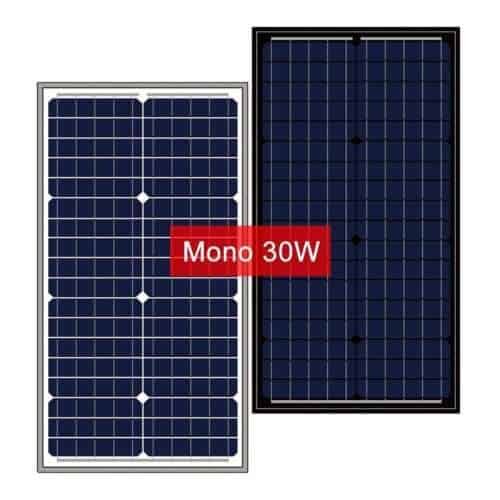
$0.15Este producto tiene múltiples variantes. Las opciones se pueden elegir en la página de productoMódulo solar monocristalino de 30 W
$0.15Este producto tiene múltiples variantes. Las opciones se pueden elegir en la página de producto
 Español
  English
  Français
  Deutsch
  Русский
  العربية