
What the CITT Actually Decided on September 17, 2026
The official release runs to two sentences of substance. The Tribunal terminated its expiry review of the order it continued on March 25, 2021 (RR-2020-001), and rescinded that order. CBSA will no longer collect duties under the Special Import Measures Act (SIMA). The CITT decision record holds the legal detail.
No reasons were published with it. As pv magazine explains, SIMA lets the Tribunal end a review that lacks support from domestic producers. That makes this a procedural ending, not a finding that dumping has stopped.
Why does that distinction matter to a buyer? Because a new complaint can always be filed. If you are building a three-year import program, plan it so a future trade case would hurt your margins, not your ability to supply.
Does the Ruling Affect Your Product? A Quick Scope Check
Most coverage of this news skips the product definition, which is a mistake. The original CBSA definition always excluded modules rated 100 W or less, plus PV built into electrical goods that use the power themselves. Then, in March 2026, a separate interim review (RD-2025-001) carved out flexible modules up to 200 W fixed to curved vehicle surfaces.
So where does your product sit?
| Product | Status under the old order | Effect of the September ruling |
|---|---|---|
| Rigid rooftop or project modules above 100 W | Covered | Duties end |
| Flexible or semi-rigid panels above 100 W for boats, roofs or portable use | Covered | Duties end |
| Flexible modules up to 200 W fixed to curved vehicle surfaces | Excluded since March 2026 | Little change |
| Any module rated 100 W or less | Never covered | No change |
| PV built into a device that uses the power | Never covered | No change |
| Aluminum racking and extrusions | Separate order | Still subject; continued October 1, 2025 |
Here is the practical upshot. If you mainly buy small, embedded or vehicle-mounted modules, your duty position was already clear. The ruling mostly opens doors for rigid modules and larger flexible panels. Everything else stays where it was: classification, valuation, GST/HST, provincial approval, and the separate rules for inverters, batteries and kits. “Tariff-free Chinese solar” is simply the wrong headline.
The Three Gates Every Canadian Solar Order Must Pass
For a decade, the first question from Canadian buyers was about duty. That bottleneck has now moved. In our project work, it shifts from the border to the electrical inspector and the sales channel, so we plan every Canada order around three gates.
| Gate | Who decides | What they need from the manufacturer |
|---|---|---|
| 1. Border | CBSA and your customs broker | Exact model names, rated power, clear descriptions, origin statement, invoice and packing list |
| 2. Approval | Provincial safety authority, certification body, inspector | A frozen design, BOM, electrical data, test evidence and nameplate artwork |
| 3. Channel | Distributor, retailer, insurer, end customer | Warranty terms, serial traceability, manuals, packaging and a support process |
Gate 1 is mostly paperwork, and Gate 2 is where custom projects succeed or stall. Gate 3? That one decides whether you ever see a reorder.
Custom Solar Panels for Canadian RV, Marine, OEM and BIPV Buyers
We are not the cheapest source of standard 400 W rooftop panels, and a buyer who only needs those has plenty of options. Our work fits a different problem: a product, a surface or a brand where a catalogue module does not fit.
| Buyer | The pain point we hear most | The detail that decides the design |
|---|---|---|
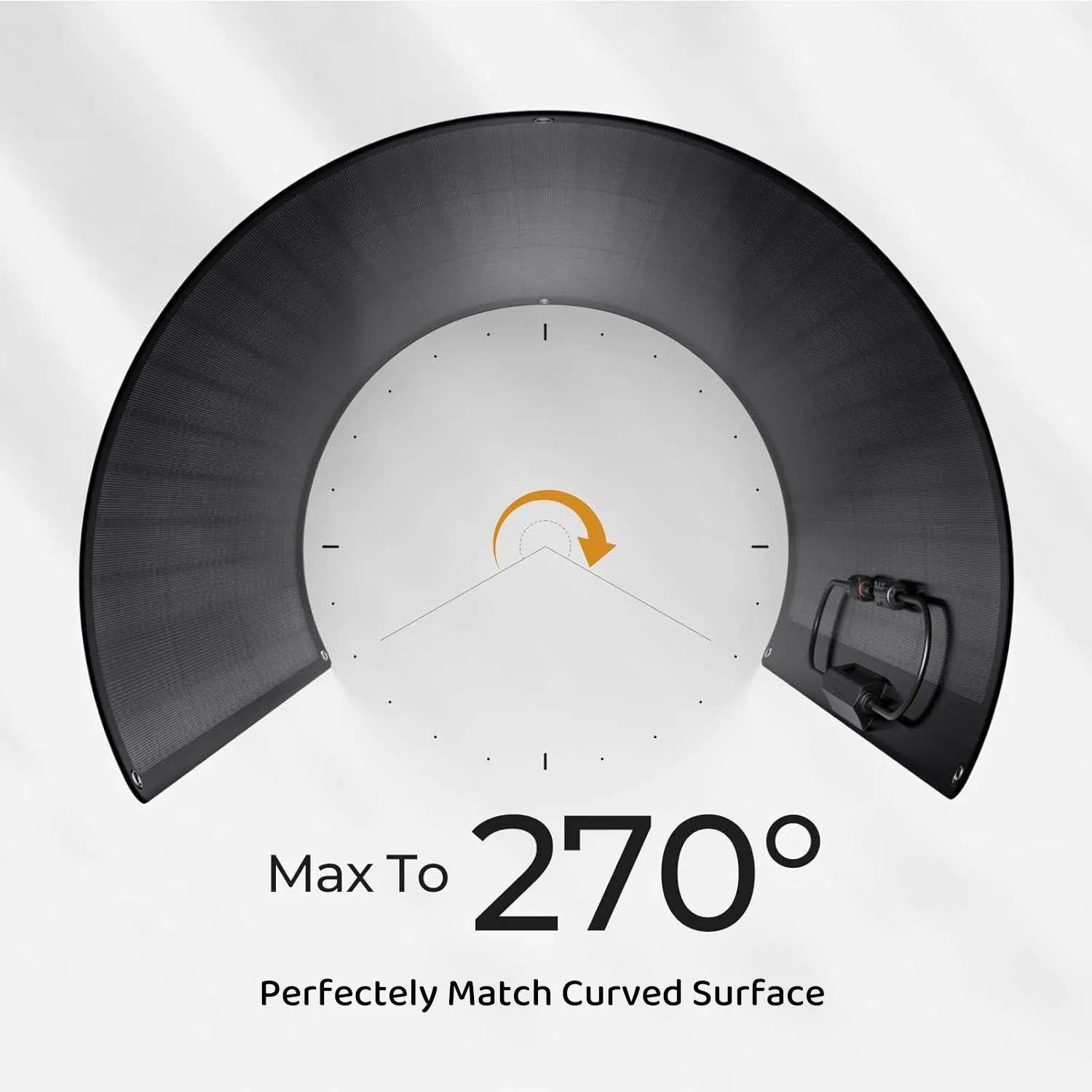
| RV and van-conversion brands | Standard panels leave half the roof unused | Roof keep-outs, bend radius in mm, cable exit |
| Marine integrators | Glass on deck is a hazard; cheap flexible panels fail early | Salt exposure, foot traffic, deck curvature |
| Equipment OEMs | No catalogue module fits the enclosure or the voltage | Voltage window, outline, connector |
| Distributors and private-label brands | Competing on price with identical imports | Label, carton, warranty wording, SKU mix |
| BIPV and architectural teams | Sizes and looks that standard modules cannot match | Dimensions, appearance, approval route for the building |
What an OEM Solar Panel Manufacturer Should Be Able to Change
“Customization available” tells you nothing, so ask which variables a factory can actually move. At our plant, the list looks like this.
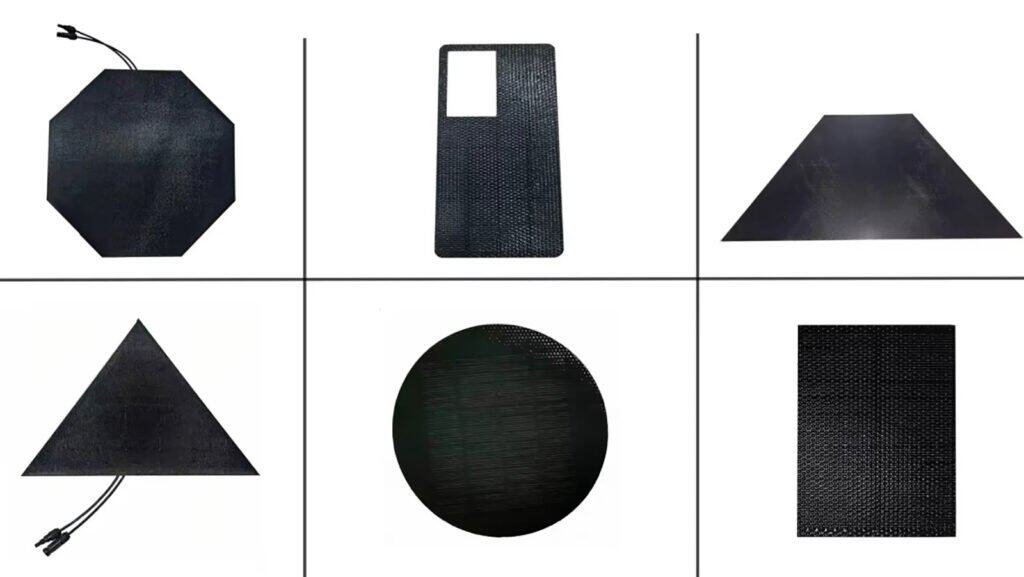
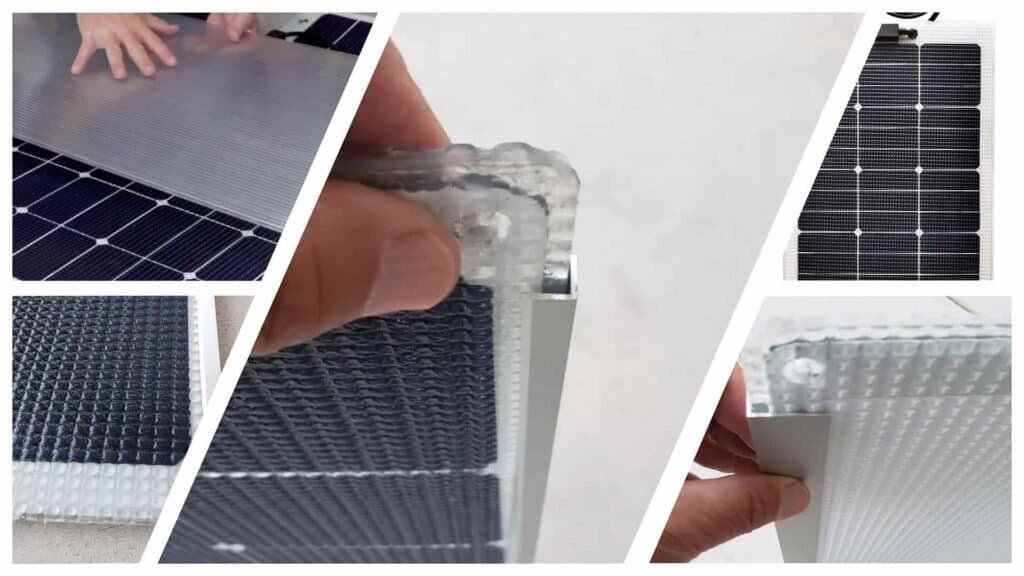
The outline can be compact, narrow, trapezoidal, triangular or curved-edge. Cells can be back-contact (HPBC or ABC), TOPCon, HJT or PERC. The structure can be flexible, semi-flexible, framed, frameless or dual-glass. Beyond that, we set voltage, current, bypass diodes, cables, connectors, finish and mounting features to suit the application.
Projects follow one path: concept, engineering, prototype, testing, production. A sketch, a CAD file or a single sentence about what the product must do is enough to start. Our small-module OEM guide walks through it step by step.
One rule matters more in Canada than almost anywhere else: freeze the design before the approval path starts. Under IEC TS 62915, a change to materials or construction can trigger retesting. Swapping the encapsulant after sample approval is the classic way to lose a season.
Engineering for Canada: Cold-Weather Voltage, Controllers and Plug-In Kits
Cold mornings push voltage above the label
Open-circuit voltage (Voc) climbs as cells get colder. The Canadian Electrical Code handles this in Rule 64-202, which gives installers two methods. They can multiply the label Voc by 125%, a factor based on a −40 °C module. Or they can calculate it from the datasheet coefficient and the site’s lowest daily minimum temperature. ESA’s Bulletin 64-3-4 explains both.
The gap between them is bigger than most people expect. Modern n-type and back-contact modules publish Voc coefficients of about −0.20% to −0.26% per °C. At −30 °C, a panel labeled 22.0 V Voc reads roughly 24.4 to 25.1 V. The 125% default says 27.5 V. Size the controller input and every DC component for the number your installer will actually use, not the one on the label.
Match the panel to the charge controller
Plenty of Canadian RVs and cabins still run 12 V batteries. A panel with a Vmp near 22 V needs an MPPT controller, while a true PWM-friendly 12 V panel needs a Vmp of about 17 to 18 V. Send us the controller model, and we will set the cell count around it.
Do not sell plug-in balcony kits as “Canada-ready”
Ontario’s Electrical Safety Authority (ESA) has issued a flash notice on plug-in PV equipment that sets minimum conditions, starting with a recognized certification mark. In a June 2026 Code File column, ESA’s senior director of engineering wrote that these products are not approved and no Canadian safety standard yet applies. We make balcony modules for Europe, but we will not market them for Canadian homes until a real approval path exists.
Not sure which gate will stop your project? Send the application, the province of use and your controller model. We will tell you what we can document and what your importer should confirm locally. Email info@couleenergy.com or call +1 737 702 0119.
Solar Panel Approval and Import Documents in Canada
Ontario states the rule plainly. According to ESA, electrical products sold or used in the province need approval under Rule 2-022, with a short list of exceptions. Approved products carry one of ESA’s recognized approval marks. Other provinces run their own safety authorities, so confirm the route where the panel will be installed.
For modules installed under the CE Code, the Canadian product standard is CSA C22.2 No. 61730-1. Read its scope carefully if you sell into RVs or boats. It states that specific marine and vehicle requirements are not covered, so those products also answer to their own sector rules.
An IEC test report supports approval; it does not replace it. Our catalogue modules have published reports on our certificates page. Custom modules are designed to the same standards, and Canadian approval for a specific custom build is something we plan with you from day one.
On the customs side, CBSA’s Memorandum D11-11-3 explains how to request a binding advance ruling on tariff classification. Applications now run through the CARM Client Portal, so register before you need it.
Our standard Canada document pack:
- Commercial invoice with exact model numbers and rated power
- Packing list, transport document and origin statement
- Datasheet with Pmax, Voc, Isc, Vmp, Imp and temperature coefficients
- Installation manual, nameplate artwork, serial list and BOM summary
- Applicable test reports for the exact model
- Warranty statement and claim process
How to Vet a Chinese Solar Panel Manufacturer: Six Questions
Photos and brochures all look alike, but the answers to these questions do not. Ask them of every supplier on your shortlist, including us.
| Ask | A good answer | A red flag |
|---|---|---|
| Can I see the test report for this exact model? | A report naming the model, lab and date | A “series” certificate for a different model |
| What happens if I change the size or laminate? | Explains which tests repeat and why | “The same certificate covers it” |
| What is the Voc on my coldest morning? | Works it out with the coefficient and the 125% rule | Repeats the label value |
| Can you show EL images from my production batch? | Yes, linked to serial numbers | Only marketing photos |
| How does a warranty claim reach you from Canada? | A written process built on serial traceability | “Ship it back to China” |
| Which Incoterm do you suggest, and why? | Discusses who acts as importer of record | Pushes DDP without asking |
Private-Label Solar Panels: What You Actually Own
A logo sticker is not a brand, and Canadian channels judge a private-label line by what stands behind the label, so settle these points before launch:
- Who is the warrantor in Canada. Your customers will call you, not us. Agree how claims, photos and replacements flow back to the factory.
- Whose name is on the nameplate. It must match the approval file exactly.
- Serial format. Each serial should trace to a production batch and its test data.
- Language on retail packaging. Under the Consumer Packaging and Labelling Act, prepackaged consumer products need key label details in English and French. Products sold only for commercial or industrial use are exempt. Quebec adds its own rules.
- What makes the line yours. A distinctive size, voltage or finish is far harder to copy than a logo.
Wholesale Solar Panel Orders: From One Sample to a Container
You do not need a container to start, because most of our Canadian relationships begin with a single sample.
| Path | Best for | What you confirm |
|---|---|---|
| Sample | New OEMs, designers | Fit, finish, electrical data, documents |
| Pilot order | Distributors testing a line | Market response, packaging, claims process |
| Project order | EPCs, BIPV, industrial | BOM, delivery date, site approval |
| Container order | Established importers | Loading plan, Incoterm, importer of record |
Commercial basics: our small-module MOQ starts at 100 pieces. Catalogue small modules carry a 3-year product and 10-year performance warranty. Warranty terms for custom builds, sample time and production lead time are written into each quotation. We quote EXW, FOB, CIF/CFR or DAP. DDP gets careful handling, because it makes someone the importer of record in Canada.
Seven Mistakes Canadian Buyers Make After the Duty Ruling
- Reading the ruling as an approval. It changes customs, not the electrical code.
- Expecting a landed-cost drop on small panels. Modules of 100 W or less never carried these duties.
- Forgetting the racking. Chinese aluminum extrusions are still under their own order.
- Sizing controllers from the label Voc. Canadian winters and Rule 64-202 both push the number up.
- Changing materials after the sample is approved. That can restart testing.
- Launching a private label with no Canadian claims path. The first failed panel will test it.
- Listing plug-in balcony kits. Ontario ESA says none are approved today.
What We Will Not Claim
- That Chinese solar products are now duty-free in Canada.
- That any panel is approved for every province.
- That a custom module carries a certificate it has not earned. We tell you what exists and what a new build would need.
- That we replace your customs broker or electrical engineer. We give them data; they sign off.
If another supplier promises more, ask for it in writing.
Request a Quote for Canada-Ready Solar Panels
A vague RFQ gets questions back. These seven lines change our answer the most:
- Application: RV, marine, equipment, rooftop, BIPV or retail line
- Energy target: watts, or better, watt-hours per day
- Size limits: maximum length, width, thickness and weight
- Electrical match: battery voltage and controller model
- Quantity: sample, pilot and yearly forecast
- Branding: none, nameplate only or full private label
- Destination: province of use and delivery port or city
Prefer email? This button opens a pre-filled RFQ template.
Email Your RFQ »Frequently Asked Questions
Has Canada removed anti-dumping duties on Chinese solar panels?
For the covered goods, yes: the CITT rescinded the order on September 17, 2026. Classification, taxes, approval rules and duties on aluminum racking still apply.
Were solar panels under 100 W ever subject to these duties?
No. The order always excluded modules rated 100 W or less, and PV built into devices that use the power. Since March 2026, some flexible vehicle modules up to 200 W were excluded as well.
Do imported solar panels need approval in Ontario?
Generally, yes, under Rule 2-022. A few exceptions exist, but check before assuming your product fits one.
What is the MOQ for private-label solar panels?
Our small modules start at 100 pieces, while new laminates or outlines are quoted per project.
Who should be the importer of record?
Usually the Canadian distributor or brand owner, working with its customs broker. That keeps classification, taxes and product liability with the party that sells the panel in Canada.
Can I sell plug-in balcony solar kits in Canada?
Not today. Ontario ESA says they are not approved, and no Canadian safety standard yet covers them.
Key Takeaways
- The ruling ends duties on covered modules above 100 W. It approves no product.
- Panels of 100 W or less, and PV built into devices, were never covered.
- Chinese aluminum racking still carries its own duties.
- Plan every order around three gates: border, approval and channel.
- Size controllers for Canadian cold, using Rule 64-202.
- Build private-label lines on a real warranty path and a real product difference.
Sources and How This Article Was Checked
We read each primary source directly and cross-checked trade news against official records. The Tribunal’s full reasons were not published at the time of review. This is public guidance, not legal advice. Last reviewed: September 2026.
- CITT news release, September 17, 2026
- CITT decision record
- pv magazine, September 21, 2026
- CBSA, final determination and product definition (2015)
- CITT, aluminum extrusions order continued, October 1, 2025
- CBSA Memorandum D11-11-3, Advance Rulings for Tariff Classification
- ESA, Exceptions to Product Approval Requirements
- ESA Bulletin 64-3-4, Rule 64-202 PV source circuit voltage
- ESA Flash Notice, Plug-In Photovoltaic Equipment and Systems
- Electrical Business, Code File, June 2026
- SCC listing, CSA C22.2 No. 61730-1:19
- Competition Bureau, Consumer Packaging and Labelling Act
- IEC TS 62915, retesting guidance for PV modules
- Couleenergy: No More AD/CVD on Chinese PV Modules in Canada
You Bring the Application. We Engineer the Solar.
Tell us what your product or project has to do in Canada. We will come back with a proposed configuration, the documents we can supply and the points your importer should confirm. Email info@couleenergy.com or call +1 737 702 0119.
Custom Solar »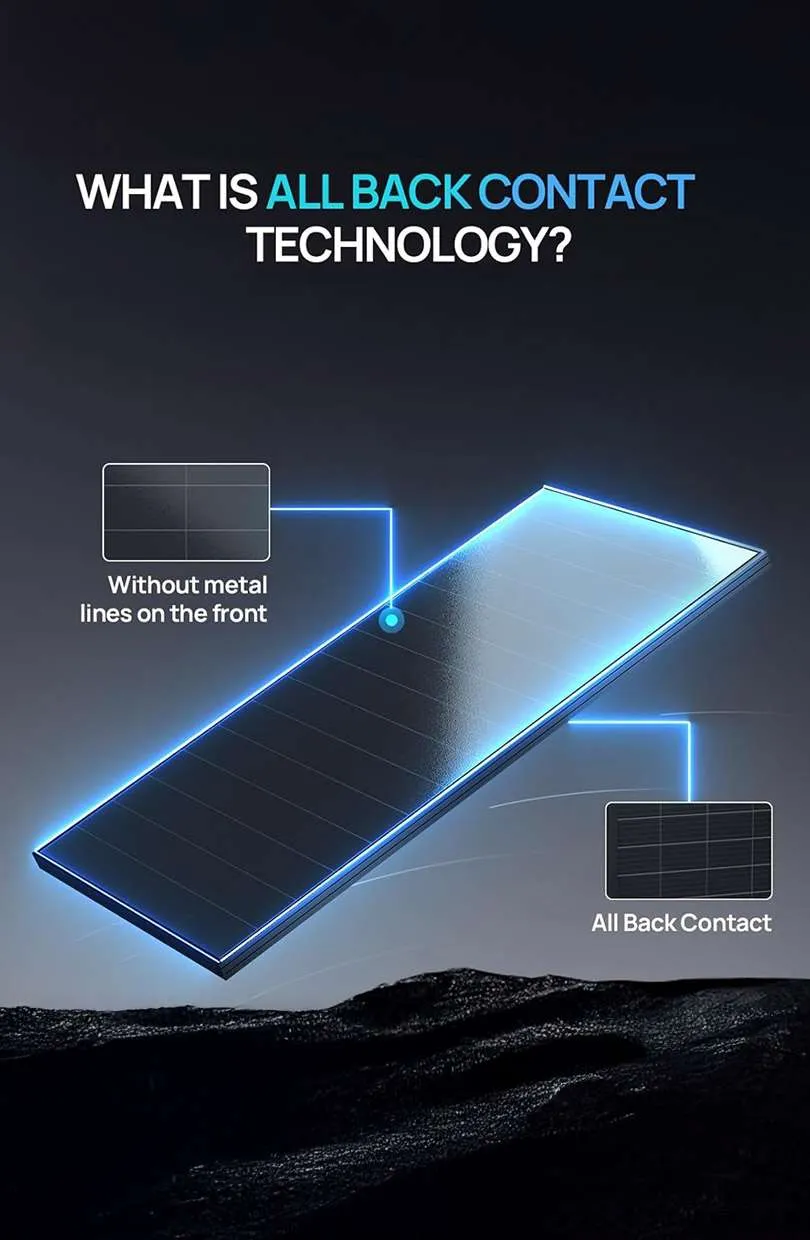

 English
  Español
  Français
  Deutsch
  Русский
  العربية