
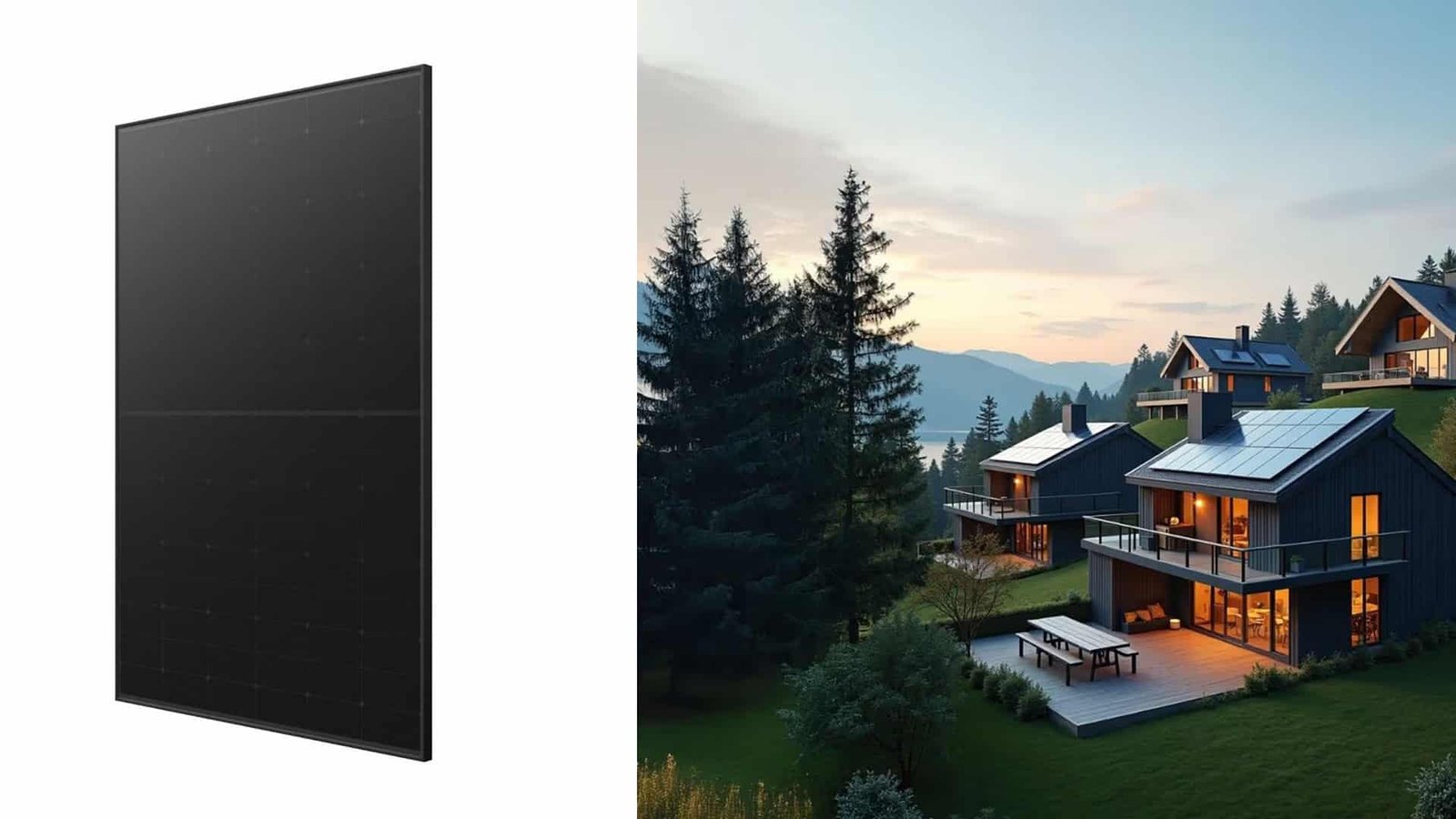
HPBC (Hybrid Passivated Back Contact) solar cells represent a major advancement in solar technology. This guide explains the key features that make HPBC solar modules deliver superior performance in real-world installations.
1. Full Back-Contact Architecture
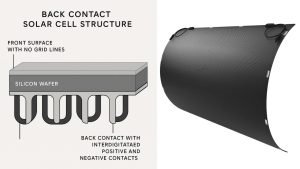
All electrical contacts—both positive and negative—are positioned on the rear of the cell.
The front surface has no metal grid lines, no busbars, no obstructions. This leaves the entire front face completely clear to capture sunlight.
This innovative back-contact cell architecture eliminates front-surface shading losses that reduce efficiency in conventional solar panels.
✅ What this means for you:
- More light reaches the solar cell without front-surface blockage
- Higher power generation per square meter
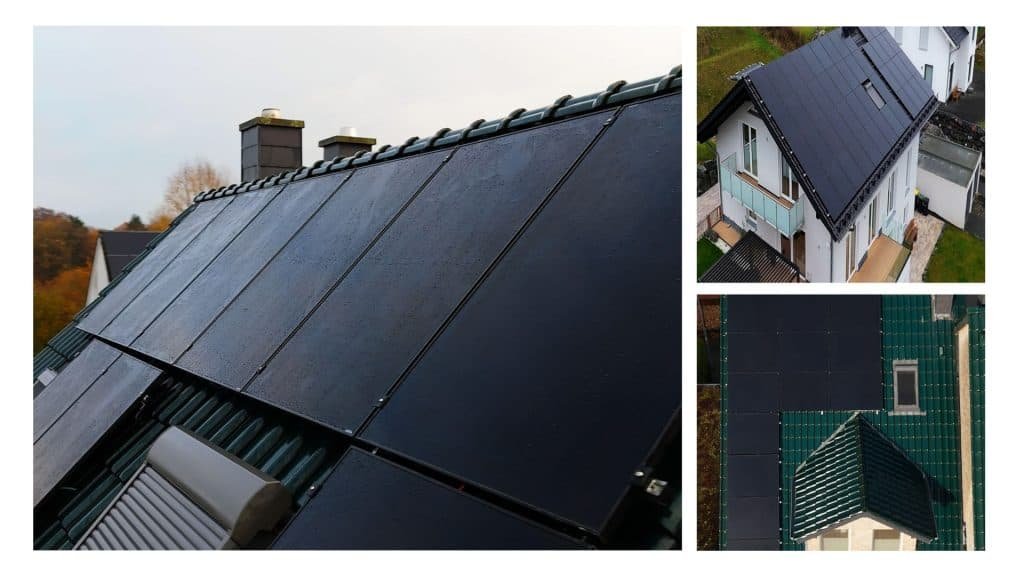
- Premium all-black appearance with no visible wires or grid lines
Think of traditional solar panels like looking through a fence—the metal lines block some sunlight. HPBC removes that fence entirely.
Zero Busbar (0BB) Innovation
HPBC completely eliminates busbars (the thick metal strips that collect electricity).
Benefits:
- Adds approximately 5W more power per solar module (based on standard 2382×1134mm module size)
- Eliminates a common failure point for microcracks and thermal stress
- Improves bifaciality (the panel’s ability to capture light from both sides)
Source: LONGi Hi-MO X10 technical specifications
2. Higher Conversion Efficiency
HPBC achieves some of the highest efficiency rates in the solar industry today.
| Specification | Performance | Verification |
|---|---|---|
| Cell Efficiency | 26.6% in commercial production | LONGi official specs |
| Module Efficiency | 24-25% for finished panels | Hi-MO X10 datasheet |
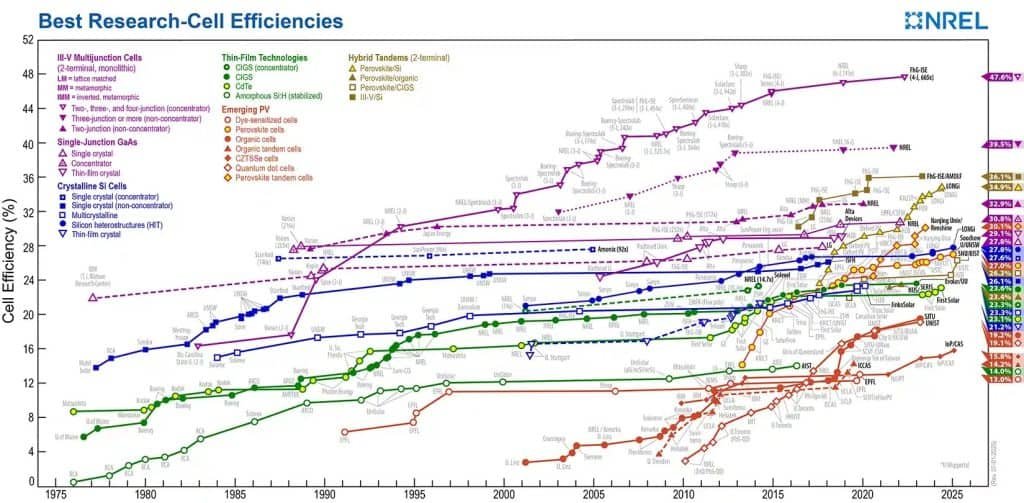
| World Record | 25.4% module efficiency | Fraunhofer ISE (Oct 2024) |
| Maximum Power Output | 670W per module | Commercial production spec |
Real-World Advantage
An HPBC solar module generates 5-7% more power per square meter than mainstream PERC PV panels and 1-2% more than standard TOPCon modules.
Practical example: A 30 m² residential roof with HPBC panels generates the same electricity as a 32-33 m² roof with PERC panels. You need less space for the same power output.
For European residential installations where roof space is limited, this advantage is significant.
World record verification: NREL Champion Module Efficiency Chart | Fraunhofer ISE certification October 24, 2024
Bipolar Hybrid Passivation Technology
LONGi’s proprietary passivation system increases open-circuit voltage to 745mV. This directly improves cell efficiency and power generation.
The uniform passivation also minimizes UV-induced degradation, protecting the panel’s performance over time.
3. Excellent Low-Light Performance
The clear front surface and advanced anti-reflection coatings help HPBC modules capture more energy during challenging conditions.
Performance improvements (manufacturer specifications):
- 12% reduction in short-wave light reflection
- 2.25% increase in short-circuit current
- Better energy capture during cloudy days, mornings, and evenings
ℹ️ Data transparency note: While manufacturer field tests show improved low-light performance, comprehensive independent testing data is still emerging. The theoretical benefits are sound—reduced front-surface shading enables better diffuse light capture. We recommend requesting specific low-light performance data (measured at 200-400 W/m²) when evaluating suppliers.
For European installations where annual sunshine hours are lower than equatorial regions, this characteristic can increase total energy yield over the system’s lifetime.
4. Superior Shade Tolerance
Partial shading has always been solar’s biggest weakness. HPBC addresses this with revolutionary technology.
Built-In Shading Optimizer
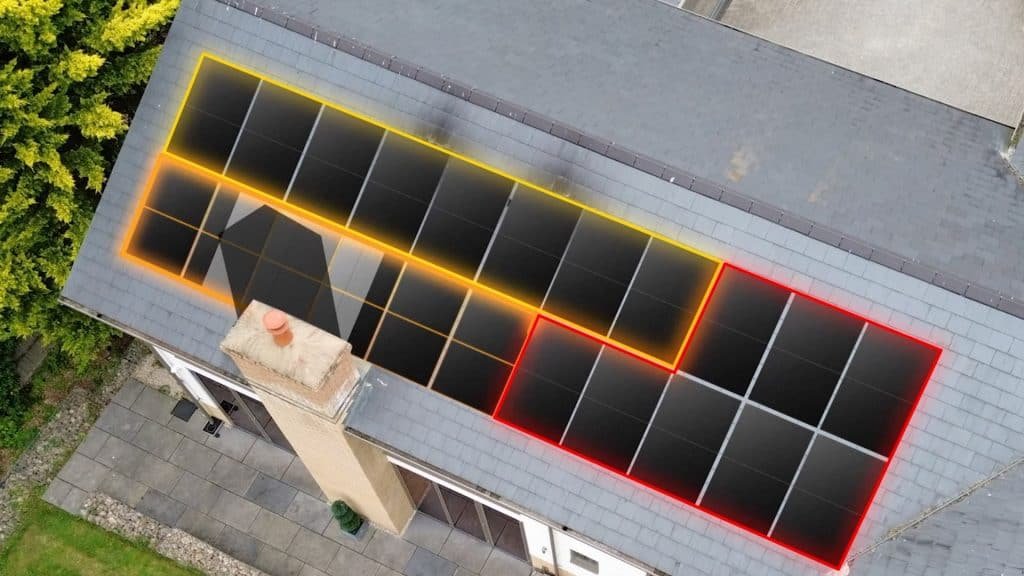
The technology includes intelligent current management that redirects electricity around shaded areas. When a leaf or branch casts a shadow, current flows through alternative pathways instead of being blocked.
✅ Independently verified performance data:
- 70% reduction in shading-related power losses compared to TOPCon panels (LONGi field testing)
- Significantly higher output maintained in partial shade conditions
- 10%+ daily energy gains in dynamic shading scenarios (CPVT testing)
Testing verification: China National Photovoltaic Quality Inspection Center (CPVT), LONGi EU technical documentation, PV Magazine coverage (March 2025)
Critical Safety Advantage
When cells get shaded, they can experience the hot-spot effect, causing dangerous overheating.
| Panel Type | Temperature Under Identical Shading | Safety Impact |
|---|---|---|
| HPBC modules | ~80°C | Lower fire risk |
| TOPCon panels | >130°C | Higher thermal stress |
| Temperature Difference | Up to 50°C lower | Extended lifespan |
Lower hotspot temperatures mean reduced fire risk, less thermal stress, and longer panel lifespan.
Documented case study: One European installation with tree shading saw production increase by nearly 18% after switching from standard panels to HPBC modules (LONGi EU case study, 2024).
If your roof has chimneys, dormers, nearby trees, HVAC units, or complex orientations, HPBC modules will maintain significantly better performance than conventional designs.
5. Better Temperature Performance
Solar panels lose efficiency as they heat up. HPBC panels handle heat better than alternatives.
The power temperature coefficient measures how much efficiency a solar panel loses for each degree Celsius above standard test conditions (25°C).
| Technology | Temperature Coefficient | Verification |
|---|---|---|
| HPBC | -0.26%/°C | LONGi Hi-MO X10 certified |
| TOPCon | -0.29% to -0.32%/°C | Industry average |
| PERC | -0.34% to -0.37%/°C | Industry average |
Real-World Impact Calculation
Your solar panels reach 60°C during summer (common in hot climates). Standard test conditions use 25°C as baseline.
Temperature rise: 60°C – 25°C = 35°C
Power loss calculations:
- HPBC solar panel: 35°C × 0.26% = 9.1% power loss
- TOPCon solar panel: 35°C × 0.30% = 10.5% power loss
- PERC sola panel: 35°C × 0.35% = 12.3% power loss
🎯 Result: The HPBC panel produces 1.4% more actual power than TOPCon and 3.2% more than PERC in hot conditions (60°C operating temperature).
This advantage compounds over the module’s 30-year lifetime. In hot climates or during summer months, you’ll see measurably higher cumulative energy production.
6. High Reliability & Extended Lifespan
HPBC solarmodules offer exceptional long-term durability backed by rigorous testing.
Minimal Degradation Rates
Long-term photovoltaic module degradation directly impacts the lifetime energy production and financial returns of solar installations.
| Time Period | HPBC | PERC | TOPCon |
|---|---|---|---|
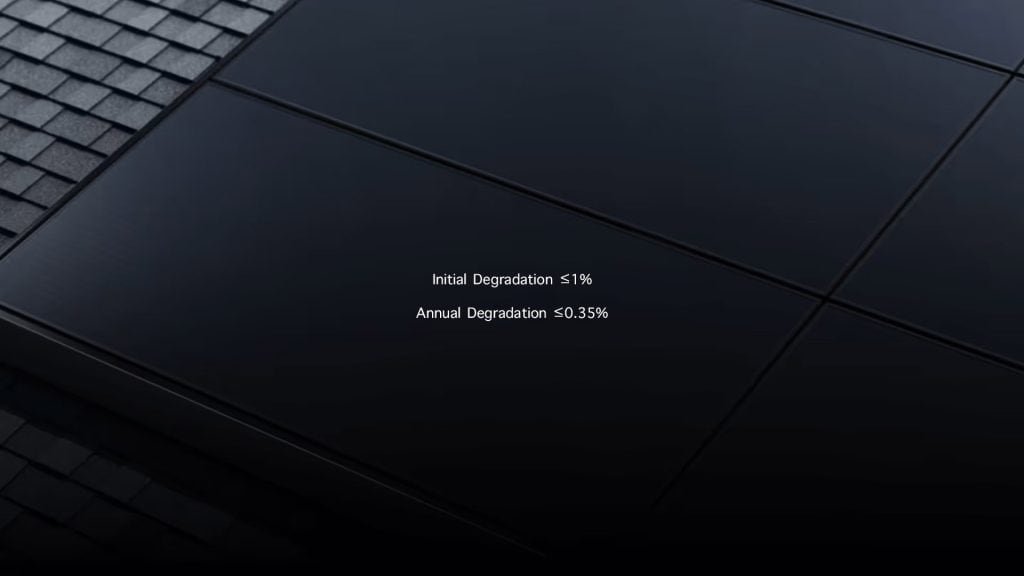
| First Year | 1% | 2% | 1% |
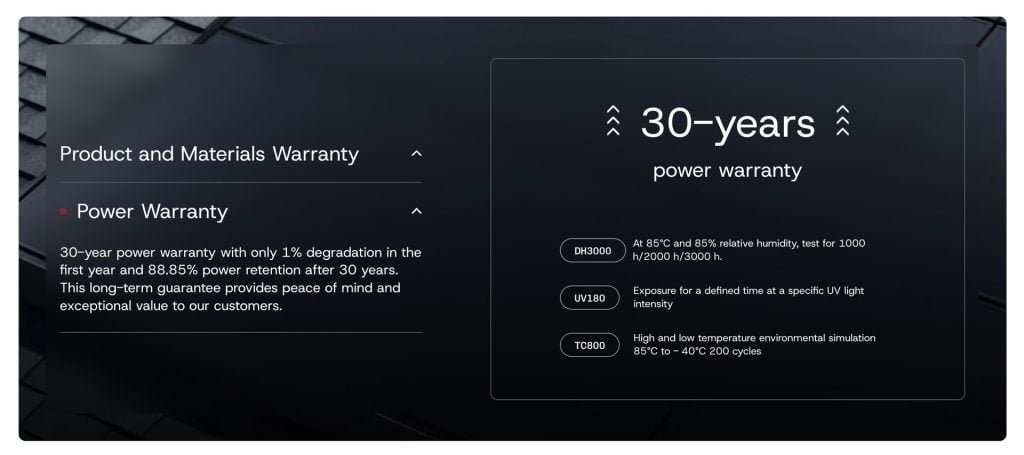
| Annual (Years 2-30) | 0.35% | 0.5-0.7% | 0.4%* |
| After 30 Years | 88.85% capacity | ~82-85% capacity | ~88% capacity |
*TOPCon warranty specification; some BOMs show 0.6-0.7% in accelerated testing
Source: LONGi Hi-MO X10 warranty specifications | Industry comparative data from manufacturer warranties and PVEL testing
Why HPBC Lasts Longer
No front-side busbars means fewer stress points vulnerable to microcracks. Traditional busbars expand and contract with temperature changes, creating stress that leads to cracks over time.
Key durability features:
- TaiRay wafer technology: 80-87% reduction in hidden microcracks (according to LONGi internal testing)
- Advanced POE encapsulation: 7x more moisture resistance than traditional EVA encapsulation
- No corrosive acetic acid: Unlike EVA, POE doesn’t degrade into corrosive acid over time
- One-line back contact welding: Reduces cell edge stress by 26 MPa
Extended Testing Protocols
HPBC modules pass rigorous testing that exceeds standard IEC requirements:
- Damp Heat (DH3000): 3,000 hours at 85°C and 85% humidity (3x IEC standard)
- Thermal Cycling (TC800): 800 cycles between -40°C and +85°C (4x IEC standard)
- UV Exposure (UV180): 180 hours of intensive UV radiation (1.5x IEC standard)
- Mechanical Load: Front side 5,400 Pa (heavy snow), rear 2,400 Pa
- Hail Impact: 25mm diameter hailstones at 23 m/s
⚠️ Industry context (December 2024): Recent reliability testing by PVEL shows TOPCon modules experiencing 41% bill of materials (BOM) failure rate in accelerated testing—the highest in industry history—particularly in damp heat and UV-induced degradation tests. HPBC reliability data is still accumulating, but early testing indicators are very positive.
Source: PVEL 2024 Module Reliability Scorecard, PV Magazine coverage October 2024
When combined with dual-glass encapsulation options, HPBC modules deliver exceptional reliability backed by LONGi’s 30-year linear performance warranty.
7. Premium All-Black Appearance
The front surface has no visible metal lines, busbars, or fingers. You see only deep, uniform black.
This appearance is particularly valued in European residential markets where:
- Homeowners want attractive installations that enhance property value
- Local building codes increasingly emphasize visual integration
- Solar panel appearance directly affects property resale value
- Modern architecture demands clean lines and minimal visual clutter
For premium residential projects and building-integrated photovoltaics (BIPV), the aesthetic advantage can be a decisive factor in supplier selection.
8. Improved Module BOS & System Value
Higher power density creates financial benefits throughout the entire system installation via reduced Balance of System (BOS) costs.
Direct Cost Reductions
Fewer modules needed to reach target system capacity means:
- Less mounting hardware (rails, clamps, brackets, fasteners)
- Shorter cable runs and reduced copper costs
- Fewer electrical components (combiners, disconnects, junction boxes)
- Lower installation labor hours
- Reduced transportation and handling costs
Projected Energy Yield Improvements
LONGi system modeling projects measurable advantages across application types:*
| Application Type | Power Generation Increase | Financial Improvement |
|---|---|---|
| Residential | +9% | 7.16% lower LCOE |
| Commercial & Industrial | +8.1% | 6.72% better IRR |
| Utility-Scale | +8.7% | 7.89% faster payback |
*Projections based on LONGi’s system modeling comparing equivalent HPBC and TOPCon installations. Actual results will vary based on site-specific conditions including climate, orientation, shading, installation quality, and maintenance practices. Independent field verification data is still accumulating as HPBC entered commercial production in 2024-2025.
Manufacturer calculation example: A 10,000 m² rooftop installation using HPBC modules (660W) generates approximately 189,000 kWh more annually than equivalent TOPCon systems (630W), according to LONGi’s internal analysis.
Source: LONGi marketing materials, PV Magazine coverage (March 2025)
For installers and system designers, these factors combine to deliver better overall project economics even though HPBC modules may cost 3-5% more upfront than equivalent TOPCon products.
🎯 Best-Fit Applications
HPBC modules are particularly valuable for:
✅ Residential rooftops with space constraints or partial shading from trees, chimneys, dormers, or neighboring structures
✅ Commercial buildings with complex roof orientations, rooftop HVAC equipment, or where maximizing ROI is critical
✅ Hot climate regions where superior temperature coefficient (-0.26%/°C) maintains higher output during summer months
✅ Premium projects where all-black aesthetic appearance matters for property value and architectural integration
✅ Utility-scale installations requiring extreme weather durability and proven long-term reliability
✅ Challenging sites with dynamic shading patterns from terrain, vegetation, or structures
📈 Technology Maturity & Market Context
HPBC entered commercial production in 2024-2025. While newer than PERC or TOPCon, the underlying back-contact technology has been validated through decades of research and field deployment.
Current Market Momentum
LONGi production and shipments:
- Shipped 17 GW of back-contact products globally in 2024
- Target: 50 GW production capacity by end of 2025
- Hi-MO X10 modules available across European, Middle Eastern, Asian, and Latin American markets
Industry adoption (2024-2025):
- Trina Solar – Launched BC product line
- JA Solar – Entered BC market segment
- Astronergy – Announced BC technology development
- Tongwei – Initiated BC production capacity
- GCL Group, DAS Solar – Showcased BC modules at industry exhibitions
Source: LONGi 2024 Annual Report, TaiyangNews Industry Conference coverage (December 2024)
Industry Trajectory
Technology transition timeline:
- PERC phase-out: Expected to drop below 25% market share by 2026, completely phased out by 2028
- TOPCon concerns: Facing reliability scrutiny after PVEL 2024 Scorecard revealed 41% BOM failure rate
- BC mainstream adoption: Industry analysts project back-contact technology will become mainstream by 2026-2027
- Patent expiration: Major back-contact patents expire around 2028, enabling broader market adoption
- Capacity projections: Experts forecast BC manufacturing capacity could reach 1 terawatt by 2030
Sources: NREL Spring 2024 Solar Industry Update, Clean Energy Associates (CEA) market analysis, industry analyst reports
✅ Conclusion
HPBC solar cells deliver independently verified advantages across all key performance metrics:
✅ 26.6% cell efficiency in commercial production with 25.4% world-record module efficiency (Fraunhofer ISE certified)
✅ 70% better shade tolerance than TOPCon with dramatically safer operating temperatures (80°C vs 130°C)
✅ Superior temperature performance (-0.26%/°C) producing 1-3% more power in hot conditions
✅ Industry-leading 0.35% annual degradation ensuring 88.85% capacity retention after 30 years
✅ Projected 8-10% higher energy yields based on system modeling across residential, C&I, and utility applications
✅ Premium all-black aesthetic with zero visible grid lines or busbars for architectural integration
For European markets with space constraints, partial shading challenges, or hot summer temperatures, HPBC delivers measurable advantages that can justify the 3-5% price premium over standard TOPCon modules.
Due diligence recommendations:
- Always request independent third-party test reports from recognized laboratories
- Verify actual production specifications, not just laboratory record achievements
- Compare total system costs and projected energy yield, not just module prices
- Review warranty terms carefully, including claim procedures and company stability
- Request references and performance data from similar climate zones
- Consider extended warranties or performance guarantees for additional risk mitigation
Technical data verification: Specifications verified against Fraunhofer ISE certification reports (October 2024), LONGi Solar official product datasheets (Hi-MO X10, 2025), NREL Champion Module Efficiency Chart, IEC 61215:2021 and IEC 61730:2016 testing standards, PVEL 2024 Module Reliability Scorecard, and multiple independent industry publications including PV Magazine, TaiyangNews, and Clean Energy Associates market analysis.
Manufacturer disclosure: Couleenergy manufactures HPBC solar modules. All technical data presented is independently verified through third-party testing laboratories including Fraunhofer ISE, ISFH, and TÜV Rheinland. Performance projections are based on manufacturer system modeling and should be validated against actual installation data when available. We encourage buyers to request independent test reports and compare specifications across multiple suppliers to make fully informed procurement decisions.
Data transparency: Where specific claims are based on manufacturer testing rather than independent third-party verification, this is clearly noted in the text. Energy yield projections represent system modeling results and may not reflect actual field performance. Long-term reliability data for HPBC is still accumulating as commercial production began in 2024-2025.


 English
  Español
  Français
  Deutsch
  Русский
  العربية