
Same cells. Same efficiency class. Two completely different products. Here is how to pick the one that will not fail in year three.
You have decided on back-contact cells. Smart move. Now you face a second question that trips up a lot of buyers: flexible or rigid?
Most people answer it backwards. They start with a photo or a spec sheet. Then they discover the panel does not suit the surface, the climate, or the way the customer installs it. Six months later, the returns start.
This guide fixes that. What separates the two formats, what the test data says, and how to match a format to a project. Just the parts that matter when you sign the order.
The Problem: Buyers Choose the Package Before the Application
Here is the pattern we see almost every week. A distributor orders flexible panels because they are light and easy to ship. The customer glues them flat onto a metal van roof. Summer arrives. The panels cook. Bubbles appear. Within two seasons, the customer wants a refund.
Or the reverse. A buyer specifies rigid modules for a fleet of catamarans. The panels are excellent. But they cannot follow the curve of the deck. The installer drills into the hull to build a frame. Nobody is happy.
Neither panel was defective. Both were the wrong format for the job. That mistake is easy to avoid once you know what each format is really built to do.
First, What Both Formats Share
Back-contact cells move every electrical contact to the rear. Nothing sits on the front surface — no silver fingers, no busbars. That single change delivers several benefits at once, and both formats inherit all of them.
More light reaches the silicon
A conventional cell loses part of its front surface to metal. Multi-busbar designs cut this down, but the metal never disappears. A back-contact cell has a fully open front. More light in, more watts per square meter.
Better behavior under light shade
This is where the data gets interesting. In testing at China’s National PV Quality Inspection Centre (CPVT), a single cell shaded by 50% cost a back-contact module 10.15% of its output. The TOPCon comparison lost 36.48%.
The reason is how current behaves. In a back-contact module, current is shunted around the shaded cell internally, without firing a bypass diode. In a conventional module, one shaded cell can switch off a whole substring.
Two honest caveats, because your customers will find them anyway.
First, the advantage narrows as shading spreads. A 2026 TÜV NORD study found the BC advantage holds at three or fewer shaded cells across substrings. At four or more it disappears, and both technologies lose roughly 50%. BC is genuinely better under leaves, dust or a mast shadow. It is not a cure for a chimney.
Second, shade advantage is not the same as annual yield. A JinkoSolar field study in Kagoshima, Japan, verified by TÜV Nord, put modules on a clean, unshaded ground mount. TOPCon recorded a 94.19% performance ratio against 91.99% for p-type BC and 89.29% for n-type BC.
Read that one carefully. It is a manufacturer study, on a bifacial-optimized ground mount that favors TOPCon, using BC samples that are not current-generation. But the direction is real, and it shows where each technology belongs. On open ground with no obstructions, BC has less to offer. On a rooftop, boat or vehicle with rails, vents and moving shadows, shading behavior is worth a great deal.
Cooler running under partial shade
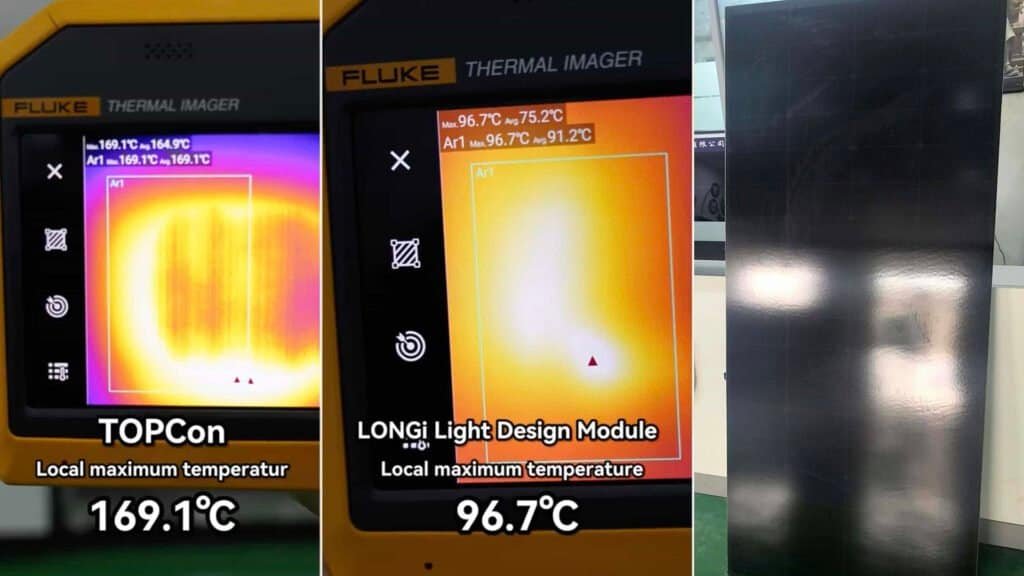
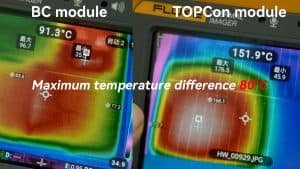
In TÜV Rheinland testing, a back-contact module held a peak local temperature near 100 °C under shading, against more than 160 °C for TOPCon — a 77 °C difference. Lower local heat means less encapsulant stress, which matters more in a flexible panel than in glass.
Strong temperature coefficient
Current BC module datasheets list a Pmax coefficient near −0.26 %/°C, against roughly −0.35 to −0.40 %/°C for older PERC. Every panel loses power as it heats up. A lower coefficient means it loses less.
A clean, uniform look
No grid lines. No ribbons catching the light. For architects, yacht owners and premium RV brands, this is often the reason they call.
Keep this in mind: none of these benefits belong to one format. Choose flexible or rigid, and you still get the cell technology. The format decision is about the package around the cells.
Insight 1: Weight Is the Decision, Not Efficiency
Buyers often start by comparing efficiency. That is a fair place to begin, so let us be precise about it, because there is a real gap and some suppliers hide it.
Premium BC flexible panels reach roughly 20 to 22.5% module efficiency. Rigid BC modules reach around 24%. The flexible laminate gives up a few points to inactive cell area and encapsulant losses.
Watch the wording. A supplier quoting “23% efficiency” on a flexible panel is usually quoting cell efficiency, not module. Ask for module efficiency at STC, on a test report with the laboratory named. That one question filters out a lot of noise.
Put that in context. Against a conventional flexible panel at 15 to 18%, BC flexible is a large step up. If your surface can take a rigid module, though, take the points.
Most of the time, though, that is not the question in front of you. Weight is.
A flexible ETFE panel runs roughly 2.4 to 3.8 kg per square meter. A framed rigid module runs roughly 10 to 12.5 kg per square meter, based on current back-contact datasheets. That is a three-to-four times difference.
Think about where that load lands.
- An RV roof has a stated load limit. Rails and ballast eat into it fast.
- A sailboat carries weight high above the waterline. Naval architects care about this.
- An older warehouse roof may not take a framed array without engineering work.
- A tent, backpack or portable kit has no structure at all.
If the host structure cannot carry a framed module, the efficiency conversation is over before it starts. Flexible is not the compromise here — it is the only option that works. Flip it around, though: if the structure carries the weight easily, rigid wins on most other measures.
Insight 2: Heat Kills Flexible Panels, and Installers Cause It
This is the most important section in the article, so we will keep it blunt. Most flexible panel failures are not manufacturing failures. They are heat failures, and the heat comes from the installation method.
A rigid module sits on rails, so air moves under it constantly and the frame spreads heat outward. A flexible panel glued flat to a dark metal roof has none of that. The heat has nowhere to go.
A flush-bonded panel on a sun-facing metal surface can reach 70 to 85 °C in summer. That number is not arbitrary. IEC 61730-1:2023 covers modules whose 98th-percentile operating temperature stays at or below 70 °C. Above that, the standard points you to a separate technical specification, IEC TS 63126.
In plain terms: a glued-down panel in a hot climate can run outside the band the mainstream safety standard was written for. Then a chain reaction starts:
- The encapsulant softens and creeps.
- Small air pockets form over the hotter cells.
- Edge seals weaken under repeated heating and cooling.
- Moisture works its way in at the corners.
- Delamination spreads, and output falls for good.
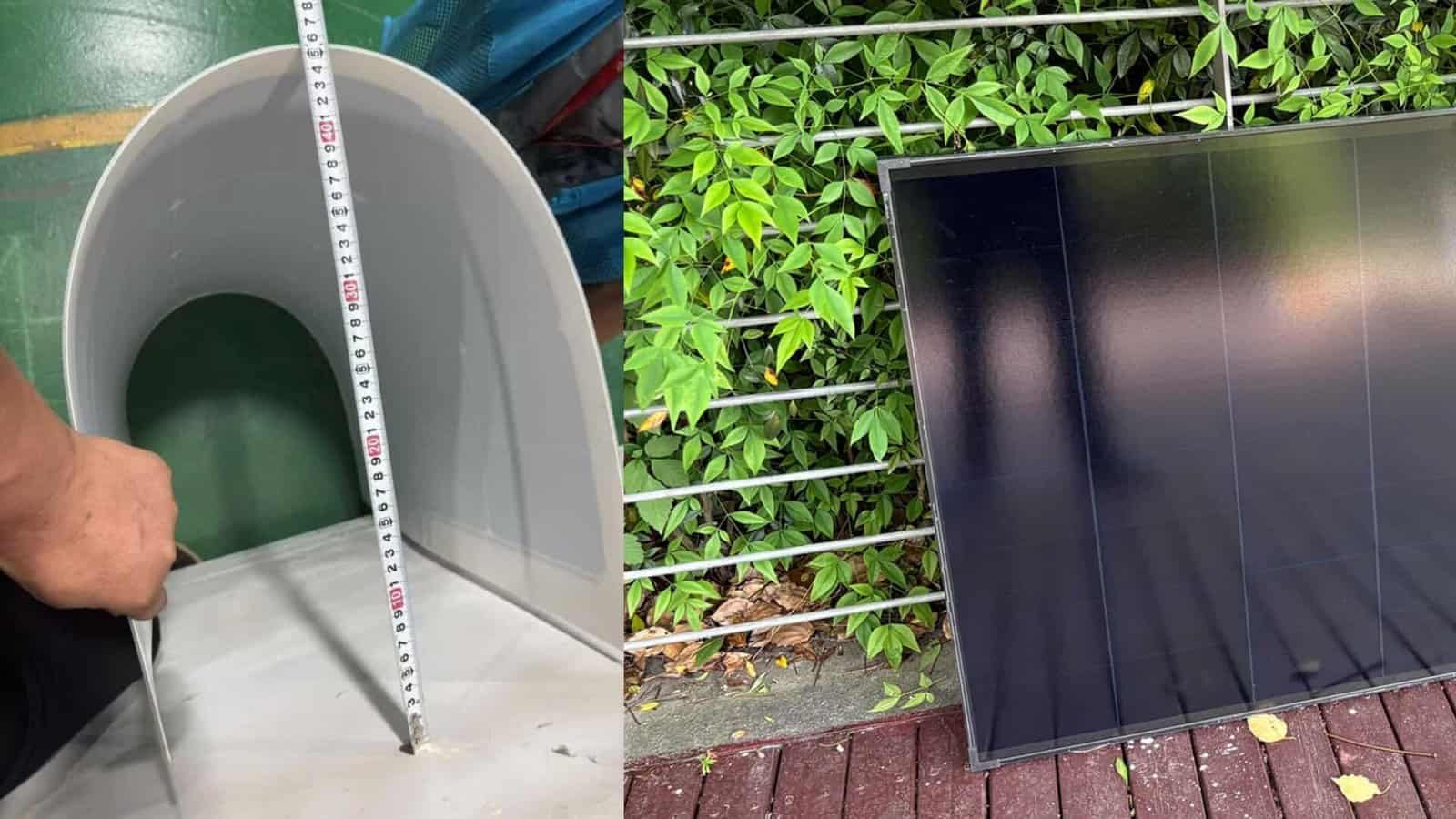
The fix is simple. Leave an air gap. Even 10 to 15 mm makes a real difference. Use standoffs, battens, or a thin polycarbonate twin-wall sheet.
Two other things decide whether a flexible panel survives:
Frontsheet material. ETFE and PET are not close cousins. PET clouds, yellows and peels under UV and salt spray, often within a few seasons. ETFE holds up. If a supplier is vague about which one they use, treat that as an answer.
Bend discipline. A well-built BC flexible panel bends generously. Ours handle up to 240°, measured as the total arc the panel can form across its length.
Read any bend figure carefully, including ours. Some suppliers quote the arc. Others quote deviation from flat, which is why you also see numbers like 30°. Those are not the same measurement. The number that actually protects the cells is the minimum bend radius, so ask for it.
And however generous the specification, bending must follow a smooth curve. Sharp folds and repeated flexing along one line will crack cells no matter who made the panel.
Get those three right, and the failure stories mostly disappear.
Insight 3: Rigid Panels Buy You Engineering Certainty
A framed module is a known quantity. That is its real advantage. Rigid modules are typically built to the IEC 61215 test regime: 200 thermal cycles between −40 °C and +85 °C, 1000 hours of damp heat at 85% humidity, and a hail impact test using 25 mm ice.
It also includes static mechanical load testing, and here datasheets blur a detail. The baseline is 2400 Pa. The 5400 Pa front load quoted so often is the higher optional level, meant for heavy snow. Selling into an alpine or northern market? Confirm which level was tested.
Why does this matter commercially? Because a structural engineer can work with those numbers. So can a building inspector, an insurer and a lender. On a commercial rooftop or a ground mount, someone will ask for them.
Rigid formats also give you:
- Highest power per panel. Full-size cells and full-size laminates. Fewer connections for the same array size.
- Standard mounting. Pre-drilled holes, clamps and rails that every installer already owns.
- Long service life. Tempered glass and an anodized frame simply last. Warranties reflect that.
- Serviceability. One panel fails, you unbolt it and swap it. A bonded flexible panel is far harder to remove.
That last point gets overlooked. If your customer plans to keep the system for twenty years, ask how they will replace a single panel in year nine.
Warranty length reflects this. Rigid modules routinely carry 25 to 30 year performance warranties. Flexible panels carry shorter terms industry-wide — not marketing timidity, but a polymer laminate working without glass.
Side by Side: The Honest Comparison
| Flexible BC Panel | Rigid BC Panel | |
|---|---|---|
| Structure | Frameless multi-layer composite | Aluminum frame, glass, backsheet |
| Thickness | 2.7 – 3.3 mm | 30 – 35 mm |
| Weight | 2.4 – 3.8 kg/m² | 10 – 12.5 kg/m² |
| Module efficiency | ~20 – 22.5% | ~24% |
| Shape | Bends up to 240° along a smooth arc | Fixed flat plane |
| Mounting | Adhesive, tape, eyelets — needs an air gap | Rails, clamps, pre-drilled holes |
| Wind & snow load | Follows the host surface | Engineered and load-tested per IEC 61215 |
| Impact & vibration | Excellent — no glass to break | Good — tempered glass, but it is still glass |
| Typical performance warranty | Shorter — varies widely by build | 25 – 30 years is common |
| Replacement | Harder once bonded | Unbolt and swap |
| Best for | Curved and weight-limited surfaces, mobile use | Fixed roofs, ground mounts, long-life systems |
Typical values for current commercial products. Final specifications depend on the model, cell format and custom configuration. See sources at the foot of this page.
The Solution: A Three-Question Test
Answer these three questions about the project, and the format usually picks itself.
Question 1: Is the mounting surface flat and strong?
If yes, go rigid. That is exactly what a framed module is designed for, and you get more power per panel plus easier service later. If the surface curves, or the structure cannot take the load, go flexible. This is the whole reason the format exists.
Question 2: Does the installation move?
Vehicles, boats and trailers vibrate and flex constantly. Glass under constant vibration is a risk you must design around. A frameless composite panel handles that motion far better. A fixed building does not move, so glass is fine — and it will outlast the composite.
Question 3: Can the installer leave an air gap?
Be honest here. If the panel must be glued flat with no ventilation, and the climate is hot, you are buying a problem. Either change the mounting plan, or choose rigid. We would rather say this before shipping than after.
Sometimes the answer is both
Mixed arrays are common on boats and larger RVs, and they work well. Rigid panels go on the flat rear gantry where there is room and airflow. Flexible panels cover the curved cabin roof or the deck area rails cannot reach.
Wire them as separate strings into separate controller inputs. Different formats behave differently in shade and heat. Keep them apart electrically and the system stays predictable.
What to Ask Before You Place an Order
Format is half the decision. The supplier is the other half. These questions separate a serious factory from a trading company with a catalogue.
For flexible panels
- Is the frontsheet genuine ETFE, and how thick is it?
- What is the backsheet made of? Ask for the full laminate stack.
- Can you provide EL test images for my batch, not a sample batch?
- What bend radius do you actually specify, and how was it tested?
- What mounting method do you recommend for a hot climate?
For rigid panels
- What mechanical load has this model been tested to, front and back?
- What is the Pmax temperature coefficient on the datasheet?
- What is the frame thickness and the mounting hole pattern?
- What is the junction box IP rating and diode configuration?
For both
- Who makes the cells, and which BC architecture is it?
- What does the warranty cover, and who honours it in my market?
- Can I get a sample before committing to a production run?
A supplier who answers these clearly is worth working with. One who deflects on the laminate stack or the EL images is telling you something important.
When the Standard Sizes Do Not Fit
You do not have to design your product around a catalogue panel.
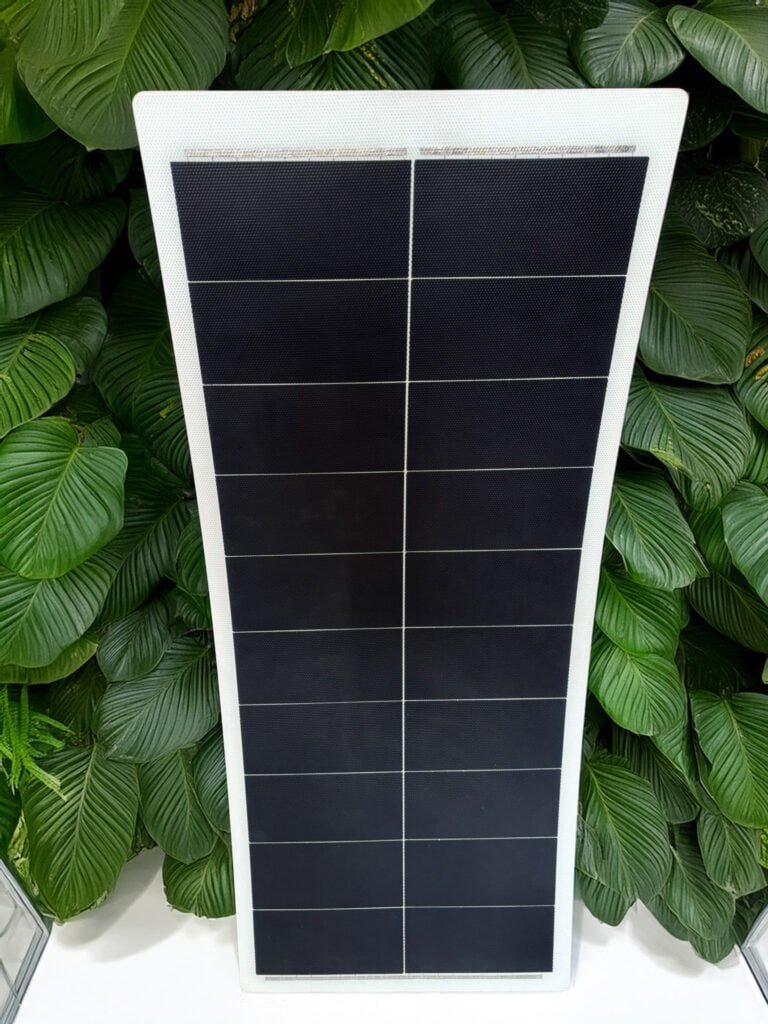
Most projects start the same way. A camper roof with a vent in an awkward place. A boat deck with a hatch. A façade module that must line up with the window grid. Standard panels never quite fit, so people leave area unused or accept a compromise that looks wrong. With OEM and ODM production, you can specify:
- Size and shape — cut corners and non-rectangular outlines included
- Power and voltage — matched to your controller or battery window
- Cable exit and connectors — routed where your assembly needs them
- Surface finish — textured for walkable decks, smooth for architecture
- Mounting features — eyelets, adhesive backing, custom hole pattern
- Your branding — panel, label and packaging
Couleenergy builds both formats in-house in Ningbo: back-contact flexible ETFE panels, rigid BC modules, and dual-glass BIPV products. We keep MOQ low on purpose, because most good products start as a small first run.
Still deciding? Send us the application, not a part number. The surface, the climate, the load limit, the mounting method. That is usually enough to tell you which format fits — including when the honest answer is the one we sell less of.
Common Questions
Are flexible BC panels less efficient than rigid ones?
Yes, at the module level. Premium BC flexible panels reach about 20 to 22.5% module efficiency. Rigid BC modules reach around 24%. The cells are the same. The laminate is what costs you the difference. Against conventional flexible panels at 15 to 18%, though, BC flexible is a clear step up.
How long will a flexible panel last?
More on installation than on the panel. Industry expectations for premium ETFE builds sit at 10 to 15 years, against 25 to 30 for glass. But the same panel glued flat to a hot roof may degrade within a few seasons. Ventilation is the biggest variable, and it sits with the installer.
Can I walk on a flexible panel?
Only if it was built for it. Walkable marine panels use a textured surface and support underneath. A standard flexible panel is not a deck surface.
Can I mix flexible and rigid panels in one system?
Yes, and it is often the smartest layout. Keep them on separate strings and separate controller inputs. Do not put different formats in series on the same MPPT.
The Short Version
Flexible and rigid BC panels are not competitors. They answer two different questions.
Choose flexible when the surface curves, the structure is weight-limited, or the installation moves. Then insist on ETFE and an air gap.
Choose rigid when the surface is flat and strong, the system is permanent, and someone will ask for load numbers.
Either way, the back-contact cells give you the same clean front surface, the same strong heat performance and the same advantage under light shade. Rigid still wins on module efficiency and warranty length. Flexible wins everywhere rigid cannot physically go. The format decision is about the structure, the climate and the installer. Get that right, and the panel does its job for a very long time.
Not Sure Which Format Fits Your Project?
Tell us about the surface, the climate and the mounting method. Our engineering team will recommend a format, a laminate and a size — and explain the reasoning, not just quote a part number.
OEM and ODM production. Low MOQ. Custom size, power and shape. Fast sampling.
Email: info@couleenergy.com
Phone: +1 737 702 0119
Web: couleenergy.com
Sources
- TÜV NORD partial-shading study on BC and TOPCon modules, published in Solar Energy and reported by pv magazine (July 2026)
- CPVT single-cell shading test (10.15% vs 36.48%) and TÜV Rheinland hot-spot testing on HPBC 2.0 / Hi-MO X10, published by LONGi (October 2025)
- JinkoSolar Kagoshima field study, verified by TÜV Nord, reported by pv magazine (October 2024)
- IEC 61730-1:2023 safety qualification, including the 70 °C operating-temperature scope and the reference to IEC TS 63126; IEC 61215-1:2021 design qualification and mechanical load levels
- Current back-contact module datasheets (LONGi Hi-MO X10, AIKO Neostar 2S) for weight, module efficiency and temperature coefficient ranges



 English
  Español
  Français
  Deutsch
  Русский
  العربية