
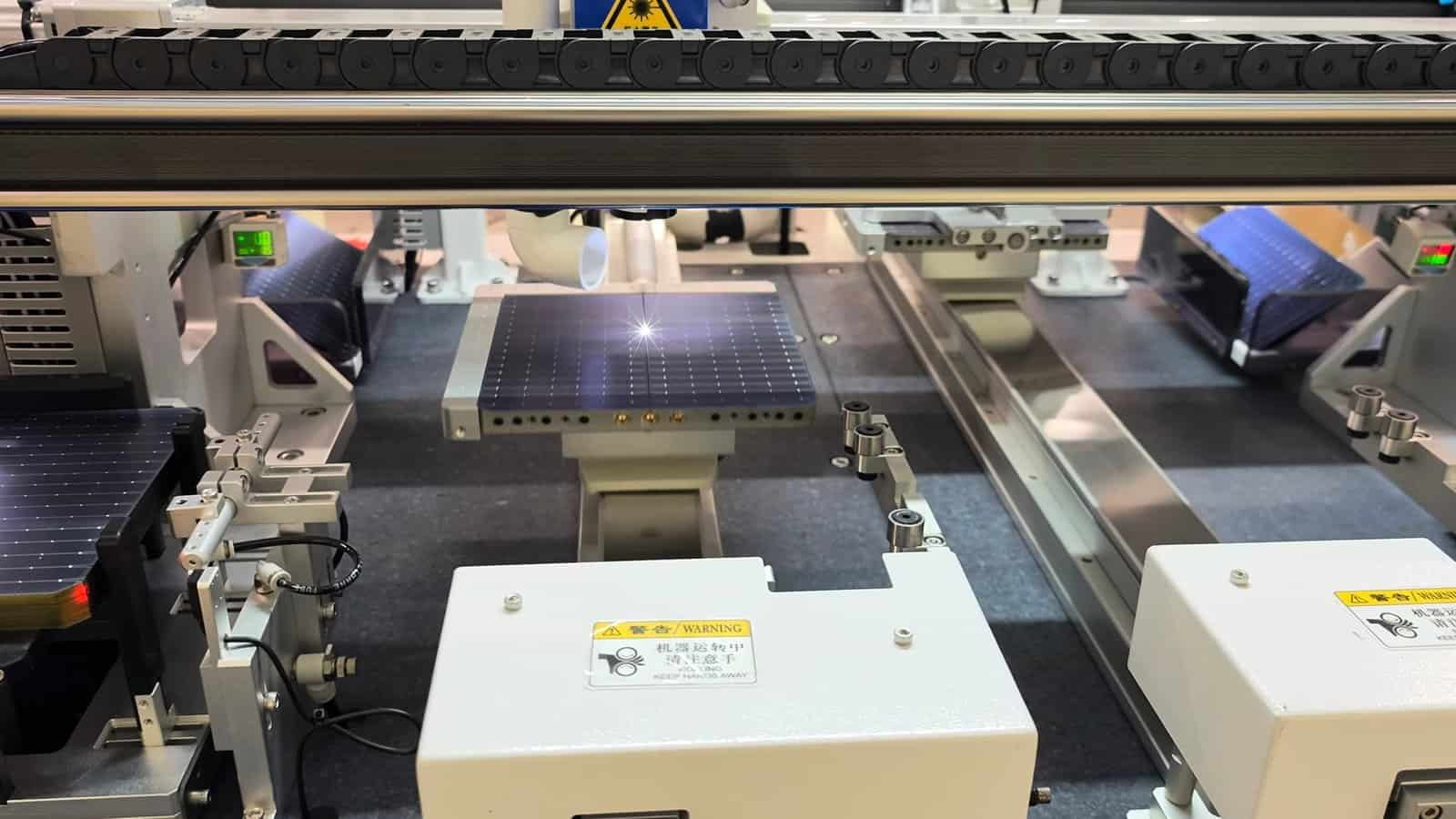
Everything from glass type to order volume shapes the final price. Here is what buyers, engineers, and project managers need to understand before they request a quote.
Standard solar modules are priced simply. Factories produce the same format at enormous scale. Buyers compare watts per dollar and select the lowest landed cost.
Custom solar panels work differently. Every deviation from the factory norm — the glass specification, how cells are cut and arranged, the shape of the frame, the order size — creates a cost impact that compounds across the bill of materials. Buyers who do not understand these mechanics often receive quotes that surprise them. Some assume the factory is overcharging. Others accept a price without knowing which elements have room to negotiate.
This guide explains the eight major pricing drivers for custom modules. It is written for technical buyers, solar product managers, OEM sourcing teams, and project decision-makers who need to read a quote intelligently — not just accept it.
Key Principle
Custom panels are not simply smaller or differently shaped standard panels. They are engineered products. Each specification decision triggers a chain of manufacturing consequences that affects cost, yield, and long-term reliability.
What Makes a Solar Panel “Custom”?
A custom solar panel is any module built to specifications that differ from a factory’s standard format. Standard formats follow mainstream rectangular footprints — typically the 60-cell and 72-cell form factors — established around high-volume automated production. Anything outside those dimensions, or any change to materials, cell type, shape, or electrical configuration, qualifies as custom.
Common customizations include:
- Non-standard dimensions (any length or width outside the standard format range)
- Specific voltage or current targets (for MPPT matching, battery systems, or vehicle electronics)
- Non-rectangular shapes (L-shapes, triangles, trapezoids, or polygons for BIPV or vehicle integration)
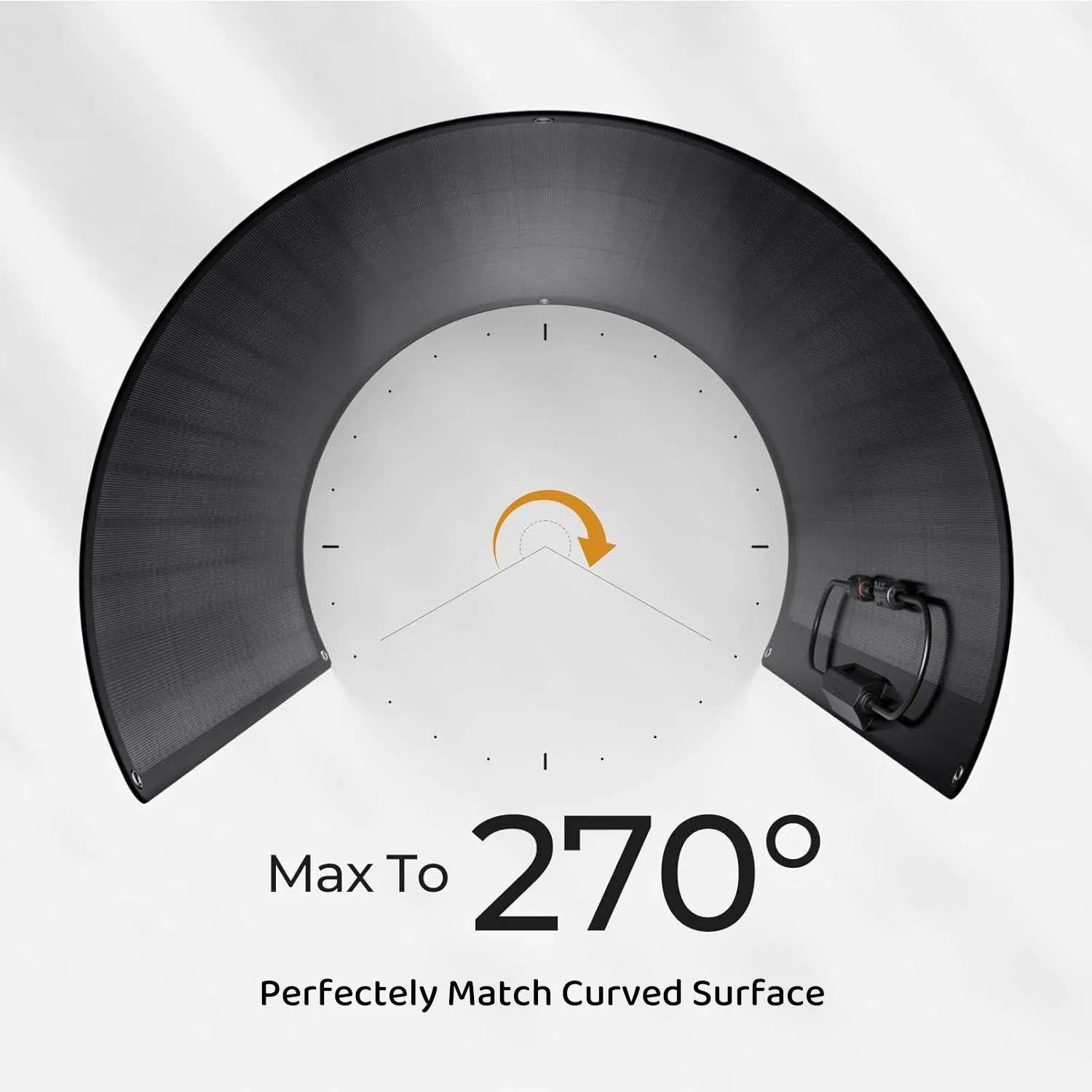
- Alternative encapsulation (ETFE front sheets for lightweight and flexible panels)
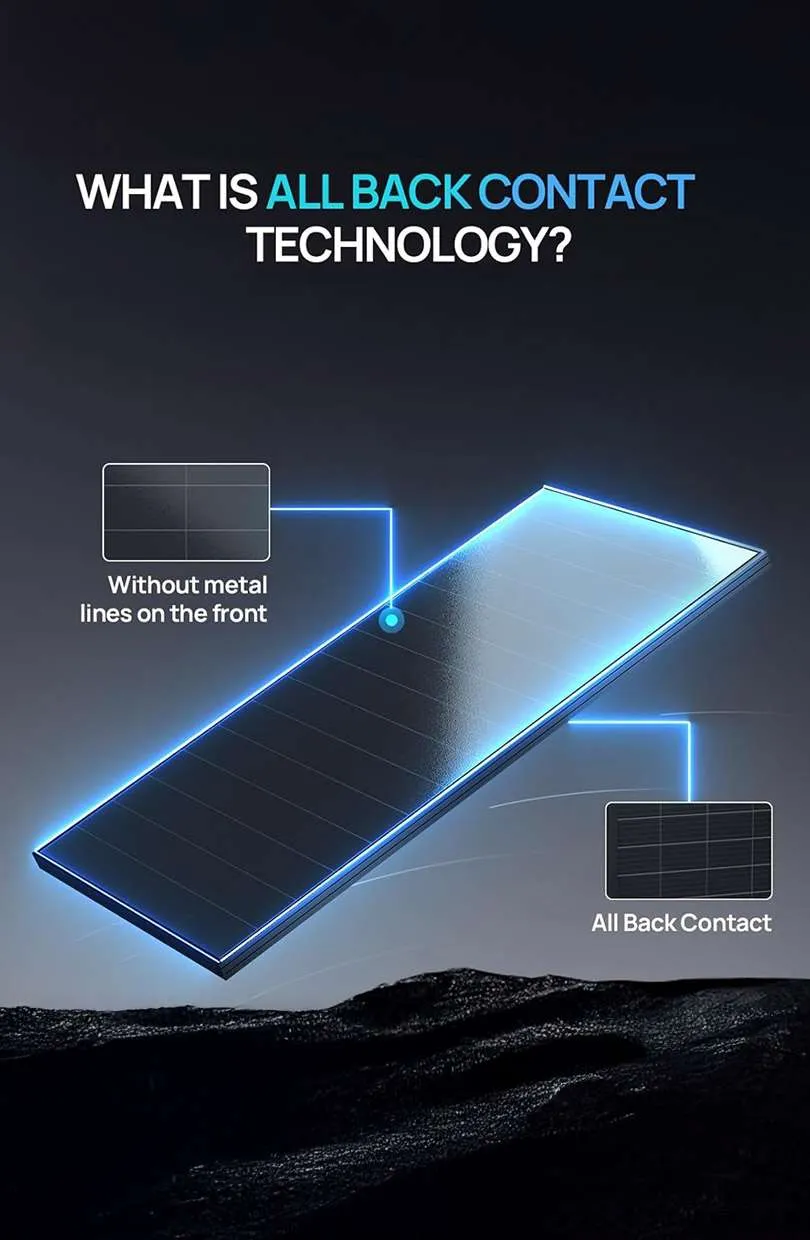
- Specific cell technology (TOPCon, HJT, IBC, or ABC cells in non-standard cut sizes)
- Glass-glass construction (required for bifacial, BIPV facade, and harsh-environment modules)
- OEM branding (custom labeling, junction box positioning, private packaging)
The key insight is this: a custom panel is an engineered product. Each specification decision triggers a chain of manufacturing consequences — in materials, processes, tooling, and testing — that ultimately determines the quote.
Factor 1: Glass Selection
Glass is the heaviest single material in a rigid solar module. It also carries significant cost variation depending on specification. Three properties drive glass cost beyond basic thickness: iron content, surface treatment, and construction type.
Iron content governs light transmittance directly. Standard low-iron solar glass typically achieves around 91–92% transmittance. Ultra-low-iron glass — used in high-efficiency HJT and back-contact modules — pushes this to 93.5% or above[1], because lower iron oxide content reduces absorption in the visible spectrum. The performance improvement is real, but so is the material cost premium.
Anti-reflective (AR) coating reduces surface reflection losses, improving transmittance by a further 1–2 percentage points. AR-coated glass is now standard in premium modules, particularly those using back-contact cells where even marginal gains at the glass level compound over a 25-year service life.
Glass-glass (dual-glass) construction replaces the polymer backsheet with a second glass pane. This configuration is mandatory for BIPV facades and is strongly preferred for bifacial modules in harsh environments and high-humidity coastal applications. The second pane adds structural weight, extends lamination cycle time, and requires additional edge sealing — each contributing to a meaningful cost increase over a single-glass equivalent. For BIPV applications where the module also functions as a regulated building product, this premium is typically justified by extended service life and structural integration requirements.
Patterned and ceramic-frit glass is used in architectural BIPV for facade aesthetic integration. Custom textures require specialty production runs, which means limited volume, reduced pricing competition, and higher unit cost compared to standard flat solar glass.
| Glass Type | Key Properties | Relative Cost Level | Best Application |
|---|---|---|---|
| Standard low-iron tempered | ~91–92% transmittance, proven | Baseline | Standard residential / commercial |
| Low-iron AR-coated | Reduced surface reflection, ~93%+ transmittance | Moderate premium | TOPCon, HJT, BC modules |
| Ultra-low-iron AR-coated | ~93.5%+ transmittance, lowest absorption | Higher premium | Premium BIPV, HJT, back-contact modules |
| Dual-glass (glass-glass) | Structural durability, bifacial-ready, longer service life | Significant premium | BIPV facades, bifacial, harsh climates |
| Patterned / ceramic-frit | Architectural integration, aesthetic surface | Specialty pricing | Architectural BIPV skin, facades |
| ETFE front sheet (flexible) | >95% transmittance, very lightweight, UV stable | Application-dependent | VIPV, lightweight portable, marine |
Transmittance values are typical commercial glass specifications at 3.2 mm. AR-coated performance varies by coating method and manufacturer.

Factor 2: Cell Technology and Layout
Cell technology determines the efficiency ceiling of the module. Cell layout determines how that efficiency is expressed in a non-standard format.
The 2026 Cell Technology Landscape
The industry has undergone a decisive technology transition. N-type cell architectures — led by TOPCon — now account for roughly 88% of shipments among major manufacturers in 2025[2], with PERC declining to a low single-digit share of new production. This market shift matters directly for custom panel buyers: PERC is no longer the competitive baseline it was three years ago. TOPCon is now the mainstream specification, and back-contact technologies (ABC, IBC, HPBC) have moved from niche to volume production at leading manufacturers.
| Cell Technology | Module Efficiency (2026) | Temperature Coefficient | Production Share | Custom MOQ (typical) |
|---|---|---|---|---|
| P-type PERC | 20–22% | −0.35 to −0.40%/°C | Declining rapidly (<10% new lines) | 200–500 pcs |
| N-type TOPCon | 22–24% | −0.29 to −0.32%/°C | ~65–88% new production | 500–1,000 pcs |
| HJT (Heterojunction) | 22–24% | −0.25 to −0.27%/°C (best in class) | ~9% and growing | 500–1,000 pcs |
| IBC / Back-Contact | 23–25% | −0.26 to −0.29%/°C | Premium niche, scaling | 50–200 pcs (sample); 200+ production |
| ABC (All Back Contact) | 23–25% | −0.25 to −0.27%/°C | Growing; AIKO confirmed 25% in volume | 100–200 pcs |
| HPBC (Back Contact, LONGi) | 23–24.5% | −0.26 to −0.29%/°C | Cost-competitive BC tier | Varies by manufacturer |
Module efficiency ranges reflect commercial production data as of 2025–2026. Temperature coefficient data sourced from IEA, Fraunhofer ISE, and manufacturer datasheets. Production share data from InfoLink Consulting and SolarQuarter.[3]
The Hidden Cost of Cell Cutting
Standard panels use full-size or half-cut cells in a rectangular string. Custom panels often require cells cut to non-standard fractions — one-third, one-quarter, one-sixth, or arbitrary dimensions — to fit a specific module size or shape.
There is a physics issue that buyers frequently overlook. When a cell is cut to a smaller area, its output does not scale down proportionally. Edge recombination losses — degradation of minority carrier lifetime at the cut surface — reduce actual power output below the purely geometric expectation.[4] The magnitude of this loss depends on cut fraction and cell technology. Small-fraction cuts (one-sixth or smaller) are proportionally more affected than half-cuts because the ratio of edge length to active area increases. Factories account for this in cell count and layout calculations. Buyers who do not understand this effect may misread quoted power specifications as underperformance.
Cell cutting also adds manufacturing complexity. Laser scribing for back-contact cells — where the entire contact structure sits on the rear surface — must be precisely controlled to avoid heat-affected zones that damage metallization. Yield loss from cutting irregular fractions is factored into custom pricing. This is not padding; it reflects a real and measurable manufacturing cost.
String design adds another layer of complexity. Custom shapes — particularly L-shaped or triangular modules — may require multiple parallel string segments, additional bypass diode placements, or repositioned junction boxes. Each modification adds engineering time and BOM changes that the quote must reflect.
Factor 3: Encapsulant Selection
The encapsulant layer bonds cells to the glass and backsheet. It is one of the less visible cost variables — but it has a direct and documented impact on long-term module reliability that buyers should understand before specifying.
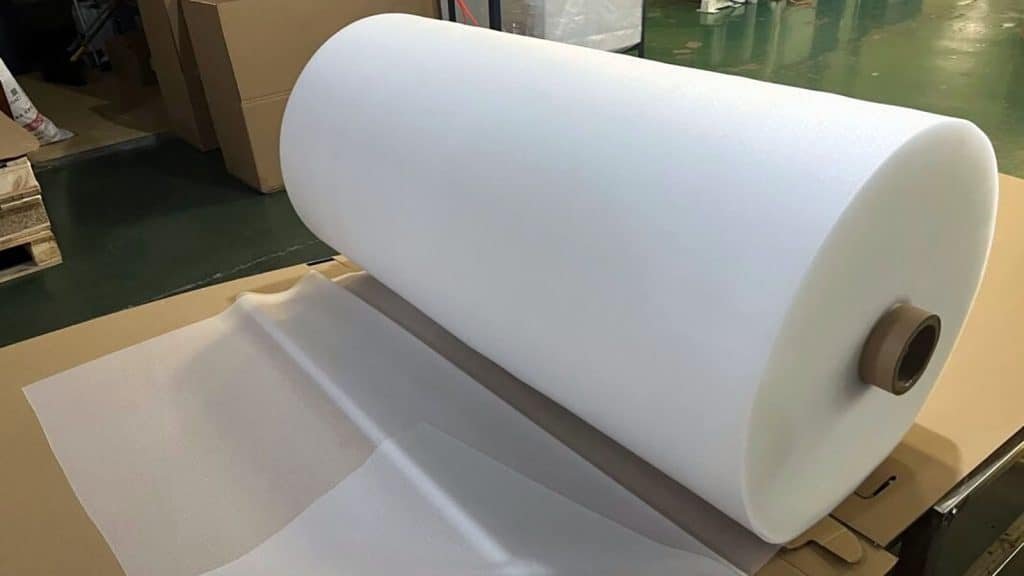
EVA (ethylene vinyl acetate) is the standard choice for P-type PERC modules: low cost, proven, and appropriate for that cell architecture.
However, EVA is not the right choice for modules using N-type cell technologies — TOPCon, HJT, IBC, or ABC. The reason is metallization corrosion, not PID resistance (N-type cells are in fact more PID-resistant than P-type PERC). Under thermal cycling and elevated humidity, EVA undergoes gradual deacetylation, releasing acetic acid as a byproduct. Research published in Solar Energy Materials and Solar Cells (TNO, 2023)[5] and confirmed by subsequent studies shows this acetic acid corrodes the aluminum-rich front metallization of TOPCon cells and the fine-pitch rear contacts of IBC and ABC cells — failure modes that are largely absent in P-type PERC. EVA-encapsulated TOPCon test modules showed approximately 11% relative power loss after 1,000 hours of standard damp-heat exposure[6], compared to significantly lower losses in POE-encapsulated equivalents. Field data on HJT modules tells a similar story: EVA-encapsulated HJT modules degrade roughly twice as fast as their POE counterparts[7], directly undermining the efficiency premium that justifies HJT’s higher cell cost.
POE (polyolefin elastomer) contains no vinyl acetate groups and therefore produces no acetic acid under degradation.[8] It also provides a lower water vapor transmission rate than EVA, reducing moisture ingress at cell contacts and solder joints. These two properties — chemical inertness toward metallization and superior moisture barrier performance — make POE the technically correct specification for N-type cell technologies. For any custom panel using TOPCon, HJT, IBC, or ABC cells, POE is not an optional upgrade; it is the encapsulant the cell design requires for reliable field performance.
EPE (EVA-POE-EVA composite) places a POE core layer between two EVA outer layers. It offers a cost-performance middle position for mid-range custom modules where full POE lamination is not required but some protection against moisture-driven degradation is desirable.
For flexible panels targeting VIPV or portable applications, ETFE (ethylene tetrafluoroethylene) replaces glass entirely as the front sheet. ETFE dramatically reduces panel weight — modules can reach areal weights below 3 kg/m² versus 11–13 kg/m² for standard glass modules — while offering excellent UV resistance and long service life. It requires specialized lamination equipment and carries a higher film cost than glass, but for weight-critical applications the trade-off is straightforward.
| Encapsulant | Acetic Acid Release | Moisture Barrier | Relative Cost | Correct Use Case |
|---|---|---|---|---|
| EVA | Yes — corrodes N-type metallization | Standard | Lowest | P-type PERC only |
| EPE (EVA-POE-EVA) | Reduced (POE core layer) | Moderate–Good | Moderate | Mid-range custom modules |
| POE | None — no vinyl acetate groups | Superior | Higher | TOPCon, HJT, IBC, ABC — required |
| ETFE front sheet | N/A — replaces glass | Excellent UV resistance | Application-specific | Flexible / VIPV / lightweight panels |
Technical Note
Not all POE formulations are equal. Recent research (ScienceDirect, 2026) identified that certain POE grades containing UV absorbers can develop secondary degradation pathways under prolonged outdoor exposure, releasing carboxylic acids from UV absorber breakdown.[9] Specifying certified, module-qualified POE from established encapsulant manufacturers — rather than generic polyolefin film — is important for long-term reliability assurance.
Factor 4: Frame Design and Tooling
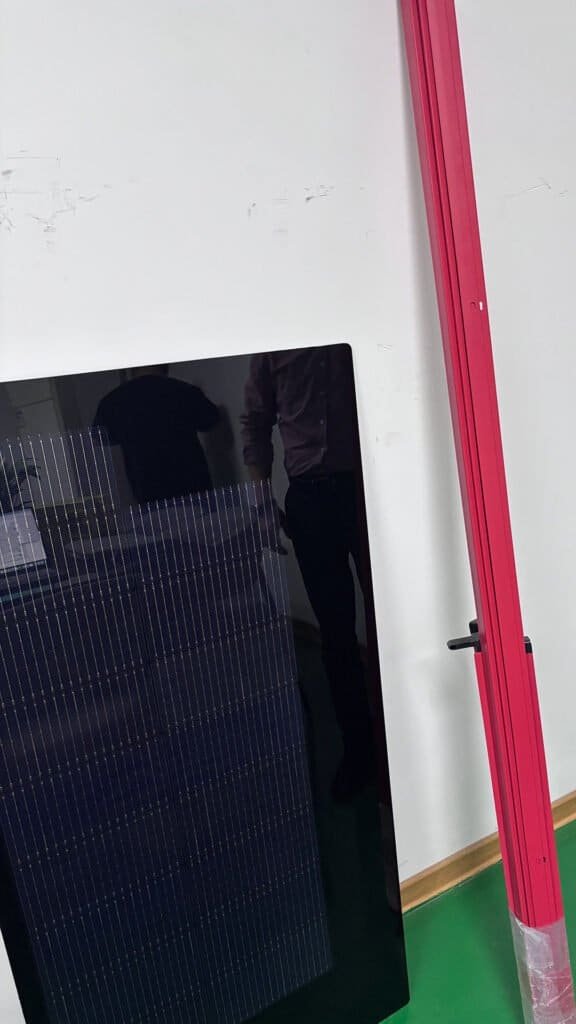
For rectangular custom panels — same shape, different dimensions — most manufacturers charge no tooling fee. The existing frame extrusion profile works. Only the cut length changes.
Non-rectangular shapes require new tooling, and the cost impact depends heavily on complexity.
Extrusion dies are needed when the frame cross-section profile differs from what the factory already produces. Aluminum extrusion die creation is a one-time non-recurring engineering (NRE) cost amortized across the production run.
Miter cutting at non-standard angles is required for any frame corner that is not 90 degrees. Triangular, hexagonal, and parallelogram panels all fall into this category. This increases fabrication time and reduces dimensional consistency compared to standard 45-degree miters.
Injection-molded corner pieces are used in some BIPV and VIPV panels where polymer corners replace mitered aluminum joints. Custom injection molds represent a more significant one-time engineering cost than extrusion dies. Discuss this requirement early in the project so the NRE can be planned and amortized across a defined production volume.
Frameless modules — standard in glass-glass BIPV — avoid frame tooling entirely. However, they require mounting hardware designed for the specific module thickness and edge profile. The tooling cost does not disappear; it moves from the module BOM to the mounting system BOM.
Overmolded modules, where the module edges are encapsulated in custom rubber or polymer, represent the highest tooling complexity. Overmolding is common in VIPV and marine applications where edge sealing and vibration resistance are critical. This is one scenario where NRE cost is unavoidable regardless of order volume.
Tooling Rule of Thumb
Rectangular custom panels: typically zero tooling NRE. Non-rectangular shapes with standard extrusion: one die cost. Custom corner injection molds or overmolded profiles: significantly higher NRE. In all cases, the tooling cost is fixed — the more units it is spread across, the lower its per-unit impact.
Factor 5: Order Volume and MOQ
This is the most discussed pricing variable — and the most misunderstood.
Factories do not offer lower per-unit costs at higher volumes as a commercial gesture. It is a fixed-cost amortization reality. Setup activities — production line reconfiguration, cell cutting calibration, QA re-baseline for a new size, EL imaging standard establishment — cost the same whether 50 panels or 1,000 panels follow the setup. Small-batch custom orders carry high per-unit overhead not because the factory is profiting more, but because fixed setup costs divide across fewer units.
When buyers push back on pricing for small orders, the most constructive response is to show this math explicitly. It reframes the negotiation from “your price is too high” to “how do we structure the order to improve unit economics?” That is a productive conversation. The former is not.
Some cell technologies offer structural advantages for low-MOQ buyers. ABC and IBC modules support lower minimum order quantities than TOPCon or HJT for custom specifications, because their production processes are already designed for smaller, higher-value production batches. For buyers at the prototype or R&D stage, this matters.
For buyers at the development stage, planning in three distinct phases — engineering samples, pilot run, scale production — allows the factory to quote each phase at the appropriate cost tier. Blending them into a single “custom quote” request usually results in the factory pricing the entire quantity at the highest-cost tier. Phased ordering preserves negotiating flexibility at each stage.
| Order Stage | Typical Quantity | Unit Cost Behaviour | Best For |
|---|---|---|---|
| Engineering samples | 1–20 pcs | Highest per-unit; setup amortized over very few units | Design verification, fit testing, electrical validation |
| Pilot run | 50–200 pcs | Elevated; improved over samples | Market testing, initial installation, pre-certification |
| Production run | 200–500 pcs | Approaching competitive range | Distribution supply, OEM product launch |
| Scale production | 500–1,000+ pcs | Best unit economics; full setup amortization | Established product lines, repeat orders |
Factor 6: Lead Time and Its Hidden Cost
Lead time affects total project cost in ways that rarely appear in the initial module quote.
A complex BIPV project or overmolded VIPV module may require multiple sampling and revision cycles before mass production can begin. A rushed timeline after that can trigger expedite fees or priority scheduling surcharges. Late discovery of a certification gap for the target market can add weeks of re-testing to a schedule that is already behind.
The less visible lead time cost is freight mode. Projects that start planning late often ship engineering samples by air courier and production units by sea — a hybrid approach that works but adds meaningful cost to the first phase of the project. Planning the entire timeline from specification to on-site installation — factoring in sampling, design revision, mass production, ocean freight, customs clearance, and local delivery — is one of the most practical actions a buyer can take to control total project cost. For complex custom BIPV or VIPV programs, eight to twelve weeks is a realistic minimum from specification approval to receipt of production units, and overmolded designs often require longer.
The timeline cost has a compound effect that is easy to overlook: delays in custom module delivery can hold up an entire installation project, creating labor and site cost overruns that far exceed the module cost itself.

Factor 7: Certification and Market Compliance
Custom panels do not automatically inherit the factory’s existing certifications. This is one of the most underestimated cost and schedule risks in custom solar procurement.
Most certification bodies issue module certificates to a defined design family — a specified range of sizes, cell types, and materials. When a custom module falls outside that certified family, a full or partial re-test is required. The key standards to clarify upfront are:
- IEC 61215 — Design qualification and type approval (covers durability and performance reliability, not electrical safety)[10]
- IEC 61730 — Module safety qualification (covers electrical and mechanical safety requirements; distinct from IEC 61215)
- UL 61730 — The US equivalent safety standard; required for grid-tied residential and commercial installations in North America
- CE / TÜV — European market conformity; size-family coverage rules determine whether a custom module requires new testing
- Class A fire rating — Relevant for BIPV roofing products in most markets; adds testing time and cost
- EN 50583 — The European standard for photovoltaics in buildings. Part 1 covers BIPV module requirements as construction products; Part 2 covers BIPV system requirements[11]
For small production runs, certification costs spread across limited units represent a meaningful per-unit burden. Buyers in regulated markets — grid-tied US installations, EU BIPV projects, public building integrations — should clarify certification status before ordering samples. Discovering a compliance gap after samples are produced is expensive; discovering it after mass production has begun is a serious project risk.
BIPV Regulatory Note
The EU Energy Performance of Buildings Directive (EPBD) recast, published in 2024, strengthens requirements for solar integration on new and renovated buildings.[12] BIPV modules used as building skin elements now increasingly face dual certification requirements: electrical (IEC 61730) and construction product (EN 50583) simultaneously. Manufacturers with existing BIPV certification portfolios offer significant project-schedule advantages over standard module factories approaching BIPV applications for the first time.
Factor 8: Junction Box, Connectors, and Ancillary Components
These components represent a smaller BOM line item than glass or cells, but they compound across the order and create real field serviceability issues when specified incorrectly.
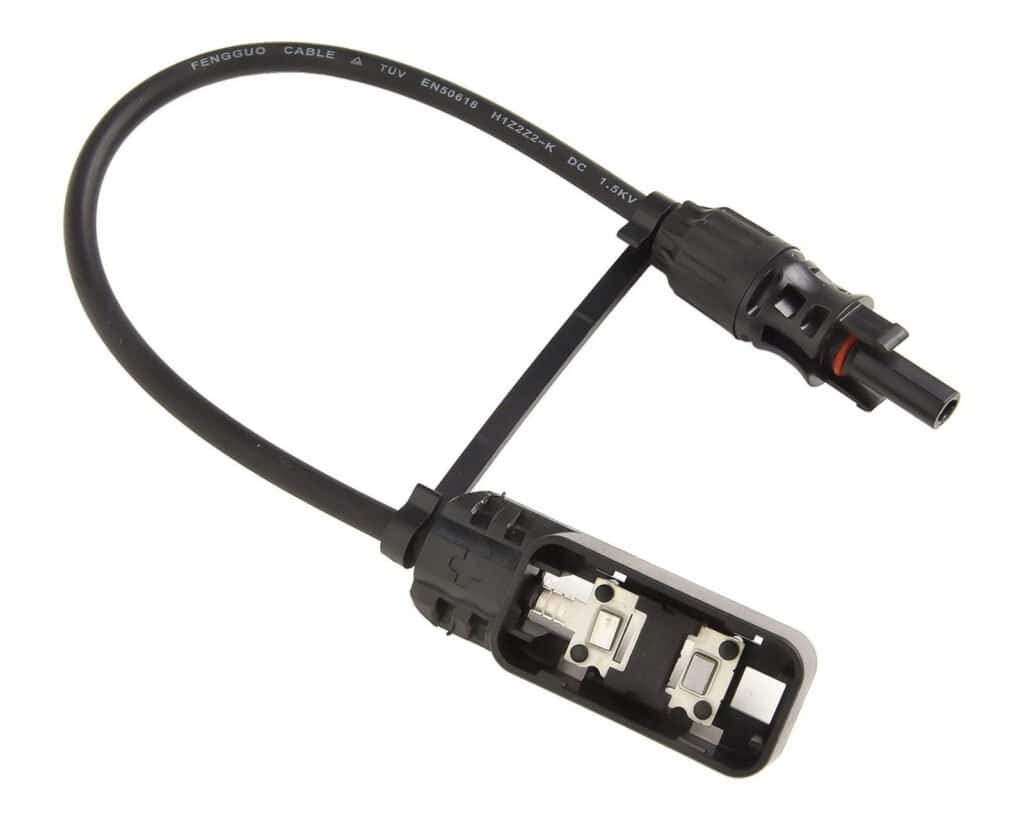
Standard junction boxes are designed for standard panel formats — center-mounted, with fixed cable length and MC4 connectors. Custom panels routinely require relocated junction boxes (moved to a long edge, corner, or specific position dictated by the installation space), multi-output boxes for split-string configurations in irregular layouts, or aviation-grade connectors rated for VIPV environments.
Connector standardization matters more than buyers often realize. In a project that will evolve across multiple production batches or combine multiple panel types, connector incompatibility creates field service costs that can substantially exceed the savings made at the component specification level. Standardizing on a single connector family across the project BOM is a small decision that prevents large downstream costs.
For marine and VIPV applications, IP69K-rated connectors and cable glands provide protection against high-pressure water ingress. This is a non-negotiable reliability specification for those environments, not a premium upgrade. Installing IP67-rated connectors in an IP69K application is a field warranty problem waiting to happen.
Customization Level vs. Manufacturing Complexity
Use this reference to benchmark your project’s complexity before approaching manufacturers.
| Customization Level | Example Project | Relative Complexity | Tooling NRE? | Cert Re-test Risk |
|---|---|---|---|---|
| Rectangular dimension change only | 1,100 × 500 mm TOPCon module | Low | Usually none | Low |
| Dimension + premium cell tech | 900 × 450 mm ABC panel, glass-backsheet | Moderate | Usually none | Moderate |
| Glass-glass + non-standard size | BIPV facade module, frameless | High | Possible (glass cutting fixture) | High (IEC 61730 + EN 50583) |
| Non-rectangular shape + framed | Triangular roof-edge BIPV tile | High | Yes (frame die / miter tooling) | High |
| Flexible ETFE + BC cells | VIPV vehicle roof panel | High | Possible (lamination fixture) | Moderate–High |
| Overmolded + IP69K + VIPV | Marine / vehicle edge-sealed integration | Very High | Yes (injection mold required) | High |
Checklist: What to Prepare Before Requesting a Quote
Submitting a complete specification on your first inquiry reduces quote turnaround time and produces a more accurate price. Use this checklist before you contact a manufacturer.
- Physical dimensions — exact length × width in mm, or a dimensioned drawing (DXF/DWG preferred for non-rectangular shapes)
- Target power output — Watts at STC, or acceptable range
- Voltage / Vmp target — especially important for MPPT matching, off-grid, marine, or VIPV applications
- Cell technology preference — PERC, TOPCon, HJT, IBC, ABC, or manufacturer’s recommendation based on application
- Encapsulation type — glass-glass, glass-backsheet, ETFE-backsheet, or fully flexible; confirm encapsulant (EVA, POE, or EPE) is matched to cell technology
- Frame requirement — aluminum framed, frameless, or custom frame profile; note if non-rectangular angles are required
- Connector and cable spec — MC4, Amphenol H4, bare leads, IP67/IP68/IP69K gland, custom cable length
- Order quantity and phases — target production run and phased ordering plan if applicable (samples / pilot / production)
- Market destination — determines certification requirements; note whether grid-tied, off-grid, BIPV construction product, or mobile application
- Application context — BIPV, VIPV, off-grid portable, marine, industrial IoT; helps engineers optimize the layout and material specification from the start
Frequently Asked Questions
Why can’t I just cut a standard panel to a smaller size?
Cutting a completed, laminated module severs the encapsulation layer, creates exposed live conductors at the cut edge, voids all certifications, and produces a significant shock and fire hazard. Custom sizing must happen during manufacturing — cells, glass, encapsulant, and all structural layers are sized together before lamination. There is no safe field modification equivalent.
Is a custom panel always less efficient than a standard one?
Not necessarily. Cell-level efficiency depends on the cell technology, not the module size. A custom module using high-efficiency ABC or IBC cells can match or exceed the module-level efficiency of standard PERC or even TOPCon panels. Panel power density (W/m²) depends on the active cell area as a proportion of total glass area — a layout decision made during engineering, not a consequence of being custom.
Why is POE required for N-type custom panels? Is it just about PID?
The primary reason has nothing to do with PID — N-type cells are actually more PID-resistant than P-type PERC. The real driver is metallization corrosion. EVA releases acetic acid as it thermally degrades over time, and this acid attacks the aluminum-rich metallization of TOPCon cells and the fine-pitch back contacts of IBC and ABC cells. POE contains no vinyl acetate groups, so it produces no acetic acid. It also provides superior moisture barrier performance. Both properties are required for reliable field performance in N-type modules.
Can I get a custom panel certified for the US market?
Yes — UL 61730 certification is required for grid-tied residential and commercial US installations. If the manufacturer’s existing UL certification covers your module’s size family and bill of materials, the process is faster and less costly. If your design falls outside the certified design family, new testing is required. Clarify this before ordering samples, not after — and check both IEC 61730 and UL 61730 coverage if you are targeting both EU and US markets simultaneously.
What is the minimum order quantity for a custom ABC or IBC module?
Some manufacturers accept engineering samples for ABC and IBC technologies in quantities well below 50 pieces. Production MOQs depend on the manufacturer, cell availability, and module complexity. Back-contact technologies tend to have more flexible MOQ structures than TOPCon or HJT for custom specifications, because their production batches are already sized for smaller-volume, higher-value runs. This makes ABC and IBC well suited for R&D phases and product development programs with limited initial quantities.
How do I decide between ETFE and glass for a custom panel?
Weight is usually the deciding factor. ETFE-front flexible panels weigh significantly less than equivalent glass panels — a critical advantage for vehicle integration, portable applications, and roofing substrates with limited load capacity. Glass offers superior scratch resistance, longer outdoor service life under abrasion and UV exposure, and better performance under mechanical load. Where weight is not a design constraint, glass is generally the preferred specification for long-term durability.
Key Takeaways
- Custom means engineered, not modified. Changing any specification triggers a cascade of material and process consequences. The quote reflects real manufacturing complexity, not arbitrary pricing.
- Cell technology and glass together are the biggest cost drivers. TOPCon is now the mainstream baseline — not PERC. Match glass and cell specifications to what the application genuinely demands, not the highest available tier.
- Encapsulant is a reliability decision, not a cost decision. EVA corrodes N-type cell metallization through acetic acid release. POE is not optional for TOPCon, HJT, IBC, or ABC custom modules. Specifying EVA to reduce cost introduces a documented long-term failure mode.
- MOQ drives unit cost through fixed-cost amortization — not factory margin. Understanding this mechanism enables productive negotiation around order structure, not unit price alone.
- Tooling NRE is unavoidable for non-rectangular shapes. Budget for it early, amortize it across the full production program, and simplify the shape where the application allows.
- Resolve certification gaps before sampling. Discovering IEC 61730, UL 61730, or EN 50583 compliance gaps after mass production is one of the most costly mistakes in custom solar procurement.
Ready to Start Your Project?
Get Application Engineering Support With Your Quote
Couleenergy designs and manufactures custom BC modules, flexible ETFE panels, BIPV solutions, and OEM/ODM products for B2B buyers in Europe and North America. Our application engineers work from your installation requirements backward — so you understand every cost line before you commit to sampling.
Footnotes
- Typical solar glass transmittance values: standard low-iron tempered ~91–92%; ultra-low-iron AR-coated reaching 93.5%+. Data from Fraunhofer ISE annual technology benchmarking. Fraunhofer ISE Photovoltaics Report (2024)
- TOPCon accounted for ~88% of shipments among the global top-five module manufacturers in full-year 2025; PERC declined to ~1–2% of that cohort. InfoLink Consulting — 2025 Global Module Shipment Ranking (Feb 2026)
- Commercial module efficiency ranges and temperature coefficient bands by cell technology. Sources: Fraunhofer ISE Photovoltaics Report (2024); ITRPV 16th Edition (2025)
- Edge recombination and yield loss in diced silicon solar cells. Cutting increases the edge-to-area ratio, reducing minority carrier lifetime at the scribed surface; the magnitude scales with cut fraction and cell technology. ITRPV 16th Edition — Cell Technology Trends (2025)
- EVA deacetylation under thermal stress releases acetic acid, which corrodes N-type cell metallization (aluminium-rich front contacts in TOPCon; fine-pitch rear contacts in IBC/ABC). Original TNO research: Sommeling et al., Solar Energy Materials and Solar Cells (2023); reported in pv-magazine (April 2023)
- EVA-encapsulated TOPCon minimodules showed ~11% relative Pmax loss after 1,000 h damp-heat (85 °C / 85% RH) testing, attributed to acetic acid-driven corrosion of aluminium-rich metallisation. Sen et al. (UNSW / Fraunhofer CSP), Solar Energy Materials and Solar Cells (2026); also reported in pv-magazine (Jan 2026)
- HJT modules encapsulated with EVA degrade approximately twice as fast as POE-encapsulated equivalents under field conditions. POE is now standard for HJT from leading manufacturers. TaiyangNews — Hangzhou First: TOPCon & HJT Encapsulant Reliability (Dec 2024)
- POE (polyolefin elastomer) contains no vinyl acetate groups; it does not produce acetic acid under UV or thermal ageing. It also exhibits a lower water vapour transmission rate than EVA, reducing moisture ingress at cell contacts. Background on EVA vs. POE demand dynamics for N-type modules: InfoLink Consulting — TOPCon Technology and EVA/POE Encapsulant Demand
- Certain POE formulations containing UV absorbers can generate carboxylic acids from UV absorber photodegradation, creating a secondary metallisation corrosion pathway independent of EVA. Specifying certified, module-qualified POE from an established encapsulant supplier is essential. Sen et al. (UNSW / Fraunhofer CSP), Solar Energy Materials and Solar Cells (2026); reported in pv-magazine (Jan 2026)
- IEC 61215 covers terrestrial PV module design qualification and type approval — durability and performance reliability testing. It does not cover electrical safety (that is IEC 61730). IEC 61215-1:2021 — Terrestrial PV Modules: Design Qualification and Type Approval (IEC Webstore)
- EN 50583 is the European (CENELEC) standard for photovoltaics in buildings. Part 1 addresses BIPV module requirements as construction products; Part 2 addresses BIPV system requirements. The IEC international equivalent is IEC 63092. Both require PV modules to satisfy construction product regulations alongside standard PV electrical qualification. IEC 63092-1:2020 — Building-Integrated Photovoltaic Modules (IEC Webstore)
- The EU Energy Performance of Buildings Directive (EPBD) recast (Directive 2024/1275/EU) was published in the Official Journal of the EU in May 2024. It mandates solar installations on new buildings and imposes progressive requirements on renovated buildings across EU member states. European Commission — Energy Performance of Buildings Directive


 English
  Español
  Français
  Deutsch
  Русский
  العربية