
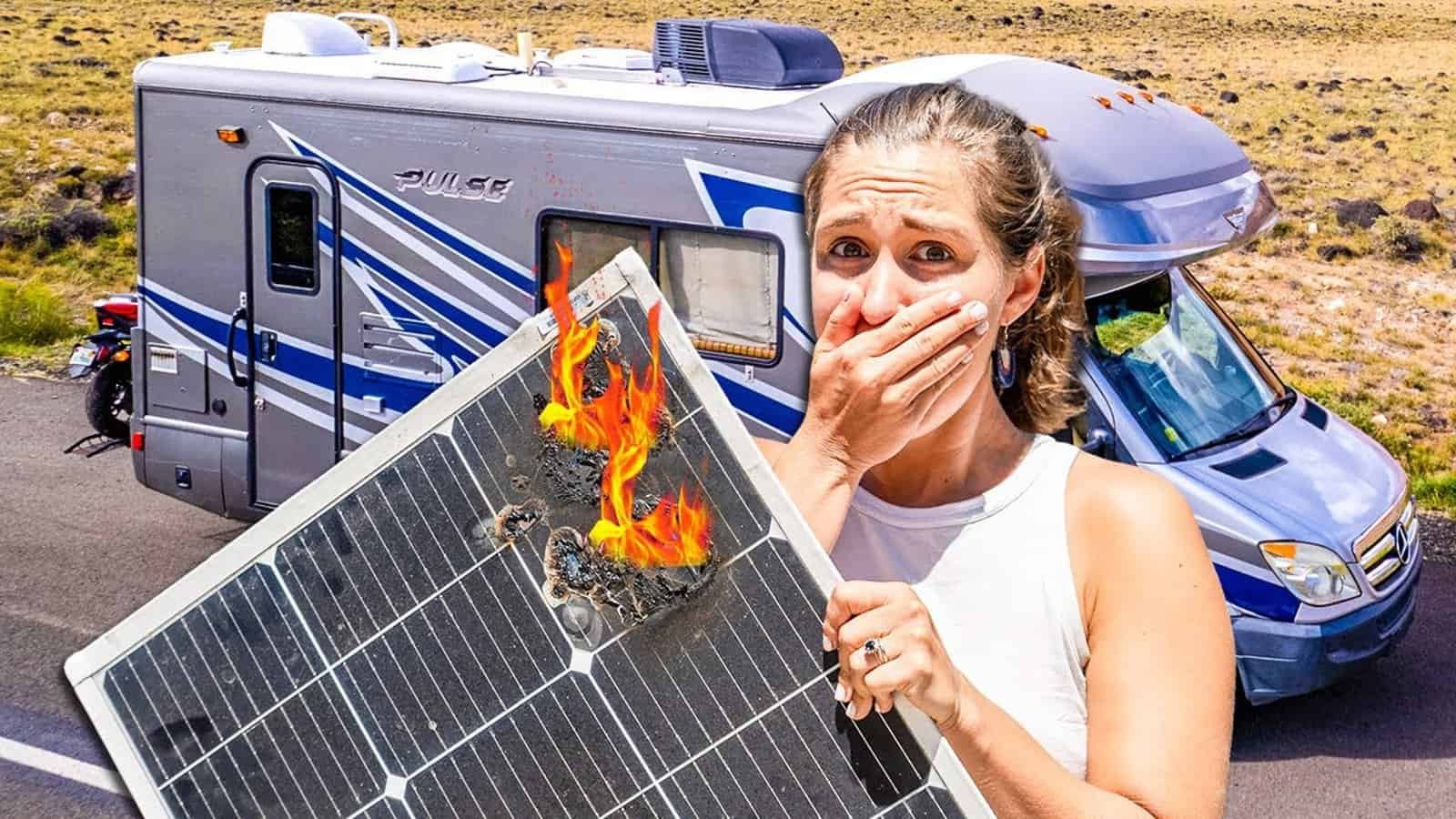
Topics: Flexible Solar Panels · ETFE Solar Module · Delamination · Micro-Cracks · Hot Spots · Water Ingress · Marine Solar · RV Solar · Back-Contact Flexible Module · Custom Flexible Solar Module Manufacturer
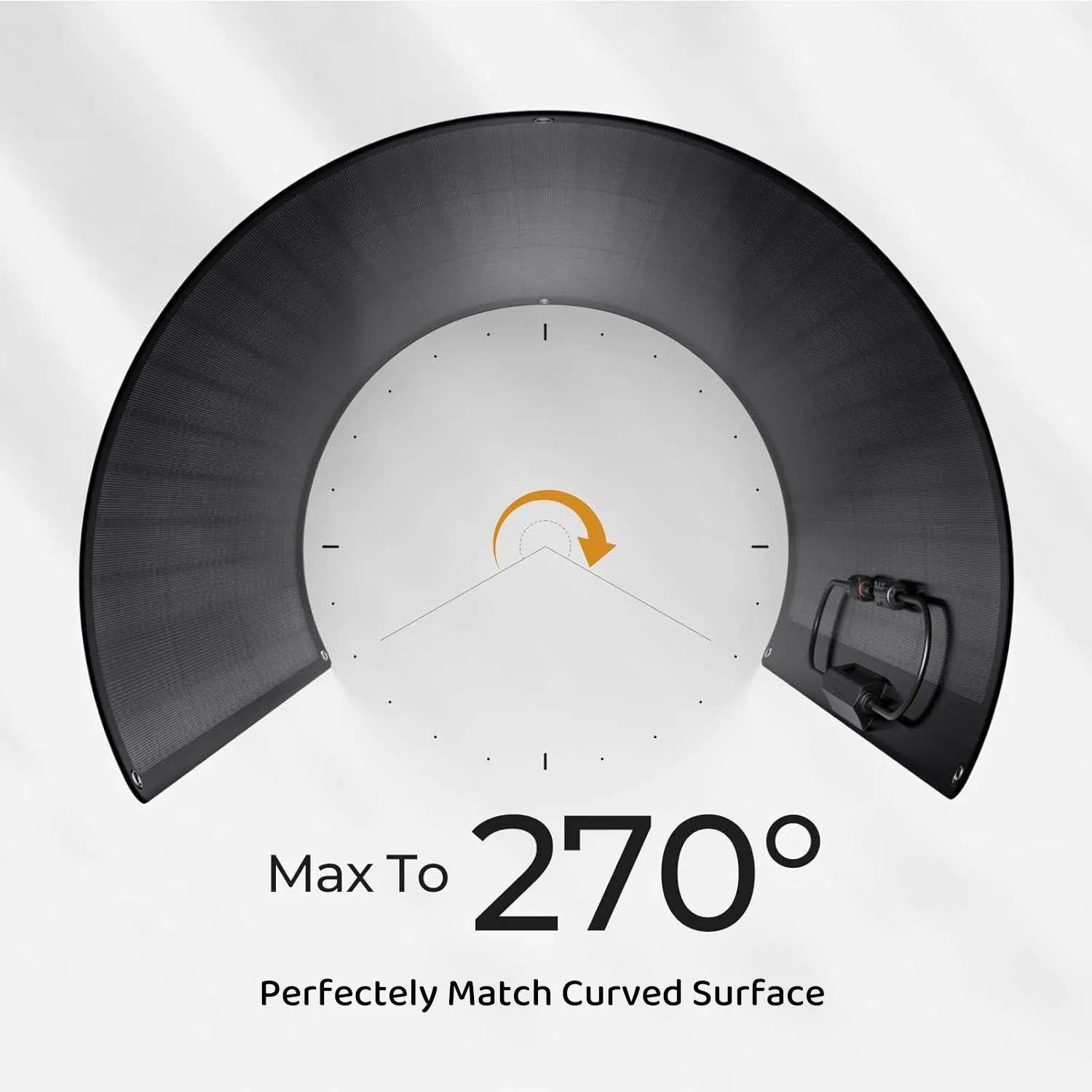
Flexible solar panels have a strong sales pitch. They are thin. They are light. They conform to curved surfaces where glass modules cannot go. For marine, RV, VIPV, off-grid, and BIPV applications, the appeal is obvious.
The problem is their failure rate.
Flexible panels fail more often than rigid glass modules — and they can fail fast. A panel that looks fine at delivery may lose significant output within one or two seasons of real outdoor use. In B2B deployments across fleets of RVs, vessels, or vehicles, that failure rate is not just a product inconvenience. It is a project liability.
The failures follow a predictable pattern. Delamination, micro-cracks, hot spots, and water ingress are not random events. They are physics-driven outcomes of specific engineering choices. Understanding them — and knowing how to question suppliers about them — is one of the most useful things a procurement manager or project engineer can do before signing a sourcing agreement.
The Four Failure Modes: How Flexible Solar Panels Break Down
Delamination — When the Layers Lose Their Bond
A solar module is a laminated sandwich. In a flexible panel, the layers typically include a frontsheet film, one or more encapsulant layers, the solar cells, reinforcement materials, and a rear barrier. Delamination is what happens when those layers start to separate.
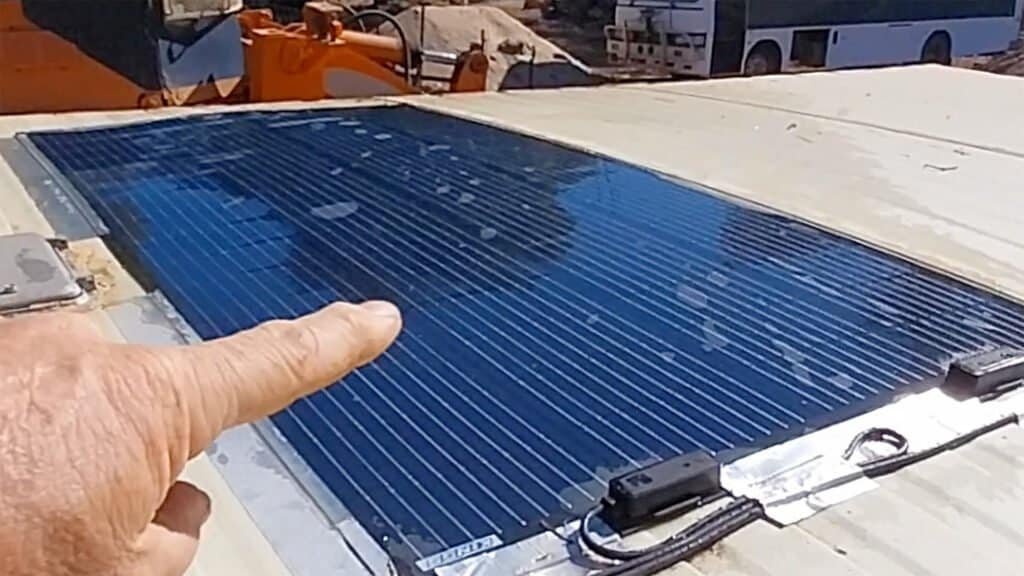
Visually, it shows up as bubbles, cloudy patches, lifted edges, or wrinkling across the panel surface. These symptoms often appear months before measurable power loss — which is one reason delamination is frequently underdiagnosed in the field.
What causes it?
Poor lamination processing is the most common factory-level cause. The encapsulant — typically EVA (ethylene vinyl acetate) — must cross-link properly during lamination. That chemical transformation converts EVA from a soft thermoplastic into a durable, adhesive thermoset. If the temperature, vacuum, pressure, or curing duration falls outside the correct window, cross-linking is incomplete. The bond is weak from the start.
In the field, excessive heat is the leading driver. Flexible panels bonded directly to metal roofs without an air gap can reach temperatures that push EVA beyond its mechanical stability threshold. At those temperatures, the encapsulant softens and loses adhesion. The frontsheet begins to lift.
Beyond heat, there is a self-reinforcing chemical feedback loop that few buyers are told about. When moisture infiltrates an EVA laminate and combines with heat, EVA undergoes hydrolysis. This produces acetic acid — confirmed by multiple peer-reviewed studies including research published in Progress in Photovoltaics (2024)[1] and documented by Kempe et al. in Solar Energy Materials and Solar Cells (2007).[2] That acid attacks adhesive bonds, corrodes cell contacts, and causes the dark “snail trail” discolouration visible on degraded panels. More acid causes more delamination. More delamination lets in more moisture. More moisture produces more acid. Left unchecked, this cycle destroys a panel from the inside.
The material difference: ETFE vs. PET
| Property | ETFE Frontsheet ✓ | PET Frontsheet |
|---|---|---|
| UV resistance | Excellent, long-term stable | Poor — yellows and cracks over time |
| Water vapour permeability | Very low | Relatively high |
| Thermal stability | High | Thermolabile — can swell and blister |
| Delamination risk | Low (when laminated correctly) | High — common in demanding environments |
| Typical outdoor lifespan | 10–20+ years | 1–5 years depending on UV exposure and climate |
| Marine suitability | Yes | No |
ETFE is clearly the better frontsheet material. But ETFE is only the surface. A premium ETFE frontsheet on a poorly laminated module is like quality exterior paint on a rotting wall. The surface looks fine while the structure fails underneath.
Micro-Cracks — The Failure You Cannot See
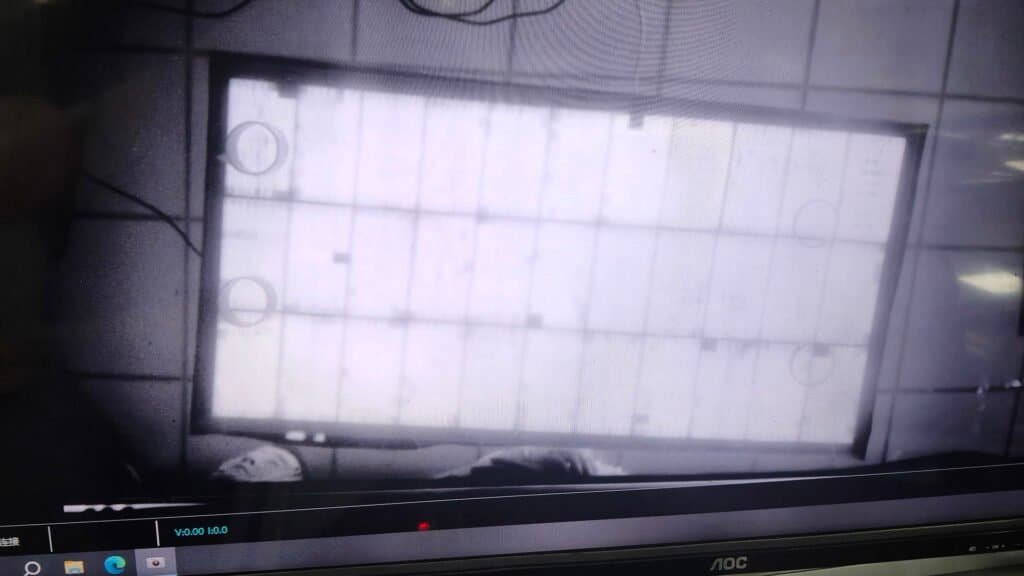
Micro-cracks are fractures in the silicon solar cells inside the panel. They typically measure less than 0.1 mm wide. You cannot see them in a visual inspection. Electroluminescence (EL) imaging — which illuminates the panel electrically and captures a near-infrared image — is the only reliable detection method.[3]
This is what makes them dangerous. A panel can have significant internal cracking and still appear to function at installation — only for power output to decline as cracks propagate under thermal cycling, vibration, and mechanical load.
EL studies on modules in the field and supply chain have consistently identified microcracks at transport and installation stages — damage that is invisible in routine visual inspection. For flexible modules on boats, RVs, and vehicles, post-installation vibration compounds the problem continuously. Academic research confirms that microcracking can cause measurable power loss in the low-to-mid double digits, with the rate depending on crack geometry, the proportion of electrically disconnected cell area, and how many current pathways around the crack remain intact.
Why flexible panels are more vulnerable than rigid panels
In a conventional rigid module, tempered glass and an aluminium frame protect the cells from bending stress. In a flexible module, that rigid protection is absent by design. The cells — brittle crystalline silicon — sit inside a polymer laminate that bends. Every installation flex, temperature swing, vibration event, and mechanical load puts stress directly on the cell material.
A note on standard certification and real-world thermal cycling
IEC 61215 requires modules to survive 200 thermal cycles (–40°C to +85°C) as part of type qualification.[4] Over a 25-year service life, a module in the field accumulates significantly more thermal stress cycles than this test evaluates — a gap that industry extended testing protocols such as IEC TS 63209 are designed to address.[5] For flexible modules installed on vibrating or thermally active surfaces, this gap between the certification test and real-world exposure is meaningful. It is one reason that module selection for demanding applications should go beyond certification compliance alone.
Types of cracks and their severity
Cracks that run parallel to the cell busbars are the most damaging type — they interrupt current flow along the cell’s main electrical pathways. Mesh cracks divide a cell into multiple isolated fragments, creating severe localised heating and significant output loss. The worst outcome in any crack scenario is current bottlenecking: because cells in a string operate at the same current, one high-resistance cracked cell limits current through every cell downstream in that string.
Common causes by stage
| Stage | Cause |
|---|---|
| Manufacturing | Mechanical stress during soldering, lamination, or handling |
| Transportation | Vibration and improper packaging during shipping |
| Installation | Over-bending the module; walking on panels; bonding over uneven surfaces |
| Operation | Thermal cycling; wind vibration; mechanical loads from vehicle or wave movement |
Hot Spots — Where Small Defects Become Heat Damage
A hot spot forms when part of a solar cell stops generating power and starts consuming it instead. The affected area acts as a resistive load. The rest of the string forces current through it. It overheats.
In flexible modules, hot spots are especially common because multiple failure triggers converge:
- Micro-cracks create high-resistance zones where current bottlenecks and heat concentrates.
- Partial shading from antennas, roof rails, ropes, bird droppings, or salt deposits forces uneven current flow across the string.
- Delamination bubbles trap heat over individual cells, cutting off convective cooling.
- Flush mounting without airflow raises the baseline operating temperature of the entire module.
Marine applications face the sharpest hot-spot risk, because the shading environment is complex and unpredictable. A mast shadow, a rope, a cleat, a radar dome, salt deposits after a spray event — all of these create partial shading on different parts of the module at different times. A generic off-the-shelf panel designed for open rooftop use is not engineered for that electrical reality.
BC cell temperature advantage compounds hot-spot resistance
Back-contact cells — including HPBC 2.0 (temperature coefficient –0.26%/°C) — have a measurably better thermal performance than conventional PERC cells (typically –0.35%/°C or worse). In high-temperature direct-bond installations, every degree of operating temperature costs less efficiency. Combined with HPBC 2.0’s “weak conduction” internal current shunting design — independently verified by TÜV Rheinland in 2025[6] — BC modules maintain significantly lower peak hot-spot temperatures under identical shading conditions compared to conventional cell architectures.
Bypass diodes: protection that can become a hazard
Bypass diodes route current around shaded cells. When they work, they limit hot spot severity. When they fail — due to thermal runaway, undersized ratings, or poor junction box design — they become a concentrated heat source. A junction box without proper potting compound, poor thermal contact, or undersized diodes is a silent liability in any high-heat or marine application.
Water Ingress — The Failure That Hides Until It Is Serious
Moisture ingress rarely announces itself. It is a slow process. By the time visible symptoms appear — discolouration, snail trails, power loss — the panel interior has typically been wet for months.
Moisture enters through two main mechanisms: physical breaches (cracks or gaps in edge sealant that draw liquid water in via capillary action) and vapour diffusion (degraded sealants that allow water vapour to permeate the laminate over time, condensing inside).
In flexible modules, the sealing challenge is harder than in rigid modules. Flexible structures bend and flex with temperature changes, vibration, and installation stress. UV radiation degrades lower-quality sealants within a few years, making them brittle. When different materials in the panel expand and contract at different rates — as they always do — the edge sealant bears that mechanical stress. Inferior sealants fatigue and fail.
Marine and coastal environments compress the timeline dramatically. Salt mist accelerates corrosion of exposed metal components. Constant humidity means any seal breach immediately draws moisture into the laminate.
Once inside, moisture attacks multiple components simultaneously: it corrodes metal interconnects, accelerates EVA hydrolysis and the acetic acid feedback loop, degrades electrical insulation, and can trigger Potential Induced Degradation (PID)[7] — a leakage current mechanism that causes rapid, sometimes large-scale power loss across an entire system.
The Cascade: Why One Failure Mode Triggers the Others
These four failure modes do not operate independently. They form a degradation chain that is far more destructive than any single mode alone.
Manufacturing stress / transport vibration
↓
Micro-cracks form in silicon cells
↓
Cracks interrupt current flow → resistance increases
↓
Hot spots develop at crack locations
↓
Heat softens EVA → air pocket forms
↓
Delamination begins (air pocket over cell)
↓
Edge seals weaken from thermal cycling + UV
↓
Water ingress through compromised seal
↓
EVA hydrolysis → acetic acid → more delamination
↓
Corrosion of interconnects → more hot spots
↻ cycle accelerates
The entry point varies — a transport crack, a flush-mount heat trap, a weak edge seal. The endpoint is always the same: premature module failure that is almost never traceable to a single cause.
Does BC + ETFE Solve the Problem?
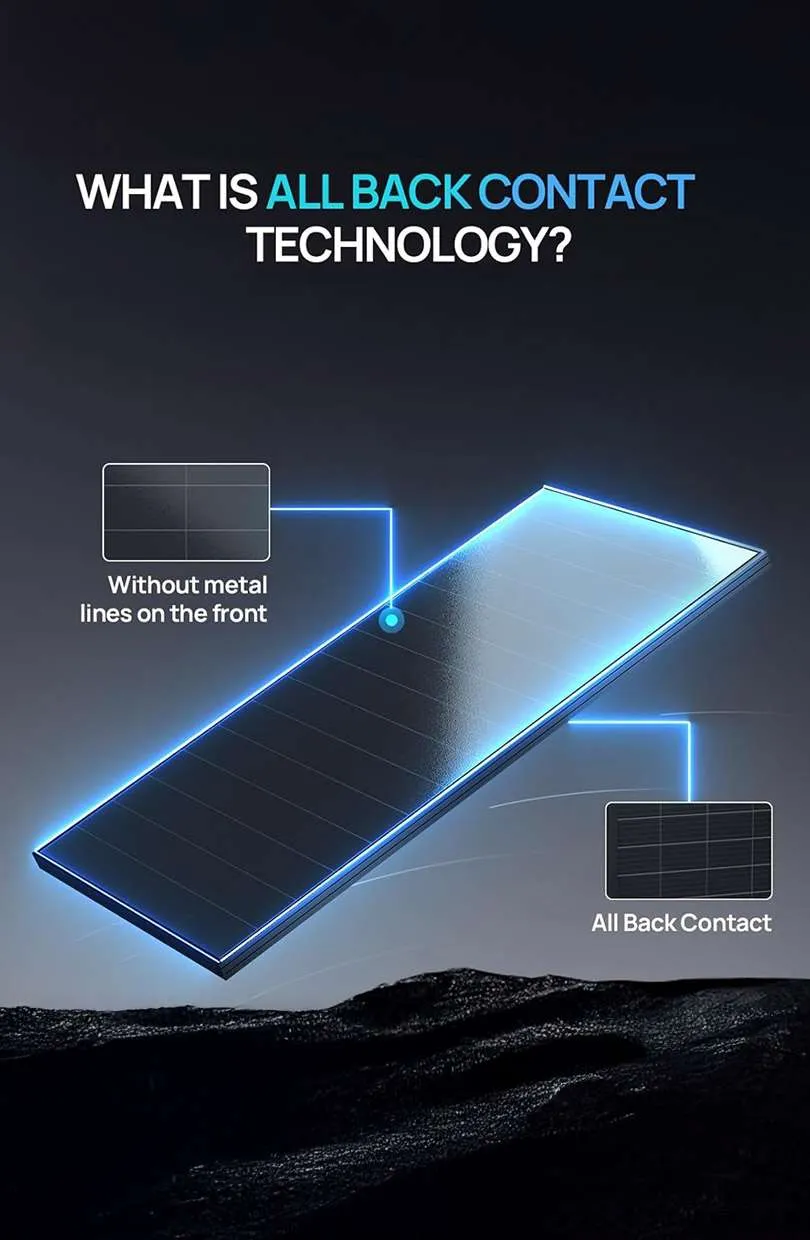
Back-contact (BC) cell technology — including HPBC 2.0 and ABC designs — is now a leading architecture in premium flexible modules. Combined with an ETFE frontsheet, it represents a meaningful upgrade over conventional flexible panels with front-busbar cells and PET frontsheets.
But it is not a complete solution on its own.
What BC + ETFE genuinely improves:
- Hot spot resistance. Because all electrical contacts are on the rear, current has more pathways to bypass localised resistance. HPBC 2.0’s internal weak-conduction design allows current shunting around shaded areas without activating bypass diodes — a verified advantage under TÜV Rheinland testing.
- Aesthetic quality. No front busbars means a cleaner, all-black appearance — valuable for BIPV, VIPV, and premium RV or marine installations.
- Surface durability. ETFE provides strong UV resistance, near-zero water vapour permeability through the face, and thermal stability that PET cannot match.
What BC + ETFE does not fix:
| Failure Mode | Does BC Help? | Does ETFE Help? | What Actually Fixes It |
|---|---|---|---|
| Delamination | Limited | Partial (face only) | POE/EPE encapsulant, strict lamination process, edge sealing |
| Micro-cracks | Partial | No | Reinforcement layer, smaller cut cells, bend-radius control, EL testing |
| Hot spots | Yes | Limited | BC cells + proper circuit layout + bypass diode design |
| Water ingress | No | Partial (face only) | Edge sealing, rear barrier, IP67/68 junction box, marine-grade cables |
| Heat from flush mounting | No | No | Standoff gap, thermal backsheet, installation design |
BC cells are still crystalline silicon. They still crack under excessive bending, vibration, and installation stress. ETFE protects the face, not the edges or rear. Delamination starts from the inside — from encapsulant failure, not frontsheet failure. The ETFE surface can remain intact while the laminate underneath is already separating.
A more complete framing: BC cells + ETFE frontsheet + reinforced multi-layer structure + POE or EPE encapsulant + marine-grade edge sealing + optimised circuit layout + pre-shipment EL testing.
That is a different product story than “ETFE and BC cells.” It is also a more honest one.
What a Reliable Flexible Solar Module Actually Needs
The Full Material Stack
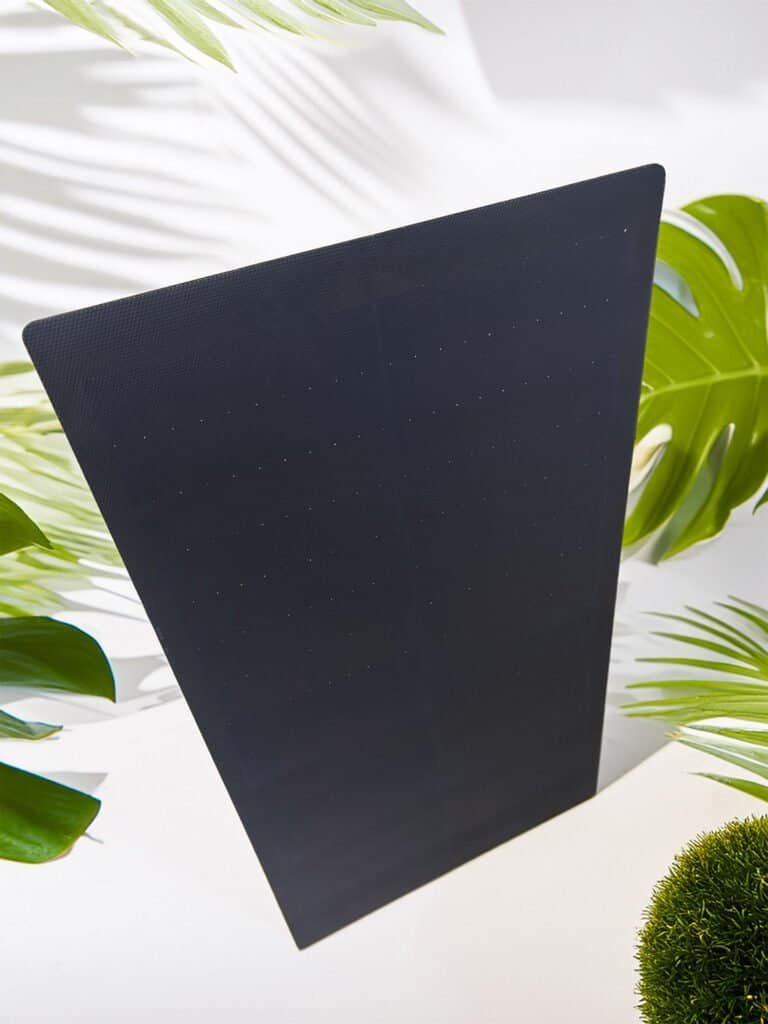
Not all flexible module structures are equivalent. A reinforced multi-layer design — such as Couleenergy’s nine-layer CLM series architecture — addresses more failure modes than a standard five-layer construction. The key layers in a high-durability flexible module structure are:
- ETFE frontsheet — UV stability, thermal resistance, low water vapour transmission through the face
- Outer encapsulant — adhesion to ETFE
- Composite reinforcement layer — mechanical protection for the cells
- Cell-layer encapsulant (POE preferred) — moisture resistance, no acetic acid hydrolysis pathway
- BC solar cells — higher efficiency, rear-contact design, better shading and hot-spot performance
- Cell-layer encapsulant (POE preferred) — symmetric moisture protection
- Composite film — structural support
- Inner encapsulant — adhesion to rear barrier
- Rear barrier (TPT or ETFE) — rear UV and moisture resistance
POE (polyolefin elastomer) encapsulant is a significant upgrade over standard EVA. Research published in Solar Energy Materials and Solar Cells[8] and independently confirmed by SoliTek’s comparative durability testing (2024)[9] shows POE does not produce acetic acid during moisture exposure, removes the EVA hydrolysis feedback loop entirely, has inherently lower water vapour transmission, and is anti-PID by design. EPE (EVA-POE-EVA, a co-extruded tri-layer) offers a practical middle ground: POE core for moisture and PID resistance, EVA outer layers for adhesion and ease of processing.
Installation Method as a Design Variable
Most flexible panel data sheets specify electrical performance. Very few specify the thermal management requirements for direct-bond installation — which is how most flexible panels are actually deployed.
The basic recommendation for any flush-mounted flexible panel is a standoff gap of at least 10–15 mm for airflow underneath the module. On dark metal roofs, marine decks, or vehicle rooftops in hot climates, the operating temperature difference between ventilated and unventilated installation can be significant — and every degree matters for both output and durability.
Where a standoff gap is not possible, the panel must be specifically designed for that installation method: a thermal backsheet, ribbed adhesive patterns that create partial channels, and a cell layout adapted to expected peak temperature.
Frequently Asked Questions
Key Takeaways
- Flexible solar panel failures follow a predictable cascade: micro-cracks → hot spots → delamination → water ingress → accelerated failure of all modes.
- ETFE protects only the front face. Edge sealing, encapsulant quality, and lamination discipline determine whether a panel survives in demanding conditions.
- BC cells reduce hot spot risk and improve shading performance, but do not prevent delamination, water ingress, or micro-cracks by themselves.
- POE or EPE encapsulant is a high-impact upgrade. It eliminates the acetic acid hydrolysis loop that links moisture ingress to delamination and cell corrosion — documented in peer-reviewed PV reliability research.
- IEC 61215 thermal cycling certification covers 200 cycles. Over a full service life, modules accumulate significantly more thermal stress than this test evaluates. For demanding flexible applications, certification compliance is a starting point, not a guarantee.
- EL imaging before shipment is standard quality practice. Requesting EL sampling at goods receipt is an additional procurement tool for fleet-scale B2B sourcing.
- Direct-bond installation without a ventilation gap is one of the most common field causes of premature failure. The installation method is a design input, not an afterthought.
- For B2B fleet or large-scale deployments, any design flaw baked into a production run multiplies across every unit. Procurement due diligence is not optional.
Choosing the Right Flexible Solar Panel for Your Application
Different applications have genuinely different design priorities. A panel that works well on an off-grid cabin roof is not necessarily the right design for a marine deck, an RV roof under desert sun, or a VIPV installation on a commercial vehicle.
A reliable flexible module must be engineered around the actual installation environment — its temperature range, vibration profile, shading conditions, mounting method, and expected service life — not configured from a catalogue default.
For project-specific advice on flexible solar panel specifications, material options, and custom module design for marine, RV, VIPV, BIPV, or off-grid applications, contact the Couleenergy technical team directly:
Couleenergy (Ningbo Coulee Tech Co., Ltd.) is a Zhejiang-based B2B solar module manufacturer specialising in back-contact flexible ETFE modules, BIPV glass-glass products, and OEM/ODM custom configurations. The company serves distributors, installers, EPC contractors, and OEM partners in EU and North American markets.
References & Footnotes
[1] Riedl, M. et al. (2024). Environmental fatigue crack growth of PV glass/EVA laminates in the melting range. Progress in Photovoltaics: Research and Applications. Peer-reviewed study confirming that acetic acid formation under hot-humid conditions lowers EVA delamination resistance, accelerating interfacial failure.
https://onlinelibrary.wiley.com/doi/abs/10.1002/pip.3800
[2] Kempe, M.D., Jorgensen, G.J., Terwilliger, K.M., McMahon, T.J., Kennedy, C.E. & Borek, T.T. (2007). Acetic acid production and glass transition concerns with ethylene-vinyl acetate used in photovoltaic devices. Solar Energy Materials and Solar Cells, 91(4), 315–329. DOI: 10.1016/j.solmat.2006.10.009. Seminal peer-reviewed characterisation of EVA hydrolysis, acetic acid production, and the resulting corrosion and delamination cascade in PV modules.
https://www.sciencedirect.com/science/article/abs/pii/S0927024806004107
[3] IEA PVPS Task 13 (2014). Review of Failures of Photovoltaic Modules. International Energy Agency Photovoltaic Power Systems Programme report documenting delamination, micro-cracks, and hot spots as recognised failure modes; identifies electroluminescence imaging as the primary method for detecting internal cell defects.
https://iea-pvps.org/key-topics/review-of-failures-of-photovoltaic-modules/
[4] IEC 61215-1:2021. Terrestrial photovoltaic (PV) modules — Design qualification and type approval — Part 1: Test requirements. The international standard governing PV module durability qualification. The 2021 edition introduced MQT 22, a specific bending test for flexible modules — a notable addition for buyers sourcing non-rigid panels.
https://webstore.iec.ch/en/publication/61345
[5] IEC TS 63209-1:2021. Photovoltaic (PV) modules — Extended-stress testing — Part 1: Terrestrial PV modules for general open-air climates. Voluntary extended durability protocol developed to address the gap between IEC 61215 certification and real-world long-term thermal stress; recommends 500+ thermal cycles for projects requiring higher confidence in 25-year lifespan predictions. Referenced here for the principle that the 200-cycle certification test represents a fraction of lifetime field exposure.
https://webstore.iec.ch/en/publication/62791
[6] LONGi Solar / TÜV Rheinland (2025). HPBC 2.0 anti-shading performance certification. Independent testing confirmed HPBC 2.0 maintained peak hot-spot temperatures of ~100°C versus >160°C for TOPCon under identical partial-shading conditions.
https://energyindustryreview.com/renewables/longis-hpbc-2-0-achieves-tuv-rheinland-certification-for-superior-anti-shading-performance/
[7] Morlier, A. et al. (2016). Polyolefin as PID-resistant encapsulant material in PV modules. Fraunhofer ISE / ResearchGate. Peer-reviewed study demonstrating that POE’s higher volume resistivity and lower WVTR reduce ionic and moisture transport, significantly lowering Potential Induced Degradation risk vs. EVA.
https://www.researchgate.net/publication/284123484_Polyolefin_as_PID-resistant_encapsulant_material_in_PV_modules
[8] Schneider, A. et al. (2024). Enhancing photovoltaic modules encapsulation: Optimizing lamination processes for Polyolefin Elastomers (POE) through crosslinking behaviour analysis. Solar Energy Materials and Solar Cells. Peer-reviewed study confirming POE’s absence of acetic acid by-products upon humidity exposure and its advantages in moisture resistance and long-term adhesion stability.
https://www.sciencedirect.com/science/article/abs/pii/S0927024824000370
[9] SoliTek / TaiyangNews (2024). SoliTek Releases EVA vs POE Analysis for Solar Modules. Industry durability testing comparing EVA and POE encapsulants across glass-glass module architectures; POE modules demonstrated significantly enhanced longevity and moisture resistance.
https://taiyangnews.info/technology/solitek-releases-eva-vs-poe-analysis-solar-modules
[10] Widhiyanuriyawan, D. et al. (2025). The impact of damp heat test on photovoltaic modules through visual inspection and testing of electroluminescence and wet leakage current according to IEC 61215 standard. AIP Conference Proceedings, 3166, 020014. Confirms the 85°C / 85% RH / 1,000-hour damp heat test conditions and documents failure modes detected under these conditions.
https://pubs.aip.org/aip/acp/article/3166/1/020014/3343098/
[11] IEC 61701:2020. Salt mist corrosion testing of photovoltaic (PV) modules. Edition 3 (current) — cancels and replaces the 2011 edition. Specifies cyclic salt mist test procedures to evaluate PV module resistance to corrosion from salt-containing atmospheres; relevant for coastal, marine, and offshore installations. Updated to harmonise with IEC 61215-1 and IEC 61215-2 (2021 editions).
https://webstore.iec.ch/en/publication/59588
[12] IEC TS 62782:2016. Photovoltaic (PV) modules — Cyclic (dynamic) mechanical load testing. Technical Specification (not a full International Standard) for cyclic dynamic mechanical load testing — evaluates cell interconnect, edge seal, and structural integrity under alternating mechanical loads. Note: the specification states it applies to modules mounted in a rigid manner; when specifying for flexible panels, ask whether the supplier has tested the module in its actual rigid-mounted configuration. This test is now incorporated by reference in IEC 61215-1:2021.
https://webstore.iec.ch/en/publication/24310

 English
  Español
  Français
  Deutsch
  Русский
  العربية