

Solar roof tiles have matured into serious building products. When you combine them with back-contact (BC) cell technology and double-glass construction, the result is a system that looks stunning, performs brilliantly, and lasts for decades — all in one integrated package.
Your roof does two things: it protects your home and shapes how it looks. What if it could also power your entire household — quietly, cleanly, and without compromising a single detail of your design? That is exactly what modern solar tile roofing delivers. And when those tiles are built on all-black double-glass back-contact (BC) cell technology, every key performance benchmark improves at once. This article covers every major reason why this specific combination stands apart from every other option available today.
01
Your Roof Becomes the Solar Panel
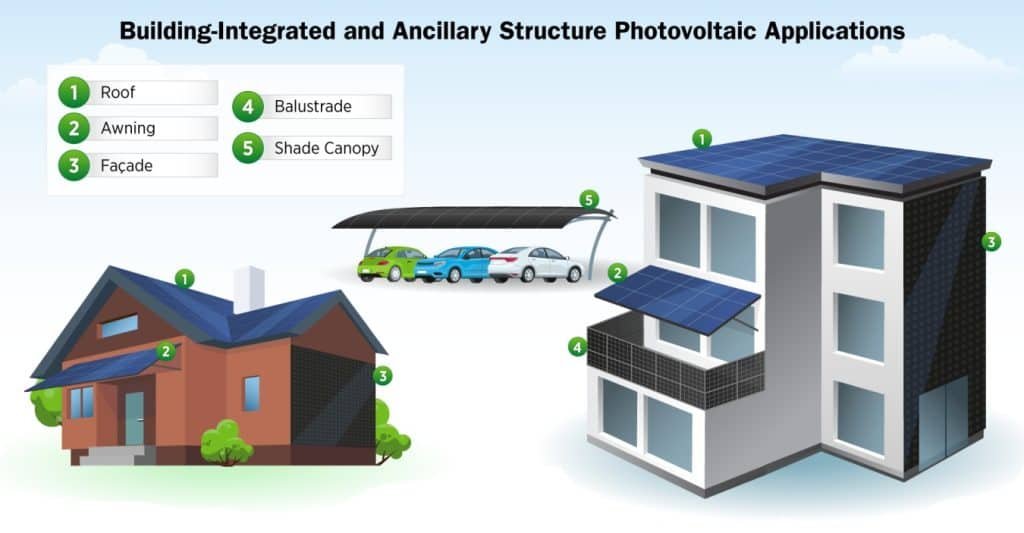
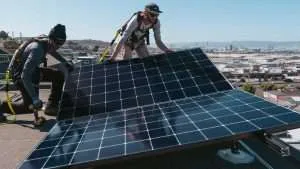
Traditional solar panels sit on top of your roof. Solar tiles are your roof. That distinction matters more than it might seem. There are no brackets, no rails, no hardware penetrating the waterproofing layer. The tiles interlock directly into the roofing system — protecting the building from the elements while simultaneously generating clean electricity.
This integration is called BIPV: Building-Integrated Photovoltaics. Instead of adding solar as an afterthought, BIPV weaves energy generation directly into the structure of the building itself. The result is a cleaner installation, fewer potential leak points, and a roof that earns its keep from day one.
Think of solar roof tiles as an upgrade to a product you already need. You need a roof. You want clean energy. A solar tile system delivers both — without visual or structural compromise.
02
Aesthetics That Actually Work
Conventional solar panels have a look that most people recognize immediately — silver grid lines, blue or dark-blue cells, bulky mounting frames. For homeowners with strict HOA rules, heritage conservation requirements, or simply high design standards, that look has been a dealbreaker.
All-black BC solar tiles solve this. Here is how.
No Grid Lines. Ever.
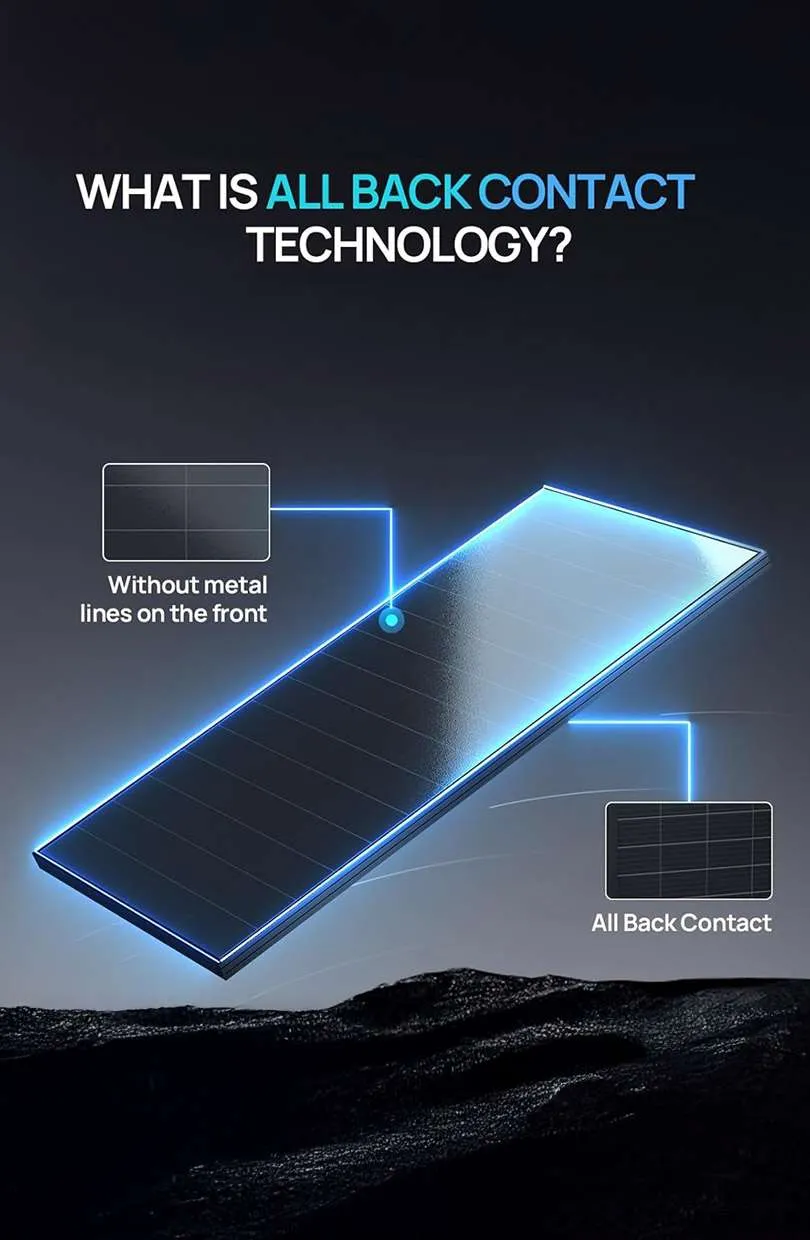
Back-contact cells move all electrical connections to the rear of the panel. The front surface is completely smooth — no busbars, no silver fingers, no striped pattern. What you see is a uniform, deep black surface that reads as high-end roofing material, not a power plant. Every angle of view delivers the same clean, continuous appearance.
Minimal Glare, No Reflective Hot Spots
Without reflective silver contacts on the front surface, all-black BC tiles produce significantly less glare than conventional panels. Standard panels reflect a meaningful portion of incoming light from their metal contacts, creating reflective hot spots visible to neighbors and surrounding properties. BC tiles eliminate those contacts entirely, making them far better suited to communities with strict visual regulations, coastal planning zones, or heritage districts.
Color-Matched to Any Architecture
Modern BIPV manufacturing allows tiles to be produced in Midnight Black, Slate Gray, Terracotta Red, and fully custom color-matched finishes. Whether the project is a contemporary minimalist home, a traditional pitched-roof cottage, or a commercial heritage building, the tiles can be specified to match. That level of architectural flexibility simply does not exist with conventional racking systems.

03
Higher Efficiency at the Cell Level
Efficiency in a solar panel refers to how much sunlight it converts into usable electricity. Higher efficiency means more power from the same area of roof — which matters enormously when roof space is limited or installation angles are not ideal.
Back-contact technology has a structural efficiency advantage. By removing metal contacts from the front surface, approximately 7% more of the cell area is directly exposed to sunlight. Light that would otherwise bounce off silver busbars is captured and converted instead. Photon utilization rates for BC cells reach up to 97.3% — meaning nearly all light striking the panel surface contributes to power generation.
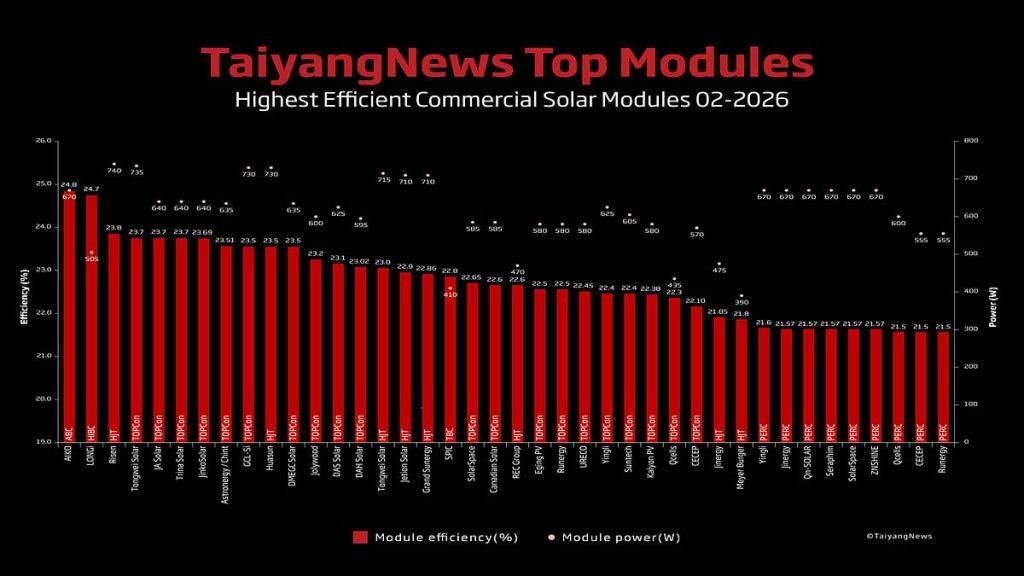
ℹ️ A note on BC sub-technologies: HPBC (Hybrid Passivated Back Contact) is LONGi’s technology, commercially launched in 2022, with HPBC 2.0 modules now shipping at 24.8% efficiency. ABC (All Back Contact) has over 20 years of field data from manufacturers such as Maxeon, with commercial modules at 24.3–24.9%. Both are grid-free and all-black. Always compare module efficiency — not cell efficiency — when evaluating real-world performance.
For flush-mounted roof applications — where the panel cannot be tilted to face the sun at an optimal angle — every percentage point of cell-level efficiency counts. BC technology provides that efficiency at the point of generation, compensating for fixed installation geometry that conventional panels cannot overcome.
04
Real-World Performance, Not Just Lab Numbers
Lab efficiency is a starting point. What happens on an actual rooftop — with partial shade, rising temperatures, and overcast skies — determines the system’s real value. BC panels consistently outperform conventional technologies in all three of these real-world conditions.
🌑 Shade Tolerance
In urban and suburban environments, shadows are unavoidable. Chimneys, neighboring buildings, dormers, and trees all cast shade across a roof throughout the day. Conventional solar panels are particularly vulnerable — even a small shaded area can drag down output for an entire string of cells.
BC back-contact panels handle shading fundamentally differently. By moving all contacts to the rear and eliminating front-surface constriction points, current can flow more freely around shaded areas. Data from 30+ manufacturer-led demonstration projects across Asia and Europe, compiled in a 2025 industry white paper by LONGi, Aiko Solar, TÜV Rheinland, and the China Electricity Council, confirms BC modules can generate up to 33% more power in partial shade and 1.2–3.2% more under full-sun conditions compared to TOPCon — with typical rooftop project gains of 5–15% in mixed-shading environments. Independent utility-scale testing shows a more mixed picture; the shade and rooftop advantages are where BC technology’s edge is clearest for BIPV applications.
ℹ️ ABC vs. HPBC in shade: The two main BC variants have different shade-performance profiles. ABC panels (Aiko, Maxeon) demonstrate up to 70% lower temperature rise in shaded cells compared to conventional technology, dramatically reducing hot-spot risk (per manufacturer specifications). HPBC 2.0 (LONGi) reduces shading-related power loss by up to 70%, thanks to its integrated shading-optimization layout (per manufacturer specifications). These are distinct advantages from different cell architectures — both meaningful, but not interchangeable. TÜV reliability testing independently confirms that BC modules outperform conventional modules in long-term performance benchmarks.
🌡️ Hot Weather Performance
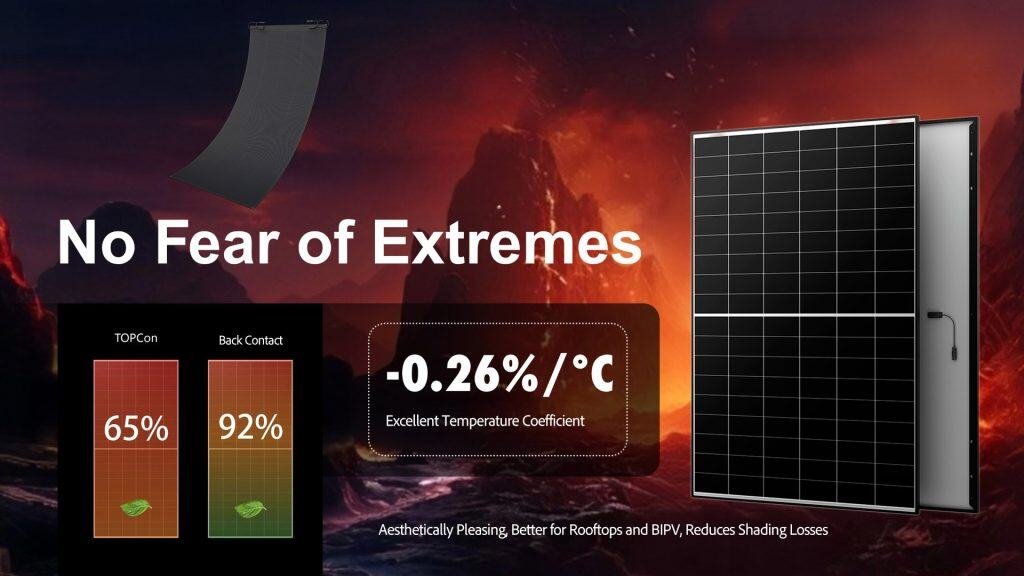
All solar panels lose some efficiency as temperature rises. This is called the temperature coefficient. BC panels — especially the HPBC variant — have superior temperature coefficients compared to PERC and standard TOPCon panels. HPBC panels achieve temperature coefficients of approximately −0.26 to −0.29%/°C depending on the product generation — with LONGi’s HPBC 2.0 (Hi-MO X10) reaching −0.26%/°C — versus −0.34% to −0.5%/°C for PERC. In practice, this means the panels hold onto more of their rated output when rooftop surfaces become hot. For flush-mounted tiles with limited airflow underneath, this advantage accumulates substantially over a long, hot summer.
🌥️ Low-Light and Off-Peak Conditions
Early mornings, late afternoons, and diffuse overcast light are not dead time for BC panels. The grid-free front surface and optimized cell architecture capture diffuse photons more effectively than front-contact designs. This contributes meaningfully to total annual energy production — particularly in climates with high cloud cover, short winter days, or roofs with sub-optimal orientation.
According to an industry white paper presented at Intersolar Europe 2025 by LONGi, Aiko Solar, TÜV Rheinland, and the China Electricity Council, field data from 30+ manufacturer-led demonstration projects shows BC modules producing 2–5% more energy than TOPCon in full-sun rooftop conditions — with advantages reaching up to 15% in shaded scenarios. For BIPV tile applications where shade tolerance and fixed-angle mounting are primary design constraints, this cumulative advantage translates into a meaningful difference in total output across a 25- to 30-year system life.
05
Double-Glass Construction: Built for Decades of Rooftop Life
Most solar panels use glass on the front and a polymer backsheet on the rear. Double-glass construction replaces that polymer layer with a second sheet of tempered glass. This sounds like a modest change. In practice, it transforms the long-term durability profile of the module in ways that matter deeply for a product expected to function as a roof for 25 to 30 years.
- Superior Moisture Barrier — Glass is fully impermeable to water vapor. Unlike polymer backsheets — which can allow moisture to slowly permeate over years of outdoor exposure — a second glass layer creates a hermetic seal around the solar cells on both sides. Industry testing by PVEL (2023 extended damp-heat protocol) shows glass-glass modules exhibit measurably lower power degradation from humidity than glass-backsheet designs. This protection is especially critical for rooftop applications where the module faces continuous weather exposure for decades.
- Mechanical Strength — Two layers of tempered glass provide exceptional resistance to hail impact, foot traffic during installation and maintenance, and the ongoing mechanical stress caused by thermal expansion and contraction through seasonal changes. The symmetric glass-glass structure also distributes mechanical loads more evenly, reducing the risk of micro-cracking in the cells over time.
- Fire Safety — Glass is non-combustible. Double-glass tiles eliminate the fire risk associated with polymer backsheets, which can melt or ignite under extreme heat. In roofing applications — where fire ratings directly affect building codes, planning approvals, and insurance premiums — this all-glass construction provides the strongest possible fire-safety profile.
- UV & Chemical Stability — Polymer backsheets yellow, crack, and delaminate over time when exposed to UV radiation, ammonia, salt spray, and other atmospheric chemicals. Glass does none of these things. The optical properties and structural integrity of a double-glass tile remain stable across the full operational lifespan — regardless of climate or installation environment.
- Longer Warranties — The superior durability of double-glass construction gives manufacturers the confidence to back their products with 30-year performance warranties — and in the case of premium ABC manufacturers like Maxeon, up to 40 years in select markets (EMEA, Australia, Japan, and Mexico; standard 25-year warranty applies in North America). Standard single-glass panels typically carry 25-year coverage. That five- to fifteen-year warranty extension reflects genuine structural confidence.
- Lower Degradation Rate — Annual power loss in premium BC panels can be as low as 0.35–0.4% per year — versus 0.5–0.7% for standard monocrystalline panels. After 30 years of operation, panels degrading at 0.4%/year still deliver approximately 89% of their original rated power. That is a benchmark that sets a high bar for any roofing product, solar or otherwise.

06
The BC + Double-Glass Synergy
The real breakthrough is not either technology on its own — it is what happens when they work together. BC cells have no exposed metal contacts on the front surface. There is nothing to corrode, delaminate, or allow moisture to work through. Pair that with double-glass encapsulation that seals the cell hermetically from both sides, and the result is a module architecture that eliminates the three most common long-term failure modes seen in conventional solar panels.
Conventional front-contact panels are vulnerable to Potential-Induced Degradation (PID), caused by voltage stress and moisture ingress through the backsheet. They also suffer busbar corrosion as silver contacts interact with moisture over time, and micro-cracking from thermal cycling that stresses fragile front-side solder connections.
All-black double-glass BC tiles sidestep every one of these failure modes. No front-side contacts means no corrosion pathway. A hermetic glass enclosure on both sides means no moisture ingress vector. A symmetric glass-glass structure means better mechanical stability through thermal cycles. The combination does not just perform better at installation — it maintains performance far closer to its original rating for a significantly longer period.
TÜV reliability testing confirms that BC modules consistently outperform TOPCon modules in long-term performance benchmarks. This structural advantage compounds over a 25- to 30-year installation life into a meaningful difference in lifetime energy yield.
07
Structural Advantages of Solar Tile Roofing
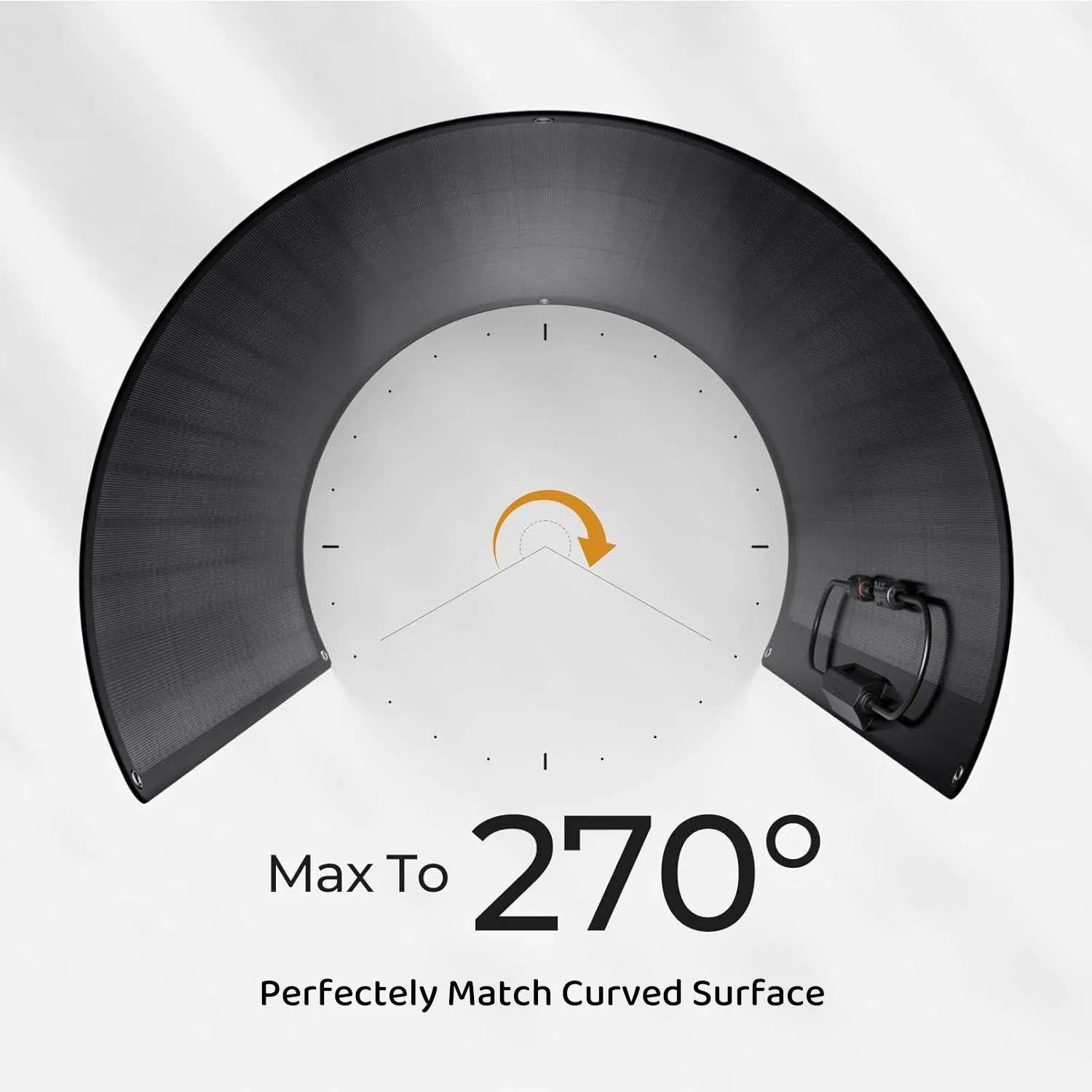
One concern that comes up often is weight. Traditional tile materials — clay, slate, concrete — require structural assessment and sometimes reinforcement before installation. Modern polymer-based solar tiles address this directly. They are lightweight enough to be installed on most existing roof structures without engineering upgrades, keeping installation timelines and costs predictable.
The interlocking design of solar tiles also improves wind resistance compared to standard shingles. Where individual shingles can be peeled off under strong wind uplift, interlocked solar tiles form a unified surface that distributes force across the entire roof plane. Many systems are tested and certified to withstand sustained winds exceeding 110 mph, with premium systems rated at 130 mph or higher under ASTM D3161 Class F standards.
Hail resistance is equally strong. Top-rated solar tile systems achieve a Class 4 rating under UL 2218 — the highest classification available — indicating the tile can absorb the impact of a 2-inch steel ball dropped from 20 feet without cracking or losing structural integrity.
08
Energy Independence and Grid Resilience
A standard grid-tied solar panel system shuts off automatically during a power outage — a safety requirement that frustrates many homeowners who expected backup power from their investment. The solution is pairing a solar tile array with a battery storage system.
When battery storage is connected, the home can “island” — disconnecting from the grid and running entirely on stored solar energy. During daylight hours, the tiles keep generating and charging the batteries. During the night, or through a grid outage, the batteries supply the house. The loop is self-sustaining as long as sunlight is available each day.
For homes in regions prone to wildfire-related grid shutoffs, hurricane seasons, or severe winter storms, this level of energy resilience has moved from a luxury to a practical necessity. Solar tiles with battery backup provide that resilience without requiring a separate, visible rooftop installation.
09
Home Value and Long-Term Return
A solar tile system is a permanent fixture that becomes part of the property’s appraised value — particularly when owned outright rather than leased. Research consistently shows that homes with solar installations sell at a meaningful premium compared to equivalent properties without them. A 2025 market analysis by SolarReviews, reviewing over 400 recently sold U.S. home listings, found that solar-equipped homes sold for an average of 6.9% more than comparable non-solar properties — up from the 4.1% premium recorded in 2019. A separate 2025 analysis of over 5,000 California home sales found premiums of 5–10% for single-family homes with owned solar systems. Premiums vary by region: high-electricity-cost states like New Jersey (9.9%) and Seattle (9.3%) see the largest lifts, while some lower-adoption markets show smaller or no premium.
ℹ️ Context for B2B buyers: These studies cover solar installations broadly — rooftop panels as well as integrated tile systems. Dedicated home-value research specific to BIPV solar tiles at scale is limited, given the technology’s relatively recent mainstream availability. The premium data is directionally relevant but applies most directly to owned, conventional panel installations. As BIPV adoption grows, tile-specific resale data will follow.
The return-on-investment picture becomes more compelling when you account for the fact that a solar tile system replaces a roof replacement that would be needed regardless. Two separate expenditures — new roofing and solar generation — combine into one integrated project. Buyers understand they are purchasing a built-in power plant, and increasingly, they seek out properties with this infrastructure in place rather than treating it as a complication at closing.
10
Environmental Impact That Goes Beyond Clean Electricity
The most obvious environmental benefit of solar is avoiding carbon emissions from fossil-fuel energy generation. But the full picture extends further than that for integrated rooftop systems.
Solar roof tiles reduce the urban heat island effect. Traditional dark roofing materials absorb solar radiation and re-radiate it as heat into the surrounding environment. Solar tiles convert a significant portion of that incoming energy into electricity rather than heat, reducing roof surface temperatures and helping cool the surrounding microclimate.
Unlike utility-scale solar farms, rooftop BIPV systems require zero land clearing or habitat disruption. They coexist directly with the built environment, generating electricity at the point of consumption. This eliminates distribution losses and avoids the infrastructure costs associated with long-distance power delivery from centralized plants.
At the end of their operational life, double-glass BC tiles are highly recyclable. Glass, silicon, and aluminum are all recoverable materials through established industrial recycling streams. The circular economy case for these products is strong — their environmental footprint continues to shrink even after decommissioning.
11
Customization at the Manufacturing Level
Off-the-shelf products rarely fit complex architectural requirements perfectly. This is where manufacturer-level customization becomes decisive. An OEM solar tile manufacturer with genuine BIPV expertise can tailor tile dimensions, cell technology selection, color, surface texture, connector specifications, and efficiency targets to match the precise requirements of each project.
For distributors, installers, and project developers working across varied markets and building types, this flexibility is the difference between offering a niche product and serving the full breadth of the premium residential and commercial BIPV market. Custom tiles for heritage conservation projects, architect-specified colorways for luxury developments, and high-efficiency variants for space-constrained urban rooftops are all achievable with the right manufacturing partner.
A professional custom BIPV development workflow moves from initial consultation through design refinement, prototype production, and laboratory testing before entering certified mass production. Environmental exposure trials, mechanical load validation, and full international certification documentation are part of the process — not optional extras that can be skipped in the interest of speed or cost.
12
Who Benefits Most
All-black double-glass BC solar tiles are a premium product, and the market for them reflects that. These are the buyers and specifiers who see the clearest and most immediate advantage.
🏠 Homeowners Replacing a Roof
If the roof needs replacing anyway, solar tiles turn a necessary expenditure into a long-term energy asset. The dual-purpose economics are at their most compelling at this moment.
✏️ Architects & Developers
Grid-free surfaces and color-matched options mean solar can be designed into the building from day one — integrated with the architecture, not applied over it.
📦 Distributors & Installers
Entering the BIPV market with a product that solves the aesthetics, durability, and efficiency problems simultaneously separates you from a crowded conventional panel market.
🌴 Hot, Humid & Coastal Climates
Superior temperature coefficients combined with a hermetic glass-glass moisture barrier make this the most climate-resilient solar roofing option for demanding coastal and tropical environments.
🏛️ Heritage & HOA Properties
Smooth, color-customizable tiles pass architectural review processes that would reject conventional panel installations outright — opening markets that are otherwise closed to solar.
🏢 Commercial & Mixed-Use Buildings
Large roof areas, premium aesthetics, strong efficiency, and long warranty coverage make BC double-glass tiles a compelling specification for offices, hotels, and retail developments.
BC Double-Glass Tiles vs. Standard Alternatives
| Feature | BC Double-Glass Tile | Standard PERC Tile | TOPCon Tile | Thin-Film BIPV |
|---|---|---|---|---|
| Front surface | ✅ Smooth, grid-free | Visible grid lines | Visible grid lines | Smooth but lower output |
| Module efficiency | ✅ 24–25%+ | 19–21% | 22–23.5% | 12–18% |
| Shade performance | ✅ Up to 33% better¹ | Baseline | Moderate improvement | Varies |
| Moisture protection | ✅ Hermetic glass-glass seal | Polymer backsheet | Depends on build | Varies |
| Annual degradation | ✅ ~0.35–0.4% | 0.5–0.7% | 0.4–0.5% | 0.5–1.0% |
| Warranty | ✅ Up to 30–40 years² | 25 years | 25 years | 20–25 years |
| Fire safety | ✅ Excellent (all glass) | Backsheet fire risk | Depends on build | Varies |
| Aesthetic quality | ✅ Premium all-black | Industrial look | Industrial look | Good but low output |
¹ Up to 33% better in documented partial-shade scenarios per 2025 BC industry white paper; typical real-world project gains of 5–15% vs. conventional panels, depending on shading pattern and system design. ² 30 years for standard BC double-glass premium products; up to 40 years from Maxeon (ABC/IBC technology with 20+ years field data) in select markets including EMEA, Australia, Japan, and Mexico — standard 25-year warranty applies in North America.
The Bottom Line
All-black double-glass BC solar tiles bring together every property that matters in a BIPV product: zero-compromise aesthetics with no visible grid lines, industry-leading cell efficiency verified at 25.4% world-record module level, real-world performance advantages in shade and high-temperature conditions, a hermetic glass-glass moisture barrier, and a degradation rate as low as 0.35–0.4% per year — delivering close to 89% of original power after 30 years of operation. In full-sun rooftop conditions, field data shows BC modules producing 2–5% more energy annually than equivalent TOPCon installations — a gap that widens to 15% or more in partially shaded scenarios that are unavoidable in most urban and suburban BIPV applications.
No single other combination of cell technology and module construction checks all of these boxes simultaneously. Whether you are specifying a building, distributing solar products into a regional market, or evaluating roofing options for a specific project, the technical case is clear: BC cells, double-glass construction, all-black finish. This is the technology stack built for the next 30 years of the solar industry.
Ready to explore what this means for your specific project? Contact Couleenergy’s technical team directly to discuss cell technology options, custom dimensions, color matching, and certifications.
Ready to Source All-Black BC Solar Tiles?
Couleenergy manufactures custom BIPV solar tiles to exact specification — dimensions, color, cell technology, and certifications included. Speak with our team to discuss your project requirements.
📧 Email Us: info@couleenergy.com
📞 Call: +1 737 702 0119
 English
  Español
  Français
  Deutsch
  Русский
  العربية