
Solar panel technology advances quickly. What was cutting-edge two years ago might already have a newer, more powerful successor. LONGi’s back-contact solar portfolio proves this evolution—they’ve released three distinct technologies in just three years, each targeting different performance levels and applications.
If you’re researching solar panels for your business, understanding these differences matters. The right technology choice affects your energy output, return on investment, and system reliability for decades.
This guide breaks down HPBC 1.0, HPBC 2.0, and HIBC—three technologies that share the back-contact foundation but deliver very different results.
🔬 What Makes Back-Contact Technology Different?
Before comparing the three versions, let’s establish what back-contact means.
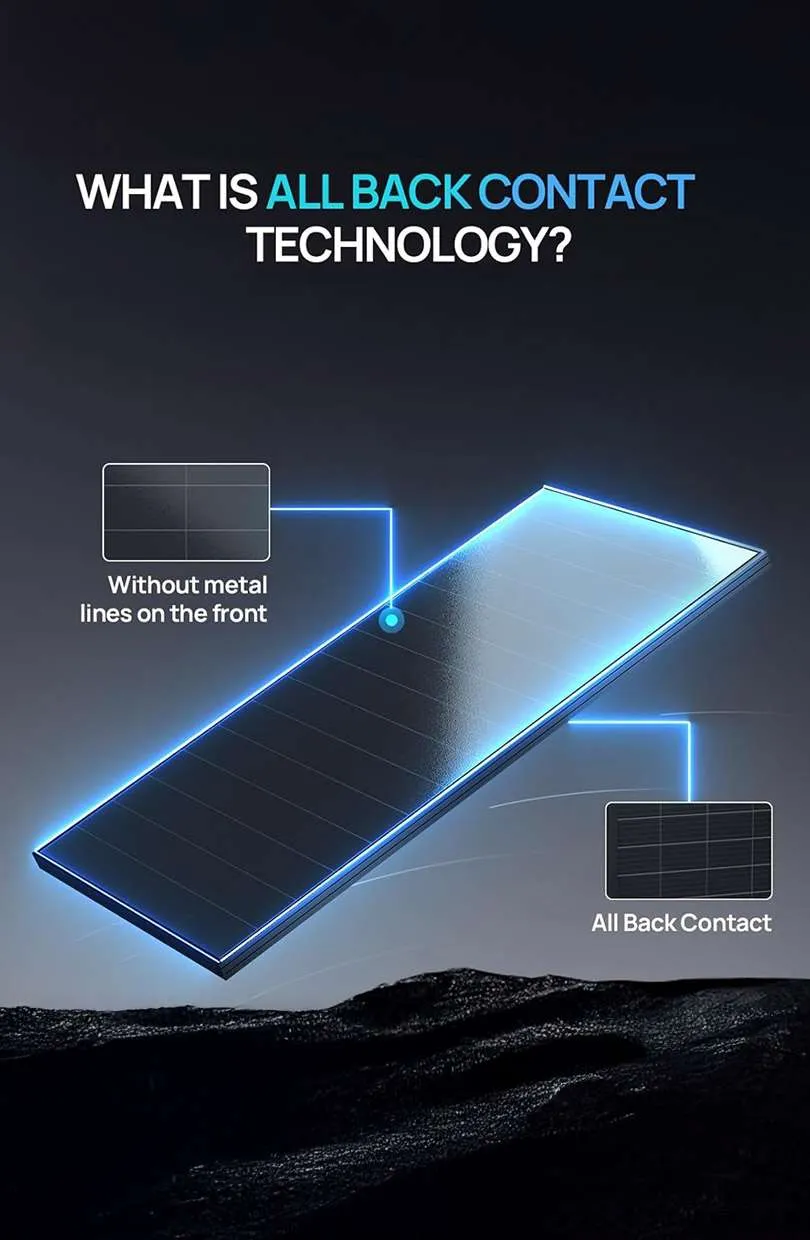
Traditional solar panels place metal contacts on the front surface. These contacts collect electricity but also block sunlight. They create shadows across the cell, reducing the power you generate.
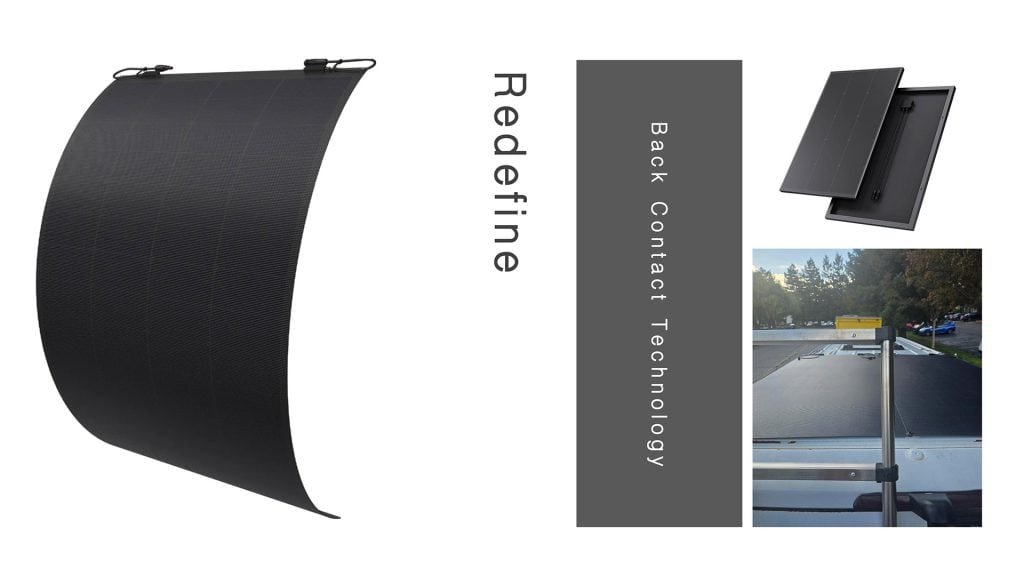
Back-contact technology moves all electrical contacts to the rear of the panel. The front surface receives unobstructed sunlight. More light reaches the silicon, and more electricity flows out.
📊 This design change brings several advantages:
- Higher efficiency from increased light absorption
- Better aesthetics with an all-black appearance
- Improved durability with fewer front-side stress points
- Enhanced performance in partial shade conditions
Now let’s explore how LONGi has evolved this technology across three generations.
📅 The Three Technologies: Timeline and Purpose
LONGi didn’t just create one back-contact technology. They developed a portfolio addressing different market needs.
🔹 HPBC 1.0 First Generation
Launched in November 2022 as LONGi’s entry into back-contact solar. It combined PERC technology with back-contact design on P-type silicon wafers. This first-generation product targeted premium residential and commercial projects where aesthetics and performance both mattered.
🔹 HPBC 2.0 Mainstream Generation
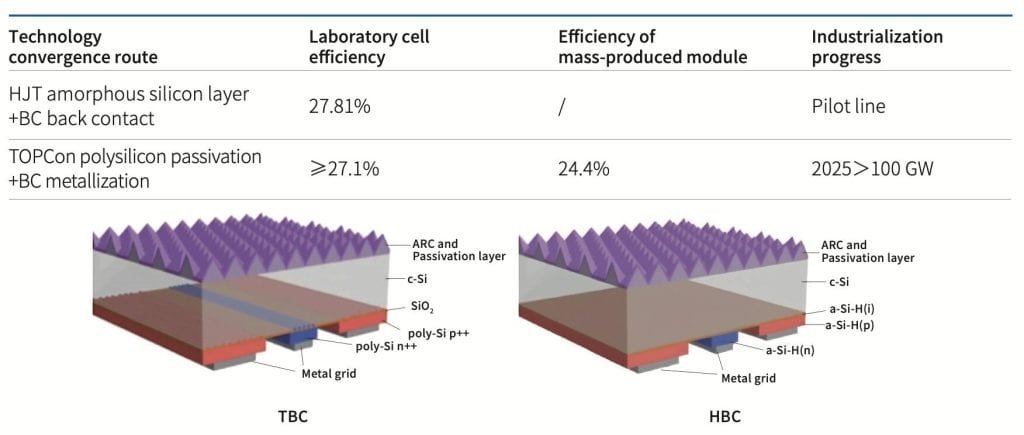
Arrived in October 2024 with major upgrades. LONGi switched to N-type silicon with their proprietary TaiRay wafers and integrated TOPCon passivation technology. This second generation aimed to bring back-contact benefits to mainstream markets—residential, commercial, and utility-scale installations.
Note: HPBC 2.0 is sometimes referred to as TBC (Tunneling Back Contact) in industry literature—these terms describe the same underlying technology combining TOPCon passivation with back-contact architecture.
🔹 HIBC (Heterojunction Back Contact) Ultra-Premium
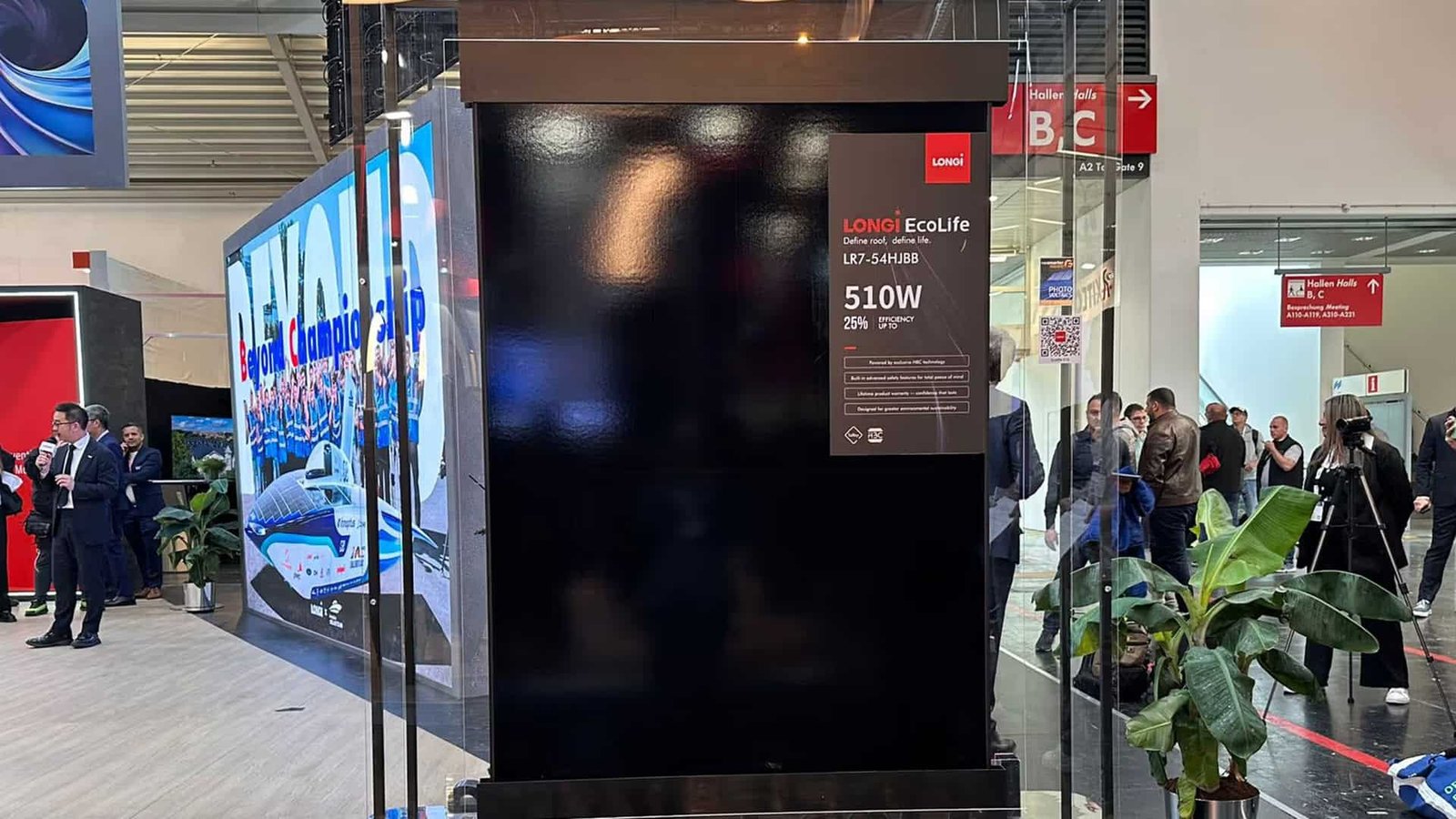
Debuted in May 2025 as LONGi’s ultra-premium offering. This technology combines heterojunction solar cells with back-contact architecture—a world first in commercial production. HIBC targets customers who want maximum efficiency and are willing to invest more for the best available technology.
⚙️ HPBC 1.0: The Foundation Technology
Core Design
HPBC 1.0 built on proven PERC (Passivated Emitter and Rear Cell) technology. LONGi adapted PERC’s passivation layers to work with back-contact architecture on P-type silicon wafers.
The hybrid approach meant combining different technologies:
- PERC’s established manufacturing processes
- Back-contact electrical routing
- All-black aesthetic design
This combination delivered solid performance improvements over standard PERC panels without requiring completely new factory infrastructure.
Performance Specifications
HPBC 1.0 modules achieved respectable numbers for 2022-2023:
| Specification | Value |
|---|---|
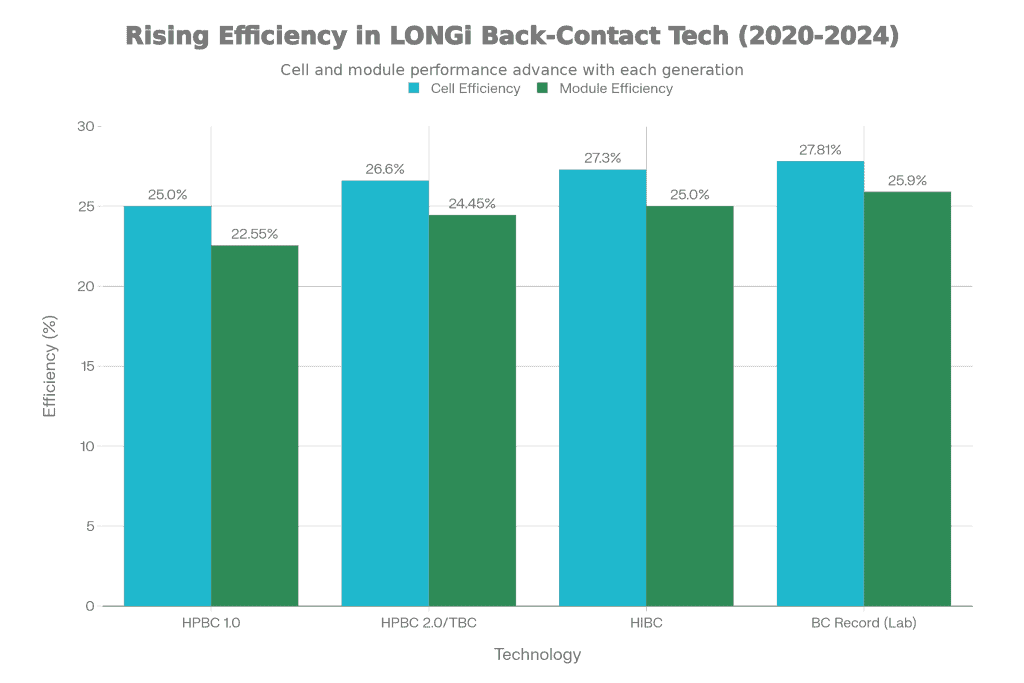
| Cell Efficiency | ~25.0% |
| Module Efficiency | 22.3% to 22.8% |
| Power Output | 515W to 575W (72-cell) |
| Temperature Coefficient | -0.29%/°C |
These specifications placed HPBC 1.0 firmly in the premium segment. The 22.8% module efficiency exceeded most standard solar panels at launch.
Reliability Features
LONGi backed HPBC 1.0 with strong warranties:
- 15-year product warranty
- 25-year performance warranty
- First-year degradation: 1.5%
- Annual degradation: 0.4% per year
Over 25 years, these PV panels retained about 86-87% of their original power output. That’s acceptable for premium solar products, though later generations improved these figures significantly.
Best Applications
HPBC 1.0 worked well for:
- Premium residential installations where appearance mattered
- Commercial rooftops with good sun exposure
- Projects prioritizing aesthetics alongside performance
- Applications where the all-black look justified the premium
The technology delivered meaningful benefits but faced competition from advancing TOPCon products. As HPBC 2.0 became available, most new projects shifted to the newer generation.
🚀 HPBC 2.0: The Mainstream Breakthrough
Revolutionary Design Changes
HPBC 2.0 represented a complete platform upgrade. LONGi changed nearly every major component:
🔧 Key Innovations:
- Wafer Technology: Switched from P-type to N-type silicon using proprietary TaiRay wafers with 16% better resistance to breakage
- Passivation Technology: Upgraded to Bipolar Hybrid Passivation, boosting open-circuit voltage beyond 745 mV
- Zero Busbar Structure: Eliminated thick metal busbars entirely with 0BB design
- TaiRay Wafer Benefits: Higher manufacturing concentration, superior purity, significantly stronger physical resistance
Performance Leap
HPBC 2.0 numbers show dramatic improvements:
| Specification | HPBC 1.0 | HPBC 2.0 | Improvement |
|---|---|---|---|
| Cell Efficiency | ~25% | 26.6% | +6.4% |
| Module Efficiency | 22.8% | 24.8% | +8.8% |
| Power Output (72-cell) | 575W | 670W | +16.5% |
| Temperature Coefficient | -0.29%/°C | -0.26%/°C | Better by 0.03%/°C |
The efficiency jump from 22.8% to 24.8% translates to approximately 16-19% more power from the same-sized solar panel, depending on specific module configuration.
🏆 World Record Achievement: LONGi achieved a world record 25.4% module efficiency certified by Fraunhofer ISE, one of the world’s most respected solar testing institutions.

Temperature Performance Advantage
Solar panels lose efficiency as they heat up. HPBC 2.0’s improved temperature coefficient (-0.26%/°C versus -0.29%/°C for HPBC 1.0) delivers measurable benefits.
HPBC 2.0’s better temperature performance means generating approximately 0.7% more power at typical 60°C operating temperatures, with advantages increasing to over 1% during extreme heat events. In hot climates, this advantage compounds across thousands of operating hours annually.
Shading Performance Breakthrough
HPBC 2.0’s “soft breakdown design” represents a major innovation. When partial shade hits the panel, current can bypass shaded cells through alternative pathways.
Independent testing shows impressive results:
- 70% reduction in power loss compared to TOPCon modules when shaded
- 28% lower hotspot temperatures under shading conditions
- Maintains 80-85% power output in shade versus 65-70% for standard panels
One European installation with tree shading saw an 18% production increase after switching to HPBC modules. For real-world installations where perfect sun exposure isn’t always possible, this advantage matters tremendously.
Enhanced Durability
The TaiRay wafers and full back-welding structure provide superior physical resilience:
- 87.2% lower risk of micro-cracks during transport and installation
- 16% better break resistance compared to standard wafers
- Superior performance in thermal cycling, humidity, and UV tests
Fewer micro-cracks mean more consistent long-term performance. Your system maintains rated output for more years.
Extended Warranty
📋 HPBC 2.0 Warranty Coverage:
- 15-year product warranty
- 30-year performance warranty (5 years longer than HPBC 1.0)
- First-year degradation: less than 1.0%
- Annual degradation: 0.35% per year
- 30-year capacity retention: ~88.85%
That extra five years of warranty protection provides significant financial security for long-term projects.
Real-World Validation
Laboratory numbers tell one story. Field testing tells another.
China’s National Photovoltaic Quality Inspection Center (CPVT) and CGC independently tested HPBC 2.0 against TOPCon modules:
| Test Condition | HPBC 2.0 Advantage |
|---|---|
| Under Shade | 32.62% higher power generation |
| Post-Shading Recovery | 11.34% better performance |
| Overall Generation | 1.93% higher per-kilowatt output |
| Operating Temperature | Averages 1.26°C cooler |
The first commercial HPBC 2.0 project—a 2.2 MW solar plant in Yichun, China—demonstrates real advantages:
- Expected to generate 3.2 million kWh annually
- Projects 111,000 kWh more annual generation versus same-capacity TOPCon plant
- 5% increased installation capacity across the same surface area
- Combined gain: 8.56% power generation improvement
Manufacturing Scale
LONGi is rapidly scaling HPBC 2.0 production:
- Cell production yield rate: 97% (indicating mature, cost-effective manufacturing)
- Over 17 GW of back-contact products shipped in 2024
- Targeted production capacity: 70 GW by end of 2025
- LONGi’s Jiaxing “Lighthouse Factory” contributes over 40% of capacity
The 97% yield rate is particularly significant. It means the manufacturing process has matured beyond the experimental phase into reliable mass production.
Global Expansion
LONGi is establishing HPBC 2.0 production globally:
- 1.4 GW facility in Indonesia (with Pertamina NRE)
- European availability established Q1 2025
- Production and shipments across China, Europe, Middle East-Africa, Asia-Pacific, and Latin America
- Additional capacity expansions planned through 2026
💎 HIBC: The Premium Technology Frontier
Groundbreaking Innovation
HIBC (Heterojunction Back Contact) represents LONGi’s most advanced technology. Launched in May 2025, HIBC achieved something unprecedented—combining heterojunction solar cells with back-contact architecture in commercial production.
Heterojunction technology uses ultra-thin amorphous silicon layers to create better electrical interfaces. This reduces energy losses and improves efficiency. Previous attempts to combine HJT with back-contact faced manufacturing challenges. LONGi solved these challenges and brought the technology to market.
Exceptional Performance
Commercial Production Specifications:
| Specification | HIBC Value |
|---|---|
| Cell Efficiency | 27.3% in mass production |
| Module Efficiency | 25% at module level |
| Power Output | Up to 510W (54-cell modules) |
| Temperature Coefficient | Ultra-low -0.24%/°C |
| First-Year Degradation | Just 1% |
The 27.3% cell efficiency sets HIBC apart. This is among the highest efficiency ratings for any commercially produced silicon solar cell.
Temperature Performance Champion
HIBC’s -0.24%/°C temperature coefficient is the best among these three technologies. In extremely hot climates, this advantage becomes financially significant.
For a large commercial installation operating in temperatures regularly exceeding 50°C, HIBC maintains higher output throughout the hottest hours. These are often peak demand hours when electricity value is highest.
Laboratory Record Achievements
Beyond commercial products, LONGi’s HIBC research achieved remarkable results:
🔬 Research Milestones:
- 27.81% efficiency on a full-size commercial wafer (April 2025)
- World record for single-junction silicon cells
- Published in prestigious scientific journals
- 25.9% module efficiency and 700W power output in lab testing
These records demonstrate HIBC’s technical ceiling. Current production versions deliver 27.3% efficiency, with clear pathway to approach 28% in coming years.
Product Positioning: EcoLife Brand
LONGi created a new consumer brand called EcoLife to market HIBC technology:
- EcoLife Pro (Hi-MO S10): The flagship HIBC product line
- Targets premium residential customers
- Emphasizes maximum efficiency, sleek aesthetics, and cutting-edge technology
- Available across European markets starting August 2025
The EcoLife branding signals LONGi’s positioning—this technology aims at customers who want the absolute best, not those seeking mainstream solutions.
Best Applications
HIBC excels in specific scenarios:
- Residential installations with severely limited roof space
- Premium projects where maximum efficiency justifies higher investment
- Hot climate regions where temperature coefficient matters most
- Buildings with architectural requirements for ultra-high performance
- Applications where owners want future-proof technology
For most commercial and utility projects, HPBC 2.0 offers better value. HIBC serves the ultra-premium segment where maximum efficiency is non-negotiable.
📊 Side-by-Side Comparison
Timeline and Foundation
| Technology | Launch Date | Silicon Type | Passivation Method |
|---|---|---|---|
| HPBC 1.0 | November 2022 | P-type | PERC + back contact |
| HPBC 2.0 | October 2024 | N-type TaiRay | TOPCon + back contact |
| HIBC | May 2025 | N-type TaiRay | Heterojunction + back contact |
Performance Specifications
| Metric | HPBC 1.0 | HPBC 2.0 | HIBC |
|---|---|---|---|
| Cell Efficiency | ~25% | 26.6% | 27.3% |
| Module Efficiency | 22.8% | 24.8% | 25% |
| Max Power (72-cell) | 575W | 670W | — |
| Max Power (54-cell) | — | — | 510W |
| Temperature Coefficient | -0.28%/°C | -0.26%/°C | -0.24%/°C |
Reliability and Warranty
| Feature | HPBC 1.0 | HPBC 2.0 | HIBC |
|---|---|---|---|
| Product Warranty | 15 years | 15 years | 15 years |
| Performance Warranty | 25 years | 30 years | 30 years |
| First-Year Degradation | 1.5% | <1.0% | 1.0% |
| Annual Degradation | 0.4% | 0.35% | TBD |
| 30-Year Capacity Retention | ~86-87% | ~88.85% | ~89%+ |
Key Innovations
| Technology | Major Features |
|---|---|
| HPBC 1.0 | • First LONGi back-contact product • PERC + back contact hybrid • All-black aesthetic |
| HPBC 2.0 | • TaiRay N-type wafers • Zero busbar (0BB) structure • Soft breakdown design for shade tolerance • 87.2% lower micro-crack risk |
| HIBC | • World’s first commercial HJT + back contact • 27.3% mass production efficiency • Ultra-low -0.24%/°C temperature coefficient • EcoLife premium branding |
Target Markets
| Technology | Best For |
|---|---|
| HPBC 1.0 | Premium residential (legacy), existing installations |
| HPBC 2.0 | All segments—residential, commercial, utility-scale |
| HIBC | Ultra-premium residential, space-constrained installations |
💰 Economic Considerations
System-Level Benefits
Higher efficiency translates to system-level advantages across all applications:
- Fewer solar panels needed for target capacity
- Reduced mounting hardware and labor costs
- Shorter cable runs and smaller inverters
- Lower balance-of-system expenses
Based on LONGi’s system modeling comparing HPBC 2.0 to standard TOPCon:
| Application | Generation Increase | Economic Benefit |
|---|---|---|
| Residential | 9% | 7.16% lower LCOE |
| Commercial & Industrial | 8.1% | 6.72% better IRR |
| Utility-Scale | 8.7% | 7.89% faster payback |
HIBC’s even higher efficiency amplifies these advantages for space-constrained applications where maximum power density is critical.
Value Assessment Framework
When evaluating which technology makes sense for your project:
Consider HPBC 2.0 for:
- Standard commercial and utility projects requiring proven technology
- Installations with good but not perfect sun exposure
- Projects needing immediate availability and volume production
- Applications prioritizing best overall value and ROI
- Sites with partial shading from trees, HVAC equipment, or structures
Consider HIBC for:
- Extremely space-constrained residential roofs where every watt counts
- Premium projects with architectural requirements for maximum efficiency
- Hot climate installations where temperature coefficient significantly impacts output
- Customers who want cutting-edge performance and future-proof technology
- Applications where technology leadership matters for brand positioning
Consider HPBC 1.0 only for:
- Systems already installed and performing satisfactorily
- Budget-conscious projects with available inventory at attractive terms
- Simple installations with ideal conditions and minimal shading
For detailed pricing, project analysis, and customization options specific to your requirements, contact Couleenergy at info@couleenergy.com or call +1 737 702 0119. Our team can help determine which technology delivers optimal value for your specific situation.
🌍 Real-World Performance Data
Multi-Climate Testing
LONGi published global field testing results in late 2024 comparing back-contact modules to TOPCon competitors across diverse climates:
- Testing locations span temperate, tropical, arid, and humid climates
- Coverage across five continents
- Power generation gains: 1.21% to 3.92% above TOPCon modules
- LCOE reduction: 3.92% to 4.47% compared to mainstream TOPCon
These results confirm back-contact advantages work regardless of geography or local climate conditions.

Challenging Environmental Conditions
HPBC 2.0’s anti-dust design maintained stable output while conventional modules experienced 26% power drops due to frame soiling. For installations in dusty environments—agricultural areas, desert regions, industrial zones—this resistance to soiling means more consistent revenue and lower cleaning maintenance costs.
Shade Performance Validation
Independent testing showed HPBC 2.0 modules generating 32.62% more power than TOPCon under partial shade. For urban commercial installations where HVAC equipment, antennas, or building elements create intermittent shading, this advantage significantly impacts annual production and financial returns.
🎯 Application Recommendations by Market Segment
HPBC 1.0 Applications
HPBC 1.0 served its purpose well at launch. Today, it makes sense primarily for:
- Systems already installed and performing satisfactorily
- Budget-conscious projects with available stock at attractive terms
- Simple installations with ideal sun exposure and minimal shading concerns
For new projects starting in 2025 and beyond, HPBC 2.0 or HIBC typically offer better long-term value.
HPBC 2.0 Applications
HPBC 2.0 suits the broadest range of applications and represents the mainstream choice:
🏢 Commercial & Industrial:
- Complex roof orientations with variable sun exposure throughout the day
- Rooftop HVAC equipment creating intermittent shade patterns
- Projects requiring maximum ROI and predictable performance
- Facilities in hot climates with extensive daytime operating hours
- Applications needing 30-year performance warranty for long-term planning
🏡 Residential:
- Space-constrained roofs requiring maximum output per square meter
- Properties with partial shading from trees, chimneys, or structures
- Hot climate regions where temperature performance matters
- Homeowners valuing both aesthetics and performance
- Projects requiring proven technology with immediate availability
⚡ Utility-Scale:
- Large solar farms needing extreme weather durability
- Installations in dusty, sandy, or challenging environments
- Projects prioritizing long-term reliability over decades
- Applications where levelized cost of energy determines project viability
- Sites requiring proven technology with gigawatt-scale production backing
🔧 Specialized Applications:
- Building-integrated photovoltaics (BIPV) requiring aesthetic integration
- Low load-bearing roofs requiring lightweight modules (30% lighter than standard)
- Marine or coastal installations requiring superior corrosion resistance
- Agricultural settings with dust and airborne particles
- Retrofit projects replacing older technology on existing structures
HIBC Applications
HIBC targets specific high-value scenarios where maximum efficiency is essential:
💎 Premium Residential:
- Luxury homes with severely limited roof space
- Architectural projects where highest efficiency is non-negotiable
- Properties in extremely hot climates where temperature coefficient matters most
- Installations where aesthetics and performance both receive premium priority
- Homeowners wanting absolute latest technology
🏛️ Commercial Specialty:
- Flagship corporate buildings showcasing sustainability commitment
- Space-constrained urban properties with high electricity rates
- Projects with specific performance guarantees requiring maximum efficiency
- Applications where technology leadership matters for brand positioning
- Properties where roof space commands high alternative-use value
🎨 The Aesthetic Advantage
All three technologies feature sleek, all-black appearances with no visible front grid lines. This matters significantly for residential and commercial installations where appearance affects property value and architectural integration.
HPBC 2.0’s zero busbar structure creates an especially clean look on both front and back surfaces. The uniform appearance integrates seamlessly with modern building designs—no visible metal lines interrupting the sleek black surface.
HIBC maintains this aesthetic while delivering even higher efficiency—the best of both worlds for premium projects where appearance and performance are equally important.
For architects and developers, this seamless aesthetic represents a significant advantage over traditional solar panels. The modules become architectural elements rather than obvious add-ons.

🔮 Future Technology Roadmap
LONGi continues advancing back-contact technology aggressively. Their publicly stated goals include:
Within 3-5 Years (by 2028-2030)
- Cell efficiency: 28.5%+
- Module efficiency: 26%+
- Back-contact technology becoming LONGi’s dominant product platform globally
Industry Trends and Market Dynamics
| Timeline | Trend |
|---|---|
| Around 2028 | Key back-contact patents expire, potentially reducing costs by 15-25% |
| By 2026 | Back-contact expected to capture 80% of high-end market |
| 2026-2027 | Mainstream market adoption predicted |
| 2028-2030 | Technology expected to move downstream into mid-market segments |
💡 Industry Perspective: These projections suggest today’s premium technology becomes tomorrow’s mainstream solution—similar to how monocrystalline panels replaced polycrystalline, and how TOPCon is replacing PERC.
🏭 Manufacturing Maturity and Availability
LONGi’s rapid scaling demonstrates technology maturity and commercial readiness:
Current Status (2025)
- HPBC 2.0 cell production yield: 97% (indicating mature, cost-effective processes)
- Over 17 GW of back-contact products shipped in 2024
- Targeted production capacity: 70 GW by end of 2025
- Global manufacturing across multiple continents
- Established supply chains for volume production
- Multiple gigawatt-scale facilities in operation
Global Expansion and Availability
- 1.4 GW facility in Indonesia (joint venture with Pertamina NRE)
- European availability established Q1 2025 with local distribution networks
- Shipments across China, Europe, Middle East-Africa, Asia-Pacific, and Latin America
- Additional capacity expansions planned through 2026
- Regional certification programs for major markets
High yield rates (97%) indicate LONGi has moved beyond experimental phases into mature, cost-effective manufacturing. This maturity translates to reliable supply, consistent quality, and competitive pricing for volume orders.
✅ Technology Selection Framework
Choose HPBC 2.0 if:
- You need proven technology with gigawatt-scale production volume
- Your project spans residential, commercial, or utility scale
- You want excellent performance-to-value ratio
- Modules must be available immediately in volume
- Partial shading affects your installation
- Long-term reliability and 30-year warranty matter for project financing
- You need established track record for lender or investor confidence
Choose HIBC if:
- Maximum efficiency is your absolute top priority
- You have severely limited roof space where every square meter counts
- Budget accommodates premium positioning
- Temperature performance in hot climates is financially critical
- You want cutting-edge technology with premium branding
- Project timeline can accommodate newer product availability
- Brand positioning as technology leader matters
Consider HPBC 1.0 only if:
- It’s already installed and performing well (no need to replace)
- You found significant stock discounts on remaining inventory
- Simple installation with perfect sun exposure and no shading
- Regional availability of newer products is limited in your market
🤝 Working with Couleenergy
Couleenergy specializes in custom solar solutions incorporating LONGi’s back-contact technologies. As a solar panel manufacturer based in Zhejiang Province, China, we offer:
🔧 Technology Expertise:
- Deep knowledge of HPBC and HIBC implementations across applications
- Custom configurations for specific project requirements
- Technical support throughout project lifecycle
- Application engineering for complex installations
- Performance optimization consulting
🏭 B2B Focus:
- Minimum orders starting at 100 pieces
- Customized solutions for distributors, installers, EPCs, and developers
- Global shipping and logistics support
- Certification assistance for different markets
- Documentation support for project financing
⚙️ Flexible Solutions:
- Back-contact technology selection based on application requirements
- Flexible solar panel designs including standard and bifacial options
- Custom cell types tailored to project requirements
- Mixed technology orders to optimize different roof sections
- Technical training for installation teams
✅ Quality Assurance:
- Rigorous quality control aligned with international standards
- Pre-shipment testing and documentation
- Warranty administration support
- Long-term technical support
For detailed technical specifications, customization options, or project-specific recommendations, contact us:
📧 Email Us: info@couleenergy.com
📞 Call Us: +1 737 702 0119
🎯 The Bottom Line
LONGi’s three back-contact technologies—HPBC 1.0, HPBC 2.0, and HIBC—represent distinct points on the solar performance spectrum, each engineered for specific market needs.
Key Advantages Across All Three:
- All-black aesthetic appearance for superior architectural integration
- Back-contact design eliminating front shading losses
- Superior shading tolerance versus standard panels
- Enhanced durability and physical resilience
- Lower operating temperatures improving lifetime output
- Proven real-world performance gains across climates
Progressive Improvements Across Generations:
- Efficiency: 22.8% → 24.8% → 25%
- Power output: 575W → 670W (optimized for different applications)
- Temperature coefficient: -0.28 → -0.26 → -0.24%/°C
- Warranty: 25 → 30 → 30 years
- Manufacturing maturity: established → scaled → ramping
- Degradation rates: improving with each generation
Market Position in 2025
For most new installations in 2025 and beyond, HPBC 2.0 offers compelling advantages across residential, commercial, and utility applications. The technology has matured to 97% production yield, over 17 GW shipped in 2024, and established global supply chains.
HIBC serves specialized ultra-premium needs where maximum efficiency justifies additional investment—particularly space-constrained residential projects and flagship commercial installations.
🌟 Looking Ahead: The future of solar points clearly toward back-contact technology. LONGi’s three-platform approach ensures solutions exist for virtually any application, budget level, and performance requirement.
🚀 Take the Next Step
Ready to explore which technology fits your project best? Our team at Couleenergy has deep experience helping businesses select and implement the right back-contact solution for their specific needs.
Whether you’re planning a single residential project or a multi-gigawatt utility portfolio, we’re here to help you implement these advanced solar technologies successfully.
❓ Frequently Asked Questions (FAQs)
1. What is HPBC solar technology and how does it differ from standard solar panels?
HPBC (Hybrid Passivated Back Contact) solar technology moves all electrical contacts to the rear of the solar cell, eliminating the metal grid lines visible on standard solar panels. This design allows the front surface to receive 100% unobstructed sunlight, achieving 2-3 percentage points higher efficiency compared to conventional PERC solar panels (e.g., 24.8% HPBC 2.0 vs 21-22% standard PERC).
Unlike traditional solar panels where front contacts create shading losses, HPBC panels achieve:
- Higher power output (up to 670W for HPBC 2.0 versus 400-550W for standard panels)
- Better aesthetics with an all-black appearance
- Superior performance in partial shade conditions
The technology combines back-contact architecture with either PERC passivation (HPBC 1.0) or TOPCon passivation (HPBC 2.0) to create hybrid efficiency improvements.
2. HPBC 2.0 vs HIBC: Which back-contact technology should I choose for my commercial project?
Choose HPBC 2.0 if:
- You need proven technology with gigawatt-scale production (17+ GW shipped in 2024)
- You want immediate availability with 30-year warranty coverage
- You need best overall value with 24.8% module efficiency at 630-670W
- Your application has partial shading (70% better shade tolerance than TOPCon)
- Your budget is mainstream for residential, commercial, or utility-scale projects
Choose HIBC if:
- Maximum efficiency is non-negotiable (27.3% cell efficiency, 25% module efficiency)
- You have severely space-constrained installations requiring every available watt
- You operate in extremely hot climates where the ultra-low -0.24%/°C temperature coefficient matters financially
- You want cutting-edge technology for premium branding
- Your budget accommodates premium positioning (typically 10-15% higher initial investment) for maximum efficiency (27.3% cell efficiency vs 26.6% for HPBC 2.0)
For most 2025 commercial projects, HPBC 2.0 delivers an optimal performance-to-value ratio with mature supply chains.
3. How does HPBC technology perform in shaded conditions compared to TOPCon solar panels?
HPBC 2.0 demonstrates exceptional shade performance with 70% reduction in power loss compared to standard TOPCon solar modules when partially shaded.
Independent Testing Results (China’s National Photovoltaic Quality Inspection Center):
- HPBC 2.0 maintains 80-85% power output under shading
- TOPCon panels drop to 65-70% under same conditions
- 32.62% more power generated under shade
- 11.34% faster recovery after shade removal
- 28% cooler hotspot temperatures (improved safety)
Real-World Validation: A European installation with tree shading achieved 18% production increase after switching from TOPCon to HPBC modules.
The key innovation is HPBC’s “soft breakdown design” that allows current to bypass shaded cells through alternative pathways—critical for commercial rooftops with HVAC equipment or residential installations with chimney/tree shading.
4. Are HPBC 2.0 solar panels worth the investment for commercial buildings?
Yes, for most commercial projects HPBC 2.0 soalr panels deliver 8-10% higher energy yields that justify their 3-5% price premium over standard TOPCon.
Economic Analysis by Application:
| Application | Generation Increase | Economic Benefit |
|---|---|---|
| Commercial & Industrial | 8.1% | 6.72% better IRR |
| Utility-Scale | 8.7% | 7.89% faster payback |
| Residential | 9% | 7.16% lower LCOE |
Value Drivers:
- Fewer solar panels needed (reducing balance-of-system costs through less mounting hardware, shorter cable runs, and reduced labor)
- Superior performance in non-ideal conditions (shading, dust, heat)
- Extended 30-year performance warranty (versus 25 years standard)
- Proven 97% manufacturing yield (mature, reliable technology)
- Space-constrained rooftops: 670W output (vs ~550W standard) allows approximately 20% more capacity in same area
Break-even typically occurs within 3-5 years depending on electricity rates, incentives, and site conditions, with cumulative advantages over 30 years significantly exceeding initial premium.
5. What’s the difference between HPBC 1.0, HPBC 2.0, and TBC technology?
| Technology | Launch | Key Features | Efficiency |
|---|---|---|---|
| HPBC 1.0 | Nov 2022 | PERC + back contact, P-type wafers | 22.8% / 575W |
| HPBC 2.0 | Oct 2024 | TOPCon + back contact, N-type TaiRay wafers, 0BB | 24.8% / 670W |
| TBC | Industry term | Same as HPBC 2.0 (standardized name) | Same as HPBC 2.0 |
Important Note: HPBC 2.0 and TBC (Tunneling Back Contact) are essentially the same technology—HPBC 2.0 is LONGi’s branded implementation of TBC architecture.
Key Improvements in Generation 2:
- N-type wafers: Better temperature performance (-0.26°C vs -0.28°C coefficient)
- TaiRay wafers: 16% better break resistance, 87.2% lower micro-crack risk
- Extended warranty: 30 years vs 25 years
- Lower degradation: 0.35% annually vs 0.4%
- 16-19% performance improvement overall
For new projects in 2025, HPBC 2.0/TBC is the recommended choice with mature 97% production yield and global availability.
6. How do HPBC solar panels perform in hot climates compared to standard solar panels?
HPBC panels excel in hot climates with superior temperature coefficients:
- HPBC 2.0: -0.26%/°C (significantly better than standard -0.40% to -0.45%/°C)
- HIBC: -0.24%/°C (industry-leading performance)
Real-World Hot Climate Performance:
- At typical 60°C operating temperatures: HPBC 2.0 generates approximately 0.7% more power than HPBC 1.0 and 3-4% more than conventional soalr panels (based on temperature coefficient differences)
- During extreme heat events (75°C+): Temperature coefficient advantages multiply, with calculated improvements of 1-2% over HPBC 1.0 and 5-7% over standard panels
- Field testing shows HPBC PV modules operate 1.26°C cooler than TOPCon competitors
Best for These Hot Regions:
- Middle East (UAE, Saudi Arabia, Qatar)
- Southern US (Arizona, Texas, Nevada, California)
- Australia, India, North Africa
- Any location with sustained high temperatures
Long-Term Advantage: A 1MW commercial installation in hot climate gaining 4% from temperature performance generates approximately 60,000 kWh additional electricity annually, totaling over 1.8 million kWh across 30-year system lifetime.
7. Can I retrofit existing solar installations with HPBC PV panels or do I need completely new infrastructure?
Yes, HPBC PV panels are compatible with most existing solar infrastructure for retrofit and expansion projects.
Direct Compatibility Includes:
- ✅ Standard mounting rails and racking systems (conventional frame dimensions)
- ✅ Existing inverters (voltage and current specifications match standard ranges)
- ✅ DC cabling and connectors (MC4 compatible)
- ✅ Monitoring systems (standard communication protocols)
Key Considerations for Retrofits:
- Verify inverter voltage window accommodates HPBC’s voltage specifications (contact for exact Voc and Vmp values for your module selection)
- Ensure string configuration matches new power ratings (670W may require different stringing than 450W solar panels)
- Check roof load capacity (contact for exact module weight and structural requirements)
- Review electrical permits for system modifications
Important: You can mix HPBC PV panels with existing solar panels on separate strings/inverters but should NOT mix different technologies on the same string due to current mismatch.
Best Retrofit Scenarios:
- Replacing failed modules in segmented arrays
- Expanding existing systems with new strings
- Upgrading underperforming sections while maintaining functional areas
- Complete system replacements (often allow fitting approximately 15-20% more capacity on same roof area due to higher power density)
Contact technical support at info@couleenergy.com for specific compatibility assessment.
8. What are the future trends in back-contact solar technology and will HPBC panels become obsolete?
Back-contact solar technology represents the future dominant platform with strong long-term viability, not obsolescence risk.
🔮 Industry Projections:
- Back-contact expected to capture 80% of high-end market by 2026 (currently ~15%)
- Mainstream adoption predicted by 2026-2027 as key patents expire around 2028
- LONGi targets 28.5%+ cell efficiency and 26%+ module efficiency within 3-5 years
📈 Technology Evolution Path:
- Current HPBC 2.0 at 26.6% has clear pathway to 28-29% (approaching theoretical 29.4% limit)
- HIBC already achieving 27.3% in commercial production with lab records at 27.81%
- Tandem cell integration (HPBC + perovskite) could push beyond 30% efficiency by 2028-2030
💰 Market Dynamics:
- Patent expirations around 2028 will reduce manufacturing costs by 15-25%
- Multiple major manufacturers (GCL, Trina, Astronergy) entering BC market validates technology direction
- Back-contact’s superior performance creates sustainable competitive advantages
🛡️ Investment Protection:
HPBC 2.0 modules installed in 2025 will remain highly competitive throughout their 30+ year lifespan, similar to how 2010-era monocrystalline panels still perform excellently today despite 2025 panels being more efficient. The technology roadmap shows continuous improvement, not disruption.

 English
  Español
  Français
  Deutsch
  Русский
  العربية