

Bifacial solar panels represent one of the most significant advances in photovoltaic technology. These innovative modules capture sunlight from both sides, potentially boosting energy production by 10-30% in optimal conditions compared to standard panels. In typical installations, gains of 8-15% are more common, with field studies from organizations like NREL and IEA PVPS consistently documenting measurable performance improvements. But how do they actually work? And more importantly, are they right for your project?
This guide breaks down everything you need to know about bifacial solar technology. We’ll explore real-world performance data, installation strategies, and the specific conditions where bifacial panels deliver the best returns.
[Image: Bifacial Solar Panel Cross-Section Diagram]
Alt text: “Diagram showing bifacial solar panel capturing light from both front and rear surfaces”
What Makes Bifacial Solar Panels Different?
Traditional solar panels have an opaque back sheet. They only capture light from the front surface. Bifacial panels take a different approach.
These modules use transparent back sheets or glass-on-glass construction. This design allows light to reach solar cells from both directions. When sunlight reflects off the ground or nearby surfaces, the rear cells convert it into electricity.
“The concept is simple: capture more sunlight from more angles. The execution requires precision engineering to maintain structural integrity while maximizing light transmission to rear-facing cells.”
The Technology Behind Dual-Sided Power Generation
Here’s how bifacial panels generate extra electricity:
Front-side absorption works exactly like conventional panels. The sun’s rays hit the front surface directly. Solar cells convert photons into electrical current. This accounts for the majority of power generation.
Rear-side absorption captures reflected light. This is where the design shines. Light bounces off surfaces below and behind the array. It strikes the rear-facing cells. These cells add supplemental current to the overall output.
The combined effect increases total power production. The exact gain depends on several factors. We’ll examine these in detail throughout this guide.
Real-World Performance: What the Data Tells Us
Testing reveals important insights about bifacial panel performance. Field studies consistently show measurable output gains. But the results vary based on conditions.
One comprehensive test tracked two identical arrays over ten days. Both used the same bifacial panels. The key difference was mounting height.
| Configuration | Total Output (kWh) | Performance Gain |
|---|---|---|
| Elevated Array (Better Clearance) | 50.7 | Baseline |
| Ground-Level Array | 45.2 | -12.16% |
However, daily performance showed interesting patterns. On hot, clear days, the advantage was modest—around 7-10%. On cooler, cloudy days, the difference jumped to 20% or more.
Research Insight: Studies published in peer-reviewed journals confirm that bifacial solar installations generate approximately 10% more energy than monofacial systems on sunny days and up to 20-28% more on cloudy days, when diffuse light conditions favor dual-sided capture.
[Image: Graph Showing Bifacial Performance in Different Weather Conditions]
Alt text: “Chart comparing bifacial solar panel output on sunny vs cloudy days”
Why Performance Varies by Weather Conditions
Temperature plays a crucial role. All solar panels lose efficiency as they heat up. Bifacial panels actually run cooler when properly mounted. Better airflow around both surfaces removes heat more effectively.
This cooling effect matters most on hot days. It helps offset voltage losses from high temperatures. The rear-side current boost combines with better thermal management. Together, they maintain higher output.
Cloud cover creates different dynamics. Diffuse light illuminates panels more evenly. Both front and rear cells receive consistent irradiance. This maximizes the bifacial advantage. Under overcast conditions, the scattered light reflects more uniformly onto rear surfaces, allowing these cells to capture significantly more useful light than in direct sun conditions.
Critical Factors That Determine Bifacial Panel Output
Several variables influence how well bifacial panels perform. Understanding these factors helps you optimize installations for maximum return.
Albedo: The Ground Reflection Coefficient
Albedo measures how much light a surface reflects. It’s arguably the most important factor for bifacial performance.
| Surface Type | Albedo (Light Reflection %) | Impact on Bifacial Performance |
|---|---|---|
| Fresh Snow | 80-85% | Excellent (30%+ gains possible) |
| White Roofing Membrane | 60-70% | Very Good (20-25% gains) |
| Light Concrete | 30-40% | Good (15-20% gains) |
| Grass | 20-25% | Moderate (10-15% gains) |
| Dark Asphalt | 10-15% | Limited (5-10% gains) |
Higher albedo means more light reaches the rear cells. This directly translates to increased power generation. Snow-covered ground can boost bifacial gains to 30% or more.
Some installers use white gravel or reflective ground covers. This strategy increases albedo artificially. It works especially well in commercial ground-mount systems.
Mounting Height and Clearance
Elevation matters significantly. Panels mounted closer to the ground receive less reflected light. The rear cells fall into shadow from the ground plane itself.
Raising panels even a few inches improves performance. Each additional inch of clearance allows more light to reach the rear surface. It also improves cooling through better air circulation.
The optimal height depends on several factors:
- Panel size and dimensions
- Row spacing in the array
- Local ground conditions and albedo
- Available mounting hardware and budget
Industry Standards: NREL recommends a minimum clearance of 0.5 meters (20 inches) above ground for bifacial installations. Most commercial ground-mount systems use 1.0 to 1.5 meters (3 to 5 feet) of clearance for optimal performance. Field studies, including IEEE research, suggest that 1.0 meter (approximately 42 inches) provides excellent balance between performance gains and structural costs. Beyond 1.5 meters, performance improvements become marginal while installation costs increase significantly.
Rooftop systems naturally provide adequate spacing through standard racking. For flat commercial roofs, maintain at least 15-20 cm (6-8 inches) of clearance between the roof surface and panel backside.
[Image: Side-View Illustration of Proper Bifacial Panel Mounting]
Alt text: “Illustration showing optimal mounting height for bifacial solar panels with light reflection arrows”
Tilt Angle Optimization
The ideal tilt angle for bifacial panels differs slightly from monofacial arrays. You must balance front-side optimization with rear-side light collection.
Steeper angles reduce the effective area visible to reflected light. Shallower angles increase it but may compromise front-side performance. Finding the sweet spot requires considering:
- Latitude and sun path – Geographic location determines optimal angle ranges
- Seasonal variation – Sun angles change dramatically throughout the year
- Ground reflectivity characteristics – Higher albedo justifies different angles
- System type – Fixed vs. tracking systems have different requirements
Single-axis tracking systems often work exceptionally well with bifacial technology. They maintain optimal angles throughout the day. This maximizes both direct and reflected light capture.
Array Spacing and Shading Considerations
In multi-row installations, spacing becomes critical. Rows too close together create mutual shading. This blocks reflected light from reaching rear cells in adjacent rows.
Increased row spacing reduces shading. It allows more reflected light to illuminate rear surfaces throughout the day. However, wider spacing means fewer panels fit in the available area.
The trade-off requires careful analysis. Sometimes installing more panels with less spacing produces better results. Other times, wider spacing with fewer panels wins. Site-specific modeling provides the best answers.
Ground Coverage Ratio (GCR) Considerations
The ground coverage ratio—the percentage of land area covered by solar panels—significantly impacts bifacial performance. This factor often gets overlooked but deserves careful attention.
High GCR installations (panels covering 40-50% of ground area) reduce bifacial gains because rows shade each other’s rear surfaces. However, they maximize total system capacity per acre.
Lower GCR installations (panels covering 25-35% of ground area) allow more reflected light to reach rear cells. This increases per-panel performance but requires more land.
Field research shows that installations with high GCR and typical albedo of around 20% see bifacial gains of only 4-8%. Reducing GCR by increasing row spacing can boost this to 10-15%, but the land-use trade-off must justify the spacing investment.
For utility-scale projects, economic modeling should balance land costs, panel costs, and expected energy production. Commercial rooftop installations typically have fixed space constraints, making GCR optimization less relevant.
Installation Best Practices for Maximum Efficiency
Proper installation determines whether bifacial panels deliver on their potential. These practices help ensure optimal performance.
Choose the Right Mounting System
Bifacial panels need mounting systems designed for dual-sided exposure. Standard racks may block rear-side light unnecessarily.
Look for these features:
- Minimal frame contact points
- Horizontal or vertical rail systems with good clearance
- Corrosion-resistant materials for long-term durability
- Proper grounding connections for both sides
Aluminum racking provides excellent durability and light reflection. Some manufacturers offer specifically designed bifacial mounting solutions. These optimize clearance and minimize shading.
Prepare the Installation Site
Ground preparation affects bifacial performance more than with standard panels. The surface directly impacts reflected light availability.
For ground-mount systems:
- Clear vegetation and debris thoroughly
- Consider light-colored ground covers where appropriate
- Ensure proper drainage to prevent pooling
- Grade for uniform height above the surface
Rooftop installations benefit from light-colored roofing materials. White TPO membranes work particularly well. Even existing dark roofs can be improved with coatings.
[Image: Commercial Ground-Mount Bifacial Installation]
Alt text: “Large-scale bifacial solar array installation with proper spacing and white ground cover”
Optimize Electrical Configuration
Bifacial panels often produce higher current than comparable monofacial modules. This affects system design decisions and safety considerations.
Critical Safety Consideration: The additional rear-side current can increase the module’s short-circuit current (Isc) by 10-30% depending on conditions. All electrical components must be rated for this higher current to ensure safe, code-compliant operation. Under-sizing conductors or overcurrent protection devices creates serious safety hazards.
Ensure your inverters and charge controllers can handle the increased current capacity. Size conductors appropriately for the higher amperage based on the bifacial gain you expect from your installation conditions. Double-check that all connections meet electrical codes with appropriate safety margins.
Important: String sizing may differ from traditional calculations. The additional rear-side current affects voltage and current characteristics throughout the day. Work with experienced system designers who understand bifacial-specific electrical requirements for proper specifications. Many inverter manufacturers now provide bifacial-specific sizing tools and recommendations.
Monitor and Maintain for Peak Performance
Bifacial panels require the same basic maintenance as standard modules. However, the rear surface needs attention too.
Regular cleaning maintains optimal performance. Dust and debris on either surface reduces output. Some installations use automated cleaning systems for large arrays.
Monitor system performance closely during the first year. This establishes baseline data. It helps identify whether the installation achieves expected gains from bifacial technology.
When Bifacial Technology Makes the Most Sense
Bifacial panels aren’t always the best choice. Certain applications and environments favor this technology more than others.
Ideal Applications for Bifacial Panels
| Application Type | Typical Real-World Gain | Why It Works Well |
|---|---|---|
| Ground-Mount Utility-Scale | 10-20% | Optimal spacing, height control, reflective ground preparation possible |
| Snow-Prone Regions | 18-30% | Very high albedo from snow (80-95%), cooler operating temperatures |
| White Roof Commercial | 12-18% | High albedo (60-70%), maximizes limited roof space efficiently |
| Single-Axis Tracking | 15-25% | Maintains optimal angles throughout day, compounds tracking benefits |
| Standard Ground Mount (Grass) | 8-12% | Moderate albedo (20-25%), cost-effective with proper mounting height |
Note: These gains represent typical field performance under real-world conditions. Maximum theoretical gains of 25-30% are achievable in optimal scenarios with very high albedo surfaces, proper mounting, and favorable climate conditions.
Situations Where Monofacial Panels May Be Better
Hot climates with dark ground surfaces show limited bifacial advantage. Desert installations with standard mounting often see gains of only 5-8%. The additional panel cost may not provide adequate return on investment.
Dense residential areas with limited installation space face constraints. Trees, buildings, and structures block reflected light. The rear cells receive little useful irradiance. In these situations, the bifacial premium rarely justifies the modest 3-5% performance improvement.
Budget-constrained projects sometimes achieve better economics with more monofacial panels. Adding 10-15% more standard modules may produce similar total output at lower overall system cost, especially when installation space is available.
Roof penetrations and mounting limitations can negate bifacial benefits. If you can’t achieve proper clearance (minimum 0.5m) and spacing, the technology will significantly underperform. Standard rooftop installations with limited clearance typically see gains below 6%, making the premium difficult to justify.
Decision Framework: Bifacial technology makes economic sense when expected gains exceed 10%. Below this threshold, carefully compare total system costs including any specialized mounting requirements against the modest performance advantage.
Climate-Specific Optimization Strategies
Different climates require different approaches to maximize bifacial performance.
Cold and Snowy Environments
These regions offer ideal conditions for bifacial technology. Snow creates excellent albedo. Cold temperatures improve panel efficiency. The combination produces substantial gains.
Key strategies include:
- Increase mounting height to prevent snow coverage
- Use steeper tilt angles to encourage snow shedding
- Plan for seasonal performance variation
- Consider demand alignment – winter peaks often match heating loads
Winter production boosts often offset lower summer gains. This matches heating load patterns in many cold climates.
Hot and Sunny Climates
Desert and tropical locations present challenges for bifacial installations. High temperatures reduce efficiency. Dark ground typically offers low albedo.
Optimize these systems by:
- Maximizing airflow underneath panels for cooling
- Using reflective ground covers where practical
- Focusing on standard performance factors
- Comparing carefully against adding more monofacial capacity
The temperature management benefits of elevated mounting may matter more than rear-side gains. Better cooling can improve overall array performance substantially.
[Image: Climate Comparison Map for Bifacial Performance]
Alt text: “World map showing optimal regions for bifacial solar panel deployment”
Coastal and High-Humidity Areas
Salt air and moisture require durable construction. Bifacial panels must withstand these conditions on both surfaces.
Choose modules with:
- Robust frame and sealing systems
- Corrosion-resistant materials throughout
- Strong warranties covering harsh environments
- Proven track records in coastal installations
The humidity can actually benefit bifacial performance. Diffuse light conditions increase rear-side irradiance. Morning dew and light fog scatter sunlight effectively.
Moderate Climates
Mixed weather patterns create variable conditions. These regions see moderate bifacial gains across the year.
Average increases typically range from 10-15%. This provides meaningful improvement without dramatic seasonal variation. Consistent performance makes financial modeling more straightforward.
Technical Considerations for System Designers
Professional installers and engineers should evaluate several additional factors.
Module Selection Criteria
Not all bifacial panels perform equally. Key specifications include:
| Specification | What to Look For | Why It Matters |
|---|---|---|
| Bifaciality Factor | PERC: 70-80% TOPCon: 80-85% HJT: 90-95% | Ratio of rear-side to front-side efficiency under same irradiance |
| Glass Transmission | High transparency (≥90%) | More light reaches rear cells through backsheet |
| Cell Technology | PERC, TOPCon, HJT, BC | Different technologies offer varying bifacial characteristics and costs |
| Temperature Coefficient | Low negative value (-0.3%/°C or better) | Better performance retention in hot climates |
Understanding Bifaciality: The bifaciality factor indicates how efficiently the rear side generates power compared to the front. PERC (Passivated Emitter and Rear Cell) technology dominates the current market with 70-80% bifaciality at competitive prices. TOPCon (Tunnel Oxide Passivated Contact) offers improved 80-85% bifaciality with better temperature performance. HJT (Heterojunction) achieves the highest bifaciality at 90-95% but typically costs more. Choose based on your project’s performance requirements and budget constraints.
Standards and Testing
The International Electrotechnical Commission (IEC) has established testing standards specifically for bifacial modules. IEC 61215 now includes definitions for bifacial parameters including:
- Bifacial Nominal Operating Power Irradiance (BNPI) – front at 1000W/m², rear at 150W/m²
- Bifacial Standard Irradiance (BSI) – front at 1000W/m², rear at 300W/m²
- Measurement protocols for current-voltage characteristics of bifacial devices
These standards enable accurate power rating and performance comparison across different manufacturers. Look for modules tested and certified under these protocols for reliable performance specifications.
Performance Modeling Tools
Specialized software helps predict bifacial system performance. Standard PV modeling programs may not accurately capture bifacial dynamics.
Advanced tools account for:
- Ground reflection characteristics and albedo variation
- Mounting height and spacing effects on rear irradiance
- Seasonal variation in albedo (especially snow cover)
- Temperature impacts on both sides of the module
- Non-uniform rear illumination across the array
Industry-validated modeling approaches include:
View Factor Models: Calculate rear irradiance based on geometric relationships between panels and ground. Tools like NREL’s open-source models can estimate bifacial gain with roughly 1% absolute accuracy across wide albedo ranges.
Ray-Tracing Simulations: More computationally intensive but highly accurate for complex geometries. Particularly useful for installations with varied topography or surrounding structures.
Empirical Methods: Based on field measurements and validated against real-world installations. Provide quick estimates but may require local calibration.
Accurate modeling requires site-specific data. Ground measurements of albedo improve predictions significantly. Multi-year weather data helps estimate cloud cover patterns and seasonal variations. For utility-scale projects, investing in professional modeling services typically provides strong returns through optimized system design.
Warranty and Long-Term Performance
Bifacial modules should include comprehensive warranties. Both sides need coverage for:
- Power output degradation
- Manufacturing defects
- Environmental damage
Verify that warranty terms specifically address bifacial operation. Some early warranties excluded rear-side coverage. Modern quality manufacturers protect both surfaces equally.
Long-term studies show bifacial panels maintain performance well. Industry-standard degradation rates average 0.7% per year for quality modules, similar to premium monofacial panels. The dual-sided construction may actually improve durability in some respects, as glass-glass designs resist potential-induced degradation (PID) and moisture ingress better than traditional backsheet constructions. Field data from installations operating 5+ years confirms that bifacial technology maintains its performance advantage throughout the system lifetime.
Call Our Technical Team: +1 737 702 0119
Economic Analysis and Return on Investment
Understanding the financial implications helps make informed decisions about bifacial technology.
Factors Affecting Project Economics
Several variables determine whether bifacial panels provide good value:
Premium cost vs. performance gain: Bifacial modules typically cost more than comparable monofacial panels. However, prices have become increasingly competitive. The cost gap narrows as production scales up.
Installation complexity: Proper bifacial mounting may require specialized racking. This can increase installation labor. However, the same basic skills apply.
Energy production increase: Real-world gains of 10-20% translate directly to revenue. Higher production from the same footprint improves land-use efficiency.
System sizing impacts: Fewer panels may achieve the same target output. This can reduce balance-of-system costs. Smaller inverters and less wiring offset module premiums.
When the Numbers Work Best
Large commercial and utility projects often justify bifacial technology. The scale allows optimization of every parameter. Experienced development teams can capture maximum performance gains.
Research from NREL’s Levelized Cost of Energy (LCOE) analysis shows that bifacial systems achieve competitiveness with monofacial installations across various U.S. locations. The study found real LCOE for bifacial systems ranging from $25-45/MWh depending on site characteristics—comparable to monofacial systems even with an initial cost premium of 5-6¢/W.
Regions with strong incentive programs benefit from higher production. More kilowatt-hours mean more rebates or credits. This improves return calculations substantially.
Net metering situations favor higher production per panel. Exporting more excess power provides better economics. Bifacial technology helps maximize grid credits during off-peak production hours.
Investment Consideration: While bifacial modules cost slightly more upfront, the 8-15% typical energy gain translates directly to revenue increases over the 25-30 year system lifetime. This improved energy yield often results in lower overall LCOE despite the higher initial investment. The balance-of-system benefits—fewer panels needed for the same output—can offset much of the module premium.
For specific project evaluation, detailed modeling with local data provides the best answers. Contact experienced solar professionals for site-specific analysis.
[Image: ROI Comparison Chart – Bifacial vs Monofacial]
Alt text: “Financial comparison chart showing long-term returns for bifacial solar installations”
Future Trends in Bifacial Solar Technology
The bifacial market continues evolving rapidly. Several trends point to increased adoption, supported by industry research and market analysis.
Market Growth and Adoption
Bifacial technology is rapidly becoming mainstream. According to the International Technology Roadmap for Photovoltaics (ITRPV), bifacial modules are projected to capture 60-70% of the global solar market by 2029-2030. This represents a dramatic shift from just 12% market share in 2020.
Multiple factors drive this growth:
- Over 80% of industry experts consider the technology bankable
- Major manufacturers commit production capacity to bifacial lines
- Improved modeling tools enable accurate performance prediction
Technology Improvements
Manufacturers constantly improve bifacial panel designs. New cell technologies boost efficiency from both sides. Better glass coatings increase light transmission. Enhanced frames reduce rear-side shading.
These advances narrow the cost gap with monofacial panels. Performance gains increase steadily. The technology becomes more attractive for mainstream applications.
Industry Outlook: Some projections suggest bifacial panels will become the default choice within several years. The cost differential may nearly disappear. At that point, choosing monofacial panels would require specific justification rather than bifacial technology requiring special consideration.
Manufacturing Scale
Global production capacity for bifacial modules expands dramatically. Major manufacturers including LONGi, JA Solar, Trina, and JinkoSolar commit to this technology. Economies of scale drive prices down continuously.
China leads manufacturing capacity, but production expands globally. This geographic diversification improves supply chain resilience and reduces geopolitical risks for international buyers.
Integration with Energy Storage
Pairing bifacial arrays with battery storage creates interesting opportunities. The higher peak production helps size systems more efficiently. Better performance in diverse conditions improves capacity factors.
Morning and evening gains from reflected light match storage charging profiles well. This synergy becomes increasingly important as storage deployment grows.
Choosing the Right Solar Partner
Successful bifacial installations require expertise and experience. The technology performs best when properly designed and installed.
What to Look for in a Supplier
Quality bifacial panels need robust manufacturing processes. Look for suppliers with:
- Advanced production facilities
- Proven quality control systems
- Comprehensive testing protocols
- Strong technical support capabilities
The best manufacturers provide detailed performance data. They offer guidance on optimal installation practices. Their technical teams help customers achieve maximum results.
Importance of Customized Solutions
Every project has unique requirements. Climate, available space, and budget constraints vary widely. Standard solutions rarely optimize bifacial performance.
Leading manufacturers offer customized approaches. They work with customers to design systems that match specific needs. This collaboration ensures the technology delivers expected benefits.
[Image: Couleenergy Manufacturing Facility]
Alt text: “Modern solar panel manufacturing facility with quality control processes”
Why Couleenergy for Bifacial Solar Solutions
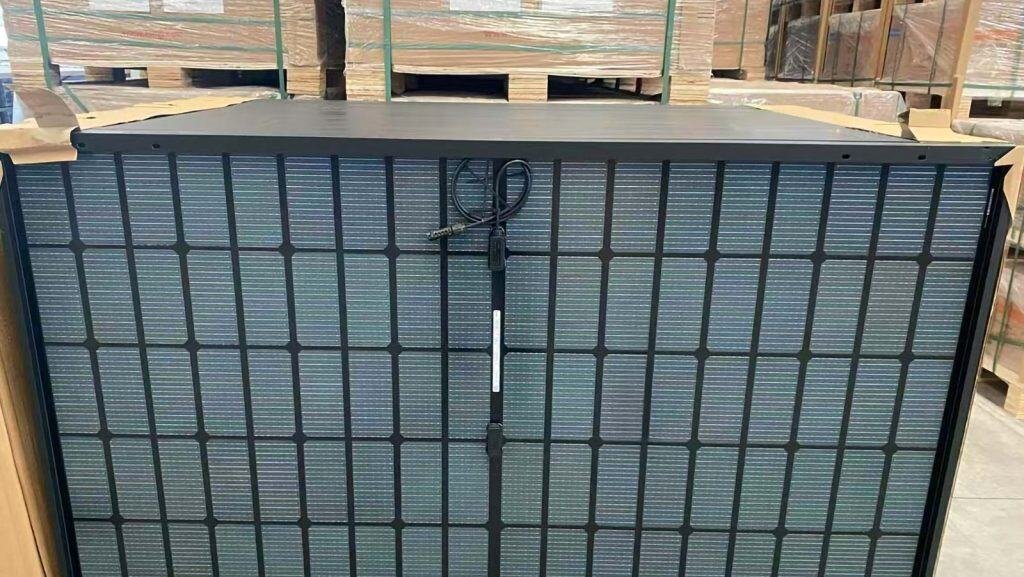
Couleenergy specializes in advanced solar panel manufacturing, including cutting-edge bifacial technology. Our modules combine proven performance with competitive value.
We understand that successful projects require more than just quality panels. That’s why we provide:
- Detailed technical specifications and performance data
- Application engineering support for optimal system design
- Flexible manufacturing capabilities for custom requirements
- Comprehensive quality assurance and testing
Our bifacial panels incorporate the latest cell technologies. We use high-transparency glass and advanced sealing systems. This ensures durability and maximum light capture from both sides.
Whether you’re planning a large utility installation or a commercial rooftop array, our team can help optimize your bifacial system design.
Get Expert Guidance for Your Project
Bifacial solar technology offers significant potential for increased energy production. However, successful implementation requires careful planning and expert knowledge.
Contact Couleenergy’s technical team to discuss your specific project requirements. We’ll help you determine whether bifacial panels are the right choice for your application. Our engineers can provide performance modeling and system design assistance.
Ready to explore bifacial solutions for your next project?
📧 Email: info@couleenergy.com
📞 Phone: +1 737 702 0119
Our solar experts are ready to answer your questions and provide customized recommendations based on your unique requirements.
Couleenergy manufactures high-efficiency solar panels for distributors, installers, and project developers worldwide. Our advanced production facilities deliver quality bifacial and monofacial modules backed by comprehensive warranties and technical support.

 English
  Español
  Français
  Deutsch
  Русский
  العربية