

You’re looking at solar panels for your home or business. Those silver grid lines running across standard panels affect both appearance and performance. What if you could get 10-15% more efficiency with cleaner aesthetics?
Enter back contact solar panels with their gridline-minimized design. These high-efficiency panels deliver more power per square meter while offering a sleeker appearance than traditional solar panels. However, they come with trade-offs you should understand.
This technology, primarily pioneered by SunPower/Maxeon and now expanding to manufacturers like REC and Aiko, has transformed premium solar installations. Let’s explore what makes them different and whether they’re right for your project.
- 22-25% Typical Module Efficiency
- -0.26 to -0.29%/°C Temperature Coefficient
- 0.25-0.35% Annual Degradation
- 15-20% Fewer Panels Needed
What Makes Back Contact Solar Panels Different
The Technology Behind Reduced Grid Lines
Traditional solar panels have metal contacts on the front surface. These create shadows and block approximately 3-7% of incoming light. Back contact solar panels move most or all electrical connections to the rear.
This design, known as Interdigitated Back Contact (IBC) technology, requires sophisticated manufacturing. Laser drilling creates thousands of tiny vias through each cell. Electrical contacts thread through these holes to connect on the back surface.
The manufacturing complexity explains why relatively few companies have mastered this technology. Historically protected by patents (many now expiring), the market is expanding as companies like LONGi, Aiko, and others develop their own variants.
Think of it like the difference between a window with a screen and one without. More light reaches its target when obstructions are removed. That’s the core advantage when you order high efficiency solar panels with back contact technology.
Real-World Performance Metrics
Back contact panels typically achieve 22%+ efficiency ratings[1] in commercial products, with premium models reaching 24.8%. Standard panels average around 20%. This efficiency improvement means fewer panels for equivalent power output.
The temperature coefficient advantage deserves attention. At -0.26% to -0.29%/°C versus -0.35% to -0.40%/°C for standard panels[2], back contact technology maintains better performance in heat. This translates to measurable production advantages in warm climates.
Perhaps most importantly, degradation rates of 0.25-0.35% annually compare favorably to 0.5-0.7% for standard panels. Over 25 years, this difference compounds significantly.
- Superior temperature coefficients for hot climate performance
- Lower annual degradation preserves long-term output
- Improved weak-light response for morning/evening production
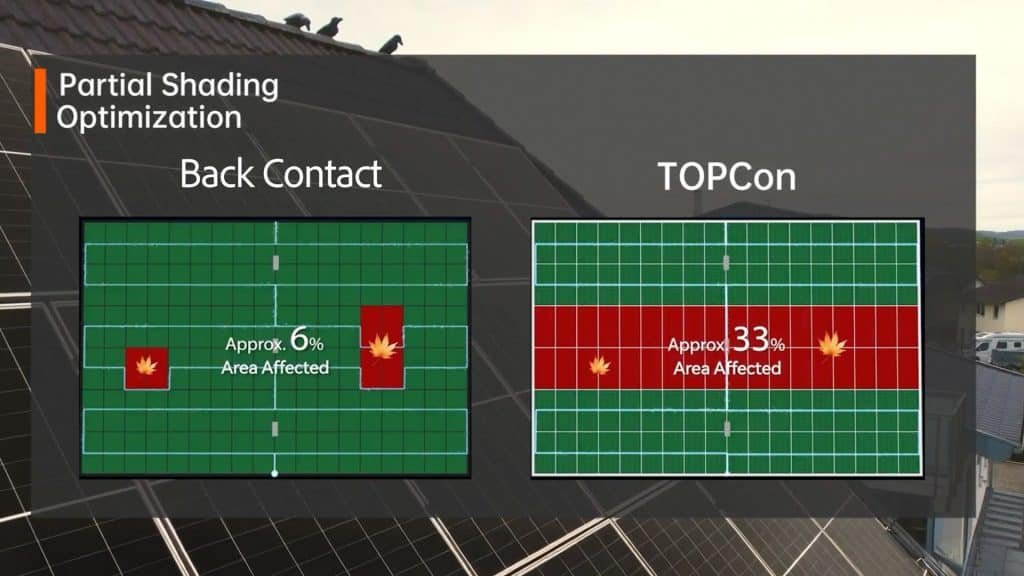
- Better cell-level shade tolerance (though system shading still impacts performance)
- Higher energy density per square meter of roof space
Real-World Context
In hot climates like Phoenix or Dubai, the temperature coefficient advantage can add 3-5% annual production. However, specific gains depend on mounting type, ventilation, and local conditions. Ground-mount systems with good airflow show smaller temperature advantages than roof-mount installations.
Black on Black Solar Panel Design: Aesthetics and Trade-offs
Why All-Black Panels Dominate Premium Markets
Black on black solar panel design eliminates visual contrast between cells and frames. Black backing sheets replace white or silver materials. Black frames complete the monochromatic appearance.
This aesthetic choice involves trade-offs. Black panels typically run 2-3°C hotter than traditional blue cells with white backsheets. The temperature coefficient advantage of back contact technology partially compensates for this heat absorption, though net gains vary by installation.
Homeowners associations increasingly approve black panels where traditional blue panels faced resistance. Commercial properties value the professional appearance. The aesthetic premium often justifies slightly lower peak efficiency for image-conscious installations.
Technical Considerations of Black Design
Anti-reflective coatings serve dual purposes on black panels. They reduce glare for neighbors while improving light absorption by 2-3%. Advanced multi-layer coatings can minimize the efficiency penalty of all-black construction.
Not all “black” panels are equal. Some use dark blue cells that appear black from distance. True black monocrystalline cells with black backsheets and frames provide the most uniform appearance but may sacrifice 1-2% relative efficiency.
Premium Applications Where Aesthetics Matter
- Historic districts with architectural review requirements
- High-end residential visible from street level
- Commercial buildings where brand image matters
- BIPV projects requiring seamless integration
- Properties in HOA-controlled communities

How to Purchase Gridline Free Solar Panels: Practical Guidance
Back contact panels typically cost more than standard panels. Understanding purchasing channels and options helps maximize value for your investment.
Distributor vs. Direct Purchase Analysis
| Project Size | Best Approach | Key Benefits | Important Considerations |
|---|---|---|---|
| < 100kW | Authorized Distributors | Local support, flexible quantities, warranty handling | Limited brand selection, higher unit costs |
| 100kW – 500kW | Regional Distributors | Better pricing, technical support, inventory availability | May require business account setup |
| > 500kW | Direct or Major Distributors | Volume pricing, direct technical support | Longer lead times, higher minimum orders |
For residential installations, authorized dealers provide the most practical path. They handle warranty registration, provide installation support, and maintain replacement inventory. The premium for this service typically ranges from moderate to significant depending on market competition.
Commercial projects benefit from establishing distributor relationships. Volume commitments unlock better pricing while maintaining local support advantages. Some distributors offer project financing, adding value beyond simple procurement.
Evaluating Back Contact Panel Suppliers
Currently, genuine IBC technology comes from limited sources. Major manufacturers include:
- Maxeon/SunPower: Original IBC technology developer, highest efficiency, premium pricing
- REC Alpha: Heterojunction back contact variant, strong European presence
- Aiko Energy: Newer entrant with ABC (All Back Contact) technology
- LONGi: Developing back contact variants as patents expire
Essential Certifications to Verify:
- IEC 61215 – Ensures 25-year durability standards[3]
- IEC 61730 – Safety certification required for most markets
- UL 61730 – North American safety standards
- Product warranties – Maxeon offers up to 40-year coverage[4], others typically 25-30 years
- Salt mist corrosion testing – Essential for coastal installations
Verification Important
Some manufacturers market “back contact” panels that only partially implement the technology. True IBC panels eliminate ALL front-side metallization. Verify specifications and ask for efficiency test reports before purchasing. Terms like “back contact optimized” or “reduced grid lines” may indicate partial implementations.
Installation Considerations for Premium Solar Panels
Professional Installation Requirements
While back contact panels don’t require special installation techniques, their higher value demands careful handling. Modern manufacturing has improved durability, but these panels still benefit from experienced installers who understand their characteristics.
Key installation considerations include:
- Proper torque specifications for mounting hardware
- Careful handling to prevent cell micro-cracks
- Appropriate grounding techniques for the specific model
- Thermal expansion allowances for all-black panels
System Design Optimization
Higher efficiency enables new design possibilities. A typical 10kW system might need only 20-22 back contact panels versus 25-28 standard panels. This difference enables installations on smaller or partially shaded roofs.
Space Efficiency
15-20% fewer panels needed for equivalent capacity. Crucial for space-constrained installations.
Weight Reduction
Fewer panels mean 15-20% less roof loading. Important for older structures.
Aesthetic Flexibility
Smaller arrays blend better with roof lines and architectural features.
Understanding Limitations and Making Informed Decisions
Every technology involves trade-offs. Back contact panels excel in specific applications but aren’t universally superior.
Key Limitations to Consider
Important Limitations
- Price Premium: Typically 20-50% higher cost per watt
- Limited Availability: Fewer manufacturers and models available
- Repair Complexity: Field repairs more challenging than standard panels
- Regional Variations: Benefits vary significantly by climate and installation type
- Longer ROI: Payback periods extend due to higher initial investment
When Standard Panels Make More Sense
Large ground-mount installations with ample space often don’t justify the premium. The efficiency advantage matters less when space isn’t constrained. Standard panels offer better economics for utility-scale projects where aesthetics are irrelevant.
Temporary or shorter-term installations (under 10 years) rarely recoup the additional investment. The long-term degradation advantages of back contact technology need time to compound.
Budget-conscious projects in mild climates with low electricity rates may find standard panels more appropriate. The premium for back contact technology makes most sense where electricity costs are high or space is limited.
Market Trends and Future Outlook
Technology Evolution
As key patents expire, more manufacturers are entering the back contact market. This competition should gradually reduce price premiums while improving availability. Laboratory silicon cell efficiencies now exceed 27.81%, suggesting room for continued commercial improvements.
Emerging technologies like TOPCon and heterojunction cells are narrowing the efficiency gap with back contact designs. Some manufacturers combine technologies, creating heterojunction back contact cells that push efficiency boundaries further.
Market Adoption Patterns
Premium residential markets continue leading adoption, particularly in regions with high electricity costs or strong aesthetic preferences. Commercial BIPV applications show growing interest as businesses value both energy production and architectural integration.
Geographic patterns reveal interesting insights:
- Hot climates value temperature coefficient advantages
- Space-constrained markets (Japan, Netherlands) prioritize efficiency
- Affluent regions emphasize aesthetics alongside performance
- Markets with time-of-use rates benefit from better low-light performance
Frequently Asked Questions
1. What exactly are back contact solar panels?
Back contact solar panels use Interdigitated Back Contact (IBC) technology to move electrical connections to the rear of the cell. This eliminates front-side shading from metal contacts, improving efficiency by 10-15% compared to standard panels. Major manufacturers include Maxeon/SunPower, REC, and emerging players like Aiko.
2. Do back contact panels really perform better in hot climates?
Yes, but with nuance. Back contact panels feature temperature coefficients of -0.26% to -0.29%/°C versus -0.35% to -0.40%/°C for standard panels. This means less efficiency loss in heat. However, all-black designs may run hotter, partially offsetting this advantage. Net benefits depend on mounting type and ventilation.
3. Can I mix back contact panels with standard panels?
While technically possible, it’s not recommended. Different electrical characteristics, efficiency ratings, and degradation rates create system imbalances. Mismatched panels can reduce overall performance and complicate monitoring. Use identical panels throughout your array for optimal results.
4. How much longer do back contact panels last?
Back contact panels typically degrade at 0.25-0.3% annually versus 0.5-0.7% for standard panels. This means they retain about 92% capacity after 25 years compared to 82-87% for standard panels. Some manufacturers like Maxeon offer 40-year warranties, though most provide 25-30 year coverage.
5. Are back contact panels worth the premium for residential use?
It depends on your specific situation. They make sense when roof space is limited, aesthetics matter for property value, electricity rates are high, or HOA approval is needed. The 20-50% price premium requires careful analysis of your long-term energy needs and financial goals.
6. How do I find qualified installers?
Start with manufacturer-certified installers who have specific training on premium panels. Check their experience with back contact technology, verify insurance and licenses, and request references from similar projects. Quality installation is crucial for protecting your investment and maintaining warranties.
Ready to Explore Premium Solar Options?
Our solar experts can help you determine if back contact technology makes sense for your specific project. We provide unbiased analysis based on your location, energy needs, and financial goals.
Email: info@couleenergy.com
Phone: +1 737 702 0119
Making Your Final Decision
Back contact solar panels represent premium technology with genuine advantages: higher efficiency, better degradation rates, and superior aesthetics. However, they also carry significant price premiums and limited availability.
Consider back contact panels when:
- Roof space limits standard panel installations
- Aesthetics significantly impact property value
- Long-term ownership (20+ years) justifies higher initial investment
- Hot climate conditions favor temperature advantages
- Premium appearance supports business branding
Choose standard panels when:
- Budget constraints require lowest upfront costs
- Ample installation space is available
- Shorter ownership periods limit payback potential
- Mild climates reduce temperature advantages
- Ground-mount installations where aesthetics don’t matter
Remember to evaluate total lifetime value, not just initial costs. Factor in degradation rates, temperature performance, and potential property value impacts. Purchase gridline free solar panels when their specific advantages align with your project requirements and long-term goals.
Solar technology continues advancing rapidly. While back contact panels currently command premiums, increasing competition and manufacturing scale should improve accessibility. Make decisions based on current economics while considering future technology trends.
References
- 20-22% efficiency ratings – NREL verified commercial solar cell efficiency records.
- -0.27% to -0.29%/°C versus standard panels – Temperature coefficient comparison studies for IBC technology.
- 25-year durability standards – IEC 61215 testing ensures long-term reliability.
- 40-year coverage – Maxeon’s industry-leading warranty for back contact panels.




 English
  Español
  Français
  Deutsch
  Русский
  العربية