

When buying solar panels, certification standards are your best protection against poor-quality products. For buyers, project managers, and investors, understanding IEC 61215 and IEC 61730 certification standards helps you make smart choices that save money in the long run.
At Couleenergy, we believe in helping our customers make informed decisions. This guide explains these important standards in clear language and shows how they affect your solar investment’s performance, safety, and financial returns.
What Are IEC Standards and Why Do They Matter?
The Basics of Solar Quality Standards
The International Electrotechnical Commission (IEC) has created two main standards for solar panels:
- IEC 61215: Tests if panels will perform well for their expected 25+ year life
- IEC 61730: Ensures panels are safe and won’t cause electrical shocks, fires, or other hazards
In Europe, these standards are called EN IEC 61215 and EN IEC 61730. Each standard has different parts:
- IEC 61215-1: Sets general rules for panel quality
- IEC 61215-2: Explains exactly how to test panels
- IEC 61730-1: Describes how panels should be built for safety
- IEC 61730-2: Details the safety tests panels must pass
These standards help separate good quality solar panels from poor ones. Choosing certified panels gives you several benefits:
- Fewer Repairs: Certified panels need 60% fewer repairs over 10 years
- Better Performance: They maintain steady power output, losing only 0.5-0.8% efficiency per year
- Global Acceptance: These certifications are required in Europe, Australia, and many Asian markets
“Certified solar panels cost only 3-5% more upfront but prevent up to 90% of early failures seen in cheaper products.”
— Solar Industry Market Analysis, 2024
Important Limitations of Certifications
Certifications are valuable guides, but they have limitations. A certification only shows that sample panels passed specific tests when they were submitted. Most certification bodies don’t check the panels again after the initial testing.
What certification does show is that a manufacturer can produce panels that meet minimum standards. For better quality assurance, look for manufacturers like Couleenergy that test their products beyond the minimum requirements and maintain strict quality control throughout production.
Success and Failure Stories
Consider this warning story: A 5MW solar farm in Southeast Asia chose non-certified PV panels to save $150,000. Within just three years, power output dropped by 15%, and they spent $700,000 replacing PV panels – nearly five times what they “saved.”
By contrast, Couleenergy’s installation for a European business client used IEC 61215:2021 certified solar panels that have maintained performance within 2% of expected output for five years, despite experiencing two major hailstorms and extreme temperatures.
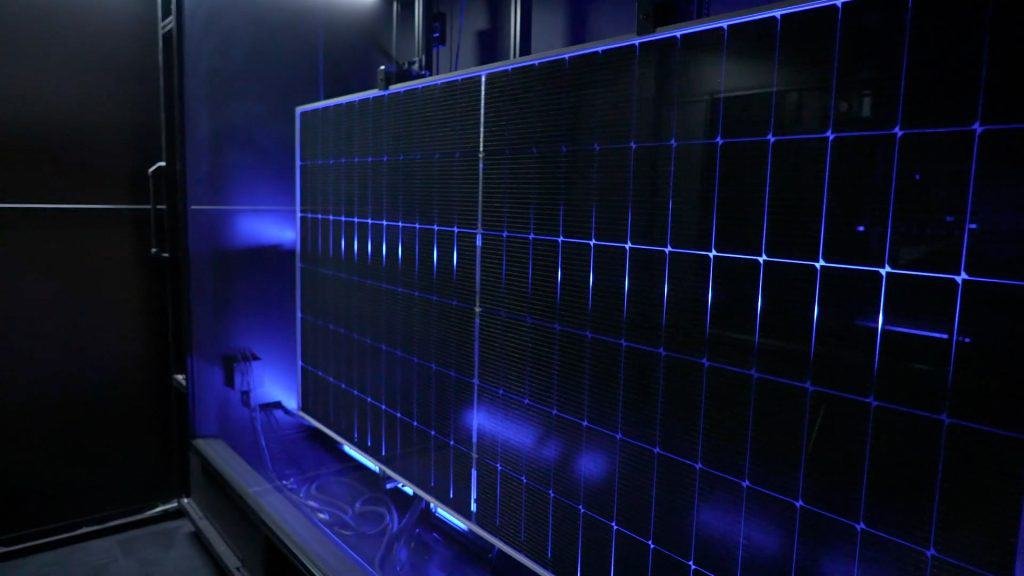
IEC 61215: Ensuring Long-Term Performance
How This Standard Has Improved
Since it began in 1993, IEC 61215 has evolved from a basic quality test to a comprehensive standard. The 2021 version is the most advanced yet, with unified testing for all solar technologies and new tests that find potential problems.
The Two Main Parts Explained
The standard has two complementary parts:
IEC 61215-1: The Rules
- Sets general requirements and test sequences
- Establishes pass/fail criteria
- Explains documentation requirements
- Works as the “rulebook” for certification
IEC 61215-2: The Testing Methods
- Gives detailed test procedures
- Explains how to use testing equipment
- Ensures tests are done the same way in all labs
- Acts as the “instruction manual” for testing
There are also special sections for different types of panels (like crystalline silicon or thin-film).
Current Implementation Status
Australia now requires IEC 61215:2021 compliance for all new solar installations. As of April 1, 2025, only panels that meet the 2021 standard will qualify for government incentives. This process has already started, with non-compliant panels being removed from approved lists.
For buyers worldwide, this is important to note—panels certified to older standards may soon be outdated in some markets, affecting warranties and resale value.
What This Standard Really Tests
IEC 61215 mainly checks if panels will avoid early failures in their first 5-10 years of use in normal climate conditions. While it helps ensure basic reliability, it doesn’t guarantee how panels will perform beyond this period.
Quality manufacturers like Couleenergy do additional testing beyond IEC requirements to ensure performance in extreme conditions and over longer lifespans.
The 19+ Tests That Matter
IEC 61215 puts solar panels through at least 19 tests that simulate years of environmental stress in just weeks or months:
Environmental Stress Tests
- Damp Heat Test: 1,000 hours at 85°C and 85% humidity (similar to 20 years in tropical climates)
- Temperature Cycling: 200 cycles between -40°C and +85°C (like decades of day/night changes)
- Humidity-Freeze Test: 10 cycles between hot/humid and freezing conditions
Strength and Durability Tests
- Static Load Test: Applies pressure equal to 2.4 meters of snow
- Hail Impact Test: Fires ice balls at panels at 97 km/h
- Dynamic Load Test: 1,000 cycles of pressure changes to simulate wind
Electrical Performance Tests
- Hot-Spot Test: Checks how panels handle partial shade
- PID Test: Makes sure high-voltage systems don’t lose power
- Wet Leakage Test: Verifies electrical safety in wet conditions
The 2021 version of IEC 61215 is a major improvement in testing, with new tests designed to find problems seen in real-world use over the past decade. Panels certified to this standard show better long-term reliability.
How Solar Panels Are Tested
The Stress Tests: Simulating Years of Weather in Weeks
The power of IEC 61215 is in its accelerated aging tests, which compress years of outdoor exposure into just weeks or months. These tests create extreme conditions that reveal weaknesses in design, materials, or manufacturing.
For example, the damp heat test keeps panels at 85°C and 85% humidity for 1,000 hours—conditions much worse than real-world environments. This fast-track aging can simulate 30 years of wear in just 6 months of testing.
Breaking Point: Finding the Weak Spots
The mechanical load tests reveal a lot about a panel’s strength. By applying pressure equal to heavy snow and then cycling pressure to simulate wind, these tests find weaknesses in frames, glass, connections, and mounting points.
At Couleenergy, our panels undergo even tougher testing than IEC requires, with mechanical load testing at 5,400 Pa for front loads and 2,400 Pa for back loads, ensuring they perform well even in extreme weather.
Different Tests for Different Technologies
Different types of solar panels need specific testing approaches:
- Silicon Panels: Need extra testing for potential power loss in high-voltage systems and light-induced degradation in p-type cells
- Thin-Film Panels: Require extended light exposure tests and special color spectrum adjustments for CdTe modules
- New Technologies: Perovskite panels need 200+ hours of light testing, while flexible panels undergo 1,000 bending cycles
How Certification Actually Works
It’s important to know that certification testing usually involves testing just a few sample panels that manufacturers carefully prepare. These samples are tested in specialized labs approved by IEC.
While the testing is thorough, it only shows quality at one point in time. Most certification bodies don’t do regular follow-up testing after certification is granted. This means changes in manufacturing or materials could affect quality while the certification remains valid.
Power Guarantee: Protecting Your Investment
One of the most important requirements is the power degradation limit: After all testing, PV panels must keep at least 95% of their initial power rating. This requirement helps ensure that performance estimates – and your financial calculations – remain accurate over your system’s lifetime, especially during the crucial first 5-10 years.
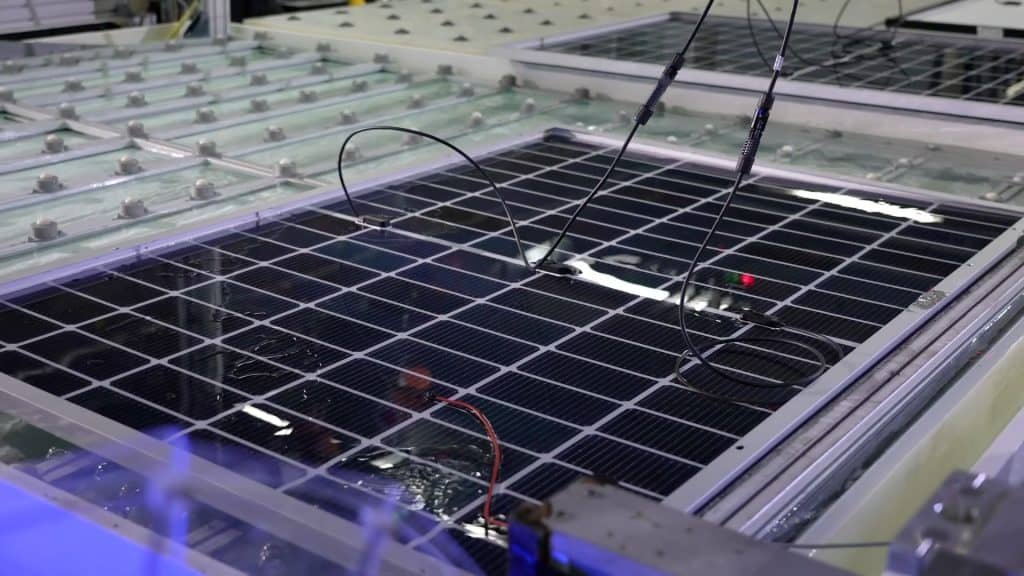
IEC 61730: The Safety Standard
Two Parts Working Together
The IEC 61730 standard has two parts that work together to ensure safety:
- IEC 61730-1: Explains how panels should be built (“what to build”)
- IEC 61730-2: Describes how to test panels for safety (“how to verify”)
This structure lets manufacturers first design according to safety rules, then confirm their designs through standard tests.
Building Safe Panels (IEC 61730-1)
IEC 61730-1:2023 sets construction requirements that prevent electric shock, fire hazards, and physical failures:
Electrical Safety Design
- Clearance: Minimum air gaps between live parts and touchable surfaces (≥5.5 mm for 1500 V systems)
- Creepage: Minimum distance along surfaces between conductive parts (≥12.5 mm)
- Insulation thickness: Minimum solid insulation thickness (≥0.4 mm for basic insulation)
Safety Classes
- Class 0: For restricted areas like fenced utility solar farms
- Class II: For general use, with double/reinforced insulation
Fire Safety
- Materials must meet specific fire resistance standards
- Adhesive joints must withstand temperature changes without separating
Physical Safety
- Frameless panels must have strong adhesive (≥70 N/cm peel strength)
- Sharp edges are not allowed, to prevent injuries during installation
Component Safety Requirements
The 2023 version of IEC 61730-1 requires that all components used in solar panels meet their own safety standards:
- Junction boxes must meet IEC 62790
- Cables must meet IEC 62930
- Connectors must meet IEC 62852
This ensures that every part of the panel system meets appropriate safety standards.
Safety Testing (IEC 61730-2)
IEC 61730-2 provides the methods to verify compliance through specific tests:
- Wet leakage test: Panels in salt water must limit leakage current to ≤50 μA/kV
- Dielectric test: Panels must withstand high voltage without breakdown
- Dynamic load test: 1,000 cycles of pressure changes to simulate wind
- Sharp edge test: Applying 10 N force to edges must not create cuts deeper than 0.2 mm
Fire Safety Classes
IEC 61730-2 includes fire safety testing that puts panels in three categories:
| Fire Class | Flame Spread Limit | Burning Brand Test |
|---|---|---|
| Class A | ≤1.82 m | 2,000 g wood brand extinguished in ≤90 sec |
| Class B | ≤2.40 m | 500 g wood brand test |
| Class C | ≤3.90 m | 100 g wood brand test |
Another important requirement is that no burning or glowing parts should fall off during testing. Class A certification is often required for rooftop installations in many countries.
2023 Updates
The 2023 edition of IEC 61730, with its October 2024 update, includes important improvements:
- Better fire testing now requires flame temperatures ≥815°C
- New material requirements for front and back sheets
- Component compliance requirements for junction boxes, cables, and connectors
These updates are especially important for high-voltage systems, double-sided panels, and new lightweight designs used in commercial installations.
Understanding Different Certifications: IEC vs. CE vs. TÜV
Making Sense of Certification Labels
The solar certification world has several overlapping standards that can confuse buyers:
IEC Certification
- Who issues it: International Electrotechnical Commission
- What it tests: Comprehensive performance and safety
- Who does testing: Accredited labs
- Limitation: Only shows that sample panels passed tests when submitted; most certification bodies don’t do regular follow-up checks
CE Marking
- Who issues it: European Union
- How it’s tested: Often self-declared by manufacturers
- What it covers: Basic safety and electromagnetic compatibility
- Purpose: Minimum legal requirement to sell in the EU
TÜV Certification
- Who issues it: Independent German testing organizations
- How it’s tested: Required third-party testing
- What it covers: May go beyond IEC requirements with extra tests
- Advantage: Includes factory inspections and ongoing quality monitoring
Technology-Specific Testing Approaches
Different solar panel technologies face different certification challenges:
Silicon Panels
- CE Certification: Basic compliance with few technology-specific tests
- TÜV Certification: Extra testing for high-voltage power loss and light-induced degradation
Thin-Film Panels
- CE Certification: Needs extra electromagnetic compatibility tests
- TÜV Certification: Requires extended environmental tests (1,000 hours damp heat) and ammonia testing for farm installations
New Technologies
- CE Certification: Material safety testing (e.g., lead leakage prevention in perovskite panels)
- TÜV Certification: Special protocols including extended light testing for perovskites and bending tests for flexible panels
Testing Comparison Table
| Test Type | CE Marking | IEC Certification | TÜV Certification |
|---|---|---|---|
| Electrical Safety | Basic tests | Complete safety testing | Advanced tests including power loss prevention |
| Mechanical Testing | Static load (2,400 Pa) | Static and some dynamic testing | Enhanced dynamic load cycling |
| Environmental | Limited heat/humidity (168 hours) | Extended climate testing (1,000+ hours) | May include additional special tests |
| Who Oversees It | Self-declaration option | Accredited lab testing | Mandatory third-party validation |
| Test Intensity | General, self-reported | Standard protocols | Technology-specific, third-party verified |
| What Problems It Finds | Basic early failures | Standard wear mechanisms | Advanced degradation types |
Best Certification Strategy
For maximum market access and quality assurance, look for manufacturers like Couleenergy that have multiple certifications:
- IEC 61215 and 61730: Foundation for global acceptance
- TÜV certification: Extra quality validation with ongoing monitoring
- CE marking: Required for European market access
- Regional certifications: Market-specific requirements
Preparing for the Future
Technology Improvements and Standard Updates
The 2021 update of IEC 61215 shows how standards evolve with technology:
- Double-sided panels: New tests for panels that collect light from both sides
- High-efficiency cells: Better testing for light-induced degradation
- Large panels: New mechanical tests for 600W+ panels
As technology advances, staying current with certification standards becomes increasingly important for buyers.
Climate Change: New Tests for Extreme Weather
Recent updates reflect growing concerns about climate change:
- Improved hail testing: Larger ice balls for severe hail regions
- Expanded temperature testing: Beyond -40°C to +85°C for extreme climates
- Enhanced UV testing: More testing for high-UV environments
Couleenergy’s research team helps develop these standards, ensuring our products not only meet but often exceed these evolving requirements.
High-Voltage Systems: 1500V+ Technology
As large solar farms move to higher voltages to improve efficiency and reduce costs, safety standards are adapting:
- Increased safety distances: Greater air gaps between electrical parts
- Better discharge testing: Detecting electrical effects in high-voltage systems
- Improved insulation: Stricter requirements for electrical isolation

Buyer’s Guide to Certification
Sample Specification Language
Include these elements in your purchase specifications to ensure certified quality:
Required Certifications:
- IEC 61215:2021 (Performance Qualification)
- Full certification to all parts based on technology
- Test reports must show ≤3% power loss after testing
- IEC 61730:2023 (Safety Qualification)
- Part 1 and Part 2 compliance
- Fire Safety Rating: Class A required
- Application Class: Class II (Double insulation safety)
- Documentation Requirements:
- Complete test reports from accredited labs
- Certification verification information
- Factory inspection reports
- Sample selection information
Understanding Test Reports
Test reports tell you more than just pass/fail:
- Power loss percentages: How well did the panel maintain power?
- Specific failures: Were any problems noted during testing?
- Complete testing: Were any tests skipped or modified?
- Testing lab credentials: Is the lab properly accredited?
Careful review of these documents can reveal quality differences between seemingly similar certified products.
Avoiding Fake Certificates
As certification becomes more important, fake certification claims have unfortunately increased. Protect your investment with these verification steps:
- Ask for complete test reports, not just certificates
- Verify certification through the certifying body’s website
- Check for consistency between product specifications and certification details
- Confirm certification date and which standard version was used
- Look for sampling information in reports
Risk Management
Consider certification as part of your overall risk management approach:
- Insurance benefits: Many insurers offer better rates for fully certified systems
- Warranty support: Certification helps with warranty claims
- Financing requirements: Many lenders require specific certifications
- Building code compliance: Certification helps meet electrical and building codes
From Standards to Success: Your Action Plan
Implementation Steps
- Check your project needs
- Environmental conditions (temperature, humidity, salt exposure)
- Local rules and regulations
- System voltage and design
- Create certification requirements
- Minimum required standards
- Extra testing for specific site challenges
- Documentation needs
- Evaluate suppliers
- Verify certification claims
- Assess production quality control
- Review past performance
- Monitor ongoing quality
- Factory inspection reports
- Batch testing documents
- Updated certifications as standards change
Cost vs. Benefit Analysis
When considering the higher cost of certified panels, think about these factors:
- More reliable energy production: Less degradation means more predictable energy output
- Lower maintenance costs: Fewer failures mean less money spent on repairs
- Longer useful life: Higher-quality panels often work well beyond their 25-year design life
- Higher resale value: Certified panels are worth more if you upgrade in the future
“We installed IEC 61215:2021 certified solar panels from Couleenergy three years ago at our manufacturing facility. Despite experiencing several extreme weather events including a major hailstorm, the system has consistently produced within 1.5% of projected output. The additional upfront investment in certified panels has already paid for itself through reduced maintenance costs and reliable performance.”
— Nella Kingswell, Operations Director
Explore Couleenergy’s Certified Solar Solutions
Conclusion: Why Certification Matters
The IEC 61215 and IEC 61730 standards are much more than technical requirements – they provide a framework for quality assurance that protects your solar investment for decades. By understanding these standards, buyers can make smart decisions that improve performance, safety, and financial returns.
It’s important to remember that IEC 61215 certification mainly shows that panels won’t have early failures in their first 5-10 years. It doesn’t necessarily guarantee long-term performance beyond this period. Similarly, certifications only confirm that sample panels passed specific tests at certification time, not that every panel will maintain the same quality.
At Couleenergy, our commitment to excellence goes beyond minimum requirements. Our solar panels undergo stricter testing than IEC standards require, ensuring excellent performance even in challenging environments. We maintain thorough quality control throughout our production process and regularly test batches to ensure consistency. This dedication to quality is reflected in our industry-leading warranties and the consistently superior performance of our installations worldwide.
For solar buyers navigating the complex certification world, remember that the small premium for fully certified, high-quality panels pays off through better reliability, fewer repairs, and consistent energy production throughout your system’s lifetime.
About Couleenergy
Couleenergy is a leading manufacturer of innovative solar panels and PV system solutions, combining cutting-edge technology with uncompromising quality standards. Our solar products exceed international certification requirements, delivering superior performance and reliability worldwide for residential, commercial, and utility-scale applications.
This article was last updated in April 2025 to reflect the latest standards and certification requirements.



 English
  Español
  Français
  Deutsch
  Русский
  العربية