
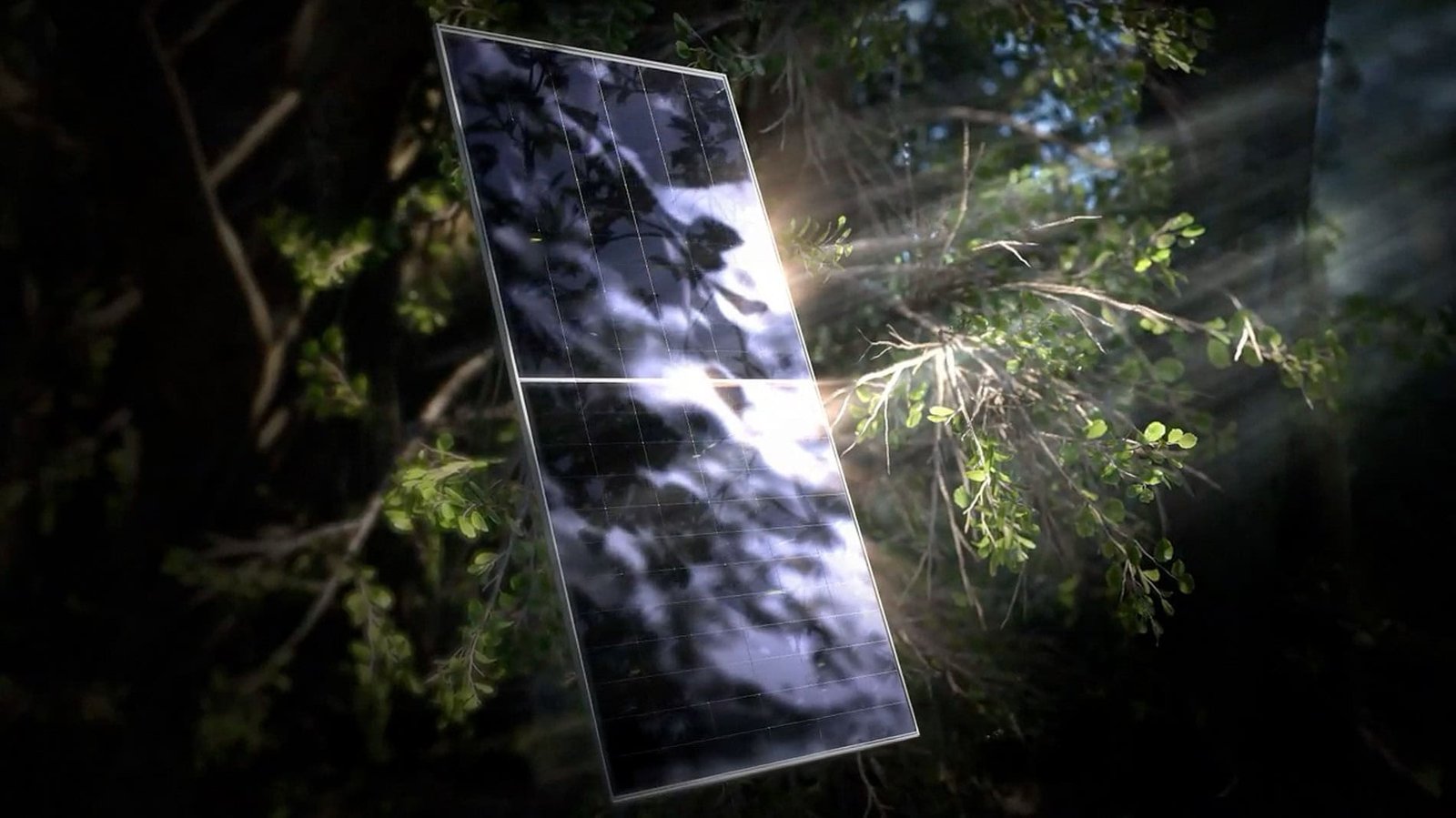
Morning fog. Evening shadows. Cloudy afternoons. These aren’t rare exceptions—they’re everyday reality for solar installations worldwide.
While most manufacturers showcase peak efficiency numbers under perfect lab conditions, the truth is simpler: solar panels spend 40–60% of their operating time in less-than-ideal light. And that’s exactly where back-contact (BC) technology pulls ahead.
Let’s look at what actually happens when the sun isn’t blazing—backed by independent field testing, government lab data, and real-world installations across three continents.
📥 Free Download: HPBC vs ABC Technology Comparison Chart
Get our comprehensive side-by-side comparison of back-contact technologies, including performance data, specifications, and application guidance.
📊 What “Low Light” Really Means for Solar Panels
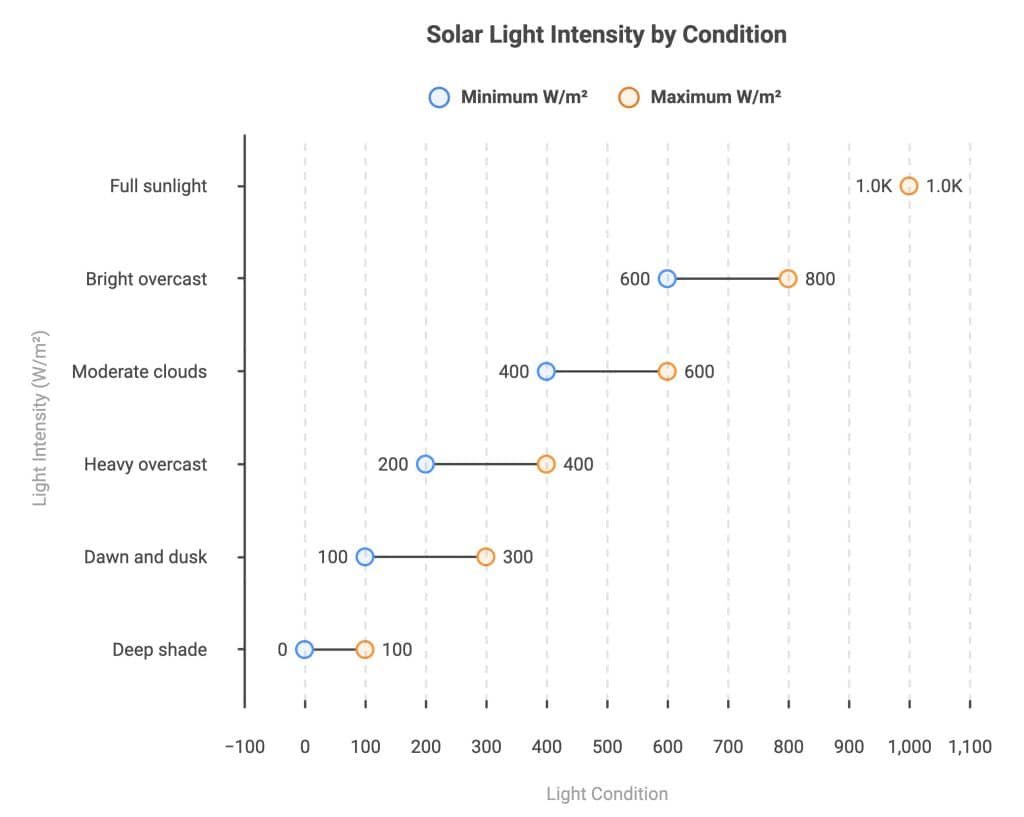
Before diving into performance data, we need to define our terms. Solar engineers measure light intensity in watts per square meter (W/m²). Here’s what those numbers mean in the real world:
Full sunlight (Standard Test Conditions): 1,000 W/m²
Think clear summer noon with direct overhead sun.
Bright overcast: 600–800 W/m²
Thin clouds with bright sky, no direct sun.
Moderate clouds: 400–600 W/m²
Gray day with visible diffuse light.
Heavy overcast: 200–400 W/m²
Thick clouds, rainy conditions, very limited brightness.
Dawn and dusk: 100–300 W/m²
Early morning or late evening when sun sits low on the horizon.
Deep shade: Below 100 W/m²
Under trees, behind buildings, in full shadow.
Industry standards test low-light performance at 200 W/m²—roughly equivalent to heavy overcast conditions. At this level, a quality panel should maintain at least 96.5% of its peak efficiency percentage.
💡 Key Insight: Most solar generation doesn’t happen in perfect conditions. Your solar panels work through clouds, early mornings, late afternoons, and changing weather. The technology that performs best when light is weak delivers more total annual energy.
40-60%
Percentage of operating time panels spend in reduced light conditions (below 600 W/m²)
96.5%
Minimum efficiency retention quality panels should maintain at 200 W/m²
3.16%
Performance advantage BC solar panels showed vs TOPCon on overcast days (Qinghai field test)
🔬 The Physics: Why Back-Contact Wins in Weak Light
Understanding why BC panels outperform conventional designs requires looking at what happens when light intensity drops.
Power Output vs. Efficiency: The Critical Difference
When sunlight decreases from 1,000 W/m² to 200 W/m², total power output drops proportionally—from 100% down to roughly 20%. This is physics. No panel can escape it.
But here’s what separates good solar panels from great ones: Does the panel maintain its conversion efficiency percentage even as total power drops?
A panel rated at 24% efficiency in full sun might be:
- 23%+ efficient at 200 W/m² → Excellent low-light response
- 21–22% efficient at 200 W/m² → Average performance
- Below 20% efficient at 200 W/m² → Poor weak-light capability
The best solar panels maintain efficiency. Mediocre panels lose efficiency as light fades.
Three Factors That Determine Low-Light Performance
1. Front-Surface Design
Traditional solar panels use metal grid lines on the front surface to collect electricity. These lines block 3–5% of incoming light—not much in bright sun, but significant when every photon counts.
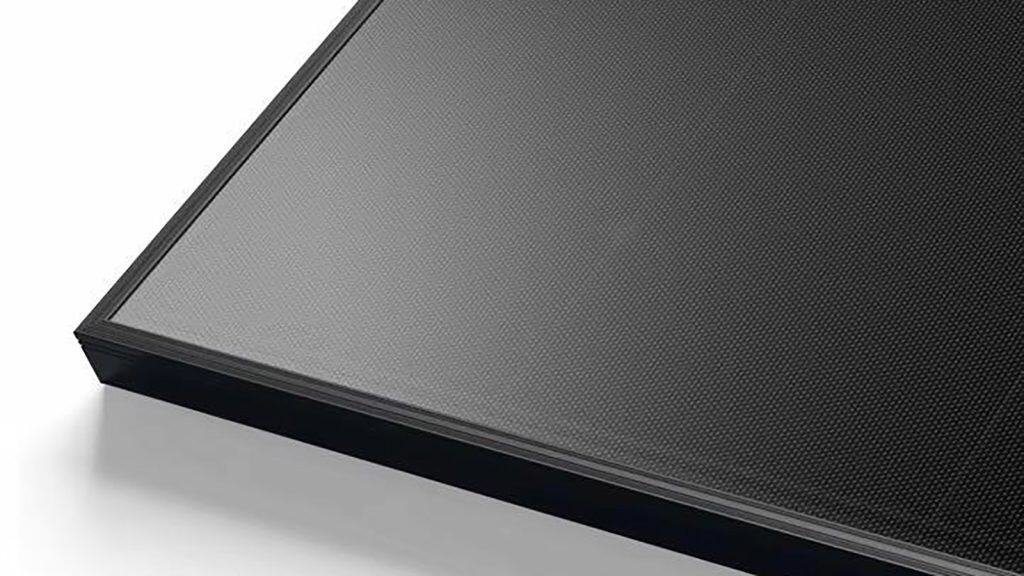
Back-contact PV panels eliminate all front-side metallization. The entire front surface absorbs light. In weak conditions with limited photons available, that 3–5% difference compounds.
2. Spectral Response
This measures how quickly cells generate current at low irradiance. Better spectral response means solar panels “wake up” earlier in the morning and keep producing later in the evening.
Back-contact designs typically show superior spectral response because:
- Lower internal resistance reduces losses at low current levels
- Optimized doping profiles improve carrier collection
- Advanced surface texturing captures light from multiple angles
3. Internal Electrical Resistance
When light is weak, electrical current is low. Internal resistance that’s barely noticeable in full sun becomes a major efficiency drain in weak light.
BC solar panels reduce internal resistance by:
- Eliminating long electrical pathways across the cell front
- Using larger contact areas on the rear
- Reducing resistive losses in busbars and interconnects
The result: less energy lost as heat, more energy delivered as electricity.
📈 Real Testing Data: What Independent Labs Found
Let’s move from theory to evidence. Multiple independent tests have compared back-contact performance against conventional technologies in low-light conditions.
China National Photovoltaic Quality Inspection Center (CPVT)
This government-certified lab tested HPBC (Hybrid Passivated Back Contact) modules against conventional panels under dynamic real-world conditions.
Key findings:
- HPBC modules delivered 10% daily energy gains in mixed weather conditions
- Monthly average advantage: 2.33% relative gain compared to conventional modules
- Peak daily advantage: Over 10% on days with variable cloud cover
The greatest improvements came during periods with:
- Morning fog or haze
- Intermittent clouds throughout the day
- Extended dawn and dusk periods
Qinghai Field Test (April 2025)
Researchers installed BC and TOPCon modules side-by-side at a test site in Qinghai Province, China. They monitored performance daily under identical conditions for a full month.
| Test Condition | BC Performance Advantage | Significance |
|---|---|---|
| Overcast Day (April 14) | +3.16% | Higher than sunny day advantage |
| Sunny Day (April 12) | +2.82% | Consistent advantage |
| Monthly Average | +2.95% | 288.21 vs 279.95 kWh/kW |
⚡ Critical Insight: The overcast-day advantage (3.16%) exceeded the sunny-day advantage (2.82%). This directly proves superior weak-light response.
Independent Australian Installation Test (July 2025)
An electrical contractor in Brisbane ran a controlled comparison between ABC (All Back Contact) panels and conventional Canadian Solar modules.
Setup: Identical orientation, identical inverters, identical monitoring systems.
Results:
- ABC panels averaged 0.9% better daily output overall
- After accounting for positive wattage tolerance, real advantage was 0.2%
- Under specific minor shading conditions, advantage increased significantly
Important context: Brisbane has a predominantly sunny climate with limited extended low-light periods. The marginal advantage would likely be larger in cloudier regions.
📝 Tester’s Assessment: “Performance was essentially identical in most conditions, with BC showing small advantages in very specific scenarios.”
What This Testing Tells Us
Combining all independent tests reveals a pattern:
| Climate Type | BC Advantage | Application |
|---|---|---|
| Cloudy climates | 2.5–3.2% daily generation | Northern Europe, Pacific Northwest |
| Sunny climates | 0.2–1% typical conditions | Mediterranean, Southwest US |
| Partial shading | 15%+ depending on shadow patterns | Urban rooftops, tree cover |
| Dawn and dusk | Extended generation hours | All locations benefit |
⚙️ How Back-Contact Technology Achieves Better Low-Light Performance
The performance advantages come from specific design features built into BC technology.
Zero Front-Side Shading
Traditional panels lose photons to metal grid lines before light even reaches the silicon. In bright sun, this 3–5% loss is manageable. In weak light with limited photons, every percentage point matters.
BC designs move all electrical contacts to the rear. The front surface becomes 100% active—no metal lines, no busbars, no obstructions. Every photon hitting the glass has a chance to generate electricity.
Enhanced Light Absorption
Modern BC panels incorporate:
- Multi-layer anti-reflective coatings that reduce short-wave light reflection. These coatings are specifically engineered to capture diffuse light from multiple angles—critical during dawn, dusk, and cloudy conditions.
- Advanced surface texturing creates microscopic pyramids across the cell surface. Light hitting at low angles (early morning, late afternoon) bounces between textures rather than reflecting away.
- Optimized cell coverage maximizes the percentage of module surface dedicated to active power generation. Some advanced BC designs achieve 93.5% cell coverage—the highest in the industry.
Superior Electrical Design
When current is low (weak light conditions), electrical resistance becomes the limiting factor. BC panels reduce resistance through:
- Interdigitated rear contacts that create multiple electrical pathways. Current doesn’t have to travel as far to reach collection points.
- Larger contact areas on the rear reduce resistive losses at connection points.
- Optimized doping profiles in the silicon improve carrier collection even when carrier generation rates are low.
The result: BC panels convert a higher percentage of available weak light into usable electricity.
Better Temperature Management
Here’s a bonus advantage: Modern BC panels achieve excellent temperature coefficients of –0.26%/°C (both LONGi HPBC 2.0 and AIKO ABC Gen 3), outperforming TOPCon’s typical –0.29 to –0.32%/°C range.
Why does this matter for low-light performance?
Early morning and late evening—prime low-light periods—are also when solar panels are coolest. Better temperature coefficients mean BC panels maintain higher efficiency during these cooler, lower-light periods.
In hot climates, this advantage extends throughout the day. When other panels are losing 8–9% of rated power to heat, BC solar panels might only lose 7.5–8%.

🌍 Real-World Applications: When Low-Light Performance Matters Most
Theory and lab tests are useful, but let’s talk about practical applications where BC’s low-light advantages deliver measurable value.
Northern Latitude Installations
Countries like Germany, the Netherlands, UK, Canada, and northern US states face:
- Shorter daylight hours in winter
- Frequent overcast conditions year-round
- Extended dawn and dusk periods with low-angle sun
BC advantage here: Extended generation hours and higher output during cloudy periods compound to significant annual energy gains. Field testing shows consistent 2.5–3% monthly advantages—which extrapolate to similar annual performance improvements in regions with frequent overcast conditions.
Example scenario: A commercial installation in Amsterdam might experience 180+ days per year with heavy cloud cover. BC PV panels maintaining 3% higher output during those days translates to substantial additional generation over a 30-year system life.
Coastal and Marine Environments
Coastal regions often deal with:
- Morning fog or marine layer
- Salt haze reducing light clarity
- High humidity affecting light diffusion
BC advantage here: Superior spectral response and anti-reflective coatings help capture diffuse light through fog and haze. The zero-shading front surface maximizes photon capture when light intensity is already reduced by atmospheric conditions.
Mountainous or Valley Locations
Mountain and valley sites face unique challenges:
- Shadows from surrounding peaks in morning/evening
- Clouds forming in valleys reducing light intensity
- Highly variable weather creating frequent light transitions
BC advantage here: Lower power generation threshold means panels activate earlier and stay active longer. When conventional solar panels shut down as light drops below minimum thresholds, BC panels keep generating.
Urban Rooftop Installations
City installations contend with:
- Nearby building shadows
- Pollution reducing light clarity
- Rooftop obstructions (HVAC, vents, antennas)
BC advantage here: Combination of low-light capability and superior partial shading tolerance. When one section of the array faces intermittent shadows while another receives weak diffuse light, BC PV panels maintain better overall system output.
Regional Performance Data
*Cloudy day estimates based on typical climate patterns; actual conditions vary annually by location.
| Region | Typical Annual Cloudy Days | Expected BC Advantage | Best Technology |
|---|---|---|---|
| Pacific Northwest (Seattle, Portland) | 200-226 days | 2.5-3% annual | HPBC |
| Northern Europe (UK, Netherlands, Denmark) | 180-200 days | 2.5-3% annual | HPBC |
| Central Europe (Germany, Poland) | 150-180 days | 2-2.5% annual | HPBC |
| Mediterranean (Spain, Italy, Greece) | 50-100 days | 0.5-1% annual | Both (choose on other factors) |
| Southwest US (Arizona, Nevada) | 30-60 days | 0.2-0.5% annual | Both (choose on other factors) |
| Coastal California (San Francisco Bay) | 100-150 days | 1.5-2% annual | HPBC (fog advantage) |
⚖️ Comparing Back-Contact Technologies: HPBC vs ABC in Low Light
Not all back-contact panels are identical. The two leading BC technologies—HPBC (Hybrid Passivated Back Contact) and ABC (All Back Contact)—show slightly different performance profiles.
HPBC (Hybrid Passivated Back Contact)
Primary manufacturer: LONGi Solar
Low-light performance characteristics:
- Demonstrated 2.8–3.2% advantage over TOPCon in weak-light field tests
- 10% daily energy gains in mixed weather conditions vs. conventional PV panels
- Extended generation hours—panels start earlier and produce later
- Better performance on overcast days than sunny days (relative to competitors)
Technology highlights:
- Zero-busbar (0BB) front surface eliminates all grid lines
- TaiRay wafer technology improves break resistance
- Advanced anti-reflective coating optimized for diffuse light
- Temperature coefficient: –0.26%/°C
- Bifaciality: >80% (matching or exceeding TOPCon)
Best applications:
- Cloudy climates with frequent overcast days
- Locations with extended dawn/dusk periods
- Sites needing maximum annual energy yield
- Installations where partial shading is present
- Ground-mount projects leveraging bifacial performance
ABC (All Back Contact)
Primary manufacturer: AIKO Solar
Low-light performance characteristics:
- Demonstrated 0.2–0.9% advantage in mixed conditions (independent Australian testing)
- Excellent minor shading tolerance with smaller shadows
- Pure black aesthetic with 93.5% cell coverage
- Temperature coefficient: –0.26%/°C
Technology highlights:
- Hidden busbar design with precision overlapping soldering
- Ultra-high resistance n-type wafers (10× longer carrier lifetime)
- Superior partial shading optimization
- Industry-leading cell coverage percentage (93.5%)
- Temperature coefficient: –0.26%/°C
- Bifaciality: 70%
Best applications:
- Premium aesthetic requirements
- Sites with intermittent small shadows (vents, antennas)
- Hot climates with occasional clouds
- Commercial installations prioritizing appearance
- Rooftop applications where bifacial gains are minimal
Side-by-Side Technology Comparison
| Factor | LONGi HPBC | AIKO ABC | Winner |
|---|---|---|---|
| Cloudy day advantage | 3.16% (field tested) | 0.2-0.9% (field tested) | HPBC |
| Monthly low-light gain | 2.95% average | Limited data | HPBC |
| Temperature coefficient | -0.26%/°C | -0.26%/°C | Tie |
| Cell coverage | Not specified | 93.5% | ABC |
| Bifaciality | >80% | 70% | HPBC |
| Aesthetics | Pure black, 0BB | Pure black, hidden busbars | ABC (slight edge) |
| Minor shading | 70% loss reduction | Excellent | HPBC (quantified) |
| Certifications | Fraunhofer ISE, ISFH | TaiyangNews #1 | HPBC (EU preference) |
📊 Understanding the Numbers: What Testing Results Mean for You
When you see claims like “3% better performance in low light,” what does that actually mean for total energy production?
Breaking Down Annual Energy Yield
Solar panels don’t generate steady output 24/7. Daily generation follows a curve:
- Peak hours (10 AM – 2 PM): High irradiance, maximum output
- Shoulder hours (7–10 AM, 2–6 PM): Moderate to low irradiance, reduced output
- Early/late hours (6–7 AM, 6–7 PM): Low irradiance, minimal output
In typical installations, PV panels operate approximately:
- 30–40% of daily hours in full or near-full sun
- 40–50% of daily hours in moderate to low light
- 20–30% of daily hours in very low light or darkness
A 3% advantage in low-light conditions translates to roughly 1.5–2% annual energy gain—because low-light hours represent a significant portion of total generation time.
Climate Impact Multiplier
The value of low-light performance varies dramatically by location:
| Climate Type | Low-Light Hours | Annual Energy Impact |
|---|---|---|
| Sunny (AZ, CA desert, Middle East) | 30–40% of operating hours | +0.5–1% annual energy |
| Mixed (Mid-Atlantic, Central EU, Japan) | 40–50% of operating hours | +1.5–2% annual energy |
| Cloudy (Pacific NW, Northern EU, UK) | 50–60% of operating hours | +2–2.5% annual energy |
| Coastal/Foggy (SF, London, Amsterdam) | 55–65% of operating hours | +2.5–3% annual energy |
Total Cost of Ownership Perspective
When evaluating BC panels, consider the complete financial picture over the system’s 30-year life:
30-Year System Economics
*The following estimates are based on typical market conditions and industry averages. Actual costs, premiums, and payback periods vary significantly by project size, location, electricity rates, financing terms, and specific product selection.
Typical BC Premium: Approximately 8–15% higher initial cost vs. conventional PV panels
Performance Advantages Over 30 Years:
- 2–3% additional annual energy (cloudy climates) = 60,000–90,000 extra kWh per 100 kW system
- Lower degradation (0.35% vs 0.5% annually) = 4.5% more retained capacity at year 30
- Fewer warranty claims (28% lower hotspot temps) = reduced replacement costs
- Better shade tolerance (70% loss reduction) = consistent output in variable conditions
Estimated Payback Consideration: In high-electricity-cost markets (>$0.20/kWh) or frequently cloudy climates, the additional energy generation from BC panels typically covers the initial premium within an estimated 3–7 years, providing 23–27 years of additional value. Individual payback periods vary based on local electricity rates, system size, financing terms, and site-specific performance factors.
Compounding Over System Lifetime
Small percentage improvements compound significantly over 25–30 year system lifetimes:
Scenario: 100 kW commercial system in a mixed climate
- Without BC advantage: 150,000 kWh annual generation
- With BC advantage (+2% annual): 153,000 kWh annual generation
- 30-year difference: 90,000 kWh additional generation
That additional energy has real value—especially in markets with high electricity costs or favorable feed-in tariffs.
Note: Performance advantages vary by geographic location, local climate patterns, system design, and installation quality. The examples above represent typical scenarios but actual results depend on site-specific conditions.
❓ Common Questions About BC Low-Light Performance
“Do solar panels even work on cloudy days?”
Absolutely. Panels don’t need direct sun to generate electricity—they need photons. Even heavy cloud cover still delivers 20–40% of full sunlight intensity.
The question isn’t whether panels work on cloudy days, but how efficiently they convert that weak light. BC technology converts weak light more efficiently than conventional designs, delivering measurably more energy during overcast conditions.
“How much does low-light performance actually improve my ROI?”
This depends entirely on your climate. In predominantly sunny locations, the improvement might be modest—0.5–1% annual gain. In frequently cloudy locations, you might see 2–3% annual gains.
Over a 30-year system life, that difference can be substantial. However, BC panels typically carry premium pricing. The ROI calculation depends on:
- Your local climate and cloud frequency
- Electricity costs or feed-in tariff rates
- The price premium for BC technology
- Financing terms and system size
“Will BC PV panels help if I have partial shading?”
Yes—significantly. BC panels offer dual advantages in shaded conditions:
First advantage: Better baseline efficiency in the reduced light reaching shaded areas.
Second advantage: Superior bypass diode design and electrical architecture that routes power around shaded cells more effectively.
Field testing shows LONGi HPBC panels can reduce shading power loss by 70% compared to conventional modules. When just 5% of a conventional panel gets shaded, you might lose 15–25% of total output. BC panels might only lose 5–8%.

“What about morning and evening generation?”
This is where BC technology really shines. Morning and evening represent 30–40% of daily generation hours but traditionally deliver only 15–20% of total daily energy.
BC panels extend productive hours by:
- Starting production earlier as morning light intensity rises
- Maintaining output longer as evening light fades
- Converting low-angle sunlight more efficiently through optimized surface texturing
Residential installations often see the biggest advantage here—because morning and evening generation align with household electricity consumption peaks.
“How do I know if low-light performance matters for my project?”
Ask yourself these questions:
- What’s your local climate like? Count typical cloudy days per year. If it’s over 100, low-light performance matters significantly.
- When is your peak electricity demand? If you consume most power during morning/evening (residential) or continuously (commercial), extended generation hours add value.
- Do you have any shading issues? Trees, buildings, roof obstructions, or nearby structures that cast even minor shadows make low-light performance more valuable.
- What’s your electricity cost or feed-in tariff? Higher rates make every additional kWh generated more valuable.
- What’s your system size? Larger commercial systems see larger absolute energy gains from percentage improvements.
If you answered “yes” to multiple questions above, BC technology’s low-light advantages likely justify the investment.
✅ Selecting the Right BC Technology for Your Project
Both HPBC and ABC technologies offer superior low-light performance compared to conventional panels. But which is right for your specific application?
Choose HPBC When:
- ☁️ Climate has frequent clouds – The 3.16% documented advantage on overcast days compounds to meaningful annual gains in climates with 150+ cloudy days per year.
- 🌅 Location has short winter daylight hours – Northern latitudes benefit most from extended dawn/dusk generation and superior weak-light conversion.
- 📈 Maximum annual yield is the priority – When every kWh matters—whether for ROI calculations or electricity cost reduction—HPBC’s proven field performance delivers.
- 🌳 Partial shading exists alongside weak-light conditions – Sites dealing with both challenges benefit from HPBC’s dual strengths.
- 🇪🇺 European certifications matter – HPBC holds world records certified by Fraunhofer ISE and other European institutions, carrying weight in EU markets.
- 🌍 Bifacial ground-mount projects – >80% bifaciality matches or exceeds TOPCon performance.
Choose ABC When:
- 🎨 Aesthetics are critical – Pure black appearance with 93.5% cell coverage creates the cleanest visual profile available.
- 📡 Small intermittent shadows are present – Antennas, vents, chimneys, or similar small obstructions—ABC shows specific advantages here.
- 🌡️ Hot climates with occasional clouds – Excellent temperature coefficient combined with solid weak-light performance.
- 🏆 You want cutting-edge commercial products – ABC held #1 ranking for commercial module efficiency for 34 consecutive months.
- 💎 Premium residential markets – High-end installations where appearance matters as much as performance.
- 🏢 Rooftop-only applications – 70% bifaciality is sufficient when rear-side irradiance is limited.
Still Not Sure?
The best choice depends on your specific conditions. Factors to consider:
- Local climate data (cloud frequency, fog, humidity)
- Site-specific shading analysis
- Budget and financing terms
- Aesthetic requirements
- System size and configuration
- Electricity rates or feed-in tariffs
Our technical team can help you evaluate these factors and recommend the optimal BC technology for your specific project. Contact us at info@couleenergy.com or +1 737 702 0119.
⚡ Beyond Low Light: Other BC Advantages
While this article focuses on low-light performance, BC technology offers additional benefits worth considering:
Superior Heat Management
BC panels reduce hotspot temperatures by 28% compared to conventional modules. In partial shading scenarios, this dramatically improves safety and longevity.
Independent testing showed:
- TOPCon modules reaching 176.5°C hotspot temperatures under shade stress
- BC modules reaching only 96.7°C under identical conditions
- 80°C temperature difference affecting long-term reliability
Lower Degradation Rates
BC panels typically show degradation rates of 0.35% annually after the first year—among the lowest in the industry. Over 30 years, this adds up to significant additional energy retention.
- 0.35%: Annual degradation rate for BC panels (years 2-30)
- 89.5%: Expected capacity retention at year 30 (vs 85% for conventional)
- 4.5%: Additional retained capacity advantage at year 30
Better Partial Shading Tolerance
Beyond low-light performance, BC architecture handles partial shading more gracefully:
- 70% reduction in shading power loss vs. conventional modules
- Multiple electrical pathways allow current to route around shaded areas
- Soft-breakdown designs prevent entire strings from failing when individual cells are shaded
Premium Aesthetics
All-black appearance with zero visible grid lines or busbars appeals to residential and commercial customers prioritizing appearance.
Bifacial Capabilities
BC modules offer bifacial functionality, capturing reflected light from the ground or rooftop. Performance varies by technology—see the comparison table in the “HPBC vs ABC” section for specific bifaciality percentages and ground-mount project considerations.
🏭 Why Couleenergy for Your BC Panel Requirements
Direct Manufacturer Advantage
As a specialized solar panel manufacturer based in Zhejiang Province, China, Couleenergy offers unique advantages for B2B clients sourcing back-contact technology:
📍 Manufacturing Capabilities
- Direct factory pricing – No middleman markup, competitive rates for volume orders
- Custom specifications – Flexible panel sizes, power outputs, and configurations
- Quality control – In-house testing and certification management
- Production capacity – Scalable manufacturing to meet project timelines
🔧 Product Range
- Back-contact technologies – Both HPBC and ABC options available
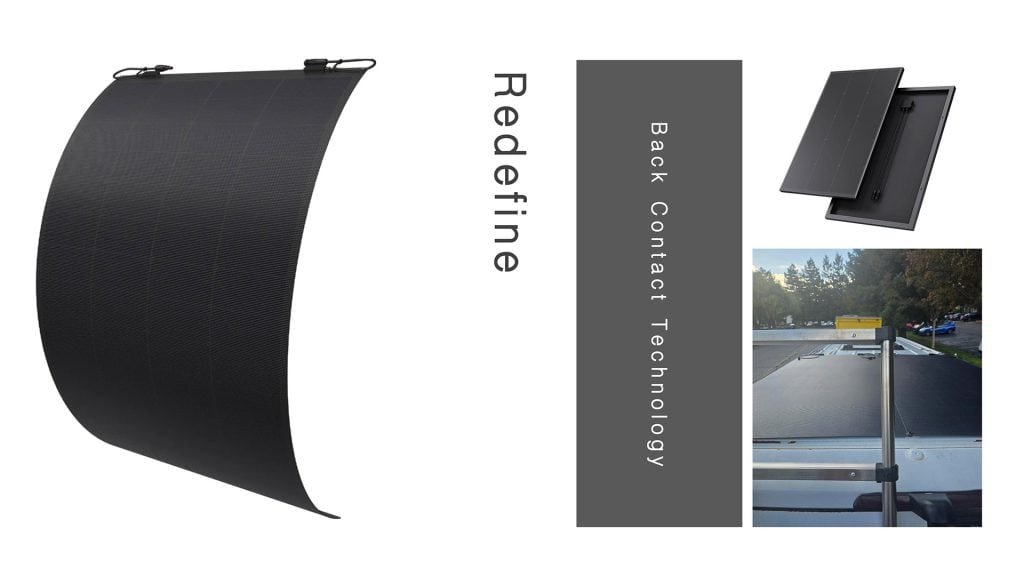
- Flexible panels – Lightweight, portable solutions for RV, marine, and off-grid applications
- Rigid panels – Standard and custom sizes for commercial and residential installations
- Advanced cell types – TOPCon, HJT, and back-contact options
💼 B2B Services
- Minimum Order Quantity: 100 pieces – Accessible for distributors and project developers
- Technical support – Pre-sales consultation, site assessment guidance, and post-sales assistance
- Documentation – Full certification packages for regional compliance
- Logistics coordination – Shipping arrangements to global destinations
⚡ Competitive Advantages
- Specialized expertise – Focus on custom solar solutions and advanced technologies
- Flexible customization – Adapt specifications to unique project requirements
- Direct communication – Work directly with technical teams and production managers
- Speed to market – Faster decision-making without distributor delays
⏰ Production Planning Note: As global demand for high-efficiency BC technology increases, production capacity for premium modules is filling for Q2-Q3 2026. Early order placement recommended for projects requiring delivery in the next 4-6 months.

🎯 The Bottom Line: Does Low-Light Performance Justify BC Investment?
Here’s the honest assessment:
| Climate/Scenario | BC Worth It? | Why |
|---|---|---|
| Cloudy climates (frequent overcast) | ✅ Yes | 2.5–3.2% advantages compound meaningfully |
| Mixed climates (moderate clouds) | ✅ Probably | Weak-light + shading + extended hours = positive ROI |
| Sunny climates (predominantly clear) | ⚠️ Maybe | Smaller advantages; depends on price premium |
| Partial shading + weak-light | ✅ Absolutely | Combined advantages highly compelling |
| Premium aesthetic requirements | ✅ Yes | All-black design with superior performance |
🌟 Final Thoughts: The Future of Low-Light Solar
Back-contact technology represents the cutting edge of silicon solar efficiency. As manufacturing scales and costs continue decreasing, BC panels are transitioning from niche premium products to mainstream solutions.
The documented advantages in low-light conditions—proven through multiple independent tests across different climates—make BC technology particularly compelling for:
- Northern latitude installations
- Cloudy or foggy climates
- Sites with partial shading
- Applications prioritizing maximum annual yield
💡 As the solar industry matures and competition intensifies on panel efficiency, real-world performance in actual operating conditions becomes the differentiator. Lab test efficiency under perfect conditions matters less than annual energy yield under real weather.
BC technology wins the real-world performance competition—especially when the sun isn’t perfect.
For detailed technical specifications, performance data, or custom quotations, reach out to Couleenergy’s team:
We’re here to help you maximize solar generation—even when the sky is gray.



 English
  Español
  Français
  Deutsch
  Русский
  العربية