
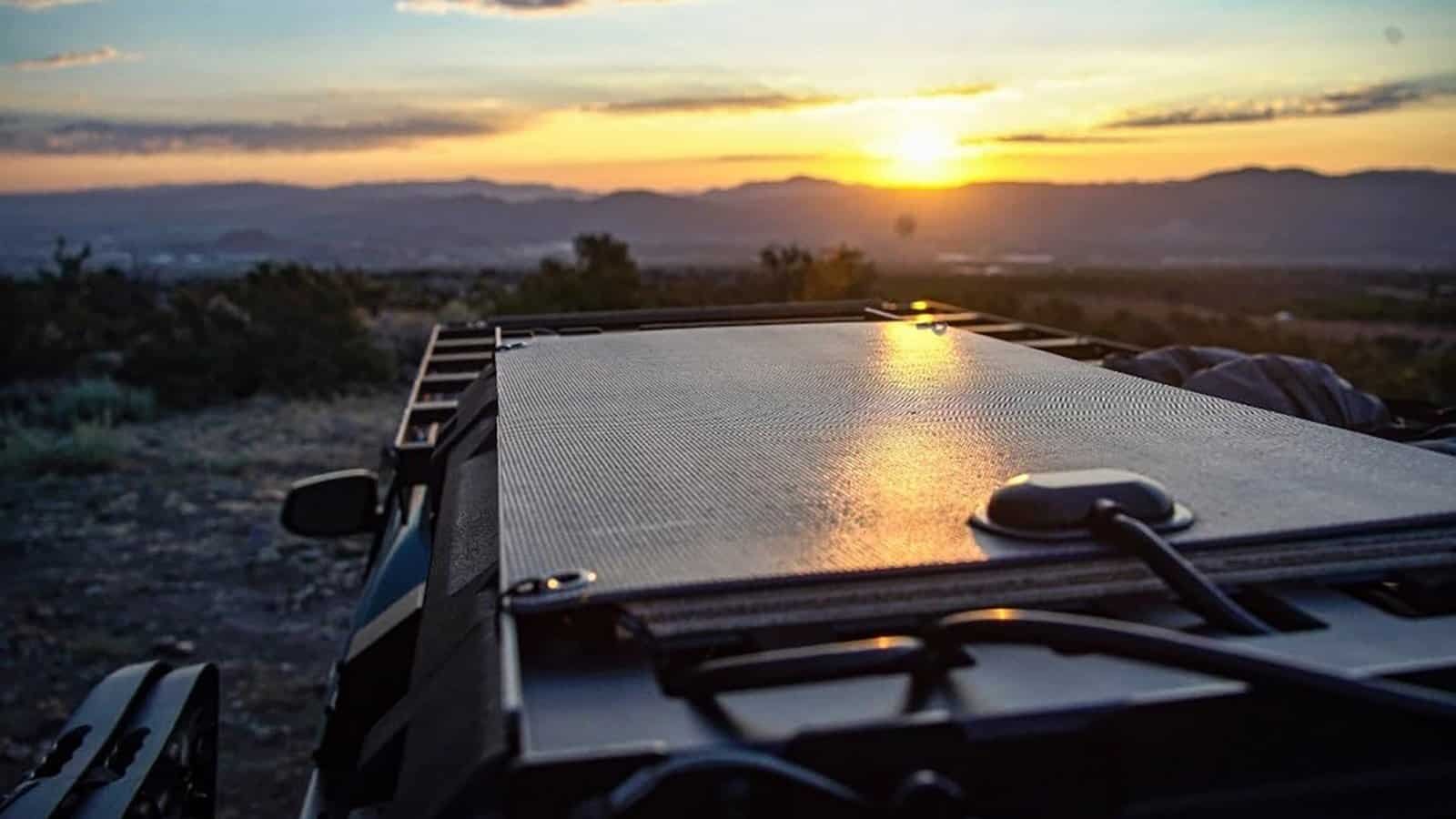
Gebogene Dächer benötigen gebogene Solarmodule. Boote, Wohnmobile, Vans und Elektrofahrzeuge bieten selten ebene Flächen für herkömmliche Glaspaneele. Flexible Solarmodule lösen dieses Problem: Sie passen sich der Oberfläche an, reduzieren das Gewicht und kommen ohne sperrigen Aluminiumrahmen aus.
“Flexibel” bedeutet aber nicht “alle gleich”. Hochwertige ETFE-beschichtete Paneele können bei fachgerechter Montage zehn Jahre oder länger zuverlässig im Außenbereich eingesetzt werden. Günstigere Alternativen mit PET-Oberfläche zeigen mitunter schon nach zwei bis drei Jahren sichtbare Abnutzungserscheinungen. Der Unterschied zwischen den beiden Produkten liegt letztendlich in wenigen Spezifikationsentscheidungen, die viele Käufer vor der Bestellung außer Acht lassen.
Dieser Leitfaden führt Sie durch zehn wichtige Prüfpunkte in der Reihenfolge ihrer Bedeutung – von Oberflächengeometrie und Zelltechnologie bis hin zu Wärmemanagement, Zertifizierungen und Steckverbinderkompatibilität. Ob Sie OEM-Einkäufer, Händler oder Ingenieur im Bereich Schifffahrt oder Wohnmobile sind: Diese Fragen sollten Sie sich vor einer endgültigen Entscheidung stellen.
Die wichtigsten Erkenntnisse
- Messen Sie den Biegeradius Ihrer Oberfläche, bevor Sie ein Panel auswählen – eine Überschreitung des zulässigen Grenzwerts führt zu irreversiblen Zellschäden.
- ETFE-Frontfolien halten im Außenbereich deutlich länger als PET-Folien; PET eignet sich nur für den mobilen oder kurzfristigen Einsatz.
- Mikrorisse sind mit bloßem Auge nicht sichtbar – fordern Sie daher von jedem Lieferanten Bilder von Elektrolumineszenz-Tests (EL) an, bevor Sie größere Bestellungen aufgeben.
- Eine bündige Montage erhöht die Betriebstemperatur erheblich; selbst ein kleiner Luftspalt verbessert Leistung und Lebensdauer.
1. Messen Sie Ihre Kurvenhöhe, bevor Sie ein Solarpanel auswählen.
Jedes flexible Modul hat seine Grenzen. Hersteller geben diese als maximalen Biegewinkel oder minimalen Biegeradius an. Wird dieser Wert überschritten, besteht die Gefahr, dass die Zellen oder die internen Verbindungen im Laminat beschädigt werden – oft dauerhaft und unsichtbar.
Die meisten flexiblen Kristallpaneele sind für eine statische Biegung ausgelegt, d. h. sie passen sich bei der Installation einmalig der Oberfläche an und behalten dann ihre Form. Sie sind nicht für wiederholtes Biegen im Gebrauch geeignet. Falls Ihre Anwendung ständige Bewegungen oder Vibrationen beinhaltet – beispielsweise ein Boot auf offenem Wasser oder ein Fahrzeug auf unbefestigten Straßen –, besprechen Sie dies bitte direkt mit Ihrem Lieferanten, bevor Sie die Konstruktion abschließen.
Messen Sie vor der Musterbestellung Ihre Oberfläche genau aus. Ein flexibles Lineal oder eine zugeschnittene Pappschablone eignen sich gut. Vergleichen Sie die gemessene Kurve mit der vom Lieferanten angegebenen Biegegrenze, nicht mit Angaben aus einer Marketingbroschüre.
Achten Sie auf Nähte und Beschläge.
Eine gleichmäßige, glatte Kurve ist eine Sache. Eine unebene Oberfläche stellt ein anderes und oft größeres Problem dar. Lüftungsöffnungen, Antennenhalterungen, erhabene Nähte und Nieten erzeugen konzentrierte Spannungsspitzen, an denen Zellbrüche entstehen. Selbst ein Panel, das für eine statische Biegung von 30 Grad ausgelegt ist, kann an einem Dach mit Unebenheiten und Kanten brechen.
Wenn Ihre Oberfläche Hardware oder unebene Bereiche aufweist, wenden Sie sich vor der Bestellung an den Hersteller. Individuelle Zellenlayouts und eine angepasste Diodenplatzierung können das Problem mitunter beheben. Standardmäßige Panels von der Stange bieten dazu in der Regel keine Lösung.
Oberflächenverträglichkeit für Klebemontage prüfen
Nicht jede Oberfläche eignet sich zuverlässig für die Anbringung von Klebepaneelen. Hier eine kurze Übersicht:
| Oberfläche | Geeignet für Klebemontage? |
|---|---|
| Fiberglas (Boot, Wohnmobil) | Ja – ideales Substrat |
| Sauberes Aluminium | Ja – zuerst gründlich entfetten. |
| Lackierter Stahl | Vor dem endgültigen Auftragen die Haftung der Farbe prüfen. |
| Marine-Gelcoat-Deck | Ja – verwenden Sie Polyurethan- oder Silikonkleber in Marinequalität. |
| Weiche Gummidachbahnen (EPDM) | Vor der vollständigen Installation die Klebstoffverträglichkeit prüfen. |
| Raues oder unebenes Holz | Vermeiden – erzeugt lokale Belastungspunkte |
2. Die richtige Solarzellentechnologie auswählen
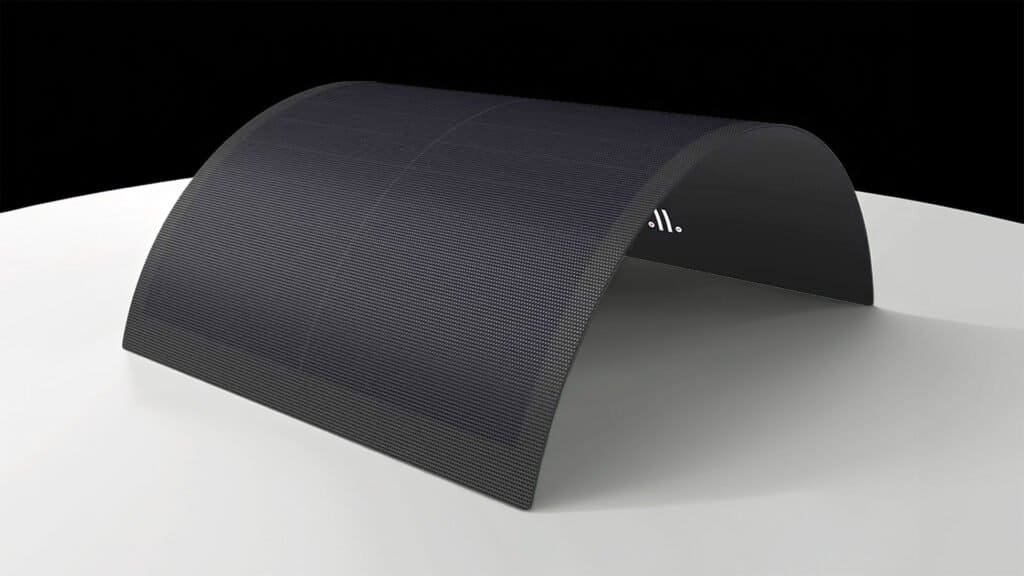
Die Zellen im Inneren des Panels bestimmen die erzeugte Leistung und deren Stabilität über die Zeit. Für Anwendungen mit flexiblen, gekrümmten Oberflächen sind drei Hauptkategorien relevant.
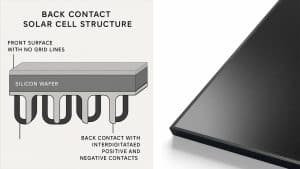
Rückkontaktzellen (BC-Zellen): Die Premium-Wahl
Rückkontaktzellen bewegen sich alle elektrischen Kontakte auf der Rückseite der Zelle. Die Vorderseite ist vollständig frei von Metallgitterlinien, wodurch mehr Licht auf die aktive Schicht gelangt und die Paneele ein sauberes, einheitliches schwarzes Erscheinungsbild aufweisen.
Die BC-Kategorie umfasst verschiedene Varianten: vollständiges IBC (Interdigitated Back Contact, z. B. von Maxeon verwendet), HPBC (Hybrid Passivated Back Contact, entwickelt von LONGi) und ABC (All Back Contact, z. B. von AIKO Solar verwendet). Allen gemeinsam ist der entscheidende Vorteil, dass die Vorderseite nicht durch Metall beschattet wird.
Bei Anwendungen mit begrenztem Platzangebot – wie einem kleinen Bootsdeck, einem Elektrofahrzeugdach oder einem BIPV- (Gebäudeintegrierte Photovoltaik) oder VIPV- (Fahrzeugintegrierte Photovoltaik) Projekt, bei dem die Ästhetik eine Rolle spielt – ermöglicht dieser Effizienzgewinn eine höhere nutzbare Leistung auf derselben Fläche.
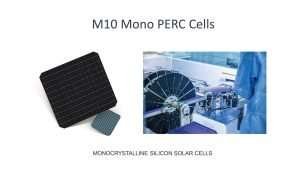
Standard-Monokristallinzellen
Die meisten flexiblen Solarmodule der Mittelklasse verwenden herkömmliches monokristallines Silizium. Der Wirkungsgrad ist geringer als bei BC-Optionen, die Leistung ist aber für den allgemeinen Einsatz in Wohnmobilen, Vans und Booten, wo der Platz weniger wichtig ist, dennoch solide.
Der zu beachtende Kompromiss: Silizium ist von Natur aus spröde. Jede Biegung beim Einbau belastet die Zelle. Unsachgemäße Handhabung oder versehentliches Begehen können Mikrorisse verursachen, die die Leistung über Monate hinweg unbemerkt und mitunter erheblich reduzieren.
Dünnschichtzellen (CIGS)
CIGS (Kupfer-Indium-Gallium-Selenid) zählt zu den kommerziell erhältlichen und effizienten Dünnschichttechnologien für gebogene, flexible Anwendungen. Im Gegensatz zu kristallinem Silizium wird die CIGS-Photovoltaikschicht direkt auf ein dünnes, flexibles Substrat aufgebracht. Dadurch ist sie tatsächlich biegsam und nicht nur auf einem flexiblen Träger montiert. CIGS-Module ermöglichen engere Krümmungen, und ihre monolithische Verschaltung – bei der die Zellen elektrisch in Reihe geschaltet sind, ohne einzelne Lötstellen – eliminiert die einzelnen Lötpunkte, die bei kristallinen flexiblen Modulen häufig zu Fehlern führen. Diese Konstruktion bedingt auch ein anderes Verhalten bei Teilverschattung als bei diskreten kristallinen Zellensträngen. Bypass-Dioden sind jedoch weiterhin wichtig, um Fehlanpassungen innerhalb der Module auszugleichen. Der Nachteil ist ein geringerer Wirkungsgrad pro Quadratmeter. Daher eignet sich CIGS am besten für Installationen, bei denen der Platz nicht die größte Einschränkung darstellt.
Zelltechnologie auf einen Blick
| Zelltyp | Relative Effizienz | Biegetoleranz | Schattierungsverhalten | Beste Passform |
|---|---|---|---|---|
| Rückkontakt (IBC / HPBC / ABC) | Höchste | Gute, statische Kurven | Ausgezeichnet – keine Schattenbildung nach vorne | BIPV, VIPV, Premium-Marine |
| Standard Monokristallin | Mittel bis hoch | Gute, statische Kurven | Mäßig | Wohnmobil, Van, allgemeine Marine |
| CIGS-Dünnschicht | Untere | Ideal für engere Kurven | Gut – monolithische Integration | Bimini-Tops, schattige Layouts |
3. ETFE vs. PET: Das Deckschichtmaterial bestimmt die Lebensdauer des Panels.
Die Schutzfolie, die über die Solarzellen laminiert ist, ist oft der wichtigste Faktor für die Lebensdauer eines flexiblen Solarmoduls im Außenbereich. Wird hier Fehler gemacht, helfen auch die beste Zellqualität oder eine wasserdichte Anschlussdose nicht mehr.
ETFE: Die richtige Wahl für den dauerhaften Außeneinsatz
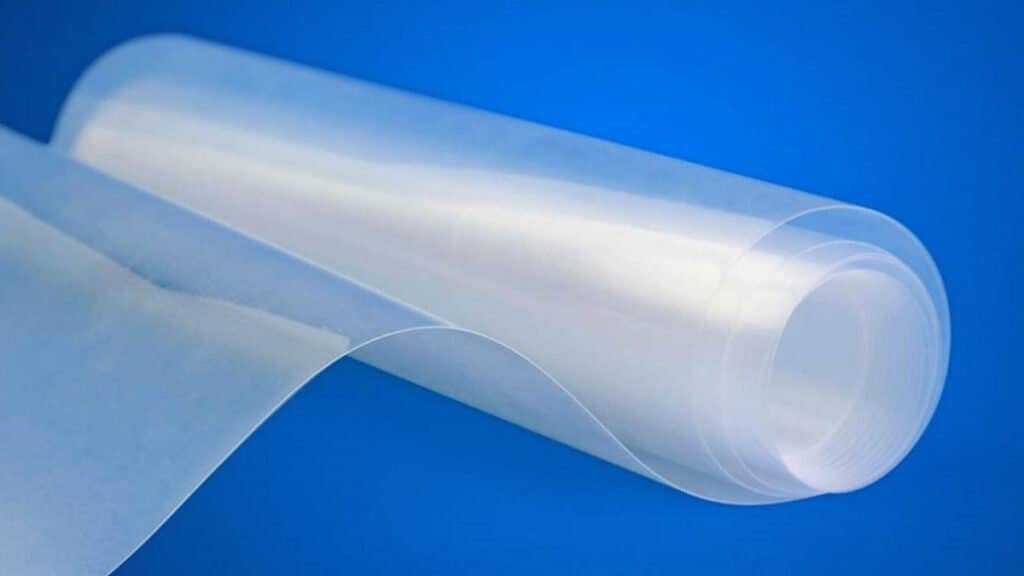
ETFE (Ethylen-Tetrafluorethylen) Es handelt sich um ein Fluorpolymer, das ursprünglich für die Luft- und Raumfahrt sowie für architektonische Anwendungen entwickelt wurde. Auf Solarmodulen dient es als hochstabile, schützende Frontschicht.
- Vergilbt nicht und zersetzt sich nicht unter UV-Strahlung, wodurch die optische Klarheit über Jahre direkter Sonneneinstrahlung erhalten bleibt.
- Antihaftbeschichtete, selbstreinigende Oberfläche – Regen spült Staub und Salzablagerungen ohne Schrubben ab
- Hohe chemische Beständigkeit gegenüber Salz, saurem Regen und den meisten industriellen Schadstoffen
- Thermisch stabil über einen weiten Bereich von Betriebstemperaturschwankungen
Für Marine-, Wohnmobil- und Industriepaneele, die jahrelang der Witterung ausgesetzt sind, ist ETFE die etablierte Wahl für OEM-Hersteller und Systemintegratoren, die eine gleichbleibende Leistung über die gesamte Lebensdauer des Produkts benötigen.
So überprüfen Sie dies auf einem Datenblatt: Achten Sie auf die Angabe des Frontfolienmaterials als “ETFE”. Manche Angebote verwenden vage Begriffe wie “Fluorpolymerfolie” oder “UV-beständige Frontfolie”, ohne das Material zu benennen. Ist die Frontfolie im Datenblatt nicht aufgeführt, fragen Sie vor der Bestellung schriftlich beim Lieferanten nach – und gehen Sie bei einer unbestätigten Antwort von PET aus, bis das Gegenteil bewiesen ist.
PET: Nur für tragbare oder kurzfristige Anwendungen geeignet.
PET (Polyethylenterephthalat) ist zwar günstiger, altert aber deutlich schneller. Es vergilbt und wird unter längerer UV-Strahlung spröde, was die Lichtdurchlässigkeit verringert und die Delamination an den Zellrändern beschleunigt. PET eignet sich für tragbare Paneele, die zwischen den Einsätzen in Innenräumen gelagert werden, oder für leichte, kurzfristige Installationen. Für Paneele, die ganzjährig im Freien montiert bleiben, birgt es jedoch ein inakzeptables Risiko hinsichtlich der Lebensdauer.
4. Das Risiko von Mikrorissen verstehen
Mikrorisse sind die häufigste Ursache für vorzeitiges Versagen flexibler Paneele, Sie sind mit bloßem Auge nicht sichtbar. Ein Panel, das bei der Auslieferung einwandfrei aussieht, kann bereits Schäden aufweisen, die sich innerhalb des ersten Jahres als Leistungsverlust bemerkbar machen.
Sie können sich zu verschiedenen Zeitpunkten im Lebenszyklus des Produkts bilden:
- Während der Herstellung — Spannungen beim Löten oder Laminieren der Zellen erzeugen unsichtbare Risse, bevor das Panel versendet wird
- Während des Versands — Vibrationen während des Transports sind ein bekanntes Risiko für dünne, leicht kaschierte flexible Module.
- Während der Installation — Das Überschreiten des zulässigen Biegeradius einer Platte ist die am häufigsten vermeidbare Ursache für Zellrisse.
- Während des Dienstes — Temperaturschwankungen, Feuchtigkeitsänderungen und Vibrationen durch Fahrzeuge oder Schiffe führen allmählich zur Vergrößerung vorhandener Risse.
Sobald sich signifikante Risse bilden, kann die Leistung stark abfallen. (Forschungsergebnisse veröffentlicht in …) Wissenschaftliche Berichte Es wurde festgestellt, dass großflächige Risse die Leistung einzelner Zellen um fast 60 Prozent reduzieren können, während selbst partielle Risse zu einer messbaren Verschlechterung des gesamten Strangs führen.
Was Sie Ihren Lieferanten fragen sollten: Anfrage Elektrolumineszenz (EL) Testbilder Für Musterbestellungen vor einer Großbestellung empfiehlt sich die Prüfung auf Basis von Elektrolumineszenz-Prüfgeräten (EL-Test). Dabei wird ein Strom an das Panel angelegt und die Nahinfrarot-Lichtemission der Zellen erfasst. Dadurch werden Rissmuster sichtbar, die unter Weißlicht völlig unsichtbar sind. Jeder Hersteller, dem Qualitätskontrolle wichtig ist, sollte diese Bilder auf Anfrage bereitstellen können. Andernfalls stellt dies ein erhebliches Beschaffungsrisiko dar.
5. Planung zur Vermeidung von Wärmestau unter bündig montierten Paneelen
Flexible Paneele liegen üblicherweise bündig auf dem Dach oder der Terrasse auf, ohne Luftspalt darunter. Dies verändert ihr thermisches Verhalten grundlegend im Vergleich zu einem starren, rahmengebundenen Paneel, das auf Abstandshaltern mit offener Luftzirkulation montiert ist.
Bündig montierte Paneele auf dunklen Metall- oder Verbundoberflächen können im Sommerbetrieb Temperaturen erreichen, die deutlich über ihrer Nenntemperatur für Standardtests (25 °C) liegen. Dies ist aus zwei Gründen relevant: Hitze beschleunigt den Klebstoffabbau und das Versagen der Randversiegelung und reduziert direkt die Leistung, da Siliziumzellen Sie verlieren pro Grad Celsius etwa 0,3 bis 0,5 Prozent ihrer Nennleistung. oberhalb der STC-Werte. Bei einer realistischen Betriebstemperatur von 65 °C auf einem Sommerdach entspricht dies einem realen Leistungsverlust von 12 bis 20 Prozent, bevor Witterungs- oder Verschattungsfaktoren berücksichtigt werden.
Möglichkeiten zur Reduzierung der Hitzebelastung:
- Durch die Montage am Rand oder an der Kante kann, sofern die Dachgeometrie dies zulässt, auch ein kleiner Luftspalt unter dem Paneel entstehen.
- Verwenden Sie strukturelle Silikon- oder Polyurethanklebstoffe – kein Schaumstoffklebeband –, die eine geringe Wärmeausdehnung ermöglichen und die Klebeverbindung auch bei erhöhten Temperaturen aufrechterhalten.
- Wenn Sie in heißen Klimazonen arbeiten, fragen Sie Ihren Lieferanten nach dem Temperaturkoeffizienten (Pmax, angegeben als %/°C) des Panels und vergleichen Sie die verschiedenen Optionen.
- Für sehr heiße, dauerhaft flächenbündig montierte Anwendungen sollten CIGS-Dünnschichtzellen in Betracht gezogen werden; ihr niedrigerer Temperaturkoeffizient bedeutet typischerweise geringere Leistungsverluste bei hohen Temperaturen.
6. Überprüfen Sie die Wasserdichtigkeitsbewertungen und -zertifizierungen.
Der Einsatz im Außenbereich in Wassernähe erfordert mehr als eine optisch dichte Anschlussdose. Eindringende Feuchtigkeit – sei es an den Kanten des Laminats, durch eine unzureichend abgedichtete Anschlussdose oder durch beschädigtes Vergussmaterial – ist eine der Hauptursachen für vorzeitige Ausfälle bei Anwendungen im maritimen und küstennahen Bereich.
Bitte prüfen Sie diese Details, bevor Sie eine Bestellung für den Außenbereich aufgeben:
- Mindestens Schutzart IP67 — Vollständiger Staubschutz sowie kurzzeitiges Eintauchen in Wasser bis zu 1 Meter Tiefe für 30 Minuten. Dies ist die Basisanforderung für flexible Außenpaneele. Für Bootsdecks, die abgespült oder teilweise unter Wasser gesetzt werden können, sollten Sie Folgendes beachten: IP68, was auch längeres Eintauchen über 1 Meter hinaus umfasst.
- Zertifizierung gegen Salznebelkorrosion Für alle Anwendungen im maritimen oder küstennahen Bereich – stellt sicher, dass Anschlussdose, Steckverbinder und Kantendichtung dauerhafter Salzwasserbelastung standhalten.
- Unabhängig abgedichtete Anschlussdose — Eine schlecht abgedichtete Anschlussdose beeinträchtigt die Schutzart der ansonsten IP-geschützten Laminierung; vergewissern Sie sich, dass sie über eine eigene Schutzart verfügt.
- Laminierungs- und Kantenversiegelungsqualität Die anfängliche IP-Schutzart spiegelt eine Momentaufnahme wider; die Haltbarkeit der Kantenversiegelung entscheidet darüber, ob diese Schutzart über Jahre hinweg durch Temperaturwechsel und UV-Strahlung erhalten bleibt.
Prüfen Sie Zertifizierungsnummern stets direkt beim ausstellenden Labor. Einige Zulieferer kleinerer Unternehmen legen kopierte oder abgelaufene Zertifikate vor – ein Compliance-Risiko, das die Zollabfertigung von B2B-Sendungen in die EU oder nach Großbritannien verzögern oder verhindern kann.
Kurzübersicht zur Zertifizierung
| Standard | Cover | Warum es wichtig ist |
|---|---|---|
| IEC 61215 | Leistungsfähigkeit und Lebensdauer von kristallinen Siliziummodulen | Kernnorm für einlagige flexible Paneele; die Ausgabe 2021 ergänzt den Biegetest (MQT 22) |
| IEC 61646 | Leistung von Dünnschichtmodulen | Erforderlich für CIGS- und andere flexible Dünnschichtpaneele |
| IEC 61730 | Qualifikation für elektrische Sicherheit | Gilt für alle Paneltypen; erforderlich für den Markteintritt in der EU und Großbritannien. |
| IP67 / IP68 | Schutz vor Staub und Wassereintritt | Schutzart IP67 für den Standardeinsatz im Außenbereich; Schutzart IP68 für maritime Anwendungen mit Unterwasserrisiko |
| IEC 61701 | Korrosionsbeständigkeit durch Salznebel | Unverzichtbar für Küsten- und Meeresanlagen; Schweregrade 1–6 |
| CE-Kennzeichnung | Einhaltung der EU-Vorschriften | Erforderlich für den Vertrieb in der EU und Großbritannien; Überprüfung anhand der Datenbank des ausstellenden Labors. |
Haben Sie eine spezielle Anwendung – Marine, Wohnmobil, BIPV oder VIPV? Unser Ingenieurteam prüft jedes Projekt individuell, von den Zertifizierungsanforderungen bis hin zum Zellenlayout und den Steckverbinderspezifikationen. Kontaktieren Sie uns unter info@couleenergy.com für eine unverbindliche technische Beratung.
7. Elektrische Spezifikationen abgleichen – Spannung, Stromstärke, Dioden und Anschlüsse
Ein Panel, das physisch auf die Oberfläche passt, muss dennoch auch mit der dahinterliegenden elektrischen Anlage kompatibel sein. Vier Parameter sind dabei besonders wichtig:
- Voc (Leerlaufspannung) Die maximale Eingangsspannung Ihres Ladereglers muss nicht überschritten werden. Berücksichtigen Sie stets eine Kältetoleranz – die Leerlaufspannung (Voc) steigt mit sinkenden Temperaturen und liegt bei einem Kaltstart am Morgen über dem im STC-Datenblatt angegebenen Wert.
- Isc (Kurzschlussstrom) muss innerhalb der zulässigen Eingangsstromgrenzen Ihres Controllers liegen.
- Vmp (maximale Leistungsspannung) sollte mit Ihrer Systemspannung übereinstimmen – 12 V, 24 V, 36 V oder einem kundenspezifischen OEM-Bus.
- Anzahl und Platzierung der Bypass-Dioden Bei gebogenen Paneelen spielt dies eine größere Rolle als bei flachen. Da ein gebogenes Paneel im Laufe des Tages unterschiedliche Bereiche in verschiedenen Winkeln der Sonne aussetzt, stellt eine ungleichmäßige Beschattung innerhalb des Paneels ein reales Risiko dar. Ohne ausreichende, korrekt platzierte Bypass-Dioden, Eine nur teilweise schattierte Zellenfolge kann die Ausgabe des gesamten Moduls unverhältnismäßig stark beeinträchtigen.
Anschlussart: Oft übersehen, immer wichtig
Bei OEM- und kundenspezifischen Integrationsprojekten muss die Spezifikation des Ausgangsanschlusses vor der Designfreigabe explizit bestätigt werden. Die drei am häufigsten für flexible Panels spezifizierten Typen sind:
- MC4 — der nahezu universelle Industriestandard für Modul-zu-Kabel-Verbindungen; wetterfest, Schutzart IP67 oder IP68, kompatibel mit den meisten MPPT-Ladereglern
- SAE — einfache zweipolige Steckverbinder, die in Kfz- und 12-V-Wohnmobil-Erhaltungsladeanwendungen verwendet werden; ausgelegt für niedrigere Ströme und nicht geeignet für dauerhafte Hochleistungsinstallationen
- Anderson — modular, geschlechtsneutral, ausgelegt für hohe Ströme in netzunabhängigen Gleichstromsystemen und bei Van-Ausbauten; häufig bei individuellen Van- und Wohnmobilumbauten
Nicht zueinander passende Steckverbinder verursachen Kontaktwiderstand, Wärmeentwicklung und können langfristig zu Ausfällen führen. Bei kundenspezifischen OEM-Aufträgen sollten Steckverbindertyp, Kabelquerschnitt und Kabellänge bereits in der Designphase und nicht erst im Nachhinein festgelegt werden.
8. Die richtige Montagemethode und den passenden Klebstoff auswählen.
Selbst ein hochwertiges Paneel kann frühzeitig ausfallen, wenn die Montage unsachgemäß durchgeführt wird. Die Wahl des Klebstoffs und die Oberflächenvorbereitung sind genauso wichtig wie das Paneel selbst.
Klebstoffauswahl:
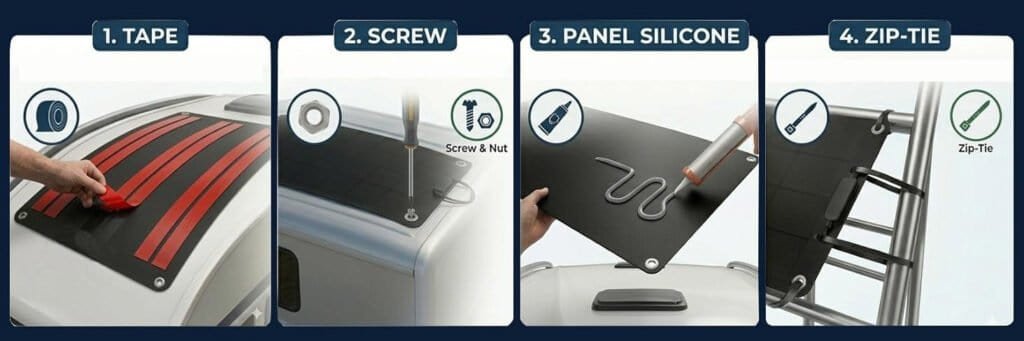
- Für die dauerhafte Installation flexibler Paneele sind Struktur-Silikon- oder Polyurethan-Klebstoffe die Standardwahl – beide haften gut auf einer Vielzahl von Oberflächen im Schiffs- und Wohnmobilbereich und sind temperaturbeständig.
- Vergewissern Sie sich, dass der Klebstoff mit dem Rückseitenmaterial der verwendeten Platte kompatibel ist – einige aggressive Klebstoffformulierungen können Polymer-Rückseitenfolien mit der Zeit angreifen.
- Vermeiden Sie reine Schaumstoffklebebänder oder Allzweck-Silikon, die nicht für den strukturellen Einsatz geeignet sind; diese weisen nicht die erforderliche Scher- und Schälfestigkeit für langfristige Verklebungen im Außenbereich unter thermischer Bewegung auf.
Vor dem Auftragen des Klebstoffs:
- Reinigen Sie die Oberfläche gründlich mit Isopropylalkohol, um Wachs, Fett, Salzrückstände oder lose Farbe zu entfernen.
- Prüfen Sie, ob der Untergrund strukturell stabil ist – keine Biegungen, Delaminationen oder weiche Stellen an der Unterseite.
- Verwenden Sie vor dem Aufbringen des Klebstoffs eine Ausrichtungsschablone aus Pappe; Struktur-Silikon und VHB-Klebeband erlauben keine Neupositionierung.
- Gewährleisten Sie die Wärmeausdehnung entlang mindestens einer Achse – verschließen Sie nicht alle vier Kanten starr, da sonst die thermische Belastung die Laminatkanten beansprucht und das Versagen der Kantenversiegelung beschleunigt.
Bei Anwendungen mit starken Vibrationen – wie Arbeitsschiffen, Fahrzeugdächern oder Industrieanlagen – kombiniert man Klebstoff mit umlaufenden, ösenbasierten mechanischen Befestigungselementen, um Redundanz zu gewährleisten. Dies erhöht die Haltekraft, ohne die Belastung auf den Zellbereich zu konzentrieren.
9. Schauen Sie nicht nur auf die Wattzahl.
Zwei Solarmodule mit identischer Nennleistung können unter realen Bedingungen sehr unterschiedliche Leistungen erbringen. Die STC-Werte (Standard Test Conditions – 1000 W/m², 25 °C, AM1.5-Spektrum) stellen eine Labormessung dar, keine Feldmessung. Die tatsächliche Leistung hängt von verschiedenen weiteren Parametern ab.
Fragen Sie Ihren Lieferanten immer nach Folgendem:
- Moduleffizienz (nicht nur die Zelleffizienz) – die Differenz zwischen Zell- und Moduleffizienz spiegelt reale Verluste im Laminat wider.
- Temperaturkoeffizient von Pmax — der prozentuale Leistungsverlust pro °C über 25 °C; kritisch für flächenbündige Anwendungen in warmen Klimazonen
- Leistung bei schwachem Licht — wie sich das Panel unter NOCT-Bedingungen (Nominal Operating Cell Temperature) verhält; relevant für frühe Morgenstunden, bewölkte Tage und nördliche Breitengrade
- Jährliche Abbaurate — was die Leistungsgarantie pro Jahr garantiert, nicht nur die beworbene Wattzahl zum Zeitpunkt des Verkaufs
Ein technisch ausgereiftes Panel mit hochwertigen Zellen und einem niedrigen Temperaturkoeffizienten wird über ein ganzes Betriebsjahr hinweg einem Panel mit höherer Wattzahl, aber minderwertiger Konstruktion, stets überlegen sein.
10. Überprüfen Sie die Garantiebedingungen und die bisherige Leistungsbilanz des Lieferanten.
Flexible Paneele haben im Allgemeinen kürzere Garantiezeiten als starre Glasmodule. Dies spiegelt die höhere thermische und mechanische Belastung wider, der Konstruktionen auf Polymerbasis im Laufe der Zeit ausgesetzt sind. Daher ist es ratsam, die Garantiebedingungen sorgfältig zu lesen und nicht anzunehmen, dass sie den Standardgarantien für starre Paneele entsprechen.
Bevor Sie einen Lieferanten auswählen, fragen Sie nach Folgendem:
- Dauer der Produktgarantie — Bei hochwertigen ETFE-Paneelen sollten Sie auf eine Produktgarantie von mindestens drei Jahren achten; bei erfahrenen Herstellern sind zehn Jahre oder mehr möglich.
- Garantie für lineare Ausgangsleistung — Ein klarer jährlicher Leistungsabfall in Prozent ist aussagekräftiger als ein einzelner Endpunktwert; fragen Sie nach der garantierten Leistung in den Jahren 5 und 10.
- Abdeckung von Delaminations- und Verkapselungsfehlern — Dies sind die Hauptausfallursachen von flexiblen Paneelen und sollten ausdrücklich genannt und nicht unklar gelassen werden.
- OEM-Projektreferenzen Ein Lieferant mit nachweislicher Erfahrung in Ihrer Anwendungskategorie (Schifffahrt, Wohnmobile, Elektrofahrzeuge) ist etwas anderes als einer mit lediglich standardmäßiger Katalogverkaufshistorie.
- Chargenbezogene Qualitätskontrolldokumentation Die Konsistenz über verschiedene Produktionsläufe hinweg ist für OEM-Käufer wichtig; fragen Sie nach, ob EL-Prüfprotokolle pro Charge und nicht nur pro Probe verfügbar sind.
Ein erfahrener OEM-Hersteller kann auch zur Entwicklung elektrischer Systeme beitragen – beispielsweise durch Vorschläge zum Zellenlayout, zur Konfiguration der Bypassdioden oder zur Kabelführung – anstatt lediglich nach Zeichnung zu bauen. Eine solche technische Partnerschaft sollte frühzeitig im Beschaffungsprozess identifiziert werden.
Checkliste für Käufer
Gehen Sie dies durch, bevor Sie ein endgültiges Angebot anfordern oder eine Bestellung aufgeben:
Häufig gestellte Fragen
Wie weit lässt sich ein flexibles Solarpanel biegen?
Die meisten flexiblen ETFE-PV-Module sind für eine statische Biegung während der Installation ausgelegt – typischerweise bis zu ca. 30 Grad. Diese Angabe gilt nicht für wiederholtes Biegen. Überprüfen Sie stets die Angaben im Datenblatt des Herstellers, da die Grenzwerte je nach Zelltyp, Substratdicke und Laminataufbau variieren. Dünnschicht-CIGS-Module vertragen im Allgemeinen engere Krümmungen.
Ist ETFE den höheren Preis im Vergleich zu PET wert?
Für alle Solarmodule, die dauerhaft im Freien montiert werden, gilt: Ja – ohne Ausnahme. PET-beschichtete Module vergilben und delaminieren typischerweise innerhalb weniger Jahre unter kontinuierlicher UV-Strahlung, wodurch die anfänglichen Einsparungen zunichtegemacht werden. ETFE behält seine optische Klarheit und strukturelle Integrität unter denselben Bedingungen deutlich länger bei. PET ist nur für tragbare Module sinnvoll, die zwischen den Einsätzen in Innenräumen gelagert werden.
Warum verschleißen flexible Glaspaneele schneller als starre Glaspaneele?
Drei Faktoren wirken zusammen: Biegebeanspruchung während und nach der Installation, höhere Betriebstemperaturen durch die bündige Montage ohne Luftspalt sowie das Fehlen eines stabilen Rahmens und einer gehärteten Glasschicht, die bei herkömmlichen Solarmodulen mechanischen Schutz und Feuchtigkeitsbeständigkeit bieten. Die Zellen selbst sind oft nicht der limitierende Faktor, sondern das Laminat und das Dichtungssystem.
Welchen Steckertyp sollte ich für eine OEM-Anwendung angeben?
MC4 ist der nahezu universelle Industriestandard für die Verbindung von Solarmodulen und mit den meisten MPPT-Reglern und Wechselrichtern kompatibel. Verwenden Sie diesen Standard, es sei denn, Ihr nachgeschaltetes System erfordert aus dokumentierten Gründen SAE (Niederstromanwendungen mit 12 V) oder Anderson (Hochstrom-Inselnetzverteilung). Klären Sie Steckertyp, Kabelquerschnitt und -länge immer bereits in der Planungsphase mit dem Hersteller – nicht erst nach der Produktion.
Was ist der am häufigsten vermeidbare Installationsfehler?
Wird ein PV-Modul über eine Oberfläche gepresst, deren Biegeradius den zulässigen Wert überschreitet, führt dies häufig zu sofortiger oder frühzeitiger Mikrorissbildung. Die Schäden sind dauerhaft und unsichtbar. Eine vorherige Messung der Oberfläche ist kostenlos und dauert nur zehn Minuten. Derselbe Fehler kann das gesamte Modul unbrauchbar machen.
Wie lange halten flexible Solarmodule tatsächlich?
Es hängt maßgeblich von zwei Faktoren ab: dem Verkapselungsmaterial und der Montageart. Hochwertige, ETFE-laminierte, kristalline Paneele erreichen bei korrekter Installation mit einem kleinen Belüftungsspalt typischerweise eine Lebensdauer von 10 bis 15 Jahren oder mehr im Außenbereich. Günstige Paneele mit PET-Frontfolie zeigen oft schon nach zwei bis drei Jahren kontinuierlicher Außenbewitterung messbare Vergilbung und Effizienzverluste. Bündig montierte Paneele auf dunklen Metalloberflächen erhitzen sich stärker als Paneele mit Luftzirkulation von unten, was den Verschleiß von Klebstoff und Kantenversiegelung unabhängig vom Frontfolienmaterial beschleunigt. Die Garantiebedingungen – insbesondere die Frage, ob Delamination und Verkapselungsfehler explizit abgedeckt sind – geben den deutlichsten Hinweis darauf, was der Hersteller unter realen Einsatzbedingungen von seinem Produkt erwartet.
Woran erkenne ich, ob eine Paneele eine ETFE- oder PET-Frontfolie hat?
Das Datenblatt oder die technische Spezifikation sollte das Material der Frontfolie explizit angeben. Falls nicht, fragen Sie direkt nach. ETFE-Platten fühlen sich in der Regel etwas härter an und sind kratzfester als PET. Zudem perlt Wasser von einer ETFE-Oberfläche aufgrund ihrer Antihaft-Eigenschaften besser ab. Kann der Lieferant das Material nicht schriftlich bestätigen, gehen Sie bis zum Beweis des Gegenteils von PET aus.
Abschließende Gedanken
Flexible Solarmodule ermöglichen Installationen, die mit starren Glasmodulen schlichtweg nicht realisierbar sind. Der Unterschied zwischen einem Modul, das ein Jahrzehnt lang zuverlässig funktioniert, und einem, das bereits vor der zweiten Monsunzeit ausfällt, liegt jedoch nicht in der Wattzahl – sondern in einigen wenigen Spezifikationsentscheidungen, die vor der Bestellung getroffen werden.
Achten Sie auf den korrekten Biegeradius. Verwenden Sie ETFE. Fordern Sie die Dokumentation des EL-Tests an. Bestätigen Sie die IP-Schutzart und den Steckertyp. Prüfen Sie die Garantiebedingungen genau, nicht nur die Angaben im Titel. Diese Schritte sind zeitsparend und beseitigen die meisten Leistungs- und Zuverlässigkeitsrisiken, die nach der Installation auftreten können.
Das richtige flexible PV-Modul ist dasjenige, das genau auf Ihre Anforderungen an Oberfläche, Klima und Lebensdauer zugeschnitten ist – und nicht dasjenige mit dem niedrigsten Preisposten im Angebot.
Beschaffung von flexiblen oder rückseitig kontaktierten Solarmodulen für ein OEM-, Vertriebs-, BIPV- oder Schiffs- und Wohnmobilprojekt?
Das Ingenieurteam von Couleenergy prüft jede Anwendung einzeln – von der Zellenauswahl und Verkapselung bis hin zu den Steckverbinderspezifikationen und Zertifizierungsanforderungen.


 Deutsch
  English
  Español
  Français
  Русский
  العربية