

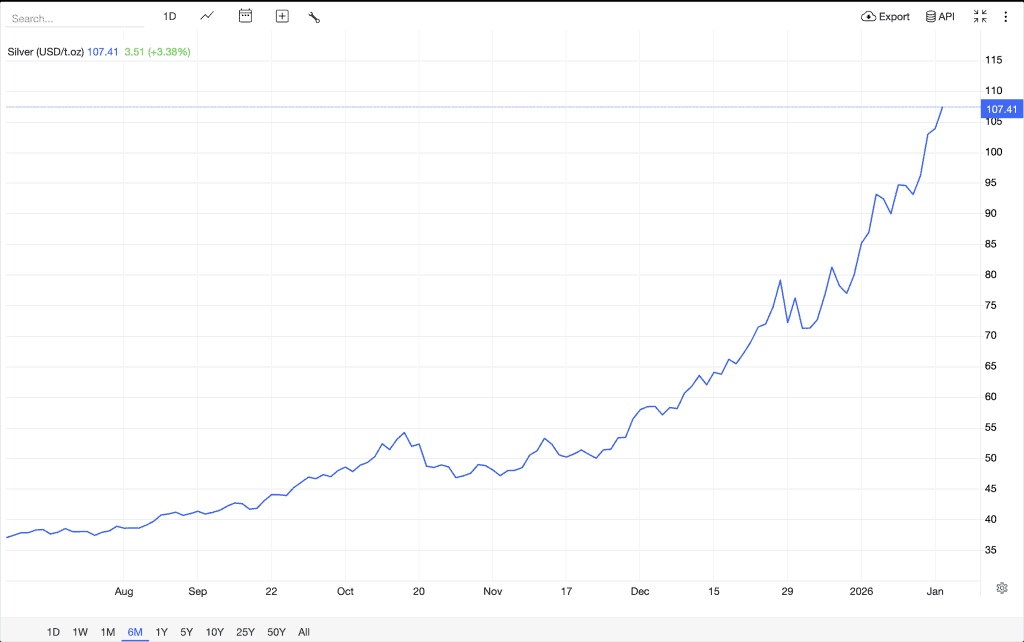
Silver prices just hit an extraordinary milestone. In late January 2026, silver reached roughly $110 per ounce—the highest level in decades. But here’s the twist: leading market analysts are now warning that this surge might reverse suddenly. And when it does, the entire solar industry could feel the impact.
If you’re planning to buy solar panels this year, this matters more than you think. Let’s break down what’s happening and what it means for your costs.
The Current Market Reality: What Manufacturers Face
To understand the silver situation, start with real numbers from the market. According to InfoLink’s latest intelligence from mid-January 2026, Chinese manufacturers are in a squeeze:
Current Solar Panel Economics (per watt):
- Cell costs: RMB 0.42/W (~$0.058/W)
- Module manufacturing: RMB 0.35-0.36/W (~$0.049/W)
- Total module cost: RMB 0.77-0.78/W (~$0.107/W)
- Actual selling price: RMB 0.70-0.80/W (~$0.097-0.111/W)
Notice the problem? Many manufacturers are selling at or below production costs. For a typical 400-watt panel, production costs run $42-43, but some transactions are happening at $39-44, leaving zero margin or even losses.
This is precisely why the silver surge matters so much.
Silver’s Cost Impact: The Real Numbers
Here’s what makes silver so critical: silver-related costs now represent roughly 30-40% of cell manufacturing costs, depending on the technology used.
Understanding the Silver Cost Component
Cell manufacturers report that silver costs have become their largest single material expense. On January 21, 2026, silver prices on the Shanghai Futures Exchange surpassed RMB 23,000/kg (approximately $110 per troy ounce), forcing immediate price adjustments.
For context: when silver was trading at $28/oz in early 2025, cell costs were around RMB 0.32-0.35/W. Now, with silver at $110/oz, those same cells cost RMB 0.42-0.45/W—a jump of roughly 25-30%.
Silver’s Impact on a 400W Panel:
At $28/oz silver (early 2025): Cell cost ~$12-14
At $110/oz silver (today): Cell cost ~$17-19
Additional cost burden: $5-7 per panel
This $5-7 increase represents nearly 12-15% of total module production costs. When you’re already selling at break-even, this kind of cost shock is devastating.
Why Silver Prices Exploded in 2025-2026
Three main factors drove silver to record highs:
- U.S. tariff fears: Concerns about silver being designated a “critical mineral” sparked panic buying and stockpiling by manufacturers and investors.
- Investment demand: Exchange-traded funds (ETFs) absorbed massive inflows. Holdings increased by 491 tons from October 2025 through January 2026.
- Supply constraints: About 72% of silver comes as a byproduct from copper, zinc, and lead mining. This means supply can’t respond quickly to price signals—miners can’t just “produce more silver” on demand.
These forces created a perfect storm that pushed silver from $28/oz to over $110/oz in roughly 12 months.
The Warning: Why Analysts Expect a Crash
Bloomberg’s Mike McGlone and StoneX’s Rhona O’Connell—two highly respected commodity analysts—are sounding alarms.
McGlone analyzed 855 months of silver price data going back to 1954. Silver has only stretched this far above its long-term average three times: December 1979, January 1980, and February 1980. Each time, a dramatic correction followed.
O’Connell uses a vivid metaphor. She calls silver “Cinderella”—it sits quietly for years, suddenly goes to the ball, then bolts out the door faster than it arrived. Her exact words about the potential reversal: “When it goes, it could be calamitous.”
The Mechanics of a Crash
Here’s the chain reaction analysts expect:
What drove prices up: Fear-driven buying, tariff speculation, investor FOMO (fear of missing out)
What will drive prices down: Once the panic buying stops, demand collapses. Speculators who bought at $90-110 start taking profits. Investors who stockpiled silver to avoid potential tariffs begin selling. Industrial users who delayed purchases waiting for lower prices suddenly flood back in.
The result? A potential crash that could be as rapid as the rise.
How a Silver Crash Would Impact Panel Prices
If silver falls suddenly from $110/oz back toward $50-70/oz, the effects would ripple through the supply chain quickly.
Immediate Relief for Cell Manufacturers
Cell makers would see instant cost reductions. A drop from $110 to $60/oz would reduce silver-related costs by roughly 45%. For a 400W panel, this translates to $2.50-4.00 in immediate savings on the cell component.
Price Drops for Module Buyers
Lower cell costs would flow to customers within 4-8 weeks as new contracts are negotiated. Panel prices could decrease by 3-5% from current elevated levels.
However, this relief wouldn’t return prices to mid-2025 levels. Other factors—especially China’s VAT policy change—ensure prices will remain higher than historical norms.
The Complication: China’s VAT Policy Change
Here’s where the situation gets complex. A silver price crash isn’t happening in isolation. There’s another massive force at play: China is eliminating export tax rebates for solar panels on April 1, 2026.
What Are VAT Export Rebates?
Since 2013, China has refunded 9-13% of value-added tax (VAT) costs to solar exporters. This subsidy allowed Chinese manufacturers to sell solar panels internationally at artificially low prices—essentially, Chinese taxpayers were subsidizing global solar installations.
On April 1, that rebate disappears completely. According to the joint announcement from China’s Ministry of Finance and State Taxation Administration, manufacturers will immediately face higher costs that must be passed to customers.
Critical Deadline: April 1, 2026
After this date, manufacturers lose the 9% VAT export rebate. Industry analysts expect this will add 5-9% to export prices, depending on how much cost manufacturers can absorb versus pass through to customers.
The Two Forces Collide
Imagine both events happening simultaneously:
- VAT rebate elimination: Adds approximately 5-9% to costs
- Silver price crash: Reduces costs by 3-5%
Net result? Prices still rise, but not as dramatically as they would without silver relief.
Price Timeline: What to Expect Through 2026
Note: These projections assume normal market conditions, successful policy implementation on April 1, a silver price correction in Q2 2026, and stable exchange rates (~1 USD = 6.9 – 7.2 RMB). Actual prices may vary ±15-20%.
| Period | Expected Price ($/W) | Key Factors |
|---|---|---|
| January 2026 | $0.094-0.099 | Current baseline—silver at $110/oz |
| February | $0.097-0.102 | Pre-April rush begins, limited supply |
| March | $0.100-0.105 | Panic buying peaks before deadline |
| April-May | $0.105-0.112 | VAT shock hits, silver may begin falling |
| June-August | $0.100-0.106 | Silver relief materializes, prices stabilize |
| Sept-December | $0.098-0.104 | New normal established |
The Critical March Deadline
Smart buyers are locking in orders before April 1. This creates a pre-deadline rush already visible in current market data. InfoLink reports that some manufacturers have order books 60-70% filled for Q2 2026.
If you’re planning a large installation, consider placing orders by mid-March. Once April arrives, the guaranteed 5-9% cost increase hits immediately.
How Different Technologies Are Affected
Not all panel types respond equally to silver price swings and policy changes.
| Technology | Current Price | Projected Q4 2026 | Why Different |
|---|---|---|---|
| TOPCon | $0.094-0.099/W | $0.102-0.108/W | Mainstream volume product, full VAT impact |
| Mono PERC | $0.088-0.092/W | $0.096-0.100/W | Lower silver content, but commodity pricing |
| HJT | $0.103-0.108/W | $0.112-0.118/W | Higher base price provides buffer |
| ABC/IBC | $0.105-0.110/W | $0.110-0.115/W | Premium tech, lower silver usage |
Note: Current pricing based on InfoLink market data (January 2026). Q4 projections based on technology cost differentials and market analyst forecasts. Actual prices may vary based on market conditions, manufacturer strategies, and commodity price movements.
Technology Quick Reference:
- TOPCon (Tunnel Oxide Passivated Contact): Current mainstream technology offering 23-24% efficiency with improved temperature performance. Uses conventional silver metallization but with optimized busbar designs.
- Mono PERC (Passivated Emitter and Rear Cell): Previous-generation standard technology achieving 21-23% efficiency. Lower manufacturing costs but being gradually phased out in favor of TOPCon.
- HJT (Heterojunction): Premium technology achieving 24-25% efficiency with excellent low-light and high-temperature performance. Higher manufacturing costs but superior degradation resistance.
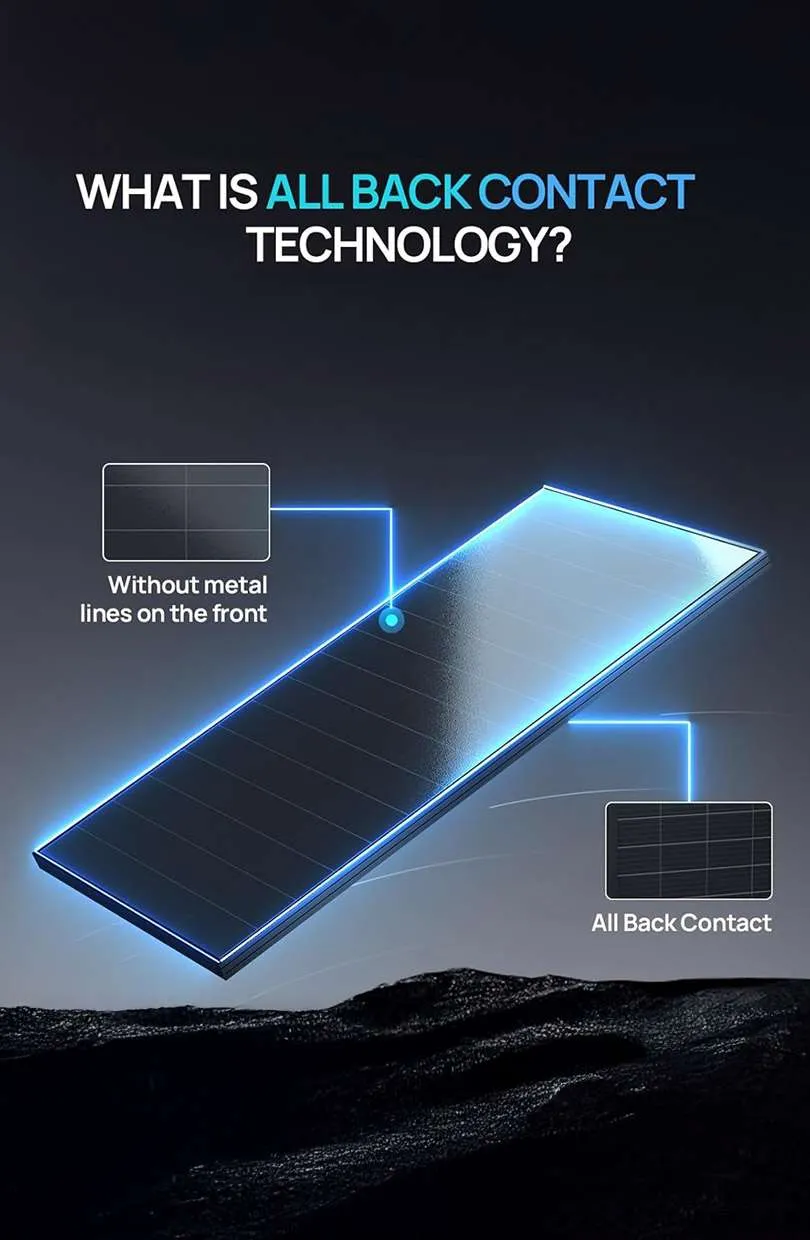
- ABC/IBC (All-Back Contact/Interdigitated Back Contact): Advanced cell design with all electrical contacts on the rear surface, achieving 24-26% efficiency while using 20-40% less silver than conventional front-contact designs.
*Current prices based on InfoLink January 2026 data. Q4 projections based on technology cost differentials and expected market conditions. Actual prices may vary.

Why Advanced Technologies Matter
All-Back-Contact (ABC) and Interdigitated Back Contact (IBC) technologies use innovative designs that reduce silver consumption by 20-40% compared to conventional cells. When silver prices are high, this efficiency advantage becomes more valuable.
Additionally, premium technologies maintain pricing power better than commodity products during market disruptions.
Industry Response: The Thrifting Revolution
Manufacturers aren’t waiting passively for silver prices to change. The industry has been aggressively “thrifting”—reducing silver content through technology improvements.
Innovations include:
- Laser Enhanced Contact Optimization (LECO): Creates narrower, more precise conductive lines
- Zero-BusBar (0BB) designs: Eliminates thick silver busbars entirely
- Multi-wire technology: Replaces thick lines with many thin wires
- Silver-coated copper: Reduces pure silver content by blending with copper
The results? Industry-wide silver usage per watt has decreased by 15-25% in just 2024-2025. This thrifting has prevented an even worse cost crisis.
The Copper Alternative
Major manufacturers like JinkoSolar and Shanghai Aiko have begun producing panels with copper metallization instead of silver. AIKO started commercial copper production in January 2025 and plans to scale to 10 GW capacity by year-end.
Combined with thrifting, these innovations are reducing total solar industry silver demand by approximately 5% in 2025 despite record panel installations.
Geographic Price Variations
Note: Geographic price estimates below are based on historical tariff differentials, international logistics costs, regional policy impacts, and local market structure. Regional solar panel prices typically range from 1.5-3× Chinese FOB export prices depending on tariffs, shipping costs, distribution margins, and local market conditions.
The impact of silver volatility and VAT policy changes varies significantly by region:
*Geographic price estimates based on historical tariff differentials, logistics costs, regional policy impacts, and market structure. Regional prices typically reflect 1.5-3× Chinese export prices depending on local factors.
United States
U.S. buyers face the hardest hit. Current prices around $0.27-0.30/W could rise to $0.30-0.33/W by Q2, then potentially stabilize around $0.28-0.31/W if silver crashes.
Why? Existing tariffs (Section 201, Section 301, UFLPA compliance costs) compound the VAT impact. Even with silver relief, U.S. customers won’t see significant savings.
Europe
European markets show more flexibility. Current prices of €0.09-0.11/W could rise to €0.10-0.12/W in April, then ease to €0.095-0.11/W by Q3 with silver relief.
European buyers benefit from more diversified supply chains and existing manufacturing capacity in Southeast Europe.
India
India expects the smallest increases globally—only 6-8% through 2026. Domestic manufacturing programs through PLI (Production Linked Incentive) schemes provide some insulation from Chinese policy changes.
However, India still depends on Chinese wafers and cells, so protection is limited.
Middle East and Southeast Asia
These regions are already locking in prices through advance contracts. Large buyers are securing deals at $0.095-0.105/W for Q2-Q3 delivery, betting that waiting will cost more.

Strategic Guidance: What Should You Do?
If You’re Planning to Buy Panels
Right now (January-February 2026):
Prices are elevated due to high silver costs but may rise further. The market is in negotiation mode with limited transaction volumes. Manufacturers are cautiously raising quotes while honoring some older contracts.
Strategy: If you have project flexibility, this might be a brief window for deals. Q1 traditionally sees lower demand, giving some negotiating leverage. However, manufacturers know April 1 is coming and are increasingly firm.
Before April 1:
This remains the critical deadline. Current prices of $0.094-0.099/W are already 10-15% higher than mid-2025 due to silver. The April shock adds another 5-9%.
For Q2-Q3 installations: Lock orders by mid-March. Factor 4-6 week lead times rather than normal 2-3 weeks due to shipping bottlenecks.
After April 1:
Prices will jump to $0.105-0.112/W range. If silver crashes in April-May (as analysts predict), you might see relief by June, bringing prices back toward $0.100-0.106/W. But you won’t see a return to 2025 pricing.
For Q4 2026 or 2027 installations: Waiting may benefit you. The market should stabilize by Q3, silver relief may materialize, and weaker manufacturers will exit—potentially creating opportunities.
If You’re a Developer or Installer
For international buyers: You have temporary advantage. InfoLink reports that procurement momentum in non-China markets has “reversed and strengthened” due to VAT policy developments. Manufacturers are prioritizing international orders.
For China-based buyers: Domestic demand remains weak in Q1. Ground-mounted project execution is declining. This creates negotiating opportunities for distributed projects, but manufacturers will hold firm knowing April 1 approaches.
Risk management strategies:
- Diversify suppliers across 2-3 manufacturers to avoid single-source risk
- Consider negotiating contracts with price adjustment clauses tied to silver spot prices (for Q3+ delivery)
- Build 10-15% contingency into project budgets for price volatility
- Evaluate advanced technologies (HJT, ABC) that are less exposed to silver swings
Why China Is Making This Change
Understanding Beijing’s motivations helps predict how permanent these shifts are:
- Stop the self-destructive price war: Chinese manufacturers have been destroying each other’s margins through aggressive undercutting. The government wants consolidation.
- Eliminate weak players: Companies dependent on subsidies to compete will fail. This is intentional industrial policy to strengthen surviving manufacturers.
- Shift to quality competition: China wants manufacturers competing on technology and service, not just rock-bottom prices.
- Reduce trade friction: Voluntarily raising prices removes ammunition for anti-dumping investigations in the U.S., Europe, and India. It’s diplomatic as much as economic.
The China Photovoltaic Industry Association explicitly stated the policy will “restore rational pricing in foreign markets.” Translation: the race to the bottom is officially over. This is a permanent strategic shift, not a temporary adjustment.
The Bottom Line
A sudden silver price crash would help solar panel buyers, but it won’t be a cure-all. Here’s the realistic assessment:
Current situation (January 2026): Prices already elevated at $0.094-0.099/W due to silver spike—roughly 10-15% higher than mid-2025.
The VAT impact: Rebate elimination on April 1 adds 5-9% to costs, pushing prices toward $0.105-0.112/W.
Silver relief potential: If silver crashes from $110 to $50-70/oz, it could reduce costs by 3-5%, bringing prices back to $0.100-0.106/W by Q3.
Net effect: Even with maximum silver relief, prices will likely remain 5-10% higher than current January 2026 levels, and 15-20% higher than mid-2025 baseline prices.
Think of silver relief as preventing the worst-case scenario, not as returning to 2025 pricing. The real story in 2026 is China deliberately ending the subsidy era and pricing solar panels to reflect actual value.
Three Key Takeaways
- Prices have already risen substantially: Current $0.094-0.099/W represents a 10-15% increase from mid-2025 due to silver. More increases are coming in April.
- The April 1 deadline is definite: VAT rebate elimination brings guaranteed cost increases of 5-9% regardless of what silver does. This deadline should drive procurement decisions, not speculation about silver crash timing.
- Silver crash timing is uncertain but likely: Analysts are confident a correction is coming, but “days or weeks” has proven unreliable. Markets can remain irrational longer than fundamentals suggest.

Need Help Navigating 2026 Solar Panel Procurement?
At Couleenergy, we specialize in helping clients navigate this volatile market. Our manufacturing base gives us direct insight into real-time pricing and policy impacts.
How we help procurement teams succeed:
- April 1 Deadline Management: Pre-deadline order processing and post-deadline cost optimization strategies
- Technology Selection Guidance: Choose between TOPCon, HJT, and ABC technologies based on your silver exposure tolerance
- VAT Impact Analysis: Detailed cost modeling showing exact impact on your project budgets
- Flexible Procurement: Minimum orders from 100 pieces with full OEM/ODM customization
- Real-time Market Intelligence: Direct manufacturer insights on silver costs and supply chain conditions
Get your customized procurement strategy:
- Email: info@couleenergy.com
- Phone: +1 737 702 0119
We serve distributors, installers, developers, and large-scale project buyers across North America, Europe, Middle East, and Asia-Pacific markets.
Final Thoughts
The intersection of silver market dynamics and China’s VAT policy creates a challenging situation, but the fundamentals are clear: solar panels cost more now than in 2025, and they’ll cost even more after April 1.
Current InfoLink data confirms manufacturers are already squeezed. Many are selling at losses, cell prices keep rising, and Q1 seasonal weakness offers little relief because everyone knows April 1 is coming.
The silver crash, if and when it arrives, will help. It could shave 3-5% off costs by Q3. But it won’t return the market to 2025 pricing. The VAT policy change is permanent, fundamentally resetting the price floor for Chinese solar exports.
The solar industry is adapting through material innovation (copper alternatives), aggressive thrifting (reduced silver per panel), improved manufacturing efficiency, and strategic focus on higher-value technologies. The short-term volatility is real and uncomfortable, but the long-term trajectory toward abundant, affordable solar energy continues—just at a higher price point than the artificially subsidized levels of 2013-2025.
Plan carefully, base decisions on definite deadlines (April 1) rather than uncertain predictions (silver crash timing), and work with manufacturers who understand both the technology and the market forces shaping it.
The era of unrealistically cheap Chinese solar panels is ending. The era of rationally priced, sustainably produced solar panels is beginning. Adjust your strategies accordingly.
Note: Commodity prices and market conditions change frequently. For the most current pricing and availability, contact Couleenergy inquiry@couleenergy.com directly.

 English
  Español
  Français
  Deutsch
  Русский
  العربية