
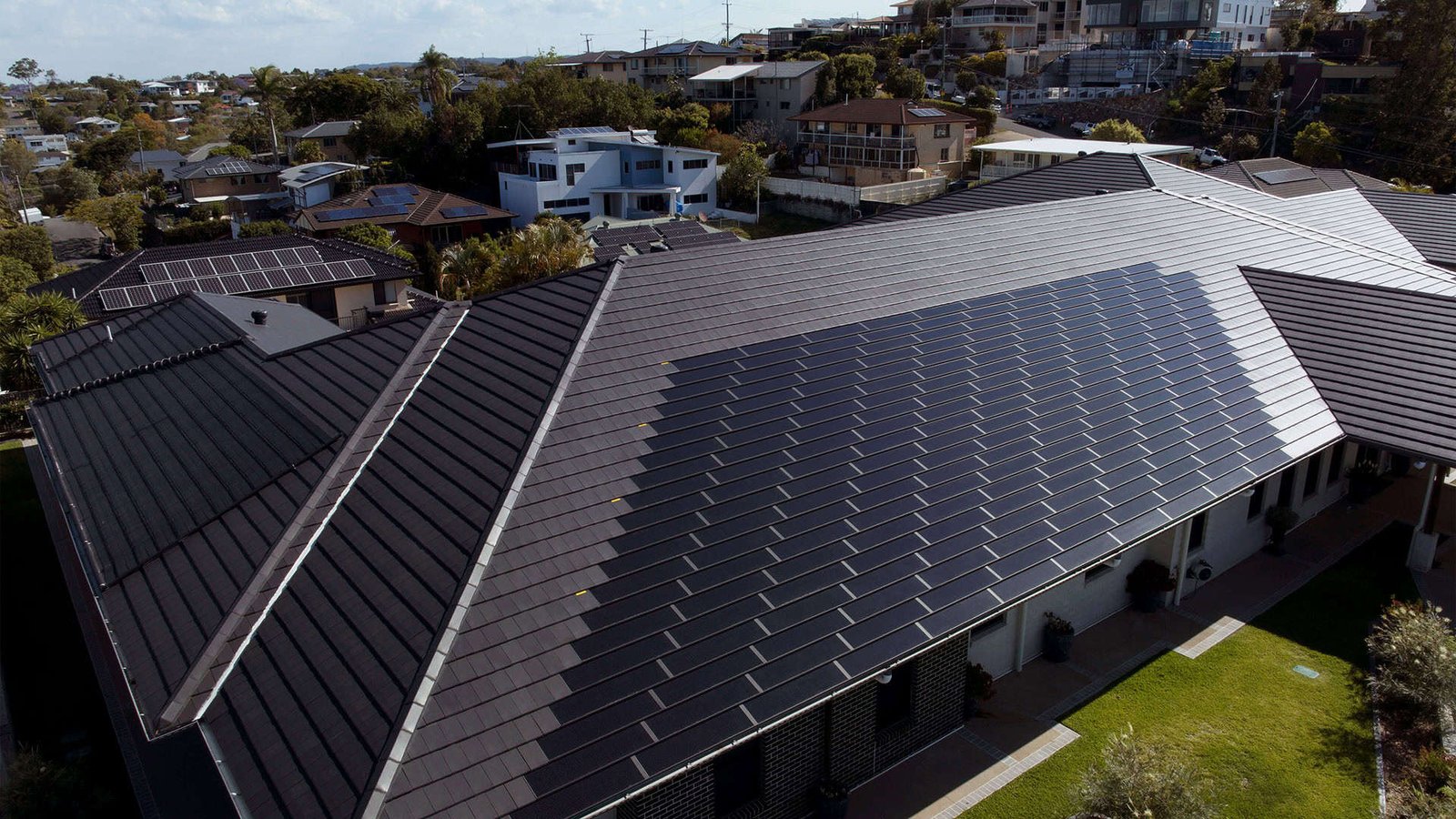
Comprehensive Market Report – 2026 Q1
Publication Date: January 8, 2026
Market Focus: European Building-Integrated Photovoltaics (BIPV)
Geographic Scope: EU-27 + UK, Switzerland, Norway
📊 Report Confidence Indicators:
- ✓ = High Confidence (verified from authoritative primary sources)
- ~ = Medium Confidence (industry consensus/projections)
- ⚠️ = Speculative (emerging technologies with uncertain timelines)
📈 Executive Summary
The European solar roof tile market stands at a transformational inflection point in early 2026, driven by converging forces of regulatory mandates, technological breakthroughs, and market maturation.
Key Market Findings
✓ Market Growth Trajectory:
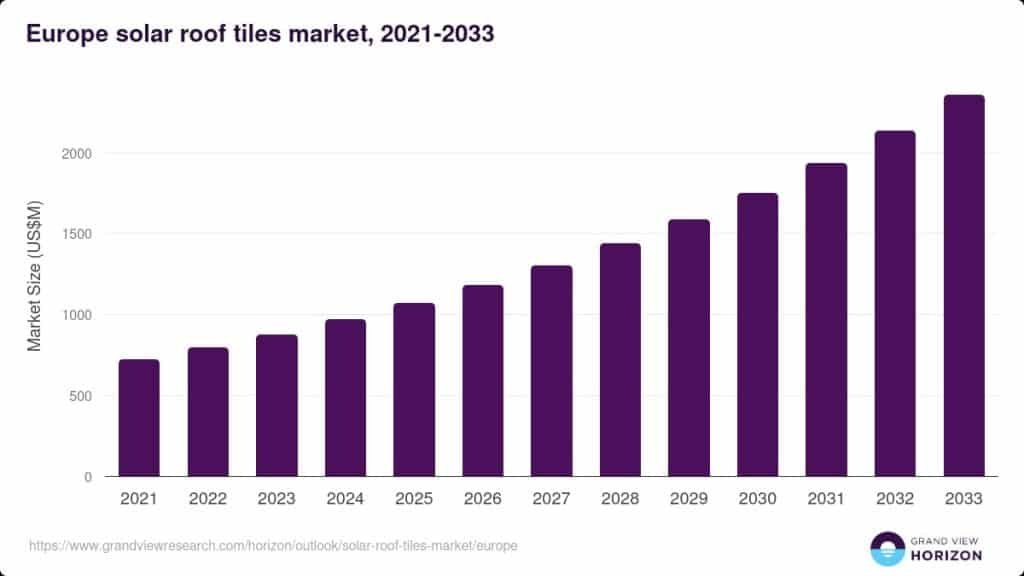
- European BIPV market: USD 7.4 billion (2022) → USD 16.5 billion (2033 projection)
- Solar roof tiles specifically: USD 969.7 million (2024) growing at 10.4% CAGR
- Growing 40% faster than overall BIPV market
Critical Regulatory Catalyst
✓ May 29, 2026: EU Member States must transpose the revised Energy Performance of Buildings Directive (EPBD) into national law.
✓ December 31, 2026: Solar-ready design mandatory for new public and non-residential buildings >250m².
✓ December 31, 2029: Solar-ready design mandatory for all new residential buildings.
✓ January 1, 2030: All new buildings must be Zero-Emission Buildings.
Technology Leadership
Back Contact (BC) technology projected to become the dominant architecture for premium solar roof tiles:
- Efficiency: 24-26% (commercial), 27%+ (laboratory)
- Aesthetics: Zero visible front contacts = “virtually invisible” integration
- Performance: Up to 33% better in partial shade, ~11% lifetime energy advantage
- Market Share: Currently ~15%, projected to reach 25-30% by 2027-2030
Recent Major Innovations
| Launch Date | Manufacturer | Innovation | Significance |
|---|---|---|---|
| Jan 6, 2026 | ML System (Poland) | Photonroof & Photonwall | Company announced 57,000 m² contracts across 5 countries |
| Jan 2025 | Jackery (Int’l) | XBC Curved Tiles | World’s first curved solar tiles (25%+ efficiency) |
| Dec 2025 | Italy Gov’t | Heritage Reform | Unlocks 200,000+ protected buildings |
Geographic Market Leaders
- Germany: Largest market, 14.1 GW solar installed (2023)
- France: Progressive commercial building mandates (30% → 50% by 2027)
- Netherlands: Sophisticated market with mature approval processes
- Italy: Massive opportunity following December 2025 heritage building reform
- Spain: Curved tile innovation unlocks Mediterranean market
Economic Viability by Region
| Region | Payback Period | Solar Irradiation | Market Opportunity |
|---|---|---|---|
| Southern Europe | 5-7 years | 1,600-2,000 kWh/m²/year | 🟢 Best economics |
| Central Europe | 6-9 years | 900-1,400 kWh/m²/year | 🟢 Strong returns |
| Northern Europe | 9-12 years | 800-1,000 kWh/m²/year | 🟡 Moderate returns |
| United Kingdom | 16-21 years | 900-1,200 kWh/m²/year | 🟡 Challenging economics |
⚠️ Important Note on Financial Incentives:
All financial incentive programs mentioned (feed-in tariffs, tax deductions, grants) were accurate as of January 2026 but are subject to change. Program availability, terms, eligibility criteria, and funding levels may be modified or discontinued. Readers must verify current program status with relevant government agencies before making financial decisions.
Strategic Implications by Stakeholder
For Building Developers & Architects
Solar integration transitions from optional feature to mandatory design requirement within 4 months (May 2026). Back contact technology provides optimal balance of regulatory compliance, aesthetic integration, and performance.
For Roofing Contractors
Solar roof tile installation requires dual expertise in roofing and electrical systems, creating workforce development opportunities and competitive differentiation. Installation capacity shortage represents biggest near-term market constraint.
For Homeowners & Property Owners
Timing considerations favor immediate action for roof replacement projects, with financial incentives remaining attractive across most European markets through 2026-2027 (verify current program availability).
For Policymakers
Heritage building regulations evolving to permit “virtually invisible” solar tiles, as demonstrated by Italy’s December 2025 reform, potentially unlocking hundreds of thousands of protected buildings across Europe.
1️⃣ Market Overview and Sizing
1.1 Market Valuation and Growth Trajectory
The European building-integrated photovoltaics (BIPV) market demonstrates robust growth across multiple measurement frameworks:
Overall BIPV Market
| Metric | Value | Confidence |
|---|---|---|
| 2022 Base | USD 7.4 billion | ✓ |
| 2033 Projection | USD 16.5 billion | ~ |
| CAGR (2022-2033) | ~7.3% | ~ |
| Europe’s Global Share | 30% | ✓ |
Solar Roof Tiles Segment
| Metric | Value | Confidence |
|---|---|---|
| 2024 Valuation | USD 969.7 million | ✓ |
| 2033 Projection | USD 2.1+ billion | ~ |
| CAGR (2024-2033) | 10.4% | ~ |
| Growth vs Overall BIPV | 40% faster | ~ |
📌 Data Currency Note: Market data reflects year-end 2024 estimates. Final verified capacity figures typically published with 2-3 month lag by organizations such as SolarPower Europe and IEA.
Why Solar Roof Tiles Grow Faster Than Overall BIPV
- Dual Functionality Value: Solar roof tiles replace conventional roofing materials entirely, reducing the incremental cost perception
- Regulatory Acceleration: Mandatory solar requirements drive new construction toward integrated solutions
- Aesthetic Evolution: Back contact technology eliminates visual objections in premium residential and heritage markets
- Technology Maturation: 25-30 year warranties signal transition from experimental to proven technology
1.2 Market Structure and Segmentation
By Application (Estimated Market Distribution)
- Residential New Construction: 35-40%
- Residential Renovation: 25-30%
- Commercial Buildings: 20-25%
- Heritage/Protected Buildings: 5-10%
- Public/Government Buildings: 5-10%
By Technology Type (Current Market Share)
Note on Market Share Data: Market share estimates based on industry analysis, manufacturer reports, and ITRPV projections. Exact figures vary by region, source, and measurement methodology.
| Technology | Market Share | Efficiency Range | Price Segment |
|---|---|---|---|
| TOPCon | ~75% (estimated) | 22-24% | Mid-Market |
| Back Contact (BC/IBC) | ~15% (estimated) | 24-26% | Premium |
| Heterojunction (HJT) | ~7% (estimated) | 22-24% | Premium |
| Emerging (Perovskite) | ~3% (estimated) | Research stage | Future |
By Geographic Region
- Western Europe: ~70% (Germany, France, UK, Netherlands, Austria)
- Southern Europe: ~20% (Spain, Italy, Greece, Portugal)
- Northern Europe: ~7% (Scandinavia)
- Central/Eastern Europe: ~3% (Poland, Czech Republic, Romania)
1.3 Key Market Players
The European solar roof tile market exhibits moderate concentration with 8-10 significant manufacturers holding approximately 80% market share:
Premium Segment
- SunStyle (Switzerland) – Back contact diamond dragon-scale tiles
- Meyer Burger (Switzerland) – Heterojunction BC (⚠️ verify financial status)
- Marley (UK) – 40-year warranty
Mid-Market
- Autarq (Germany) – Made in Germany quality
- Wienerberger Wevolt (Netherlands/Austria) – Ceramic clay tiles
- ML System (Poland) – Recent major launch (Jan 2026)
- Couleenergy (China) – Customized solutions, 100-piece MOQ
Emerging/Innovative
- Jackery (International) – World’s first curved XBC tiles
- Roofit.Solar (Multi-country) – Nordic design principles
📝 Notable Market Gap: Tesla Solar Roof and GAF Energy Timberline Solar remain unavailable in Europe as of January 2026, despite significant North American presence.
2️⃣ Regulatory Environment and Policy Drivers
2.1 EU-Level Mandates: EPBD Timeline
The Energy Performance of Buildings Directive (EPBD) – Revised 2024 – creates the cornerstone regulatory framework driving European solar roof tile adoption:
Important Timeline Note: May 29, 2026 is the deadline for Member States to transpose the EPBD into national law. Solar installation requirements begin December 31, 2026, giving stakeholders clear implementation timelines.
| Date | Requirement | Applicability | Impact |
|---|---|---|---|
| May 29, 2026 | Transposition deadline | Member States must incorporate EPBD into national law | 🔴 4 months away – Legal framework finalization |
| Dec 31, 2026 | Solar-ready design mandatory | New public/non-residential buildings >250m² | 🟡 First major implementation milestone |
| Dec 31, 2027 | Solar-ready for existing buildings | Existing public buildings >250m² (various thresholds) | 🟢 Retrofit market expansion |
| Jan 1, 2028 | Zero-emission requirement | New public buildings | 🟢 High performance needed |
| Dec 31, 2029 | Solar-ready design mandatory | All new residential buildings | 🟢 Residential market transformation |
| Jan 1, 2030 | Zero-emission requirement | All new buildings (residential & non-residential) | 🟢 Universal transformation complete |
✓ EU Capacity Target: At least 700 GW installed photovoltaic capacity by 2030, up from 338 GW estimated at year-end 2024—requiring more than doubling of solar capacity in 6 years.
Key EPBD Definitions
- Solar-Optimized Design: Buildings structurally prepared for solar integration (proper orientation, roof design supporting solar load)
- Zero-Emission Building: Very high energy performance with zero/very low on-site carbon emissions from fossil fuels
- Major Renovation: Work affecting >25% of building envelope surface or exceeding 25% of building value
2.2 National-Level Financial Incentives
⚠️ Critical Reminder: All financial incentive programs mentioned were accurate as of January 2026 but are subject to change. Verify current program status with relevant government agencies before making financial decisions.
Germany
Regulatory Framework (✓ Verified):
- Renewable Energy Sources Act (EEG): Preferential electricity prices for BIPV
- Baden-Württemberg: Solar required on all new residential buildings since May 2022
- DGNB Certification: Points awarded for integrated PV systems
Financial Incentives (Verify Current Availability):
- Feed-in tariff guarantees over 20 years
- Enhanced rates for self-consumption systems
- KfW loan programs for energy-efficient construction
Market Position: Leading European market, 14.1 GW solar installed (2023)
✓ Payback Period: 7-8 years
France
Regulatory Framework (✓ Verified):
- Energie-Climat Law: Commercial buildings >500m² must have solar covering:
- 30% of roof area (2023)
- 40% of roof area (2026)
- 50% of roof area (2027)
Financial Incentives (Verify Current Availability):
- Feed-in tariffs: €0.1276/kWh for surplus electricity (≤3 kWp systems)
- Self-consumption premium: €260/kWp (≤3 kWp), €190/kWp (9 kWp)
- Tax credits for energy renovation
✓ Payback Period: 6-8 years
Austria
✓ Special Opportunity (Current through June 2026 – Verify Availability):
20% bonus for “Made in Europe” solar products — €30 million allocated through June 2026. This creates strong preference for European manufacturing and could serve as model for other countries.
✓ Payback Period: 6-8 years
Spain
Financial Incentives (Verify Current Availability):
- Spanish income tax deductions (IRPF) through December 31, 2026:
- 40% deduction (up to €7,500/year), OR
- 60% deduction (up to €15,000 overall) for significant energy improvements
- Valencian Community grants: Up to 40% of project costs (capped at €3,000 per home through February 27, 2026)
- IBI (property tax) and ICIO (installation tax) rebates set by municipalities
✓ Payback Period: 5-6 years (among shortest in Europe)
Italy
✓ GAME-CHANGER: December 2025 Heritage Building Reform (Recently Announced)
Italy recently reduced restrictions for solar installations in historic centers, specifically mentioning “virtually invisible” integrated solar panels. According to industry reports, this reform potentially unlocks 200,000+ protected buildings across Italy.
Note: Based on Italian media reports and industry analysis. Verify with current Italian Ministry of Culture documentation for official implementation details.
Financial Incentives (Verify Current Availability):
- 36% IRPEF deduction (maximum €48,000 eligible spending)
- Conto Termico 3.0: Grants up to 65% (individuals/companies), up to 100% (public administrations)
- EU-approved agricultural sector incentives: Up to 90% for solar installations
✓ Payback Period: 5-7 years
United Kingdom
Financial Incentives (Verify Current Availability):
- Smart Export Guarantee (SEG) for surplus electricity
- Reduced VAT on energy-saving materials
✓ Payback Period: 16-21 years (longest in Western Europe)
Challenge: Lower solar irradiation and electricity rates create less attractive economics
3️⃣ Technology Landscape and Innovation Trends
3.1 Core Technology Comparison
| Technology | Efficiency | Power Density | Degradation | Market Share | Price |
|---|---|---|---|---|---|
| TOPCon | 22-24% | 140-160 W/m² | 0.4-0.5% annual | ~75% | Mid-Market |
| Back Contact | 24-26% | 145-194 W/m² | 0.25-0.4% annual | ~15% | Premium |
| Heterojunction | 22-24% | High | 0.25-0.35% annual | ~7% | Premium |
3.2 Back Contact Technology: The Game-Changer
Back Contact (BC) technology represents the most significant innovation for solar roof tiles in the past decade:
✓ Key Verified Advantages
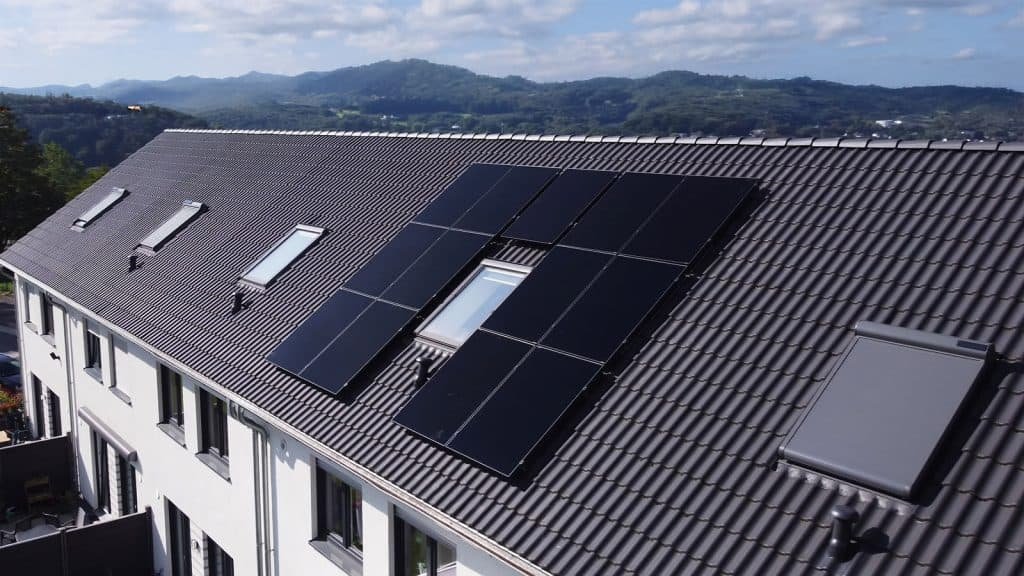
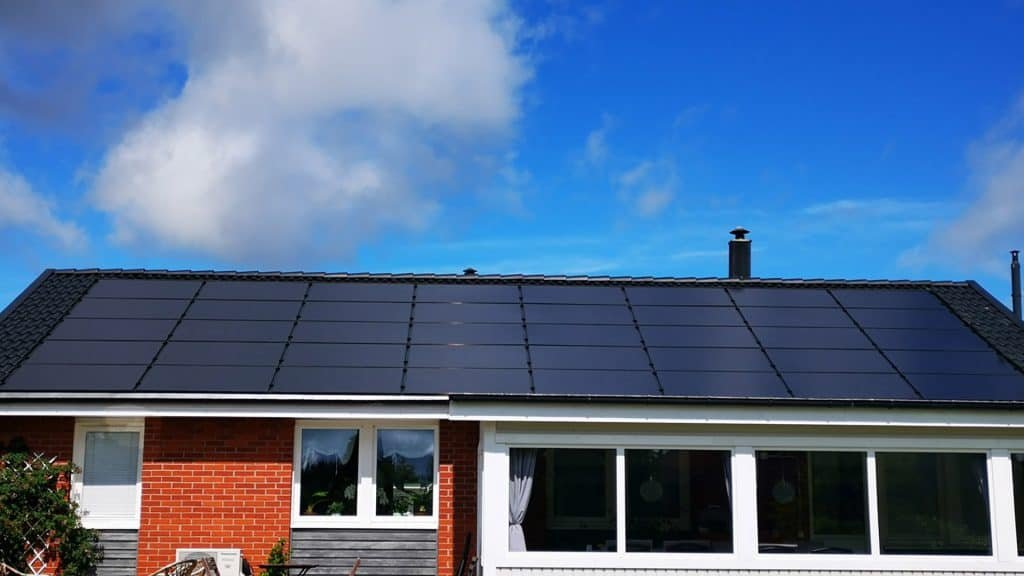
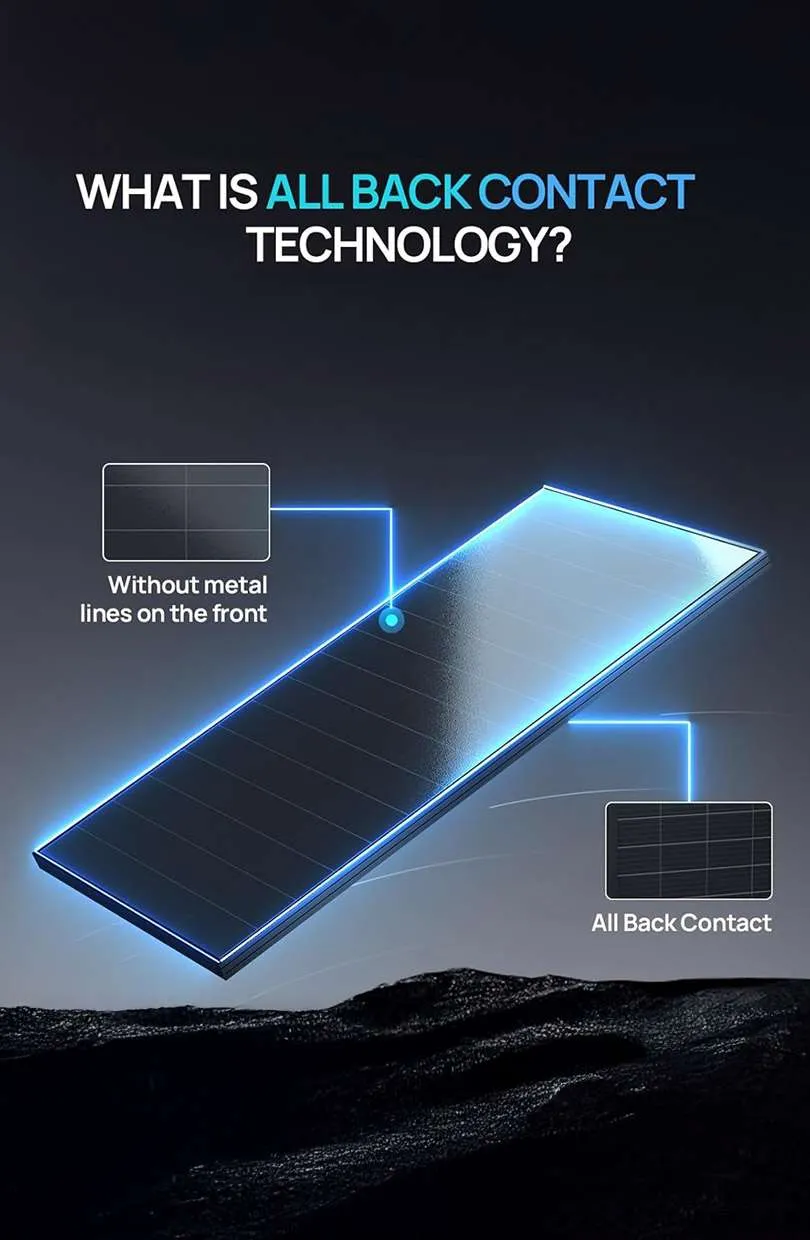
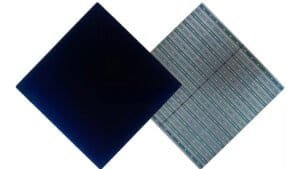
- Aesthetic Superior: Zero visible front contacts = completely smooth, uniform appearance
- Higher Efficiency: No light-blocking gridlines, photon utilization up to 97.3%
- Better Shading Performance: Up to 33% more power in partial shade conditions*
- Temperature Resilience: Superior temperature coefficient (-0.26% to -0.29%/°C)
- Lower Degradation: No exposed front metallization to corrode
- Lifetime Energy: Up to 11% more energy generation over 25-30 years**
- Design Flexibility: Available in multiple colors, finishes, even curved configurations
*Based on manufacturer field testing and comparative studies; actual performance improvement varies by shading patterns and system configuration.
**Calculated from combination of higher initial efficiency (24-26% vs 22-24%) and lower degradation rates (0.25-0.4% vs 0.4-0.5% annually) over 25-30 year lifespan.
💡 Why Back Contact Matters for Heritage Buildings:
Italy’s December 2025 reform specifically mentions “virtually invisible” solar panels—a perfect description of back contact technology. The all-back-contact architecture allows complete front-surface customization without interfering with electrical contacts, making it ideal for historic preservation requirements.
3.3 Recent Product Launches (2025-2026)
✓ ML System (Poland) – Product Announcement January 6, 2026
Note: Information based on company announcement dated January 6, 2026. Technical specifications and contract details from manufacturer-provided materials.
Photonroof Ceramic Tiles:
- Configurations: Carp-style and flat
- Power Density: Up to 145 W/m²
- Design Options: Concrete, slate, brick, marble, metallic, wood finishes
- Announced Contracts: 57,000 m² across Austria, Switzerland, Germany, Greece, Italy
Notable Installations:
- BFF Banking Group headquarters, Milan: 302 kW
- Warsaw West railway station: 1,100 kW skylight-style PV roof
✓ Jackery XBC Curved Solar Roof Tiles (Introduced at BAU 2025 – January 2025)
Note: Product introduced at BAU 2025 trade fair (January 13-17, 2025) with European market rollout ongoing. Verify current availability and specifications for your specific region before planning projects.
🏆 World’s First Curved XBC Solar Tiles (certified by Frost & Sullivan)
Technical Specifications:
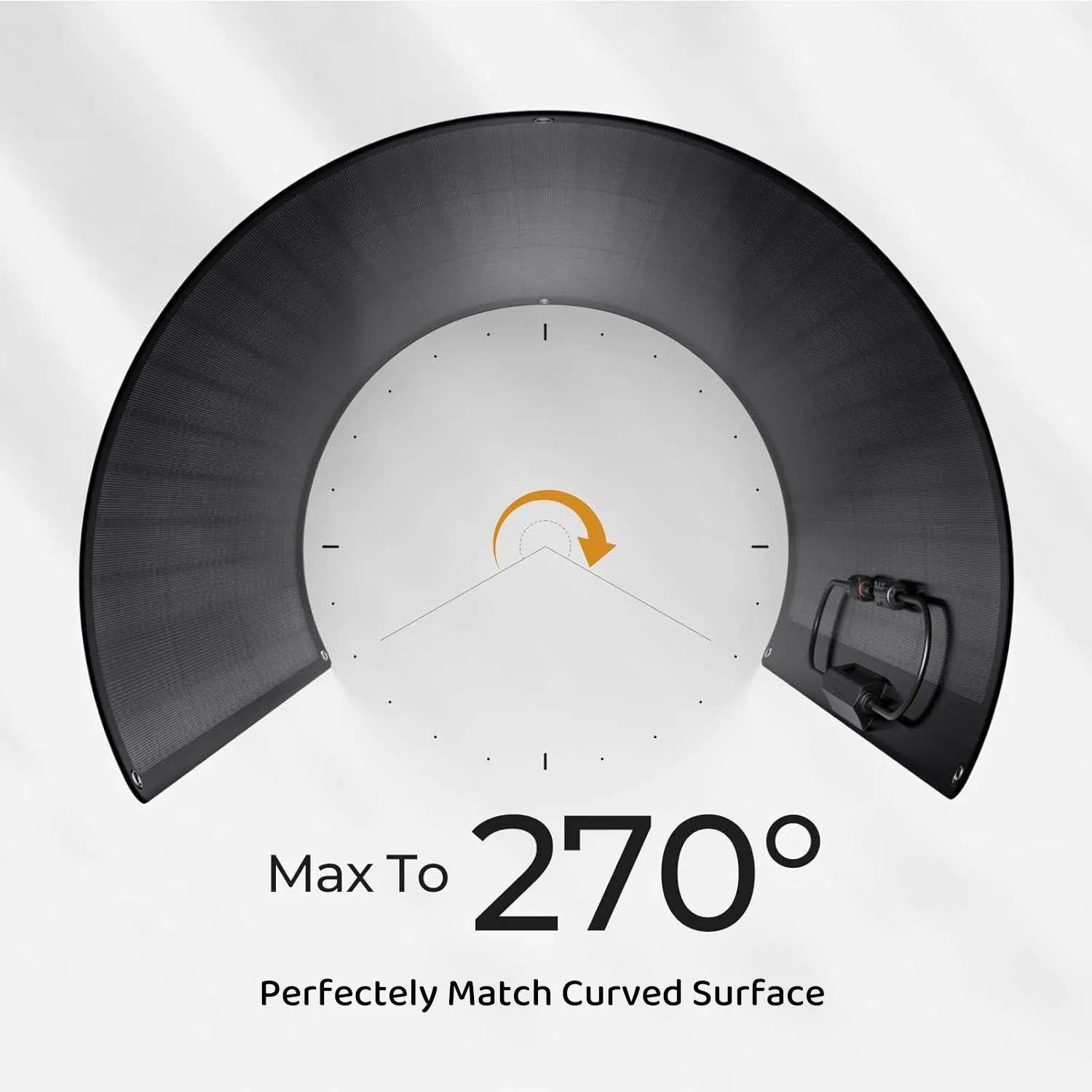
- Distinctive 150° “Smile Curve” design, 35mm bending height
- Efficiency: Over 25%
- Power Density: 170 W/m²
- Cell Technology: Ultra-thin 0.13mm crystalline silicon
- Warranty: 30 years
- Installation: Globally patented mounting system, 2 screws per tile
- Colors: Obsidian black, terracotta
Market Significance: First curved solar tiles address Mediterranean and Southern European architectural compatibility—a major market segment where flat tiles don’t match curved terracotta roof aesthetics.
3.4 Technology Selection Decision Framework
| Application | Recommended Technology | Rationale |
|---|---|---|
| Heritage Buildings | Back Contact | Invisible integration, color customization, regulatory approval |
| Premium Residential | Back Contact or HJT | Superior aesthetics, highest efficiency |
| Mid-Market Residential | TOPCon | Cost-effectiveness, industry standard, proven reliability |
| Commercial Buildings | BC (visible) + TOPCon (other) | Green certification credits, corporate sustainability |
| Mediterranean Architecture | Jackery Curved XBC | Architectural compatibility with curved terracotta |
| Custom Requirements | Couleenergy | Unlimited customization, 100-piece MOQ |
4️⃣ Leading Manufacturers and Product Analysis
4.1 Comparative Product Matrix
Product Specification Disclaimer: All specifications in this comparison are based on manufacturer-provided data as of January 2026. Performance figures represent rated values under Standard Test Conditions (STC). Independent third-party testing and verification recommended before purchase decisions. Actual field performance varies based on installation conditions, climate, and maintenance.
| Manufacturer | Technology | Efficiency | Power Density | Warranty | Price Segment |
|---|---|---|---|---|---|
| Jackery XBC | Back Contact | 25%+ | 170 W/m² | 30 years | Premium |
| SunStyle | Back Contact | High | 170-172 W/m² | 25-30 years | Premium |
| Couleenergy | Back Contact | 26%+ | 194 W/m² | Customizable | Mid-Premium |
| ML System | TOPCon/BC | Standard | 145 W/m² | Not specified | Mid-Premium |
| Autarq | TOPCon | Standard | 127-135 W/m² | Not specified | Mid-Market |
| Marley | TOPCon | Up to 20% | Standard | 40 years (80%) | Mid-Market |
📊 Power Density Calculation: Module wattage ÷ module area (m²). Example: Couleenergy 140W ÷ (1.2m × 0.6m) = 194 W/m²
4.2 Spotlight: Couleenergy – Customization Specialist
Company Profile: Employee-owned manufacturer specializing in customized solar roof tile solutions for unique European applications.
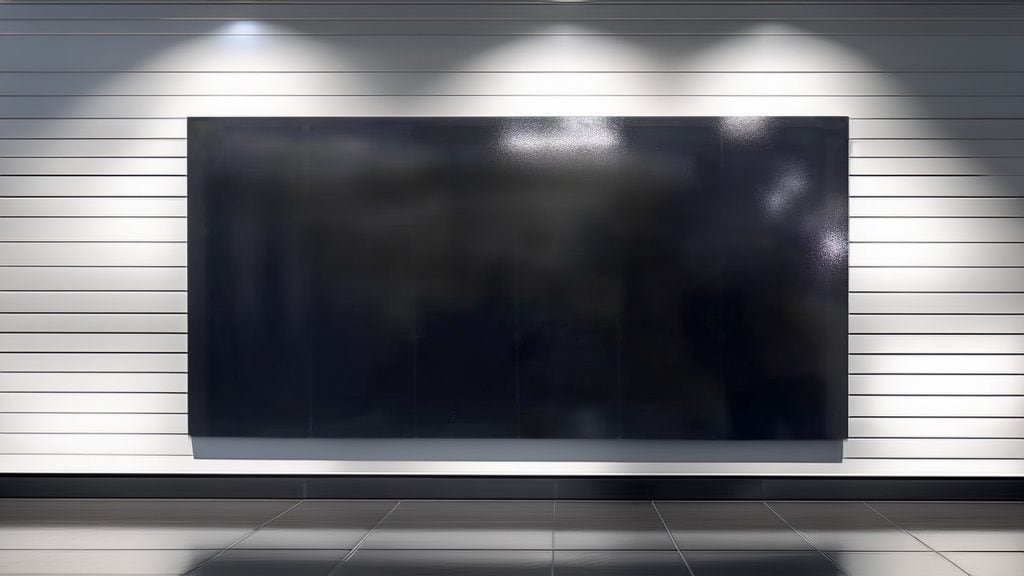
✓ Flagship Product – All Black Dual-Glass BC Solar Module:
| Specification | Value |
|---|---|
| Power Output | 140W+ |
| Module Size | 1200mm × 600mm (0.72 m²) |
| Cell Efficiency | Over 26% |
| Power Density | ~194 W/m² (highest in comparison table) |
| Degradation | 1st year ≤1%, years 2-30 ≤0.35% |
| Minimum Order Quantity | 100 pieces |
Key Competitive Advantages
- Extensive Customization: Shapes (triangular, trapezoidal, curved edges), sizes (100W-500W+), colors with ΔE <3 color precision
- Industry-Low MOQ: 100-piece minimum enables prototypes and small heritage projects
- Multiple Technologies: TOPCon, HPBC, ABC, HJT available
- Transparent Options: 10-40% transparency for agrivoltaic and skylights
- Direct Manufacturer Pricing: Eliminates distributor
Ideal Applications
- Heritage buildings requiring custom color matching
- Irregular roof geometries needing non-standard shapes
- Coastal installations (frameless corrosion resistance)
- Architectural prototypes and innovative BIPV designs
Contact Information:
- Email: info@couleenergy.com
- Phone: +1 737 702 0119
4.3 Important Manufacturer Considerations
⚠️ Meyer Burger Financial Status Warning
Meyer Burger (Switzerland) experienced significant financial challenges in 2025:
- Short-time work introduced at Thalheim, Germany site (May 2025)
- Closure of US Arizona factory (May 2025, 282 employees laid off)
- Material supply chain bottlenecks affecting production
Prospective Buyer Recommendations:
- Verify current financial status at time of purchase
- Understand warranty support arrangements
- Consider warranty insurance products if available
- Multiple financially stable alternatives exist
Note: Meyer Burger’s heterojunction BC technology remains excellent. However, for 25-30 year warranty investments, financial stability assessment is critical.
5️⃣ Performance and Economics
5.1 Technical Performance Comparison
Technical Note: All efficiency ratings referenced in this report are measured under Standard Test Conditions (STC: 1000 W/m², 25°C cell temperature, AM1.5 solar spectrum). Real-world performance varies based on actual operating conditions including temperature, irradiance, shading, and installation quality.
✓ Back Contact Performance Advantages (Verified)
| Performance Metric | Traditional Panels | TOPCon Tiles | Back Contact Tiles |
|---|---|---|---|
| Cell Efficiency | 22-24% | 22-24% | 24-26% |
| Photon Utilization | 90-93% | 90-93% | Up to 97.3% |
| Partial Shading Performance | Baseline | Moderate tolerance | +33% better |
| Temperature Coefficient | -0.30% to -0.35%/°C | -0.30% to -0.35%/°C | -0.26% to -0.29%/°C |
| Annual Degradation | 0.5-0.7% | 0.4-0.5% | 0.25-0.4% |
| 25-Year Output | 85-88% | 88-90% | 90-92% |
| Lifetime Energy Advantage | Baseline | Standard | +11% over 25-30 years |
✓ Real-World Significance:
European urban environments feature substantial shading from adjacent buildings, trees, dormers, skylights, and chimneys. Back contact technology’s 33% better performance under partial shade provides measurable real-world advantage over specifications alone.
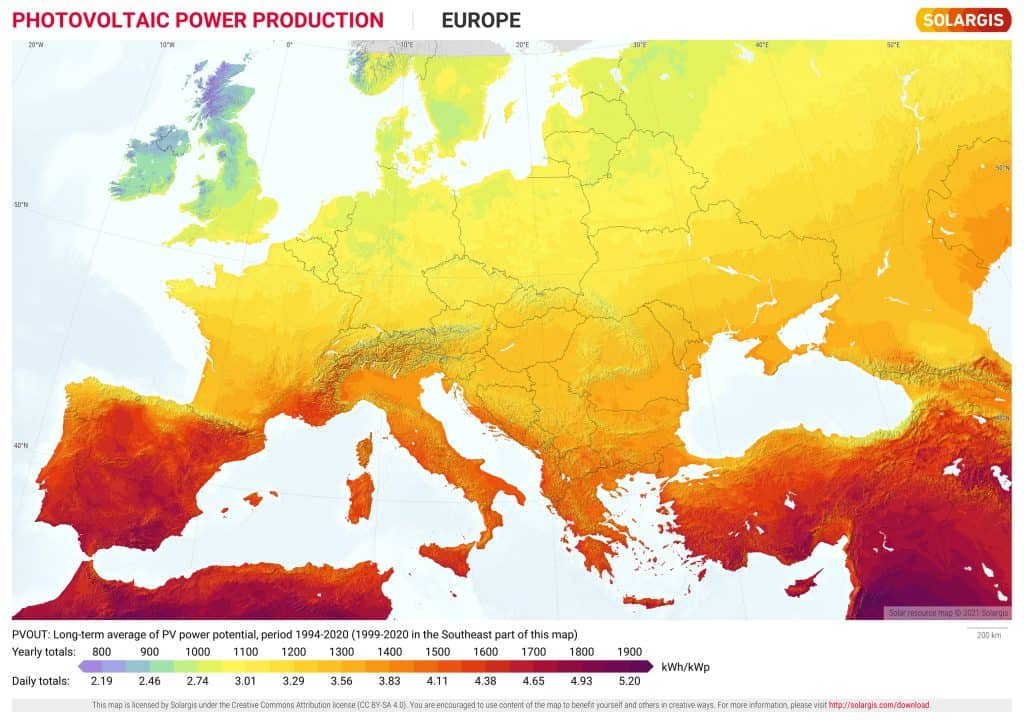
5.2 Economic Analysis: Payback Periods by Region
Payback Calculation Methodology: Estimates based on average system costs (€1,500-2,500/kWp), typical electricity rates, regional solar irradiation, and available incentives as of January 2026. Actual payback varies significantly based on specific location, system size, roof orientation, electricity consumption patterns, financing terms, and incentive availability. Consult local certified installers for location-specific calculations.
| Region | Payback Period | Solar Irradiation | Economic Rating |
|---|---|---|---|
| Southern Europe (Spain, Greece, S. Italy, Portugal) | 5-7 years | 1,600-2,000 kWh/m²/year | 🟢 Excellent |
| Germany | 7-8 years | 900-1,200 kWh/m²/year | 🟢 Very Good |
| France | 6-8 years | 1,000-1,400 kWh/m²/year | 🟢 Very Good |
| Netherlands | 7-9 years | 900-1,100 kWh/m²/year | 🟡 Good |
| Austria | 6-8 years | 1,000-1,300 kWh/m²/year | 🟢 Very Good |
| Scandinavia | 9-12 years | 800-1,000 kWh/m²/year | 🟡 Moderate |
| United Kingdom | 16-21 years | 900-1,200 kWh/m²/year | 🟠 Challenging |
Factors Affecting Payback Period
- Solar Irradiation: Southern Europe’s 50-100% higher irradiation dramatically shortens payback
- Electricity Rates: Higher rates improve economics (Germany benefits despite moderate irradiation)
- Financial Incentives: Feed-in tariffs, tax deductions, grants reduce effective cost (verify current availability)
- System Cost: Back contact premium (20-30%) extends payback 1-2 years vs TOPCon
- Self-Consumption Rate: Higher self-consumption rates improve returns vs grid export
- Installation Complexity: Simplified installation (Jackery 2-screw, Couleenergy frameless) reduces labor costs 20-30%
6️⃣ Regional Market Analysis
6.1 Southern Europe: The Opportunity Zone
Italy: Heritage Building Goldmine
✓ December 2025 Game-Changer: Heritage Building Reform
Italy reduced restrictions for solar installations in historic centers, specifically mentioning “virtually invisible” integrated solar panels.
Market Impact: Estimated 200,000+ historic buildings newly eligible for solar integration. This represents the single largest BIPV market catalyst in Europe 2026-2027.
Why This Matters:
- Rome, Florence, Venice, Siena historic districts now accessible
- Back contact technology perfectly positioned (“virtually invisible”)
- Commercial historic building conversions (hotels, museums, offices)
- Projected 15-20% annual growth 2026-2028
✓ Financial Support (Verify Current Availability):
- 36% IRPEF deduction (up to €48,000 eligible spending)
- Conto Termico 3.0: Grants up to 65% (individuals), 100% (public administrations)
- Agricultural sector: Up to 90% EU-approved incentives
✓ Payback Period: 5-7 years
Spain: Curved Tile Revolution
Market Challenge Solved: Traditional Spanish architecture features curved terracotta tiles. Flat solar tiles created jarring visual disconnect—until now.
Solution: Jackery’s 150° curved XBC tiles and Couleenergy’s custom solutions specifically address this significant market opportunity.
Market Opportunity:
- Southern coastal regions (Costa del Sol, Costa Brava)
- High solar irradiation (1,600-1,800 kWh/m²/year)
- Strong financial incentives through December 31, 2026 (verify availability)
✓ Payback Period: 5-6 years (among shortest in Europe)
6.2 Western Europe: Market Leaders
Germany: Quality and Scale
Market Characteristics:
- Largest European solar market (14.1 GW installed in 2023)
- Strong preference for “Made in Germany” products
- Baden-Württemberg solar mandate since May 2022
- DGNB certification awards points for integrated PV
Key Manufacturers:
- Autarq (Prenzlau) – domestic manufacturer advantage
- Meyer Burger (Swiss/German production) – verify current status
- SunStyle, Couleenergy (available)
France: Commercial Building Boom
✓ Progressive Mandates Driving Volume:
| Year | Required Roof Coverage | Building Type |
|---|---|---|
| 2023 | 30% | Commercial >500m² |
| 2026 | 40% | Commercial >500m² |
| 2027 | 50% | Commercial >500m² |
Market Outlook: Commercial mandate projected to drive significant growth 2026-2027
6.3 Central/Eastern Europe: Rapid Growth
Poland: Manufacturing Hub
✓ ML System Advantage:
- Domestic manufacturer with 57,000 m² contracts
- Warsaw West railway station: 1,100 kW installation
- Cost-competitive manufacturing vs Western Europe
- Export platform for Central/Eastern Europe
~ Market Outlook: Projected 15-20% annual growth, manufacturing base driving domestic adoption
7️⃣ Future Outlook and Emerging Technologies
7.1 Back Contact Technology Roadmap
The International Technology Roadmap for Photovoltaics (ITRPV)—developed by industry leaders with Fraunhofer ISE and VDMA—provides authoritative technology trajectory guidance:
~ Phase 1: Market Penetration (2026-2028)
| Metric | Current (2026) | Near-Term Projection |
|---|---|---|
| Commercial Efficiency | 24-26% | 25-27% |
| Market Share | ~15% | 25-30% |
| Production Cost | 60% reduction from 2020 | Approaching TOPCon parity |
| Applications | Heritage, premium residential | Expanding to mid-market |
~ Phase 2: Market Leadership (2029-2031)
- Expected Efficiency: 26-28%
- Projected Market Share: 40%+ in BIPV segment
- Cost: Parity with conventional cells expected
- Bifacial BC: Mainstream with ~0.8 bifaciality factor
- Applications: Expected standard for rooftop, facade, distributed generation
~ Phase 3: Technology Maturation (2032-2035)
- Projected Efficiency: 27-29% (approaching theoretical 29.1% limit)
- Expected Dominance: BIPV market leadership
- Advanced Features: Integrated microinverters, smart monitoring, self-diagnostics
ITRPV Consensus: Back contact projected to gain share especially in “rooftops, facades, and distributed generation applications”—precisely the solar roof tile market segment.
7.2 Tandem and Perovskite Cells
⚠️ Speculative Timeline – Subject to R&D Progress
Current Status (2026)
- Laboratory efficiency: 25%+ (perovskite), 33%+ (tandem)
- Stability: Improving through advanced encapsulation
- Commercial readiness: Pre-commercial stage
Major Investment
Japan: ¥227 billion ($1.5 billion) announced 2025 for commercialization
Focus: Ultra-thin, flexible cells for buildings, vehicles, non-traditional surfaces
⚠️ Projected Commercialization (Highly Uncertain)
| Period | Milestone | Target Efficiency |
|---|---|---|
| 2027-2028 | Potential initial market entry | 27-28% |
| 2029-2030 | Possible limited commercial | 28-29% |
| 2031-2033 | Broader adoption if successful | 29-30%+ |
Potential Impact on Solar Roof Tiles (If Successfully Commercialized)
- Area Reduction: ~20% fewer tiles needed for equivalent power (30% vs 24% efficiency)
- Small Roof Opportunity: Could enable solar on complex geometries
- Premium Applications: Minimal visual impact with maximum generation
- Architecture: Tandem cells projected to use back contact design for optimal performance
7.3 Smart Tile Technology
~ Emerging Capabilities (Expected Development)
- Tile-Level Monitoring
- Individual tile performance tracking
- Immediate fault detection
- Shade pattern analysis
- Predictive Maintenance
- Algorithm-based performance expectations
- Automated alerts before failure
- Weather-based cleaning recommendations
- Energy Management Integration
- Home energy management system (HEMS) connectivity
- Real-time generation forecasting
- Dynamic pricing optimization
- Smart Grid Connectivity
- Bi-directional utility communication
- Frequency regulation services
- Virtual power plant aggregation
~ Market Adoption Timeline (Projected)
- 2026-2028: Basic monitoring standard in premium products
- 2029-2031: Advanced analytics mainstream
- 2032+: Full smart grid integration standard
8️⃣ Strategic Recommendations by Stakeholder
8.1 For Building Developers & Architects
⏰ URGENT: December 31, 2026 Solar-Ready Deadline
EPBD solar-ready requirements take effect December 31, 2026 for new public/non-residential buildings >250m². Member States must transpose the directive by May 29, 2026. Review all projects in design phase immediately for solar integration requirements.
Immediate Actions (Q1-Q2 2026)
- Design Integration Planning
- Ensure structural capacity for solar loads
- Optimize roof orientation for solar generation
- Include mounting provisions in design
- Technology Specification Decision FrameworkProject TypeRecommended TechnologyHeritage BuildingsBack Contact (Required)Premium ResidentialBack Contact (Preferred)Mid-Market ResidentialTOPCon (Acceptable)Commercial ShowcaseBC Facades + TOPCon Roof
- Manufacturer Partnership Strategy
- Establish relationships with 2-3 manufacturers covering technology range
- Evaluate financial stability for 25-30 year warranty support
- Negotiate volume pricing and guaranteed supply
- Secure capacity ahead of January 2027 mandatory solar deadline surge
Medium-Term Opportunities (2026-2027)
💡 Italy Heritage Building Specialization
December 2025 reform creates immediate large market. Develop “virtually invisible” integration capability with BC technology. Partner with Solarix, ML System, Jackery (curved tiles), Couleenergy (custom colors).
8.2 For Roofing Contractors & Installers
Critical Capability Development
Market Reality: Solar roof tiles require BOTH roofing AND electrical expertise. This dual-expertise requirement creates both challenge and opportunity.
Solution Options
- Partnership Approach: Partner with certified electrical contractors
- Hiring Approach: Hire certified electricians onto roofing crew
- Cross-Training Approach: Train existing roofing staff in electrical systems (3-6 months)
Manufacturer Certification Priority
| Manufacturer | Installation Advantage | Market Segment |
|---|---|---|
| Autarq | Plug-and-play parallel connection | Mid-market, German quality |
| Jackery | 2-screw simplified system | Mediterranean, curved tiles |
| SunStyle | Premium positioning | Heritage, luxury residential |
| Couleenergy | Customization expertise | Complex projects, prototypes |
Market Positioning Opportunities
🎯 Heritage Building Specialization
Italy reform + expanding European changes create premium market opportunity:
- Develop BC technology expertise
- Master aesthetic matching capability
- Navigate regulatory approval processes
- Justify premium rates with specialized expertise
8.3 For Homeowners & Property Owners
Should I Install Solar Roof Tiles Now?
✓ YES – Strong Indicators
- 🟢 Roof replacement needed within 2 years → Incremental cost minimal
- 🟢 New construction project → Lowest integration cost
- 🟢 Heritage building with aesthetic constraints → BC tiles may be only option
- 🟢 Southern Europe location → Best economics (5-7 year payback)
- 🟢 High electricity consumption → Greater savings potential
- 🟢 Available incentives expiring soon → Capture before sunset (verify availability)
~ MAYBE – Consider Carefully
- 🟡 Existing roof in good condition → Traditional panels likely better economics
- 🟡 Northern Europe location → Longer payback (9-12 years) requires commitment
- 🟡 Complex roof geometry → Higher installation cost, custom tiles needed
🔴 NO – Wait or Choose Alternatives
- 🔴 UK location + existing good roof → 16-21 year payback often unattractive
- 🔴 Heavily shaded roof → Limited generation potential
- 🔴 Structural concerns → Reinforcement costs prohibitive
Financial Analysis Steps
- Calculate Current Energy Costs: Annual kWh consumption × electricity rate
- Estimate System Requirements: Roof area, orientation, shading analysis
- Obtain Multiple Quotes: 3-5 certified installers minimum
- Model Financial Returns: (System cost – incentives) ÷ annual savings = payback
- Evaluate Financing: Cash, home equity loan, specialized solar loan, or lease/PPA
⚠️ Important Reminders:
- Verify all incentive program availability and deadlines
- Assess manufacturer financial stability for warranty support
- Consider warranty insurance products
- Obtain multiple independent quotes
- Verify installer credentials and references
8.4 For Policymakers & Government Agencies
Near-Term Policy Actions (2026-2027)
🏛️ Heritage Building Regulatory Reform
Model: Italy December 2025 reform reducing historic center restrictions
Action: Review similar restrictions in your jurisdiction, permit “virtually invisible” solar tiles
Impact: Unlock hundreds of thousands of protected buildings
Timeline: 6-12 months for regulatory change
Installation Workforce Development
Challenge: Shortage of dual-skilled installers
Actions:
- Fund BIPV-specific training programs
- Support SEAMLESS-PV or similar initiatives
- Create installer certification standards
- Provide training grants to contractors
Target: Triple qualified installer pool by 2028
Manufacturing Support Enhancement
✓ Model: Austria’s 20% “Made in Europe” Bonus
€30 million allocated through June 2026 creates strong preference for regional manufacturing. Could serve as model for other countries to support European manufacturing competitiveness.
Implementation Options:
- Direct grants for EU-manufactured products
- Tax incentives for domestic production
- R&D funding for advanced technologies (back contact, perovskite)
9️⃣ Conclusion: The Revolution is Here
Market Transformation Underway
The European solar roof tile market is not approaching transformation—transformation is already underway. January 2026 brings us:
- ✓ ML System managing 57,000 m² of contracts across five countries
- ✓ Jackery curved solar tiles addressing previously impossible Mediterranean market
- ✓ Couleenergy offering unlimited customization with 100-piece MOQ
- ✓ Italy unlocking 200,000+ heritage buildings through December 2025 reform
- ✓ EU mandates creating legally binding demand starting May 2026
Technology Has Matured
Back contact cells achieve 24-26% efficiency with superior real-world performance. TOPCon provides cost-effective mainstream solution. 25-30 year warranties from multiple manufacturers signal proven reliability.
Economics Work
Payback periods of 5-9 years across most European markets deliver attractive returns. Available incentives further improve project economics (verify current program availability).
Policy Supports Adoption
Mandatory solar requirements, feed-in tariffs, tax deductions, and direct grants create multi-layered financial and regulatory drivers.
Market Infrastructure Exists
Established manufacturers, developing installer networks, and distribution channels enable commercial-scale deployment.
The Imperative is Clear
For stakeholders across the value chain—manufacturers, installers, developers, property owners, policymakers—the time to position for the integrated solar future is now.
The question is no longer WHETHER solar roof tiles become mainstream in Europe, but HOW QUICKLY the transformation occurs.
“The solar roofing revolution is not coming to Europe. It is here.”
📚 Appendices
Appendix A: Financial Incentive Quick Reference (2026)
⚠️ CRITICAL: All incentive programs subject to change. VERIFY CURRENT STATUS before making financial decisions.
| Country | Primary Incentive | Value/Rate | Expiration/Duration |
|---|---|---|---|
| Germany | EEG Feed-in Tariff | 20-year guarantee | Ongoing (verify) |
| France | Feed-in Tariff | €0.1276/kWh (≤3kWp) | Ongoing (verify) |
| Austria | EU Manufacturing Bonus | 20% additional | Through June 2026 |
| Spain | IRPEF Deduction | 40-60% | Through Dec 31, 2026 |
| Italy | IRPEF Deduction | 36% (max €48,000) | Ongoing (verify) |
Appendix B: Data Sources and References
Market Data (2024 base – review for 2026 updates):
Regulatory Information (current through December 2025):
- European Commission – Energy Performance of Buildings Directive (EPBD)
- European Commission – Renewable Energy Directive (RED III)
- EU Build Up Portal – Building Energy Performance Resources
- EUR-Lex – EPBD Directive (EU) 2024/1275 Full Text
Technical Performance (verified 2024-2025):
- VDMA – International Technology Roadmap for Photovoltaics (ITRPV) 2024 Edition
- Nature – All-Perovskite Tandem Solar Cells Research
Recent Developments (through January 2026):
⚠️ Important Disclaimers and Limitations
Forward-Looking Statements
This report contains forward-looking statements based on current industry projections, analyst consensus, and technology roadmaps (particularly ITRPV). Actual results may differ materially due to regulatory changes, technological developments, economic conditions, manufacturing constraints, supply chain disruptions, and competitive forces.
Financial Incentive Programs
All financial incentive programs mentioned (feed-in tariffs, tax deductions, grants) were accurate as of January 2026 but are subject to change. Program availability, terms, eligibility criteria, and funding levels may be modified or discontinued. Readers must verify current program status with relevant government agencies before making financial decisions.
Not Professional Advice
This report does not constitute:
- Financial advice or investment recommendations
- Legal advice or regulatory guidance
- Technical specifications for engineering purposes
- Specific product endorsements
Readers should consult: Licensed financial advisors, qualified attorneys, certified installers, and independent testing organizations for specific decisions


 English
  Español
  Français
  Deutsch
  Русский
  العربية