
The solar industry just had its most transformative year yet. In 2025, lab records became real products. New materials solved old problems. Smart systems made solar panels work harder. These changes matter for everyone planning solar projects in 2026 and beyond.
This guide breaks down what happened, why it matters, and what it means for your next solar decision. We’ve verified all claims against authoritative industry sources including NREL, ISFH, and peer-reviewed research.
Perovskite-Silicon Tandems: Breaking the Efficiency Ceiling
For years, silicon solar panels hit a wall. Physics limited single-junction silicon to about 29% efficiency (the Shockley-Queisser limit). That wall crumbled in 2025.
Perovskite-silicon tandem cells stack two materials together. The top perovskite layer grabs high-energy light. The bottom silicon layer catches lower-energy light. Together, they capture more sunlight than either could alone. The theoretical limit for tandems reaches 43%—far beyond silicon’s ceiling.
The breakthrough: LONGi Solar achieved 34.85% efficiency (NREL certified, April 2025)—the first certified result exceeding the single-junction Shockley-Queisser limit. JinkoSolar reached 34.76% (NPVM certified, November 2025) using a TOPCon bottom cell. Both results demonstrate the commercial potential of tandem technology.
From Lab to Real Projects
The real news? These solar panels left the lab. Oxford PV shipped commercial tandem panels to a U.S. utility project in late 2024. They hold the record for commercial-sized perovskite modules at 26.9% efficiency and signed licensing agreements with major manufacturers for mass production.
California startups moved fast too. Swift Solar partnered with American Tower Corporation to deploy perovskite solar panels on cell towers and telecom infrastructure. Caelux created “Active Glass”—a drop-in component that boosts existing panel efficiency by at least 6%. Tandem PV secured funding for utility-scale delivery in 2026.
Japan invested heavily through a national program worth over $1.5 billion for ultra-thin, flexible perovskite cells. China’s manufacturers started licensing the technology for mass production. The race is on.
Why This Matters for Your Projects
Higher efficiency means more power from less space. A 34% efficient cell produces about 70% more power than a 20% efficient cell in the same area. This changes rooftop math completely. Space-limited sites become viable. Ground-mounted projects need less land.
Commercial perovskite tandems shipping in 2026 offer around 24-26% module efficiency. Lab cell numbers take time to reach production modules. But the direction is clear—efficiency keeps climbing year over year.
TOPCon: The Workhorse Technology of 2026
While perovskite grabbed headlines, TOPCon quietly took over. This technology is now the practical choice for most solar projects.
TOPCon stands for Tunnel Oxide Passivated Contact. The technical details matter less than the results. Commercial TOPCon modules deliver 22.5-24.5% efficiency. Leading products like Trina Solar’s i-TOPCon Ultra reach 24.5%. That’s a meaningful jump from older PERC panels at 20-22%.
TOPCon Advantages Over PERC
- Better efficiency: 22.5-24.5% at module level vs. 20-22% for PERC panels
- Superior heat performance: Temperature coefficient of -0.29 to -0.32%/°C means less power loss on hot days
- Lower degradation: 0.4-0.5% annual degradation vs. 0.5-0.7% for PERC
- Similar costs: Competitive pricing due to PERC-compatible manufacturing
Understanding efficiency numbers: Cell efficiency and module efficiency differ. Cells reach higher numbers (25-26% for TOPCon), but module efficiency is what matters for your project. Module efficiency accounts for real-world factors like spacing, wiring, and frame losses.
The Manufacturing Shift
Major manufacturers converted their factories to TOPCon throughout 2025. PERC is fading fast. When you buy solar panels in 2026, TOPCon will likely be your default option. Industry experts at Fraunhofer ISE report that industrial TOPCon cells now average around 25.5% efficiency, with realistic near-term potential to reach 26-27%. JinkoSolar set a new TOPCon cell efficiency record of 27.79% (ISFH certified, November 2025), demonstrating the continued advancement of this technology.
LONGi’s HIBC (Hybrid Interdigitated-Back-Contact) cell set a world record at 27.81%, certified by Germany’s ISFH. This proves silicon technology still has room to grow. The result demonstrates what’s possible as manufacturing techniques mature.
What This Means for Buyers
TOPCon is the safe bet for 2026. The technology is proven and widely available. Installation methods stay the same as PERC. You get better results without adding complexity or cost.
For most residential and commercial projects, TOPCon solar panels offer the best balance of performance, availability, and value. They deliver measurable gains today while manufacturers scale up next-generation options.
Bifacial Solar Panels: Capturing Light From Every Angle
Why settle for one side when you can use both?
Bifacial panels generate power from front and back surfaces. The front works like any panel. The back captures reflected light from the ground, nearby walls, or other surfaces. This simple idea delivers big results.
Real-world boost: Bifacial panels can generate 10-30% more energy than single-sided panels. Typical installations see 5-15% gains, while optimal setups with high-reflectivity surfaces (white gravel, snow) can reach 25-30%.
Where Bifacial Shines
Ground-mounted systems benefit most. Light reflects off grass, gravel, sand, or concrete. Rooftop installations over white membranes also see gains. Snowy climates work well too. Snow reflects a lot of light.
Vertical bifacial installations offer a clever twist. They generate power in morning and afternoon peaks. Winter performance improves by up to 25%. This alignment matches grid demand better than south-facing arrays.
The Market Response
The bifacial market grew fast through 2025. Major manufacturers launched advanced models paired with storage systems. The combination makes sense. Capture more energy, store it, use it when needed.
For utility-scale projects, bifacial is becoming standard. The extra energy outweighs the slightly higher cost. Commercial installations are following suit. Residential adoption grows as installers gain experience.
Back Contact Technology: Maximum Power, Minimal Loss
Standard solar cells have metal lines on the front surface. These busbars and fingers collect electricity. But they also block sunlight—typically 3-5% of the cell surface is shaded by metallization. Back contact cells move all connections to the rear.
The result? No shading from wiring. More active surface area. Higher efficiency. Cleaner aesthetics for residential applications.
Back Contact Performance
- Top cell efficiency: 27.81% (LONGi HIBC, ISFH certified)
- Commercial module efficiency: 24.8-25% for leading products
- Better shade handling: Over 50% better performance in partial shade
- Higher bifaciality: Over 80% bifaciality factor with optimized rear design
- Cleaner aesthetics: No visible grid lines—ideal for architectural applications
ABC, HPBC, and HIBC Technologies
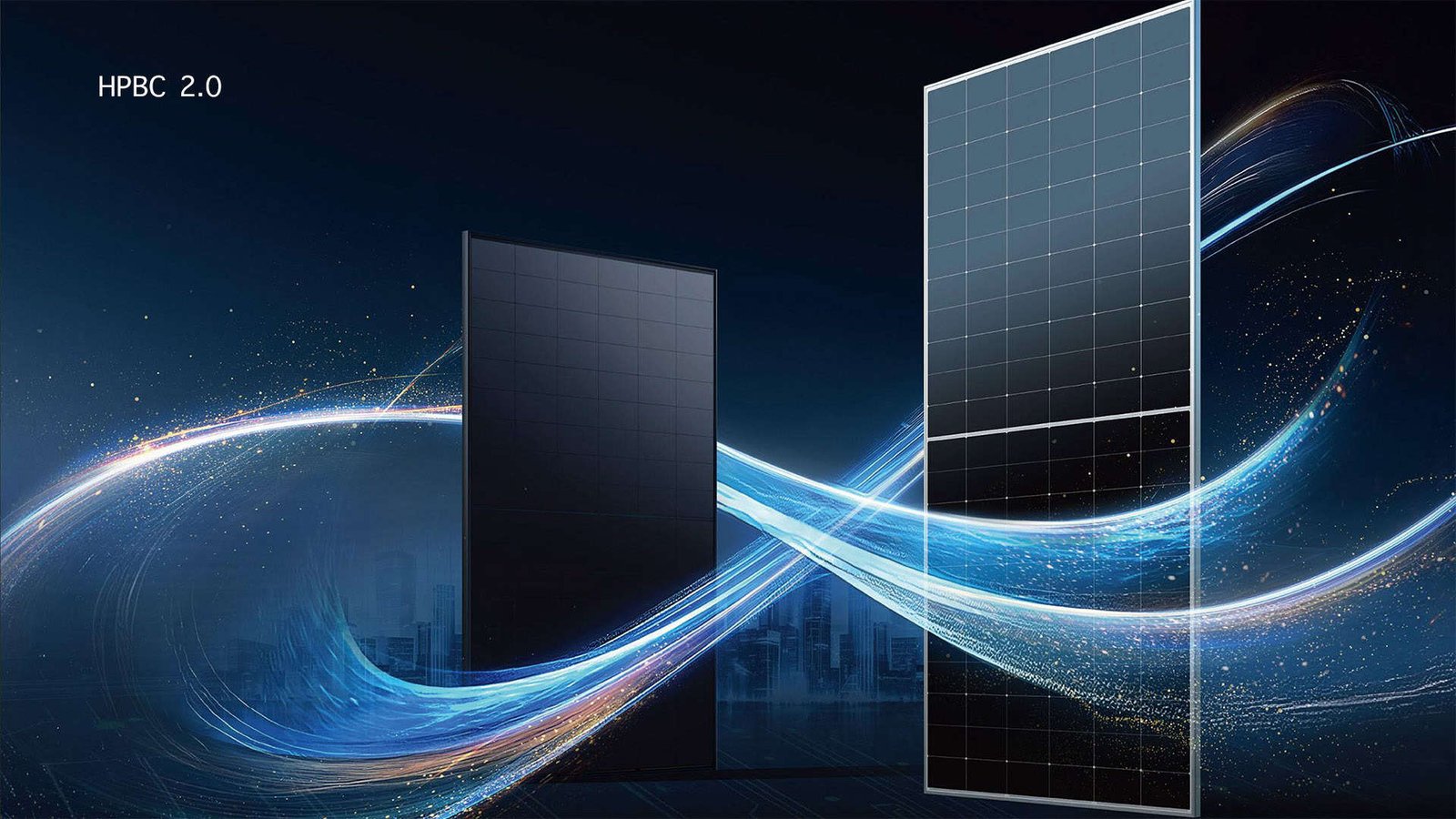
Several back contact variants now compete in the market. Aiko Solar’s ABC (All Back Contact) modules reached 25% efficiency with their NEOSTAR series, using silver-free manufacturing to reduce costs. LONGi’s commercial HPBC 2.0 technology powers their Hi-MO 9 series at 24.8% module efficiency with 670W output.
LONGi’s research HIBC (Hybrid Interdigitated-Back-Contact) technology—distinct from their commercial HPBC product line—achieved the 27.81% cell record by combining high-temperature polysilicon and low-temperature amorphous silicon processes. This demonstrates the future potential of back contact designs.
Field testing showed consistent real-world gains. Back contact panels produced 2.6-9.55% more electricity than standard panels across different locations and weather conditions.
Availability and Outlook
Back contact panels command premium positioning in 2026. Supply is more limited than TOPCon or standard bifacial options, but manufacturers are expanding capacity rapidly.
Industry forecasts expect bifacial back contact technology to capture significant market share after 2027. The combination offers the best of both worlds: maximum front-side efficiency plus rear-side energy capture through high bifaciality.
Self-Healing Materials: The Durability Revolution
Solar panels face harsh conditions. Heat, moisture, and UV light cause damage over time. What if panels could repair themselves?
Researchers made this real in 2025, particularly addressing perovskite’s durability challenges.
How Self-Healing Works
Scientists developed special polymers that respond to damage. When heat and moisture trigger degradation, these materials activate repair mechanisms. Cracks heal. Performance recovers. The innovation comes from international collaboration between Hong Kong City University, Oxford University, and Monash University.
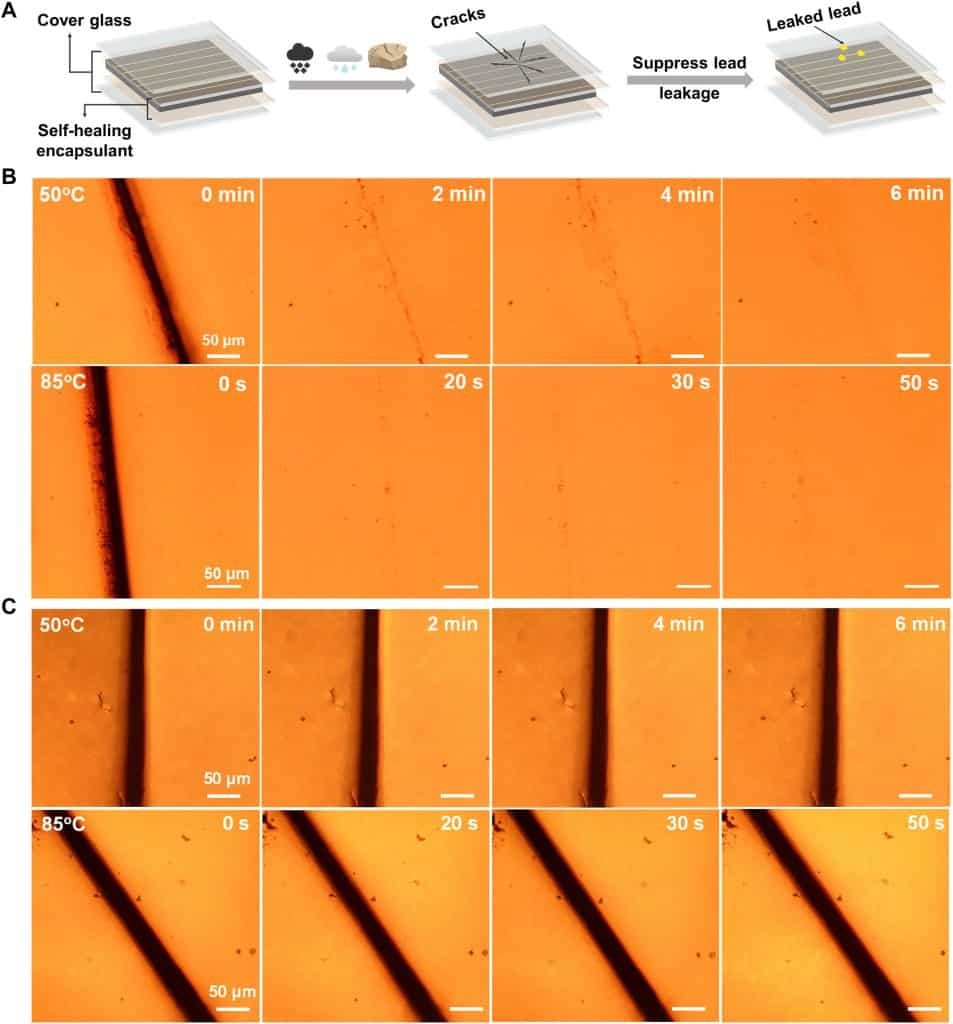
The breakthrough: A new encapsulant completely repairs scratches in just 6 minutes at 50°C—normal solar panel operating temperature. Encapsulated devices retained 95.17% of initial efficiency after 1,500 hours of damp heat testing and 93.53% after 300 thermal cycles. This matches standard silicon panel durability requirements.
The technology works through dynamic ion aggregates. These molecular structures move and reconnect when triggered. The same heat and moisture that normally damage perovskite cells instead activate healing. The encapsulant also achieves over 99% lead sequestration efficiency, addressing environmental safety concerns.
Applications for Perovskite and Flexible Panels
Self-healing matters most for perovskite cells. Their main weakness was degradation from environmental stress—heat, moisture, and oxygen exposure. Self-healing encapsulants solve this problem at the source, potentially enabling perovskite to meet the same 25-30 year lifespan expected of silicon panels.
Flexible solar cells also benefit significantly. Bending creates tiny cracks that accumulate over time. Self-healing polymers can repair this damage quickly after each flexing cycle. This extends the life of panels on curved surfaces, vehicles, building facades, and portable applications.
What This Means Long-Term
Current solar panels last 25-30 years with gradual efficiency loss of 0.4-0.8% per year. Self-healing materials could extend operational life while maintaining higher performance throughout. They also improve safety by containing any lead in perovskite cells, even if damaged.
Commercial deployment is beginning now. As manufacturing scales up, self-healing encapsulation will likely become standard in premium perovskite and flexible panels within the next few years.
AI and Smart Systems: The Brain Behind the Panels
2025 was the year AI stopped being a buzzword in solar. It became essential infrastructure.
The global solar AI market reached approximately $6 billion in 2024 and is projected to grow at over 20% annually through 2030. These aren’t abstract improvements. They deliver measurable results verified by industry research.
Predictive Maintenance
AI spots problems before they cause failures. Algorithms analyze performance data continuously. They detect patterns that signal coming issues. Maintenance crews fix problems weeks before equipment breaks down.
The verified impact: AI-driven predictive maintenance can reduce unexpected equipment failures by up to 70% and cut overall maintenance costs by 25-35%. System availability improves by approximately 25% according to industry case studies.
Real-Time Performance Optimization
Smart systems adjust solar panel angles and settings constantly. They respond to changing sun position, cloud cover, and shading patterns. Energy output increases 20-25% in installations with tracking systems and dynamic adjustment capabilities. Google’s DeepMind collaboration with solar farms demonstrated 20% efficiency gains through AI optimization.
AI Optimization Benefits (Verified Data)
- Energy yield boost: 20-25% more energy from dynamic tracking and real-time adjustments
- Forecasting accuracy: 30% reduction in prediction errors vs. conventional methods
- Processing speed: 12x faster than conventional analysis for next-day demand calculations
- Inspection efficiency: Drone + AI scanning reduces inspection costs by 40%
- Failure prediction: Up to 95% accuracy in predicting panel failures
Important context: The 20-25% energy gains apply specifically to systems with single-axis or dual-axis tracking and dynamic controls. Fixed-tilt installations benefit from AI primarily through predictive maintenance, forecasting, and battery optimization—typically seeing 5-10% overall performance improvements.
Battery and Grid Integration
AI manages storage systems intelligently. It decides when to store excess energy and when to release it. Decisions account for time-of-use rates, grid demand, and weather forecasts.
Virtual power plant technology aggregates many systems. Individual solar-plus-storage installations work together as one large resource. AI coordinates the entire network for maximum value. Companies like Tesla’s Autobidder and Enphase’s virtual power plant software enable homeowners and businesses to participate in grid services.
Practical Applications in 2026
Commercial and industrial sites benefit most from AI optimization. The complexity of large systems justifies the investment. Residential systems are catching up as software costs fall and smart inverters become standard.
For any new installation in 2026, consider smart inverters with built-in monitoring and optimization capabilities. The incremental cost pays back quickly through better performance and reduced maintenance needs.
The 2026 Solar Market: Two Different Stories
Global solar installations will dip slightly in 2026. This sounds concerning until you understand why.
China’s Planned Adjustment
China installed a massive amount of solar in 2024 and 2025. More than half of all global installations happened there. This pace wasn’t sustainable.
The country’s new five-year plan signals deliberate slowdown. This isn’t weakness. It’s policy adjustment after record-breaking deployment.
The Rest of the World Accelerates
Outside China, solar growth continues strong. According to Deloitte’s 2026 Renewable Energy Industry Outlook, renewables dominated U.S. capacity growth, accounting for 93% of additions through September 2025, with solar and storage making up 83%. India, Africa, and Latin America are ramping up fast. Energy demand and falling costs drive this expansion.
Policy changes in the U.S. (including the One Big Beautiful Bill Act) have shortened qualification windows for solar tax credits and imposed new Foreign Entity of Concern restrictions. Deloitte projects annual solar, wind, and storage additions between 2026-2030 could range from 30-66 GW, down from pre-OBBBA projections of 54-85 GW. However, projects beginning construction by December 31, 2025 may still qualify for credits without new restrictions.
The real story: One country adjusting after exceptional growth doesn’t signal industry decline. Global solar keeps growing. Technology keeps improving. The momentum is real.
Regional Highlights
United States: Domestic manufacturing expanded significantly. The country now ranks among top global producers. Data center demand drives utility-scale growth. Policy changes create some uncertainty, but fundamentals remain strong.
Europe: The market is digesting recent capacity additions. Grid connection challenges slow some projects. Solar-plus-storage combinations are growing as standalone solar economics shift.
Asia-Pacific: The region maintains the largest market share. Manufacturing capabilities and falling costs keep driving adoption. India is building domestic capacity rapidly.
Data Centers: Solar’s Biggest New Customer
One trend stands above all others for 2026: data centers need enormous amounts of clean power.
The Scale of Demand
Major tech companies are signing massive solar contracts. Their combined clean energy purchases dwarf other corporate buyers. One company alone committed to 12 GW of solar capacity.
Why? AI and cloud computing require unprecedented electricity. Data centers need reliable, clean power to meet carbon goals. Solar-plus-storage delivers exactly that.
24/7 Clean Energy Requirements
Data centers can’t just use clean energy sometimes. They need it around the clock. This drives demand for solar paired with battery storage. The combination provides firm, dispatchable power.
What Data Centers Want
- Reliability: Power that never stops
- Scalability: Room to grow with demand
- Clean credentials: Verifiable carbon-free energy
- Long-term contracts: Stable costs for decades
Impact on the Broader Market
Data center demand is reshaping how utility-scale projects are structured. Developers prioritize storage integration. Contract terms extend longer. Quality requirements increase.
This benefits all buyers. Manufacturing scales up. Technology improves faster. The infrastructure built for data centers serves everyone.
Future Technologies on the Horizon
The 2025 breakthroughs set the stage. Here’s what’s coming next.
Perovskite-Graphene Combinations
Graphene adds what perovskite lacks. It’s strong, conductive, and water-resistant. Early combinations show dramatic efficiency improvements with major cost reductions.
The manufacturing process works with existing equipment. Roll-to-roll production could make these panels extremely affordable. Watch for commercial availability in 2027-2028.
Kesterite: Earth-Abundant Solar
Kesterite solar cells use copper, zinc, tin, and sulfur (CZTS). All are abundant and non-toxic. UNSW researchers achieved a world-record 13.2% efficiency in January 2025, breaking through six years of stagnation at 11% through hydrogen passivation techniques.
The technology offers stability that perovskite still struggles to match. Professor Xiaojing Hao expects CZTS to reach 15% efficiency within the next year, with commercial deployment targeted for 2030 if efficiency gains continue.
Quantum Dot Solar Cells
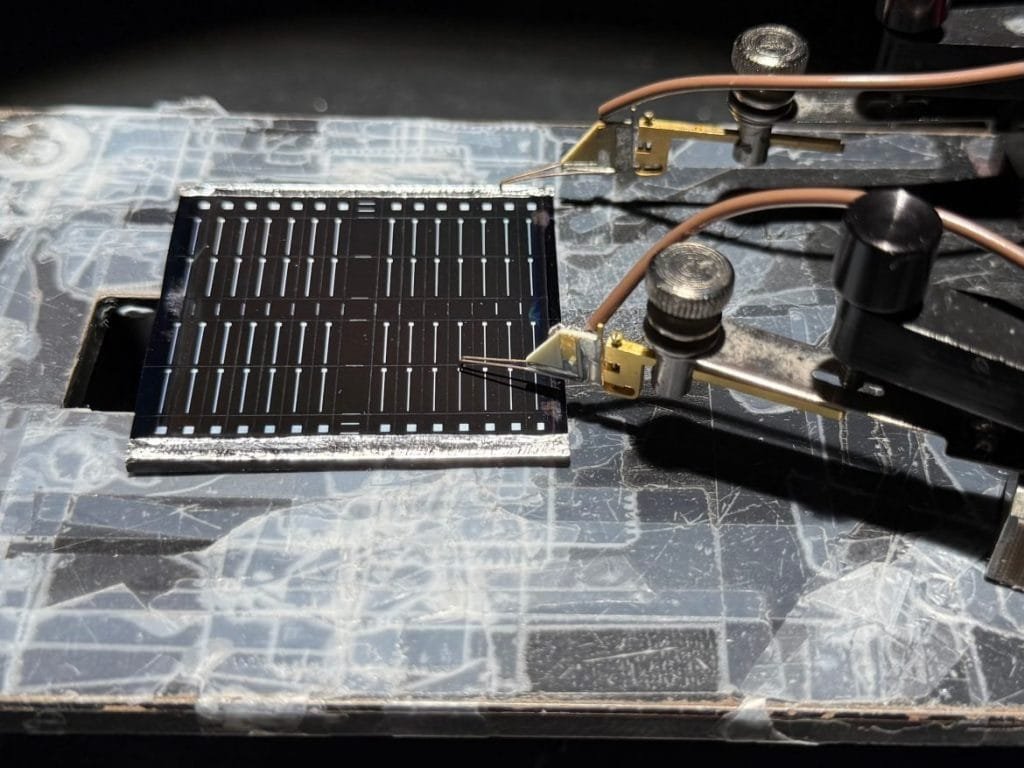
Quantum dots are tiny particles that can be tuned to capture specific light wavelengths. Stacking them creates cells that capture more of the solar spectrum.
Recent breakthroughs achieved significant efficiency with dramatically lower material costs. The theoretical limit far exceeds silicon. Manufacturing challenges remain, but progress is steady.
Space-Based Solar Power
Yes, really. Multiple startups have funding, technology demonstrations, and launch schedules.
One approach uses satellites to beam power via laser to ground stations. Another targets existing solar farms, allowing them to generate power at night. Demonstration launches are planned for 2026-2028.
Will it work at scale? Challenges remain significant. But serious money and engineering talent are now engaged. Dismissing it entirely seems unwise.
Building-Integrated Solar
Solar windows, facades, and roof tiles are approaching mainstream viability. One major manufacturer plans to sell power-generating glass with built-in perovskite cells by 2026.
These windows convert light to electricity while remaining transparent. Imagine skyscrapers where every window generates power. The technology exists. Scale-up is underway.
Floating Solar Systems
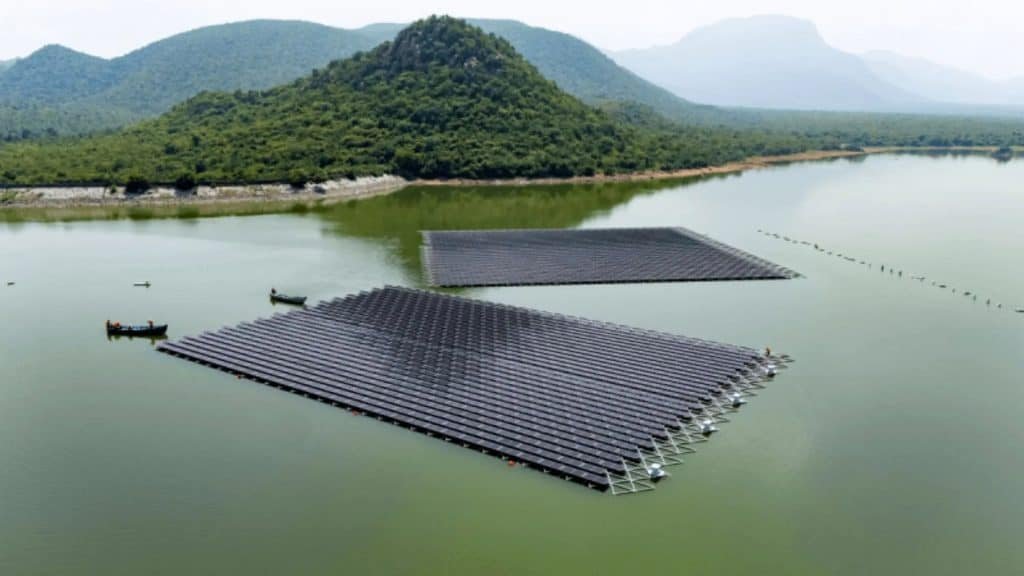
Solar panels on water bodies cool themselves naturally. This boosts efficiency while reducing evaporation from reservoirs. Global floating solar capacity is growing rapidly.
The approach works especially well in water-stressed regions. It generates power without consuming land. Large installations are operating in Asia and planned worldwide.
Your 2026 Solar Action Plan
What should you actually do with all this information? Here’s practical guidance based on project type.
For Residential Projects
TOPCon solar panels are your baseline choice in 2026. Look for PV modules with 22-24% efficiency from established manufacturers. They offer proven performance at competitive costs with wide availability.
Consider bifacial solar panels if you have light-colored roofing, ground-mounted systems, or reflective surfaces nearby. Expect 5-15% additional energy in typical installations.
Include energy storage. Battery technology keeps improving. Solar-plus-storage systems provide backup power, optimize self-consumption, and increasingly offer economic returns through time-of-use rate arbitrage.
Don’t wait for the next breakthrough. Technology always improves. Projects delayed indefinitely never generate returns. The technology available today delivers excellent value—and you can always add emerging technologies later.
For Commercial and Industrial Projects
Embrace smart energy management from the design phase. AI optimization and monitoring pay for themselves quickly on systems above 100 kW through reduced maintenance and improved performance.
Specify bifacial PV panels for ground-mounted arrays—the additional 10-25% energy yield improves project economics significantly. Ensure proper mounting height (minimum 0.5 meters) and consider reflective ground covers.
Co-locate solar with battery storage. This provides firm power for critical operations and opens grid services revenue opportunities. Plan electrical infrastructure for future expansion as energy needs grow.
Key insight: For C&I projects in 2026, integrated systems deliver the best results. Solar panels, battery storage, smart inverters, and AI-powered energy management work best when designed together from the start.
For Utility-Scale Developers
TOPCon bifacial modules are the current standard for large projects. Look for modules above 600W with bifaciality factors of 80% or higher.
Tandem perovskite-silicon cells are ready for pilot projects and early adopters. Wider commercial availability comes in 2027-2028. Back contact technology offers the highest efficiencies for space-constrained sites or premium applications.
Storage co-location is becoming essential. Corporate and utility offtakers increasingly demand 24/7 clean power. Projects without storage face growing challenges securing power purchase agreements.
Technology Selection Quick Guide
- Best all-around value: TOPCon bifacial (22.5-24.5% module efficiency)
- Highest efficiency: Back contact panels (24.8-25% module efficiency)
- Premium aesthetics: All-black back contact (no visible grid lines)
- Hot climates: HJT panels (best temperature coefficient at -0.24%/°C)
- Maximized energy yield: Bifacial + single-axis tracking + AI optimization
For Everyone
The 2025 breakthroughs mean you no longer choose between cost, efficiency, and durability. Current technology delivers all three at levels that seemed impossible just a few years ago.
Solar panels generate more power per square meter. Installation costs per watt continue falling. Panels last longer with less degradation. AI makes systems work smarter. Self-healing materials address durability concerns for emerging technologies.
This isn’t the end of innovation. It’s a foundation for the next wave. Every year brings improvements. But the technology available right now is genuinely excellent—and waiting means missing out on the energy and cost savings available today.
Ready to Plan Your Solar Project?
Our team helps businesses worldwide navigate the evolving solar landscape. From technology selection to custom solutions, we provide the expertise you need.
Contact us today:
Email: info@couleenergy.com
Phone: +1 737 702 0119
Let’s discuss how 2025’s breakthroughs can power your 2026 success.
B2B Procurement Guide: ROI, Certifications & Supply Chain
For commercial buyers, distributors, and project developers, technology breakthroughs only matter if they translate to better business outcomes. This section covers the practical procurement considerations that drive B2B purchasing decisions in 2026.
Financial Returns: What the Numbers Show
Solar ROI varies significantly by project type and location, but the fundamentals remain strong across all segments.
LCOE & Payback Benchmarks (2025 Data)
- Utility-scale LCOE: $0.038-0.078/kWh in the U.S. (Lazard 2025), global average $0.043/kWh (IRENA)
- Commercial payback: 3-10 years depending on system size and location; well-optimized systems achieve 3-5 years (Centrica Business Solutions), with industry average around 10 years and ROI of approximately 13.5% annually (Paradise Energy)
- Residential payback: 7.1 years U.S. average (EnergySage 2025), ranging from 5-12 years depending on state incentives and electricity rates
- System lifespan: 25-30+ years, generating 15-20 years of post-payback savings
Efficiency Impact on Energy Yield
Higher efficiency panels deliver measurable financial advantages. A 400W panel produces approximately 1.6-2.5 kWh daily depending on location. Upgrading from 20% to 24% efficient panels yields 20% more energy from the same roof space—directly improving project economics.
TOPCon panels (22.5-24.5% efficiency) typically deliver 1.5-2.5% more annual energy than PERC equivalents. HJT panels add 2.5-4.5% more in hot climates due to superior temperature coefficients. Over a 25-year warranty period, these efficiency gains compound into substantial additional revenue.
Essential Certifications for B2B Projects
Certification requirements protect your investment and ensure regulatory compliance. Here are the standards that matter:
Core Certifications
- IEC 61215: Design qualification and type approval. Tests panels against environmental stress (UV, temperature cycling, humidity, mechanical load). Foundation for global market access.
- IEC 61730: Safety qualification covering electrical shock, fire, and mechanical hazards. Required alongside IEC 61215 for commercial installations.
- UL 1703 / UL 61730: Required for North American markets. UL 61730 combines IEC 61730 with UL requirements—increasingly standard for manufacturers targeting global markets.
- IEC 61701: Salt mist corrosion testing for coastal installations.
- IEC 62716: Ammonia corrosion testing—essential for agricultural installations.
Key insight: Certified panels cost approximately 3-5% more but experience 60% fewer repairs over 10 years. Always verify current certification status—certifications confirm that sample panels passed tests at submission time, not ongoing production quality.
Supply Chain & Tariff Considerations
The 2025-2026 trade environment significantly impacts procurement costs, particularly for U.S. and European buyers.
Current Tariff Landscape
As of late 2025, solar equipment faces substantial import duties in the U.S.:
- China: 34%+ reciprocal tariffs on modules, cells, and inverters, stacking on top of existing 50% Section 301 tariffs
- Southeast Asia: 24-48% reciprocal tariffs on modules from Vietnam (46%), Thailand (36%), Malaysia (24%), Cambodia (49%)
- AD/CVD duties: Antidumping and countervailing duties stack on top of reciprocal tariffs—some Southeast Asian suppliers face combined rates of 200%+ depending on company-specific findings
- Section 201 tariffs: Currently 14% on bifacial modules, scheduled to expire February 7, 2026
- Equipment pricing impact: Solar panel prices increased 20-40% for U.S. buyers compared to pre-April 2025 levels
Strategic Sourcing Options
- Direct manufacturer relationships: Working with established Chinese manufacturers like Couleenergy can provide cost advantages through OEM/ODM arrangements while navigating tariff complexity
- Domestic content bonuses: U.S. projects using qualifying domestic components can access enhanced IRA tax credits (10% adder for meeting domestic content requirements—steel, iron, and manufactured products thresholds)
- Lead time planning: Allow 8-12 weeks for custom orders; 4-6 weeks for standard products from established supply chains
Warranty Comparison by Technology
Warranty terms vary significantly by manufacturer and technology type. Here’s what leading products offer in 2026:
Warranty Benchmarks
- Product warranty: 12-25 years (premium brands like Maxeon offer up to 40 years)
- Performance guarantee: 25-30 years standard, guaranteeing 85-90% output
- TOPCon degradation: 2% first year, 0.4-0.55% annually thereafter (87-90% at 25 years)
- HJT degradation: Lower annual degradation (0.25-0.4%/year) due to superior cell structure
- Back contact (ABC/HPBC): Premium warranties (88.85% output at 30 years, 0.35% annual degradation)
Bankability consideration: Verify manufacturer financial stability before relying on long-term warranties. Tier 1 Bloomberg classification indicates manufacturers likely to honor warranty commitments throughout system lifetime.

Couleenergy: Your Direct Manufacturer Partner
As an innovative solar manufacturer, Couleenergy offers B2B buyers direct access to advanced panel technologies with competitive pricing and flexible customization:
- Minimum orders: Starting at 100 pieces—accessible for commercial projects and distributor inventory
- Technologies available: TOPCon, back contact, flexible solar panels, and custom OEM/ODM solutions
- Certifications: IEC 61215, IEC 61730, CE, TÜV—ready for global markets
- Custom capabilities: Voltage configurations, size specifications, branding options for OEM partners
Direct manufacturer sourcing eliminates intermediary margins while providing technical support for complex project requirements. Contact our team to discuss your specific procurement needs.
The Bottom Line
2025 wasn’t just another year of small improvements. It was the year solar technology fundamentally advanced across multiple fronts simultaneously.
Perovskite tandems proved commercial viability with NREL-certified efficiencies above 34%. TOPCon became the new manufacturing standard with modules routinely exceeding 23% efficiency. Bifacial panels went mainstream, adding 10-30% energy yield. Back contact technology set new efficiency records above 27% at the cell level. Self-healing materials addressed perovskite durability concerns. AI optimization delivered verified 20-25% performance gains for tracking systems.
The economics continue improving. IRENA reports an 87% reduction in total installed costs since 2010, with global average LCOE at $0.043/kWh—41% cheaper than fossil fuel alternatives. Utility-scale solar in the U.S. ranges from $38-78/MWh without subsidies (Lazard 2025), making it the most cost-competitive form of new power generation.
The 2026 market reflects this transformation. Yes, global installations adjust slightly as China normalizes after record deployment. But technology keeps advancing. Non-China markets grow double-digits. Applications expand into data centers and new sectors.
For anyone buying, selling, or installing solar in 2026, the message is clear. The breakthroughs of 2025 created the foundation for years of growth ahead. The best solar technology ever developed is available right now—and it keeps getting better.
The solar revolution didn’t arrive in 2025. It accelerated. Now we scale it up.
Frequently Asked Questions: Solar Technology 2025-2026
1. What are the most significant solar panel breakthroughs in 2025, and how do they affect 2026 buyers?
Answer: The major 2025 solar breakthroughs include perovskite-silicon tandem cells achieving 34.85% efficiency (LONGi, NREL-certified April 2025) and 34.76% (JinkoSolar, NPVM-certified November 2025), TOPCon technology capturing over 70% market share with 22.5-24.5% module efficiency, and self-healing encapsulants that repair damage in 6 minutes at normal operating temperatures. For 2026 buyers, these advances mean more power per square meter, better performance in challenging conditions, and longer panel lifespans. TOPCon panels are now the standard choice, offering 10-15% better performance than older PERC technology at competitive prices. Commercial perovskite tandems will begin shipping in limited quantities, with broader availability expected in 2027-2028.
2. Which solar panel technology should I choose in 2026: TOPCon, HJT, or back contact panels?
Answer: Your optimal choice depends on your project priorities and climate:
- TOPCon PV panels (22.5-24.5% efficiency): Best all-around value for most residential and commercial projects. Proven technology, wide availability, competitive pricing. Temperature coefficient of -0.29 to -0.32%/°C.
- HJT PV panels (24-26% efficiency): Premium choice for hot climates with superior temperature coefficient (-0.24%/°C). Higher upfront cost justified in extreme heat environments like deserts or tropical regions.
- Back contact PV panels (24.8-25% efficiency): Highest efficiency for space-constrained sites. All-black aesthetics ideal for residential rooftops. Premium pricing but 2.6-9.55% more energy output than standard panels.
For most buyers, TOPCon offers the best balance of performance, availability, and cost in 2026.
3. Should I install solar panels now or wait for perovskite technology in 2026-2027?
Answer: For most buyers, installing now is the smarter financial decision. Here’s why:
- Opportunity cost: Every month you wait means paying utility bills instead of generating savings. A typical system saves $40,000-$50,000 over its 25-year warranty period.
- Perovskite timeline: Commercial perovskite-silicon tandems are available in limited quantities for utility-scale projects, but widespread residential availability isn’t expected until 2027-2028.
- Current technology excellence: TOPCon panels at 22.5-24.5% efficiency deliver excellent performance. The gap between current technology and emerging options doesn’t justify waiting years.
- Future-compatible systems: Solar installed today can be expanded or upgraded with newer technologies later, protecting your initial investment.
Technology always improves, but projects delayed indefinitely never generate returns. Today’s panels are genuinely excellent.
4. Are bifacial solar panels worth the extra cost for residential installations in 2026?
Answer: Bifacial PV panels are worth it for specific residential applications but not standard rooftop installations:
- Not recommended: Standard pitched rooftops—the roof blocks rear-side light capture, negating bifacial advantages.
- Excellent choice: Ground-mounted systems (10-25% energy gain), carports and pergolas (15-20% gain), flat roofs with white membranes (8-15% gain), and snowy climates (20-30% winter gain).
- Cost premium: Bifacial panels cost 5-10% more than monofacial equivalents. The economics work when installation conditions allow 10%+ energy gains.
For residential rooftops, standard TOPCon or back contact panels typically provide better value. For ground mounts or carports, bifacial panels deliver measurable returns.
5. What solar panel technology performs best in hot climates like deserts, the Middle East, or tropical regions?
Answer: For hot climates where panel temperatures regularly exceed 65°C (149°F), choose panels with the lowest temperature coefficient:
- Best performance: HJT panels (-0.24%/°C) lose only 5-6% output at 45°C cell temperature vs. 7-8% for standard panels. Can outperform PERC by 4-6% annually in desert conditions.
- Excellent alternative: Back contact panels (HPBC/ABC) at -0.26%/°C offer near-HJT thermal performance with better manufacturing economics.
- Good value option: TOPCon panels (-0.29 to -0.32%/°C) deliver 2-3% more annual energy than PERC in hot regions at lower cost than HJT.
- Avoid: Standard PERC panels (-0.35 to -0.40%/°C) lose significantly more power in extreme heat.
Installation practices also matter: ensure adequate ventilation beneath panels, use elevated mounting systems, and consider bifacial panels over reflective surfaces for additional cooling benefits.
6. What emerging solar technologies will transform the market by 2027-2030?
Answer: Several breakthrough technologies are approaching commercialization:
- Perovskite-silicon tandems (2026-2028): Lab records above 34% efficiency with commercial modules targeting 28-30%. Tandem PV and Oxford PV are preparing utility-scale deliveries. Wider residential availability expected 2027-2028.
- Building-integrated photovoltaics (2026): Panasonic plans to sell power-generating glass with built-in perovskite cells. Solar windows at 18% efficiency could transform commercial buildings.
- Kesterite solar cells (2028-2030): Uses earth-abundant materials (copper, zinc, tin, sulfur). UNSW recently broke a six-year efficiency ceiling, promising stable, low-cost alternatives.
- Space-based solar power (2026-2028): Demonstration satellites will test laser-beamed power to ground stations, potentially enabling 24/7 solar generation.
- Quantum dot solar cells: Lab efficiencies at 18.1% with theoretical limits above 60%. Manufacturing challenges remain, but progress is accelerating.
By 2030, tandem cells could dominate 85% of the market, with 40%+ efficiency panels becoming commercially available.
7. How will the 2026 solar market differ between regions like North America, Europe, and Asia-Pacific?
Answer: Regional solar markets in 2026 show distinct characteristics:
- North America: Renewables dominated U.S. capacity growth (93% of additions through September 2025), with solar and storage making up 83%. Policy changes (OBBBA) have shortened tax credit qualification windows, potentially reducing annual additions to 30-66 GW through 2030. Data center demand continues driving utility-scale growth.
- Europe: Market digesting recent capacity additions with grid connection challenges slowing some projects. Strong growth in solar-plus-storage systems. Germany and Spain lead in adoption, with increasing focus on building-integrated solutions.
- Asia-Pacific: China adjusting after record 2024-2025 deployment—policy normalization, not decline. India building domestic manufacturing rapidly with double-digit growth continuing. Australia, Japan, and Southeast Asia expanding utility and rooftop markets.
- Emerging markets: Africa, Latin America, and Middle East showing accelerating adoption driven by falling costs, abundant solar resources, and growing electricity demand.
The technology improvements of 2025 benefit all regions, making solar increasingly competitive with conventional power sources worldwide. By 2026, renewables are projected to account for 36% of global power generation (IEA).
Data verification: All efficiency records and statistics in this article have been verified against authoritative sources including NREL (National Renewable Energy Laboratory), ISFH (Institut für Solarenergieforschung Hameln), NPVM (National PV Metrology Centre), IRENA Renewable Power Generation Costs 2024, Lazard LCOE+ June 2025, Wood Mackenzie, SEIA, IEA, and peer-reviewed publications. LCOE data reflects IRENA’s global weighted average ($0.043/kWh) and Lazard’s U.S. utility-scale range ($38-78/MWh). Tariff information current as of December 2025, including Section 201 expiration (February 2026) and AD/CVD final determinations (April 2025). Financial data reflects market conditions as of Q4 2025. Certification standards referenced include IEC 61215, IEC 61730, UL 61730, and regional requirements current as of publication.





 English
  Español
  Français
  Deutsch
  Русский
  العربية