

You’ve found the perfect OEM solar panel manufacturer in China for your custom solar panels. The specs look great, the samples passed your tests, and you’re ready to place that first order. Then your supplier sends a quote with three-letter codes like “FOB,” “EXW,” “CIF,” or “DDP” attached to different prices.
Which one should you choose?
When you buy solar panels direct from manufacturer, this decision affects more than just your immediate costs. Understanding FOB CIF DDP Incoterms for solar panels shapes who handles shipping, who bears the risk if something goes wrong, and how much control you have over the entire import process. Let’s break down your options so you can make the right call for your business.
🌍 Understanding Incoterms: The Rules That Run International Trade
Incoterms are internationally recognized commercial terms that divide responsibilities between buyers and sellers. Think of them as a contract shorthand that spells out who pays for what, who arranges transportation, and most importantly—where risk transfers from your supplier to you.
When you see “FOB Shanghai” on a quote, you’re not just seeing a price. You’re seeing a complete package of responsibilities, costs, and risk transfer points that have been standardized worldwide since 1936.
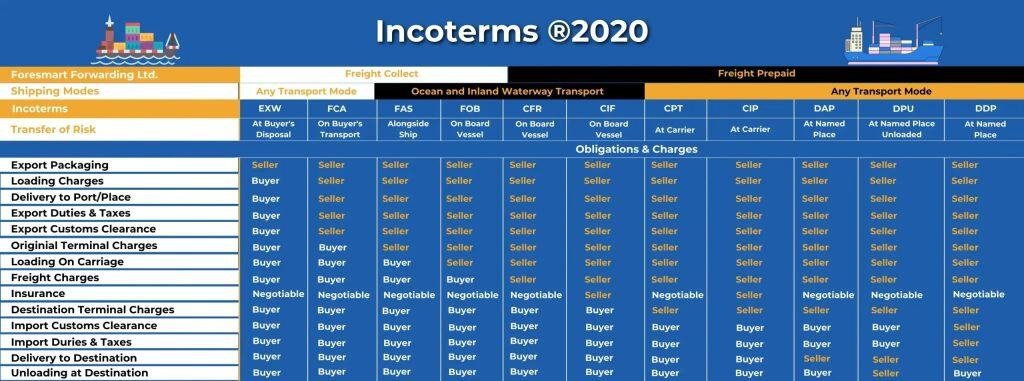
Key Point: The 2020 version includes eleven official terms, but realistically, only five or six matter for solar panel importing.
⚡ Quick Reference: Which Incoterm for Your Situation?
| Your Situation | Recommended Incoterm | Why It Works |
|---|---|---|
| First import from new supplier | FOB (with clear terms) | Balanced control + simplicity |
| Regular large container orders | CIF or DAP | Hands-off convenience |
| Small test orders | FOB or FCA | Flexibility to compare |
| Supplier located inland | FCA | Avoids port logistics issues |
| Maximum cost visibility needed | EXW (experienced only) | Complete control |
Keep reading for detailed explanations of each term and how they apply to custom solar panel imports.
📋 The Main Players: Your Incoterm Options Explained
EXW (Ex Works): Maximum Control, Maximum Complexity
What it means: Your supplier manufactures your custom solar panels and leaves them ready at their factory gate. That’s it. Everything else—pickup, trucking to port, export paperwork, ocean freight, insurance, customs clearance—falls on your shoulders.
⚠️ When risk transfers: The moment goods are available at the supplier’s warehouse, you own all the risk. A warehouse fire before your freight forwarder arrives? Your problem. Damage during the truck ride to the port? Also yours.
Who should choose this: Only experienced importers with established freight forwarder relationships and deep logistics knowledge. This term gives you total cost visibility and control, but it demands expertise you might not have yet.
The reality check: Most first-time solar importers struggle with EXW. Coordinating factory pickups in China, managing export documentation in a foreign regulatory system, and bearing immediate risk creates complexity that rarely justifies the potential savings.
FCA (Free Carrier): The Technically Correct Choice for Containers
What it means: Your supplier delivers the solar panels to a named location—usually a freight forwarder’s warehouse, container terminal, or a designated pickup point. From that handoff, you arrange and pay for everything else.
When risk transfers: At the carrier location when your supplier hands off the goods to your chosen freight forwarder or carrier.
💡 Why this matters for containers: FCA is technically the recommended Incoterm for containerized cargo because it eliminates the ambiguity of FOB. When goods are delivered to a container terminal under FCA, the risk transfers at a clear, verifiable point—not in the grey area between terminal delivery and vessel loading.
Who should choose this:
- Importers whose Chinese suppliers are located far inland from ports
- Those using multimodal transport
- Buyers who want technical precision in their contracts
- Anyone who wants to avoid FOB’s container terminal ambiguity
The practical angle: FCA splits the difference between EXW and FOB. Your supplier handles the tricky factory-to-carrier piece, while you maintain control over freight costs. It’s less common than FOB in Chinese solar imports, but increasingly recognized as the “correct” choice for containers.
Supplier familiarity consideration: Many Chinese solar suppliers are less familiar with FCA than FOB. If proposing FCA, be prepared to explain the terms clearly and ensure your supplier understands their obligations.
FOB (Free on Board): The Industry Standard (With Important Caveats)
What it means: Your supplier handles everything up to and including loading your panels onto the ocean vessel. They arrange local transport from their factory to the port, manage all export paperwork, pay port fees, and coordinate the actual loading. Once goods are on board the vessel, you take over.
When risk transfers: The moment your panels are loaded onto the vessel at the Chinese port.
Who should choose this: Almost everyone—with important considerations below. FOB is the default choice for solar panel importing because it balances simplicity with cost control.
Why it works: Chinese solar manufacturers quote FOB as their standard. They have relationships with local freight forwarders, know which ports handle solar efficiently, and can move goods from factory to ship without drama.
🚨 Critical consideration for containerized cargo: Here’s what most importers don’t realize: FOB was technically designed for bulk and break-bulk cargo that’s loaded directly onto vessels—not for containers.
Solar panels are almost always shipped in containers, which creates a technical mismatch. Containers aren’t loaded directly onto ships by your supplier. They’re delivered to container terminals where they wait (sometimes days) before being loaded onto vessels. During this waiting period, there’s ambiguity about who bears responsibility if something goes wrong.
The International Chamber of Commerce technically recommends FCA for containerized shipments to avoid this grey area. However—and this is important—Chinese solar suppliers overwhelmingly use FOB even for containers because it’s industry standard and familiar to all parties.
What you should do if using FOB for containers:
- Ensure your contract clearly specifies who pays terminal handling charges
- Clarify who bears risk if containers are damaged at the terminal before vessel loading
- Define exactly what “loaded on board” means (when container is physically on the vessel)
- Consider FCA terms if you want technical precision
CIF (Cost, Insurance, and Freight): The Hands-Off Approach
What it means: Your supplier not only loads the panels onto the vessel—they also arrange and pay for ocean freight AND cargo insurance all the way to your destination port. You only handle import customs clearance and final delivery from the port to your facility.
When risk transfers: When the goods are loaded onto the vessel at the origin port. However, since your supplier purchases insurance on your behalf, coverage extends through ocean transit to your destination port.
Who should choose this: Importers who value simplicity over cost optimization. If your focus is running your business rather than managing logistics, CIF lets you outsource the ocean freight headache.
The tradeoff: Convenience comes at a premium. Your supplier builds their freight costs plus a markup into the CIF price. You pay more compared to arranging your own freight under FOB, but you gain time and reduce complexity.
📈 Growing trend: More solar manufacturers are pushing toward CIF terms as their export volumes grow. They can negotiate better freight rates through volume and pass those savings along while still making a margin.
Important insurance note: Under CIF, your supplier arranges insurance, but verify the coverage meets your needs. The minimum insurance required under CIF is Institute Cargo Clauses (C) at 110% of the CIF value. This is basic coverage only.
⚠️ What Institute Cargo Clauses (C) Actually Covers:
- General average (shared loss situations)
- Vessel-related incidents (sinking, collision, fire)
- Jettison (cargo thrown overboard in emergency)
What it does NOT cover:
- ❌ Theft or pilferage
- ❌ Breakage or damage from handling
- ❌ Water damage (rain, seawater)
- ❌ Missing cargo or partial losses
For high-value custom solar panels, you should strongly consider purchasing additional insurance yourself to upgrade to Institute Cargo Clauses (A) coverage, which is comprehensive all-risk insurance.
DAP (Delivered at Place): Simplified Logistics
What it means: Your supplier arranges and pays for everything—freight, insurance—and delivers to a named place in your country (usually your city, not your door). You only handle customs clearance and final delivery.
When risk transfers: Once goods arrive at the named destination place.
Who should choose this: As your volume grows, this becomes attractive because it’s relatively hands-off and you only deal with local customs. Chinese suppliers are increasingly comfortable with DAP because it simplifies their export obligations.
The tradeoff: Slightly higher price than FOB, but way less complexity than managing freight yourself.
DDP (Delivered Duty Paid): The Full White-Glove Service
What it means: Your supplier handles literally everything, including paying your country’s import duties and taxes. Goods arrive at your facility, ready to use.
When risk transfers: The supplier bears all risk until delivery to your location.
The reality: Almost never for solar panel imports from China. Chinese suppliers typically refuse or heavily markup this because they don’t want to deal with your country’s customs duties—there’s too much uncertainty.
🎯 Decision Matrix: Which Incoterm Should You Choose?
| Incoterm | Best For | Your Responsibility | Risk Level |
|---|---|---|---|
| EXW | Experienced importers with established logistics | Everything except manufacturing | Very High |
| FCA | Technical precision for containers, inland suppliers | Freight from carrier location onward | Medium-High |
| FOB | Most importers (industry standard) | Ocean freight, insurance, destination delivery | Medium |
| CIF | Hands-off importers, larger volumes | Customs clearance, final delivery | Low-Medium |
| DAP | Growing businesses, simplified logistics | Customs clearance only | Low |
| DDP | Rarely used for China imports | Minimal (receive goods) | Very Low |
🔍 How to Actually Make the Right Choice
Choose FOB if you:
- ✓ Are placing your first or second order with a new supplier
- ✓ Want proven simplicity that most suppliers already understand
- ✓ Prefer controlling ocean freight costs while avoiding Chinese logistics complexity
- ✓ Are importing moderate volumes regularly from a single trusted manufacturer
- ✓ Want clear risk transfer at a point you can verify (goods on the vessel)
- ✓ Are comfortable arranging your own cargo insurance for the ocean transit
Insurance note for FOB: Your supplier may carry insurance during their responsibility phase, but this isn’t required by FOB terms. Always confirm what insurance (if any) your supplier maintains. You must arrange and pay for marine cargo insurance from the point goods are loaded onto the vessel through delivery to your facility.
Choose CIF if you:
- ✓ Are importing medium to large volumes and want logistics off your plate
- ✓ Trust your supplier to arrange competitive freight rates
- ✓ Value time savings over marginal cost optimization
- ✓ Are scaling your business and want to focus on sales, not shipping
- ✓ Have verified the supplier has legitimate freight partnerships
Choose DAP if you:
- ✓ Are importing significant volumes consistently
- ✓ Want everything handled except local customs clearance
- ✓ Have established relationships with customs brokers
- ✓ Are comfortable with your supplier managing international logistics
Choose FCA if you:
- ✓ Your supplier is located far from coastal ports
- ✓ You’re using rail transport from inland China to ports
- ✓ You want technical precision for containerized shipments
- ✓ Your supplier is comfortable with FCA terms
- ✓ You want to avoid the FOB container terminal ambiguity
Choose EXW only if you:
- ✓ Have years of importing experience under your belt
- ✓ Already maintain relationships with China-based freight forwarders
- ✓ Import regularly enough to justify the administrative overhead
- ✓ Need maximum cost visibility and control
⚡ Special Considerations for Customized Solar Panels
When you buy solar panels direct from manufacturer, especially custom solar panels with specific requirements, these products add complexity beyond standard off-the-shelf modules. Your solar panels might have specific dimensions, unique wattages, specialized junction boxes, or custom cable lengths. This customization affects your Incoterm choice in several ways:
Quality Verification Matters More
With custom specs, you need inspection checkpoints. FOB gives you a clear moment (vessel loading) where you can theoretically verify specs against your order, though in practice with containers this is difficult. FCA provides verification at the container terminal handoff. For high-value custom solar panels, consider arranging pre-shipment inspection regardless of your chosen Incoterm.
Documentation Gets Detailed
Custom panels require detailed packing lists showing exact specifications for each batch. FOB and CIF include comprehensive documentation as part of the supplier’s service scope. EXW puts documentation coordination on you.
Insurance Considerations
Custom panels might have higher replacement costs if something goes wrong. Under FOB or FCA, you arrange your own cargo insurance tailored to your custom product value. Under CIF, verify the supplier’s insurance adequately covers your custom specifications.
📦 The Container Reality: Reconciling Technical Standards with Industry Practice
Here’s the honest truth about containerized solar panel shipping: there’s a gap between what the ICC technically recommends and what actually happens in practice.
| Aspect | What Rules Say | What Actually Happens |
|---|---|---|
| Recommended Term | FCA for containers | FOB dominates in practice |
| Risk Transfer | Clear point at terminal (FCA) | Grey area during terminal wait (FOB) |
| Supplier Preference | Either term acceptable | Strongly prefer FOB (familiar) |
| Buyer Control | Better with FCA | Acceptable with FOB if clarified |
The Practical Solution
Most importers successfully use FOB for containerized solar panels by:
- Clarifying terminal handling responsibilities in the contract
- Ensuring insurance covers the terminal waiting period
- Understanding that “loaded on board” means when the container is physically on the vessel
- Working with experienced freight forwarders who understand these nuances
🛠️ Making Your Decision: A Practical Framework
Here’s how to actually choose:
Step 1: Assess your experience level
- First-time importer? → Start with FOB
- Experienced with logistics? → Consider EXW or FCA for cost control
- Time-constrained business owner? → Look at CIF or DAP
Step 2: Evaluate your order volume
- Small test orders? → FOB gives flexibility
- Medium regular orders? → FOB or CIF depending on supplier relationships
- Large containerload orders? → Compare CIF and DAP for convenience
Step 3: Consider your supplier relationship
- New supplier, first order? → FOB keeps you in control
- Established supplier, proven quality? → CIF or DAP for convenience
- Multiple suppliers? → Stick with FOB for consistency
Step 4: Account for your market requirements
- Complex customs regulations? → FOB or CIF keeps import procedures in your hands
- Standard import process? → DAP might simplify everything
- Special compliance needs? → FOB ensures proper documentation control
Step 5: Calculate total landed costs
- Get quotes in multiple Incoterms from the same supplier (FOB, FCA, and CIF minimum)
- Factor in all costs: product, freight, insurance, customs, final delivery
- Compare total delivered cost per watt, not just the supplier’s price
- Remember: the lowest supplier price doesn’t always mean lowest total cost
🚫 Common Mistakes to Avoid When Choosing Incoterms
Learn from others’ costly errors. Here are the most common mistakes importers make when buying solar panels direct from manufacturer:
Mistake #1: Using FOB Without Clarifying Container Terminal Terms
The Problem: You agree to FOB terms but don’t specify what happens during the 1-5 day waiting period when containers sit at the terminal before vessel loading.
The Result: Dispute about who pays terminal storage fees or who’s responsible if damage occurs during the wait.
The Solution: Add specific contract language: “FOB [Port Name], with seller responsible for terminal handling charges until container is physically loaded onto vessel. Terminal waiting period not to exceed 5 days without buyer notification.”
Mistake #2: Assuming CIF Insurance Is Comprehensive
The Problem: You choose CIF thinking you’re fully covered, but the supplier only provides minimum Institute Cargo Clauses (C) coverage.
The Result: Your custom solar panels are damaged by rough handling or water, but the claim is denied because these aren’t covered under Clause (C).
The Solution: Always request a copy of the insurance certificate before shipment. For valuable custom panels, purchase supplemental all-risk insurance (Institute Cargo Clauses A) yourself.
Mistake #3: Not Verifying Supplier’s Freight Forwarder Competence Under CIF
The Problem: You agree to CIF to simplify logistics, but your supplier uses a cheap, unreliable freight forwarder to maximize their margin.
The Result: Delays, damaged goods, or excessive destination charges you didn’t anticipate.
The Solution: Ask: “Which freight forwarder do you use for CIF shipments? Can you provide references from other customers who’ve used this service?” Consider asking for a specific forwarder to be named in the contract.
Mistake #4: Choosing EXW to Save Money Without Understanding Total Costs
The Problem: The EXW quote looks attractively low compared to FOB, so you choose it thinking you’ll save money.
The Result: You end up paying more because you didn’t account for factory pickup coordination costs, export documentation fees, and the premium your freight forwarder charges for origin services.
The Solution: Calculate total landed costs for both EXW and FOB before deciding. In 80% of cases, FOB ends up cheaper when all factors are included.
Mistake #5: Not Defining “On Board” for FOB Containerized Shipments
The Problem: Your contract says “FOB [Port]” but doesn’t clarify when goods are considered “on board” for containerized cargo.
The Result: Supplier claims delivery once container reaches terminal; you claim delivery hasn’t occurred until container is on the vessel.
The Solution: Specify: “Goods shall be deemed delivered when the container is physically loaded and secured onto the ocean vessel, confirmed by carrier’s on-board notation on the Bill of Lading.”
Mistake #6: Accepting DDP Without Understanding Import Complexities
The Problem: A supplier offers DDP terms at what seems like a reasonable price premium.
The Result: The supplier doesn’t understand your country’s import regulations, leading to delays, incorrect duty payments, or customs problems.
The Solution: Avoid DDP unless the supplier has established import agent in your country. For custom solar panels with specific certifications, stick with FOB, CIF, or DAP where you control import clearance.
Pro Tip: The best protection against all these mistakes is to get everything in writing. Email confirmations aren’t enough—ensure your Purchase Order or Sales Contract explicitly states the Incoterm, named location, and any special conditions regarding terminal handling, insurance coverage, or delivery definitions.
❓ Questions to Ask Your Supplier
Before committing to an Incoterm, ask these questions:
- Can you provide quotes in both FOB and CIF terms so I can compare?
- For containerized shipments, are you comfortable quoting FCA terms, or do you prefer FOB?
- What port do you typically use for FOB shipments, and why?
- For CIF pricing, which freight forwarder do you work with, and what insurance coverage is included?
- How long from order placement to goods ready at the port (FOB/FCA) or destination (CIF)?
- What documentation do you provide under [chosen Incoterm]?
- If using FOB for containers, who handles terminal storage fees if there are delays before vessel loading?
- What insurance do you carry during your responsibility phase, and does it cover terminal waiting periods?
- Have you handled custom panel specifications similar to mine before?
- What happens if the panels don’t match my specifications when they arrive?
Pro Tip: Their answers reveal experience level and help you gauge whether they’re the right partner for your chosen Incoterm.
✅ Checklist: Before You Sign That Purchase Order
Use this checklist to ensure you’ve covered all bases when selecting your Incoterm for custom solar panels:
Documentation & Clarity
- □ Obtained written quotes in at least 2 different Incoterms (FOB + CIF or FCA recommended)
- □ Calculated total landed costs for each Incoterm option including all fees
- □ Specified the exact location (e.g., “FOB Shanghai Port” not just “FOB China”)
- □ Confirmed Incoterms 2020 is referenced in the contract (not older versions)
- □ Verified all documents the supplier will provide (commercial invoice, packing list, B/L, certificates)
Container & Terminal Issues (If Using FOB or CIF)
- □ Defined “on board” explicitly for containerized shipments
- □ Clarified terminal handling charges responsibility and payment
- □ Specified maximum terminal waiting period before additional charges apply
- □ Confirmed who bears risk during container terminal waiting period
Insurance (Critical for FOB, FCA, and CIF)
- □ Asked about supplier’s insurance during their responsibility phase (FOB/FCA)
- □ Arranged cargo insurance quote for your portion of the journey
- □ Reviewed CIF insurance certificate if using CIF (verify it’s adequate)
- □ Considered supplemental insurance if carrying high-value custom panels
- □ Confirmed insurance coverage starts at the correct point per your Incoterm
Supplier Verification
- □ Confirmed supplier understands the chosen Incoterm (ask them to explain their responsibilities)
- □ Verified supplier’s freight forwarder reputation if using CIF or DAP
- □ Requested references from other customers who used the same Incoterm
- □ Checked supplier’s export license and compliance certifications
Custom Solar Panel Specifics
- □ Confirmed packing specifications for your custom panel dimensions
- □ Verified quality inspection checkpoints align with risk transfer point
- □ Documented custom specifications in purchase order matching Incoterm responsibilities
- □ Clarified warranty implications related to shipping damage under chosen Incoterm
Payment & Legal
- □ Aligned payment terms with Incoterm (e.g., when documents are provided)
- □ Reviewed letter of credit requirements if using one (some require specific Incoterms)
- □ Consulted with customs broker about import requirements at destination
- □ Had legal review if this is your first major import or uses non-standard terms
💡 Pro Tip: Print this checklist and use it for every purchase order. The 15 minutes you spend on this checklist can save you thousands in dispute resolution, delays, or unexpected costs. For custom solar panels where specifications and quality matter, proper Incoterm documentation is just as important as the technical specifications themselves.
🔧 Troubleshooting Common Incoterm Issues
Issue: Container damaged at terminal under FOB before vessel loading
Solution: This is the grey area with FOB containers. Your contract should specify:
- Who maintains insurance during terminal waiting periods
- Whether terminal storage fees are seller or buyer responsibility
- Clear definition of when “on board” occurs
Issue: Supplier’s CIF insurance coverage is inadequate
Solution: Request a copy of the insurance certificate before shipment. Verify:
- Coverage amount (should be at least 110% of CIF value)
- Coverage type (all-risk vs. limited perils)
- Claims process and who files claims
Issue: Supplier unfamiliar with FCA terms
Solution: Provide your supplier with clear documentation:
- ICC’s official FCA guidance
- Exact named place for delivery (container terminal address)
- Clarify that you (buyer) arrange vessel booking
- Confirm they handle export customs clearance
Issue: Damaged goods discovered at destination, unclear when damage occurred
Solution: This is why insurance matters:
- Take photos and document condition at every transfer point
- Inspect containers immediately upon arrival when possible
- File insurance claims promptly (within 30-60 days typically)
- Keep all documentation (bills of lading, packing lists, inspection reports)
🚩 Red Flags to Watch For
Supplier pushes DDP aggressively: Most Chinese solar manufacturers avoid DDP. If a supplier pushes it hard, verify they actually understand your country’s customs and aren’t just inflating prices.
CIF pricing seems too good: If a supplier’s CIF price is suspiciously low compared to market freight rates, they might be cutting corners on insurance coverage or using unreliable carriers.
EXW quoted significantly lower than FOB: Sometimes suppliers use EXW pricing to make their product cost look attractive, knowing you’ll face higher logistics costs. Always compare total landed costs.
Supplier uses FOB but won’t clarify container terminal responsibilities: Given the technical issues with FOB for containers, a professional supplier should be willing to clarify who handles terminal delays, storage fees, and insurance during waiting periods.
📄 Documentation Matters: What You Should Receive
Regardless of your chosen Incoterm, certain documents are essential for custom solar panel imports:
| Document | Purpose | Critical For |
|---|---|---|
| Commercial Invoice | Product specs, quantities, prices, total value | Customs clearance |
| Packing List | How panels are packed, weights, dimensions | Verification & handling |
| Certificate of Origin | Proves panels manufactured in China | Customs & tariff determination |
| Bill of Lading (B/L) | Receipt and ownership document | Claiming goods at destination |
| Test Reports | Performance test results, quality certs | Custom panel verification |
| Compliance Certificates | CE, IEC, UL certifications | Import permission & resale |
Bill of Lading (B/L) is crucial: The B/L is much more than a receipt—it’s a document of title that proves legal ownership of the goods. Without the original B/L (or proper electronic equivalent), you cannot claim your custom solar panels at the destination port, even if you’ve paid for them.
Understanding B/L Types:
- “On Board” B/L (FOB, CIF): Confirms goods are actually loaded onto the vessel. This is required for most letters of credit and provides stronger proof of shipment.
- “Received for Shipment” B/L (FCA): Confirms goods are received by the carrier but may not yet be on the vessel. Acceptable for FCA terms but may not satisfy letter of credit requirements that specifically call for “on board” notation.
Why this matters: The type of B/L affects your ability to transfer ownership, claim goods at destination, collect payment through letters of credit, and prove when risk actually transferred. Under FOB, you’ll receive an “on board” B/L showing goods were loaded. Under FCA, you’ll receive a “received for shipment” B/L. Both are valid; the difference matters mainly for letters of credit and determining the exact moment of delivery.
Pro tip: Request all documentation in advance (before shipment) so you can review for accuracy. Errors in B/L or commercial invoices can delay customs clearance by days or weeks. Common errors include:
- Incorrect consignee information
- Wrong Incoterm stated on documents
- Mismatched product descriptions between invoice and B/L
- Missing or incorrect HS codes for custom solar panels
🌟 Working with Couleenergy: Expert Guidance for Your Custom Solar Panel Imports
At Couleenergy, we understand that choosing the right Incoterm is just the beginning when you buy solar panels direct from manufacturer. As an experienced OEM solar panel manufacturer in China, we specialize in customized solar solutions and have handled every type of import arrangement—from small test orders to containerload shipments.
Our manufacturing expertise spans HPBC, ABC, and TOPCon technologies, flexible solar panels, and fully customized specifications tailored to your exact requirements. Whether you need standard or custom solar panels with unique dimensions, wattages, or integration features, we’ve shipped to distributors, installers, and EPCs worldwide, successfully navigating FOB, CIF, DDP Incoterms for solar panels, customs procedures, and logistics challenges.
We don’t just manufacture panels—we partner with you to structure the right import terms for your situation. We explain the tradeoffs clearly between FOB, CIF, and DDP Incoterms, provide documentation that customs actually accepts, and ensure your custom solar panels arrive exactly as specified with no surprises.
Why choose Couleenergy as your OEM solar panel manufacturer?
- ✓ Clear quotes in multiple Incoterms (FOB, CIF, DAP) for easy comparison
- ✓ Transparent documentation of all terminal handling and insurance terms
- ✓ Experienced freight forwarders for reliable CIF shipments
- ✓ Direct manufacturer pricing with no intermediary markups
- ✓ Custom specifications precisely documented and quality-checked before shipment
Whether you’re placing your first order or scaling up to containerloads, we’ll work with you to structure the right terms for your situation.
📧 Email: info@couleenergy.com
📞 Phone: +1 737 702 0119
💡 Final Thoughts: Start Simple, Scale Smart
Here’s the truth: most importers overthink their first Incoterm choice. The “perfect” term doesn’t exist—only the right term for your current situation.
If you’re new to importing custom solar panels from China, start with FOB (with clear terminal handling terms) or consider FCA if your supplier is comfortable with it. Both balance control with simplicity for containerized shipments. As you gain experience and volume grows, you can explore CIF or DAP for added convenience.
What matters most isn’t squeezing out every dollar through complex Incoterm gymnastics. What matters is establishing reliable processes, building trust with suppliers who deliver quality custom panels, and scaling your business without logistics headaches derailing your growth.
Choose the Incoterm that lets you focus on what you do best—whether that’s installing systems, serving customers, or building your brand. The logistics should support your business, not define it.
Need help figuring out which term fits your specific custom panel requirements? Reach out to our team at Couleenergy. We’ve guided hundreds of importers through this exact decision, and we’ll provide the clarity you need to move forward confidently.
Your custom solar panel solution is waiting. The right Incoterm just makes it easier to get there.




 English
  Español
  Français
  Deutsch
  Русский
  العربية