

Imagine certain crops producing up to 60% more yield while your farm generates clean energy at the same time. It sounds impossible, but thousands of farmers worldwide are already achieving these results. This revolutionary farming method, called agrivoltaics, is transforming agriculture, turning ordinary farms into dual-purpose powerhouses that produce both food and electricity.
🌟 The Agricultural Revolution That’s Already Here
Climate change isn’t coming – it’s here. The year 2023 was the hottest on record, with temperatures more than 2°F above the 20th-century average. Farmers everywhere face extreme weather, water shortages, and rising energy costs. Traditional farming methods are struggling to keep pace.
But there’s good news. Smart farmers are discovering agrivoltaics – a solution that tackles all these problems at once. By combining solar panels with farming, they’re creating systems that can be 50-80% more productive than using land for either purpose alone, depending on location and system design.
By 2050, experts predict that covering just 1% of agricultural land in regions like the EU or United States with agrivoltaic systems could meet their renewable energy targets. Central European countries alone could potentially install 180 GW of agrivoltaic capacity – nearly three times their current renewable electricity generation.
The global agrivoltaics market tells the story clearly. It’s projected to grow substantially over the next decade, with annual growth rates approaching 12%. This isn’t just a trend – it’s a fundamental transformation in how we think about land use.
🌱 Understanding How Solar Panels Help Crops Grow Better
The Science Behind the Success
Here’s something most people don’t know: plants can have too much sun. Just like humans, plants get stressed when they’re exposed to excessive sunlight. They reach what scientists call a “light saturation point” – where extra sunlight doesn’t help growth but actually causes problems.
When plants get too much sun, they essentially start sweating. This process, called transpiration, makes them lose water faster. They also experience heat stress, which can damage their cells and slow growth. Solar panels solve this problem by creating optimal partial shade conditions.
💡 Key Discovery: Research in Arizona showed that chiltepin pepper production was up to three times greater under agrivoltaic panels. Cherry tomato production doubled in some trials. The water-use efficiency for jalapeños improved by as much as 157% in optimal conditions.
Solar panels create what experts call beneficial microclimates. Think of them as smart umbrellas that know exactly how much sun to let through. They provide partial shade that actually helps many crops grow better than in full sun, though results vary significantly by crop type and climate.
| Microclimate Benefit | Typical Impact Range | What It Means for Farmers |
|---|---|---|
| Air Temperature | 2-5°C cooler on hot days | Less heat stress, improved plant health |
| Soil Temperature | 3-5°C reduction | Better root growth potential |
| Soil Moisture | 5-15% higher retention | Reduced irrigation frequency |
| Evaporation Rate | 20-50% reduction* | Significant water savings possible |
| Growing Season | Can extend 2-4 weeks | Potential for additional harvests |
*Results vary based on location, crop type, system design, and management practices

Why Traditional Solar Fails on Farms
Regular solar installations aren’t designed for farming. They sit low to the ground. They block too much light. They have grid lines on the front that create uneven shadows. Most importantly, they typically lose significant power when partly shaded – which happens constantly on farms.
Standard solar panels can cause problems for crops. The uneven light patterns stress plants. Some areas get too much shade while others get none. This creates inconsistent growth and can reduce overall yields. That’s why special agricultural solar panels were developed.
⚡ Advanced Solar Technologies Designed for Farming
Back Contact Panels: The Agricultural Game-Changer
Back-contact solar panels represent a breakthrough for farming applications. Unlike traditional panels with metal grid lines on the front, all electrical connections are hidden on the back. This creates a smooth front surface that provides uniform shade distribution.
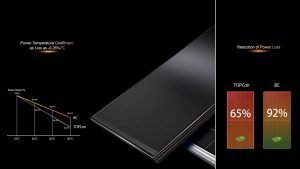
The difference can be significant. Back contact panels typically maintain 80-85% of their power output even when partly shaded. Traditional panels often drop to just 65-70%. For farms where crops, equipment, and weather create constant shading, this performance advantage can make a substantial difference in energy production.
✅ Real Results: A German agri-PV project using advanced back contact technology completed an 8.5 MW installation. The system allows farmers to use over 85% of their original farmland while generating substantial clean energy through innovative dual-use approaches.
Three types of back contact technology lead the market. ABC (All Back Contact) solar panels use copper instead of expensive silver, making them more accessible. IBC (Interdigitated Back Contact) panels have over 20 years of proven performance. HPBC (Hybrid Passivated Back Contact) panels achieve laboratory efficiencies approaching 27%, though commercial versions typically deliver 22-25% efficiency.
Bifacial Panels: Double-Sided Power Generation
Bifacial panels are revolutionizing agrivoltaics by capturing sunlight on both sides. The front side gets direct sunlight. The back side captures light reflected from the soil, crops, or snow. This dual-sided approach can increase energy output by 10-30%, depending on ground reflectivity and installation design.
These solar panels excel in agricultural settings. They can be mounted vertically between crop rows, allowing tractors and equipment to pass through easily. The vertical orientation creates moving shade throughout the day, which many crops actually prefer to static shade.
A California winery installed 43 vertical bifacial panels in their vineyard rows. Each panel produces 450W of power under optimal conditions. The entire system generates 19.35 kW while maintaining full grape production. In New Jersey, a project with 378 vertical bifacial solar panels lets cows graze comfortably underneath while generating clean electricity.
🔋 Back Contact Excellence
Superior shade tolerance makes these ideal for farms:
- Typically 80-85% power in partial shade
- No front grid lines for uniform light
- Commercial efficiency up to 25%
- Better temperature coefficients
- Extended warranties available
☀️ Bifacial Advantages
Power from both sides can mean more energy:
- 10-30% more electricity potential
- Vertical mounting options
- Suitable for row crops
- Good diffuse light performance
- Less sensitive to shading
🌿 Semi-Transparent Magic
Precise light control for sensitive crops:
- 40-70% light transmission options
- UV to red light conversion possible
- Uniform illumination patterns
- Flexible installation methods
- Ideal for greenhouse integration
🔄 Smart Tracking Systems
Intelligence that follows the sun:
- Up to 25% higher energy yields
- Agri-PV mode for crop priority
- 60-90° tilt capability
- Weather responsive features
- Automatic optimization

Semi-Transparent Panels: Precision Agriculture
Semi-transparent panels offer advanced light management capabilities. Using materials like Cadmium Telluride (CdTe) or CIGS (Copper Indium Gallium Selenide), these solar panels can be customized to let through exactly the right amount of light for specific crops, as explained in recent agrivoltaic research studies.
Research shows promising results for various crops. Soybeans can maintain up to 97% of their normal yield under 40% transparent panels while preserving grain quality. Strawberries have produced up to 87% of normal fresh weight under optimized red-tinted modules. French vineyards using semi-transparent panels report quality improvements along with water savings of 20-40%.
Some advanced panels use nanotechnology to convert harmful UV radiation into red spectrum light. Red light is typically more beneficial for photosynthesis than UV light. This means plants can potentially grow better under these specialized panels than in direct sunlight, though results depend heavily on crop type and local conditions.
💰 The Economics: Why Solar Farming Makes Financial Sense
Multiple Revenue Streams
Solar farming transforms your business model. Instead of depending on crop sales alone, you create multiple income sources. You can sell crops – often more due to improved growing conditions. You generate electricity for sale to the grid or use on your farm. You may receive government incentives and renewable energy credits. And you typically save money on irrigation, cooling, and energy costs.
The economics are compelling for many operations. Studies show agrivoltaic systems can achieve payback periods ranging from 4-8 years depending on system size, location, and available incentives. After payback, systems continue generating returns for 20+ years. Some well-optimized installations in ideal conditions report exceptional returns on investment.
⚠️ Important Consideration: While agrivoltaics offers significant benefits, initial investment requirements are substantial. Success depends on proper system design, appropriate crop selection, and effective management. Results vary by location, climate, and farming practices.
Real-World Economic Impact
Let’s look at documented results. Studies from various countries show positive economic outcomes for well-designed agrivoltaic installations. Projects have demonstrated competitive returns on investment when properly implemented. In optimal conditions, some farms report substantially higher revenue compared to traditional farming alone.
The land equivalent ratio tells an important story. Agrivoltaic systems typically achieve ratios of 1.3-1.8, meaning the same land can produce 30-80% more combined value when used for both farming and solar. A Tanzania project achieved a ratio of 1.86 – indicating 86% higher land productivity. However, these results require careful planning and aren’t guaranteed for all situations.

🌍 Global Success Stories and Market Growth
Europe Leading the Way
Europe hosts over 200 agrisolar projects across 10 countries, demonstrating various approaches to agrivoltaic implementation across Central Europe. France and Germany lead with supportive policies and ambitious installations. German potato yields increased by up to 12% under solar panels compared to open fields in specific trials. Celery showed even more promising gains in certain conditions.
Italy’s Agrivoltaico Open Labs initiative tests how these systems can integrate biodiversity protection with food and energy production. Greece, Spain, and Portugal are expanding installations to combat water scarcity while meeting renewable targets.
Asian Expansion
China, India, and Japan are scaling agrivoltaic systems to address land scarcity and energy needs. India’s government promotes dual-use solar farming to boost farmer incomes while working toward ambitious renewable electricity targets. Thailand is developing policies to unlock agrivoltaic potential across the region.
In Japan, where farmland is precious, agrivoltaics allows continued food production while generating clean energy. The technology shows particular promise for rice paddies and vegetable farms, though adoption varies by region.
African Innovation
A Kenya test plot produced cabbages that were up to 24% larger while using 47% less water for irrigation. In Tanzania, a 35kWp system delivered improved survival rates for bean crops – up to 60% higher in some conditions. Swiss chard and maize yields showed improvements. The system typically needed 10-15% less irrigation water.
American Progress
Oregon State University research suggests that converting a small percentage of American farmland to agrivoltaics could contribute significantly to renewable energy targets. Massachusetts farmers report better crop protection from extreme weather events. Alaska explores agrivoltaics for potentially extending growing seasons.
Survey data indicates that a majority of U.S. farmers express openness to solar integration when properly informed about the technology. The more farmers learn about agrivoltaics through educational resources and case studies, the more interested they become. Early adopters generally report positive outcomes, though experiences vary.
🚜 Choosing the Right System for Your Farm
| Farm Type | Recommended Technology | Ideal Applications | Key Benefits |
|---|---|---|---|
| High-Value Crops | Semi-transparent or tracking bifacial | Grapes, berries, vegetables, herbs | Precise light control, quality optimization |
| Field Crops | Elevated crystalline panels | Wheat, corn, soybeans, potatoes | Cost-effective, proven reliability |
| Greenhouses | Flexible thin-film options | Year-round vegetables, nurseries | Temperature control, integrated design |
| Livestock | High bifacial or tracking systems | Cattle, sheep, poultry operations | Animal welfare, dual land use |
Crop-Specific Considerations
Shade-loving crops often thrive under agrivoltaic systems. Berries can show yield increases of 10-20% under optimal shade conditions. Leafy greens like lettuce and spinach typically perform well. Herbs maintain quality while potentially using less water.
Shade-tolerant crops can maintain good production levels. Potatoes, wheat, and root vegetables often achieve 70-90% of normal yields, sometimes more with proper management. Pasture grasses for livestock frequently improve under partial shade. Many vegetables produce similar or better yields with appropriate system design.
Even traditionally sun-loving crops can work with the right approach. Tracking systems can adjust to give these crops maximum light during critical growth periods. Wider panel spacing allows more direct sunlight. Strategic seasonal adjustments help optimize both crop and energy production, though careful planning is essential.

❓ Addressing Common Concerns
Will Solar Panels Damage My Soil?
Modern agrivoltaic installations are designed to minimize soil impact. They typically use driven pile foundations that don’t require concrete. The partial shade can reduce soil erosion. Consistent moisture levels may benefit soil microorganisms. Many farmers report stable or improved soil quality after installation, though long-term studies are ongoing.
What About My Farm Equipment?
Systems are specifically designed with farming operations in mind. Elevated solar panels typically sit 2.5-5 meters high (8-16 feet). Tracking systems can tilt to 60-90 degrees for equipment access. Standard farm machinery fits underneath with adequate clearance. Harvest operations can continue with minimal adjustments.
How Do I Know What’s Right for Me?
Every farm is unique. Professional assessment considers your specific crops, climate, and soil conditions. Experts evaluate your equipment and farming practices. They design custom systems that aim to optimize both agricultural and energy production for your exact situation. This personalized approach is crucial for success.
What If Technology Changes?
Agrivoltaic systems use modular designs that allow for future updates. You can upgrade components without complete replacement. As technology improves and costs change, you can enhance your system. Your investment remains protected while allowing for improvements over time.
📈 The Future of Farming Is Happening Now
The transformation is accelerating globally. The agrivoltaics market shows strong growth potential, with projections indicating substantial expansion over the next decade. North America represents a significant market share. Asia-Pacific demonstrates rapid growth rates. Europe continues steady expansion with supportive regulatory frameworks.
Governments worldwide increasingly recognize agrivoltaics’ potential. Legislative measures in multiple countries promote these systems. Subsidies and incentives help make installations more accessible. Research funding accelerates technology development. Technical support programs assist farmers in implementation.
🔬 Technology Evolution: Next-generation technologies like organic photovoltaic (OPV) panels offer unprecedented flexibility for agricultural applications. These ultra-thin panels can potentially be integrated into agricultural nets and protective structures. Current international agrivoltaic guidelines and standards continue to evolve to support innovation while ensuring agricultural productivity.
Climate change continues to intensify globally. Food demand projections suggest significant increases by 2050. Water resources become increasingly precious. Energy needs continue growing. Agrivoltaics offers a practical approach to addressing these interconnected challenges, though it’s one of many tools needed for sustainable agriculture.

🚀 Your Path to Agricultural Transformation
Step 1: Initial Assessment
Start by evaluating your farm’s potential. Consider your land size and layout carefully. Assess current crops and future agricultural plans. Review sun exposure patterns throughout the year. Check soil conditions and drainage. Determine grid access for potential energy connection.
Step 2: Detailed Planning
Work with qualified experts to develop your plan. They’ll conduct comprehensive site analysis and feasibility studies. They’ll model potential energy production and crop impacts. They’ll calculate projected returns and payback periods. They’ll help identify available incentives and financing options suited to your situation.
Step 3: System Design
Get a custom design tailored to your specific needs. Choose appropriate panel technology for your crops and climate. Determine optimal heights and spacing for your operations. Plan careful integration with existing farming practices. Set realistic timelines and milestones for implementation.
Step 4: Implementation
Professional installation helps ensure success. System commissioning verifies expected performance. Training helps you operate effectively. Monitoring tracks both energy and agricultural metrics. Ongoing support helps optimize results over time. Consider joining agrivoltaic farmer networks and associations for shared learning and support.
🌟 Ready to Transform Your Farm?
Every day represents an opportunity. While others face climate challenges and rising costs alone, you could be harvesting both sunshine and agricultural success.
📧 Email Us for Your Free Consultation
Or Call: +1 737 702 0119
Take Action Today
The farms adapting today position themselves for tomorrow’s challenges. The technology continues improving. The economics become increasingly favorable in many regions. The environmental benefits align with global sustainability goals. Your decision to explore agrivoltaics could transform your operation’s future.
Don’t wait to explore your options. The combination of farming and solar represents a practical approach to modern agricultural challenges. With proper planning and implementation, agrivoltaics can enhance your farm’s resilience and productivity.
Start Your Agrivoltaic Projects
Engineering Tomorrow’s Agriculture Today – Advanced Solar Solutions for Modern Farming


 English
  Español
  Français
  Deutsch
  Русский
  العربية