Custom Solar Panels


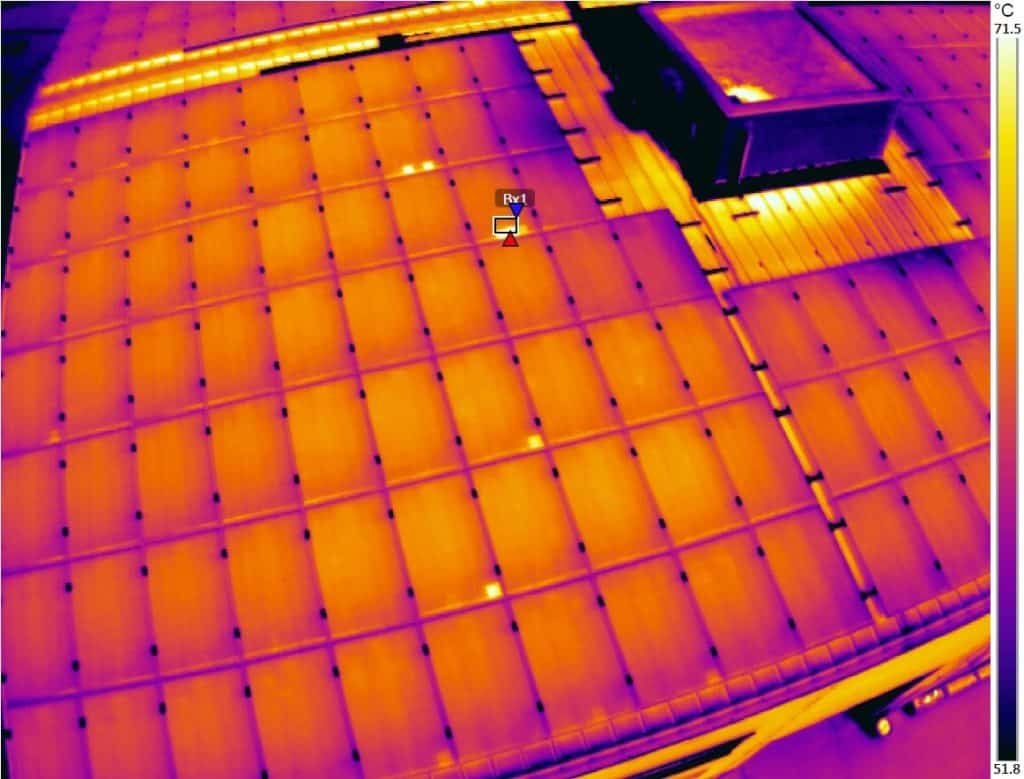
Planning solar panels for your property? Here’s what most people don’t realize: your panels will get significantly hotter than ambient temperature. We’re talking 45-65°C on summer days, even when it’s only 30°C outside.
That heat reduces your energy production substantially. But here’s the good news – choosing the right solar panels makes a dramatic difference.
🌍 Global Expertise: At Couleenergy, we export solar solutions worldwide, from the blazing deserts of the Middle East to the tropical heat of Southeast Asia. We’ve learned exactly which solar panel technologies thrive in brutal heat and which ones suffer efficiency losses.
This comprehensive guide shows you everything. You’ll discover why temperature coefficient matters more than efficiency ratings in hot climates. Plus, you’ll learn which specific technologies deliver maximum energy when the sun turns ruthless.
Ready to beat the heat? Let’s dive in.
Think of temperature coefficient as your panel’s “heat report card.”
Every solar panel receives a specification, like -0.26%/°C or -0.45%/°C. This number tells you exactly how much power your panel loses for every degree it heats up above 25°C (Standard Test Conditions: 1000 W/m², 25°C, AM 1.5).
⚠️ Critical Understanding: Lower absolute values are better. Always. A solar panel with -0.26%/°C loses less power in heat than one with -0.45%/°C. Way less.
Picture this scenario: It’s summer in a hot climate. Your roof hits 65°C.
| Panel Type | Temperature Coefficient | Temperature Rise (40°C) | Power Loss | Power Retained |
|---|---|---|---|---|
| Premium HJT Panel | -0.24%/°C | 65°C – 25°C = 40°C | 9.6% | 90.4% |
| HPBC Panel | -0.26%/°C | 65°C – 25°C = 40°C | 10.4% | 89.6% |
| TOPCon Panel | -0.30%/°C | 65°C – 25°C = 40°C | 12.0% | 88.0% |
| Standard PERC Panel | -0.40%/°C | 65°C – 25°C = 40°C | 16.0% | 84.0% |
| Budget Panel | -0.45%/°C | 65°C – 25°C = 40°C | 18.0% | 82.0% |
💡 Key Insight: That’s nearly double the heat loss with budget solar panels compared to premium technology. Over 25 years, this difference compounds to thousands of extra kilowatt-hours with the right choice.
Note: Actual performance varies by location, installation method, and specific environmental conditions.
Most people assume solar panels operate at ambient air temperature. This is fundamentally incorrect.
Your panels typically run 20-35°C above ambient temperature, depending on multiple factors. Here’s the complete explanation:
When solar panels overheat, their silicon semiconductor materials become less efficient at converting photons to electricity. Think of it like your smartphone getting sluggish when it overheats, same fundamental concept.
But unlike your phone’s temporary throttling, this efficiency reduction occurs every single day for 25+ years. That’s where smart solar panel selection pays off dramatically.
🎯 Bottom line: Choose solar panels that excel in heat, and you’ll harvest significantly more energy. Choose poorly, and you’ll watch potential savings evaporate into thin air.
Not all solar panels handle heat the same way. Some technologies thrive under thermal stress, others suffer substantial losses. Here’s the complete breakdown of what actually works:
What makes them superior: N-type panels use a fundamentally different silicon crystal structure and manufacturing process that results in better heat tolerance, higher efficiency, and enhanced long-term durability.
Industry significance: N-type technologies consistently outperform traditional P-type panels when temperatures soar, making them essential for hot climate applications.
| Specification | Performance Details |
|---|---|
| Temperature Coefficient | -0.20% to -0.30%/°C (industry-leading) |
| Heat Tolerance | Exceptional – maintains performance under extreme conditions |
| Efficiency Range | Typically 24-26% (some reaching 27%+) |
| Best Applications | Extreme climate installations requiring maximum heat tolerance |
| Market Position | Premium technology, expected 15% market share by 2030 |
Technical advantage: HJT technology combines crystalline silicon wafers with thin amorphous silicon layers, creating exceptional surface passivation and thermal stability. The amorphous silicon acts as a thermal buffer, significantly reducing temperature sensitivity.
🔬 Real performance advantage: In desert climates where panels regularly reach 70°C, HJT PV panels lose only 10.8% of their power to heat, while budget panels lose over 20%.
HPBC (Hybrid Passivated Back Contact) has emerged as a game-changing technology, combining the thermal advantages of heterojunction with the electrical benefits of back contact design.
| HPBC Specifications | Performance Details |
|---|---|
| Temperature Coefficient | -0.26%/°C (excellent heat tolerance) |
| Efficiency | Up to 24.8% with proven field advantages |
| Manufacturing | More scalable than HJT, partially compatible with TOPCon equipment |
| Market Position | Optimal balance of performance and manufacturing practicality |
🔬 Real-world validation: Field testing conducted by LONGi at their Qinghai demonstration facility showed HPBC modules delivered 3.16% higher power generation than TOPCon modules under actual operating conditions, with superior weak-light response and earlier morning startup times.
Key HPBC technical advantages:
| TOPCon Specifications | Details |
|---|---|
| Temperature Coefficient | -0.26% to -0.30%/°C |
| Heat Tolerance | Very good performance under thermal stress |
| Market Position | Projected to capture 60% market share by 2033 |
| Manufacturing Advantage | Compatible with existing PERC production infrastructure |
| Best Applications | Commercial and residential seeking reliable heat tolerance |
Why TOPCon works well: This technology adds an ultra-thin silicon dioxide layer to PERC cells, creating excellent passivation while maintaining manufacturing scalability. Great heat performance without breaking the bank.
The catch: Premium pricing. But if you need maximum power from limited space, nothing beats back contact technology.
| PERC Specifications | Performance Reality |
|---|---|
| Temperature Coefficient | -0.34% to -0.50%/°C |
| Heat Tolerance | Adequate for moderate climates |
| Market Position | Declining to ~10% by 2033 |
| Advantage | Proven track record, widespread installer familiarity |
| Best Applications | Temperate climates with moderate thermal stress |
⚡ Truth about PERC: These PV panels work fine in many climates. Just don’t expect magic in extreme heat conditions where every degree matters.

Where you live fundamentally changes your technology selection strategy. Here’s your complete climate-specific game plan:
Thermal Challenge: PV panels regularly hit 70°C+ during peak summer conditions
Specific Examples: Saudi Arabia, UAE, Phoenix Arizona, Alice Springs Australia, Atacama Desert
Key Requirement: Superior temperature coefficients become absolutely critical
Recommended Technologies:
Performance Impact: Advanced technologies typically deliver 5-8% higher annual energy yield compared to conventional panels in extreme heat.
💡 Pro tip: Don’t compromise here. The heat is relentless, and mediocre panels will underperform for decades. The premium investment pays back through superior energy production.
Thermal Challenge: High heat plus humidity that reduces natural heat dissipation
Specific Examples: Singapore, Thailand, Philippines, Caribbean islands, Northern Australia
Additional Factors: Corrosion resistance and moisture management critical
Recommended Technologies:
🌊 Key insight: Humidity makes heat worse by reducing natural convective cooling. Your solar panels need every thermal advantage available.
Thermal Challenge: Serious heat with excellent solar irradiance
Specific Examples: Spain, Greece, Morocco, Chile, parts of Argentina
Optimization Focus: Balance thermal performance with high irradiance capture
Recommended Technologies:
Design focus: You get lots of sun, so optimize for both heat tolerance and energy capture efficiency.
Thermal Challenge: Seasonal temperature variation with manageable peak conditions
Specific Examples: Northern Europe, Canada, northern US states, New Zealand
Selection Strategy: Temperature coefficient becomes secondary to other factors
Recommended Technologies:
How you install PV panels matters as much as which panels you choose. Seriously. Installation approach can make a 15°C difference in operating temperature.
| Installation Type | Air Gap | Temperature Rise Above Ambient | Thermal Performance | Best Applications |
|---|---|---|---|---|
| Flush-Mounted ❌ | < 5cm | 25-35°C above ambient | Poorest – hottest operation | Aesthetic priority with premium panels only |
| Rack-Mounted ✅ | 10-15cm | 20-25°C above ambient | Good – natural convection cooling | Most residential and commercial applications |
| Ground-Mounted 🏆 | Unrestricted airflow | 15-20°C above ambient | Optimal – maximum cooling | Utility-scale and rural installations |
| Elevated Ground Mount 🌟 | Full perimeter airflow | 10-15°C above ambient | Excellent – premium cooling | High-performance applications |
| Roof Material | Heat Absorption | Panel Temperature Impact | Recommended Panel Coefficient |
|---|---|---|---|
| Metal Roofing (Dark) | High | +5-8°C additional heat | Better than -0.30%/°C essential |
| Asphalt Shingles (Dark) | High | +3-6°C additional heat | Better than -0.32%/°C recommended |
| Tile Roofing | Moderate | Neutral to slightly cool | Standard coefficients adequate |
| Light/Reflective Roofing | Low | -2-4°C cooler operation | Relaxed coefficient requirements |
Critical airflow design principles:

The solar industry moves at breakneck speed. Here’s what’s happening right now that affects your buying decision:
What makes HPBC revolutionary: This hybrid approach combines heterojunction passivation benefits with back contact electrical advantages, achieving outstanding heat tolerance (-0.26%/°C) with practical manufacturing scalability.
Validated performance advantages:
Manufacturing and market advantages:
| Material Type | Thermal Stability | Performance Benefits | Application Focus |
|---|---|---|---|
| Traditional EVA | ~330°C degradation | Standard protection | Budget applications |
| POE Encapsulants | 400°C+ stability | Superior thermal stability, acid-free | Hot climate installations |
| Advanced TPO | 450°C+ stability | Enhanced adhesion, flexible | Extreme environment applications |

Passive cooling innovations:
Advanced thermal management:
Here’s the definitive ranking of solar technologies by thermal performance and market position:
| Rank | Technology | Temperature Coefficient | Key Advantages | Market Position |
|---|---|---|---|---|
| 🥇 1 | HJT Technology | -0.20% to -0.30%/°C | Industry leader, ultimate thermal performance | Premium tier, 15% market share by 2030 |
| 🥈 2 | HPBC Technology | -0.26%/°C | Balanced excellence, field-proven 3.16% advantage | Emerging leader, optimal performance-cost ratio |
| 🥉 3 | Premium TOPCon | -0.26% to -0.30%/°C | Solid performance, manufacturing scalability | Market dominant, 60% share by 2033 |
| 4 | Back Contact (IBC) | -0.26% to -0.35%/°C | Maximum efficiency for limited space | Niche premium applications |
| 5 | Quality PERC | -0.34% to -0.50%/°C | Proven technology, widespread availability | Declining from 75% to 10% by 2033 |
🎯 2025 Key Insight: HPBC technology has emerged as the optimal balance point, delivering near-HJT thermal performance while maintaining better manufacturing economics and proven field advantages over conventional alternatives.
Let’s examine specific performance data from actual field testing and climate studies:
In extreme heat conditions where panels reach 65-70°C, here’s how different technologies retain their rated power:
| Technology | Temperature Coefficient | Power Retention at 70°C | Annual Performance Advantage |
|---|---|---|---|
| HJT Panels | -0.24%/°C | 89.2% power retained | Baseline (highest performance) |
| HPBC Panels | -0.26%/°C | 88.3% power retained | Only 1% less than HJT |
| TOPCon Panels | -0.30%/°C | 86.5% power retained | 3% less than HJT |
| PERC Panels | -0.40%/°C | 82.0% power retained | 8% less than HJT |
| Budget Panels | -0.45%/°C | 79.8% power retained | 12% less than HJT |
Comprehensive field demonstration at LONGi’s Qinghai facility confirmed:
Hot humid climate performance benefits (relative to PERC baseline):
Hot dry climate performance advantages:
Superior temperature coefficient technologies provide cumulative advantages:
| Benefit Category | Premium Technologies | Standard Technologies |
|---|---|---|
| Warranty Coverage | 25-30 years standard | 20-25 years typical |
| Degradation Rates | ~0.60% first year, 0.25-0.4% annual | ~2.0% first year, 0.45%+ annual |
| Thermal Stress Resistance | Enhanced materials, fewer expansion issues | Standard materials, typical expansion stress |
| Performance Predictability | Consistent output over system lifetime | More variable performance over time |
Performance results vary by specific environmental conditions, installation quality, and maintenance practices.

Every installation has unique requirements. Here’s your systematic approach to making the optimal choice:
Strategy: Maximize power density and efficiency
Technology priority: High-efficiency panels with excellent temperature coefficients
Recommended: HPBC or IBC technology for maximum power per square meter
Economic justification: Premium cost offset by space optimization and energy density
Critical priority: Temperature coefficient performance outweighs almost all other factors
Required standard: Better than -0.30%/°C coefficient essential
Technology choices: HJT for ultimate performance, HPBC for balanced excellence
Long-term impact: Substantial energy production differences over system lifetime
Economic rationale: Small efficiency improvements multiply across hundreds of panels
Technology recommendation: HPBC modules with documented field advantages
Performance benefits: 3.16% generation advantage compounds significantly at scale
Investment justification: Premium technology costs offset by enhanced energy yield
Leading choice: HPBC technology offering superior field performance with manufacturing scalability
Performance advantage: Documented 3.16% generation benefits multiply across MW-scale installations
Economic benefits: Improved energy yield justifies premium technology investment
Reliability focus: Enhanced PID-p resistance and thermal stability
Critical evaluation factors:
2025 Updated Selection Matrix:
2025 Technology Sweet Spot: HPBC technology offers optimal balance, delivering near-HJT thermal performance while maintaining better manufacturing economics and documented field advantages over conventional alternatives.
🌡️ Climate Reality Check: Extreme heat events are becoming more frequent globally according to meteorological data. Investing in superior temperature coefficient panels now provides protection against future thermal challenges and changing climate patterns.
⚡ Expert insight matters: Solar technology evolves rapidly. Working with suppliers who understand global climate challenges and maintain current knowledge of thermal-resistant technologies ensures optimal selection for your specific requirements.
Professional installation practices significantly impact thermal management effectiveness. Small details make substantial differences in real-world performance:
| Environmental Factor | Impact on Panel Temperature | Optimization Strategy |
|---|---|---|
| Roof Material | Light colors reduce, dark increases thermal load | Factor into coefficient requirements |
| Wind Patterns | Consistent breeze can reduce temperatures 5-10°C | Orient arrays to leverage prevailing winds |
| Shading Objects | Intermittent shade can cause hotspot formation | Design for uniform illumination or use optimizers |
| Building Heat Sources | HVAC units, exhaust vents add localized heat | Maintain separation from heat-generating equipment |
We specialize in temperature-optimized solar solutions for global markets, offering the most advanced heat-resistant technologies available:
| Application Type | Premium Choice | Balanced Option | Economic Option | Special Considerations |
|---|---|---|---|---|
| Residential Projects | HPBC Technology | Premium TOPCon | Quality PERC | Space optimization vs. thermal performance |
| Commercial Installations | HPBC Modules | Advanced TOPCon | Proven PERC | Scale advantages for premium technology |
| Utility-Scale Projects | HJT Technology | HPBC Technology | Premium TOPCon | LCOE optimization over 25+ years |
| Extreme Climate | HJT Premium | HPBC Advanced | TOPCon Premium | Temperature coefficient critical |
You now possess comprehensive understanding of solar panel temperature coefficients and their critical impact on system performance. You understand which technologies excel in thermal management, how installation methods affect operating temperatures, and which specific approaches work best for different climate conditions.
Couleenergy specializes in temperature-optimized solar solutions for global markets. We offer cutting-edge HPBC technology alongside premium HJT and proven TOPCon panels. Our technical expertise helps you select the perfect technology match for your specific climate and performance requirements, ensuring consistent energy production regardless of thermal conditions.
Technical analysis includes:
Get expert consultation on temperature-optimized solar solutions perfectly matched to your climate and performance requirements.
Disclaimers: Performance varies by location, installation conditions, and environmental factors. Projections based on current industry data and manufacturer specifications. Actual results may differ from estimates. Consult with qualified solar professionals for project-specific guidance.
🔄 Technology Evolution Disclaimer: Solar technology evolves rapidly. While every effort has been made to ensure accuracy based on current data, readers are encouraged to verify specific technical claims with original sources and consult with qualified solar professionals for project-specific guidance.
This comprehensive guide draws from authoritative industry sources, technical research, and real-world performance data. Explore these references for deeper technical understanding and verification of the information presented.


 English
  Español
  Français
  Deutsch
  Русский
  العربية