

Latest Update (June 2025): LONGi achieved a groundbreaking 27.81% lab efficiency for advanced HIBC cells, while Aiko Solar leads commercial residential panels at 24.3% efficiency with ABC technology.
If you’re looking into solar panels, you might have heard about ABC and HPBC technologies. These are two exciting types of solar cells that are changing how we think about solar power. Both use “back contact” design that’s expected to dominate the solar industry by 2030. But what exactly are they, and how are they different? Let’s break it down in simple terms.
What Are Back Contact Solar Cells?
Before we compare ABC and HPBC, let’s understand what makes them special. Both technologies use something called “back contact” design, which industry experts now group under the term “xBC” (with different letters before BC for different variants).
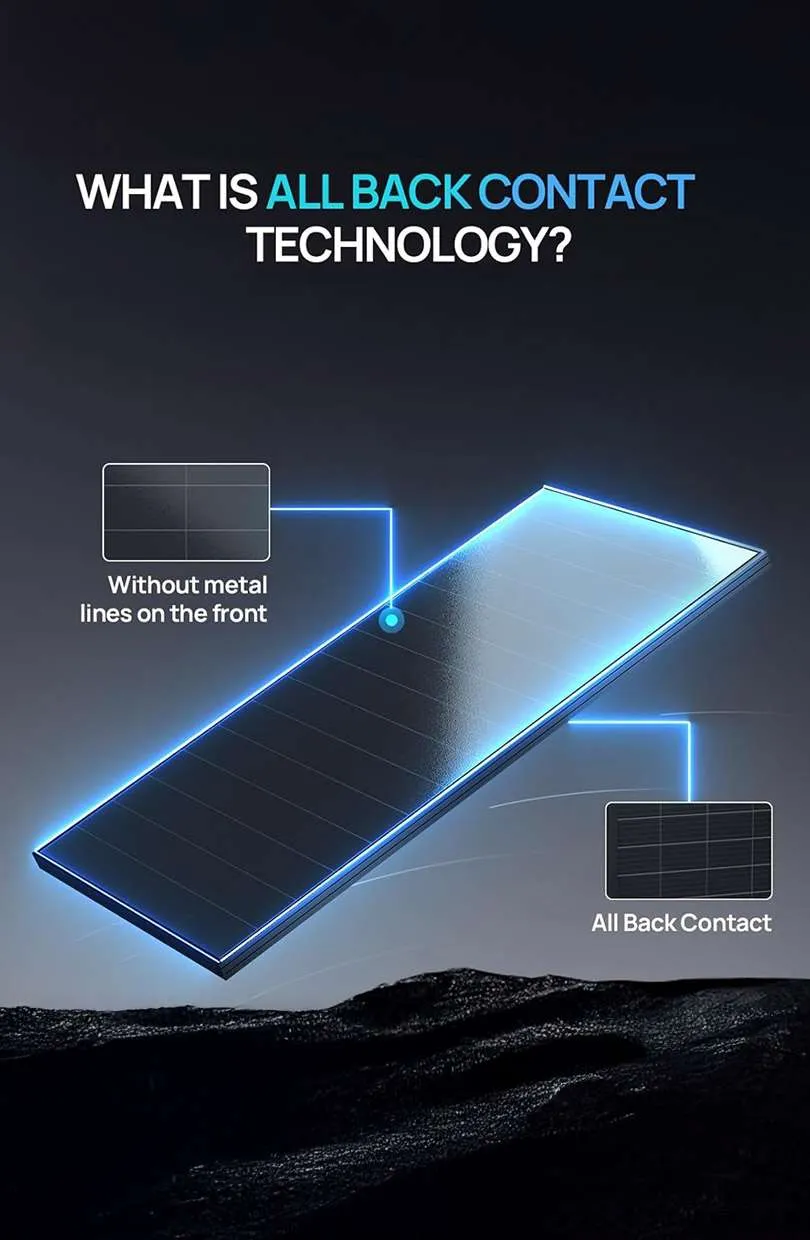
Traditional solar panels have metal lines on the front that you can see. These lines block some sunlight from reaching the solar cell. ABC and HPBC technologies move all these electrical connections to the back of the panel. This means:
Understanding Efficiency Numbers:
• Cell efficiency = Individual solar cell performance (higher numbers)
• Module efficiency = Complete solar panel performance (lower numbers)
Always compare module efficiency when shopping, as that’s what you actually buy and install.
- More sunlight can reach the solar cell (about 7% more electricity)
- The panels look cleaner and more attractive
- Higher overall efficiency compared to regular panels
- Better performance in various lighting conditions
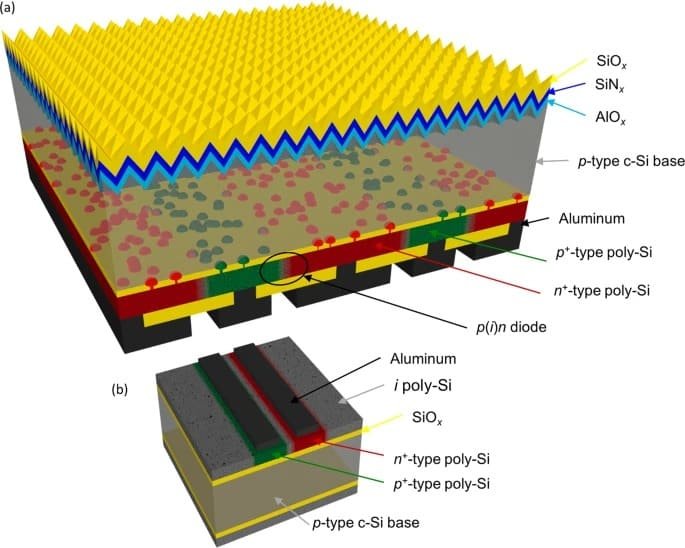
ABC Technology: The Proven Back Contact Leader
What Does ABC Stand For?
ABC means “All Back Contact.” Some people also call it IBC (Interdigitated Back Contact). It’s the more established technology with over 20 years of proven performance.
How ABC Works
ABC solar cells have a special pattern on the back that looks like interlocking fingers. All the positive and negative electrical contacts are arranged in this pattern on the rear side only.
ABC’s Current Performance (2025)
- Commercial modules: Up to 24.3% module efficiency (Aiko Solar leads residential market)
- Module record: 24.9% module efficiency achieved by Maxeon in 2024
- Proven reliability: Over 20 years of real-world performance data
- Premium applications: Excellent for high-end residential and commercial projects
- Shading performance: 70% lower temperature rise in partial shade compared to other technologies
ABC Technology Leaders
Aiko Solar currently leads residential ABC panels with their Neostar series achieving 24.3% efficiency. Maxeon Solar continues advancing IBC technology with proven long-term reliability and comprehensive 40-year warranties.
The Challenges
ABC technology requires specialized manufacturing equipment, which makes it more expensive to produce. However, this may change significantly after 2028 when key patents expire.
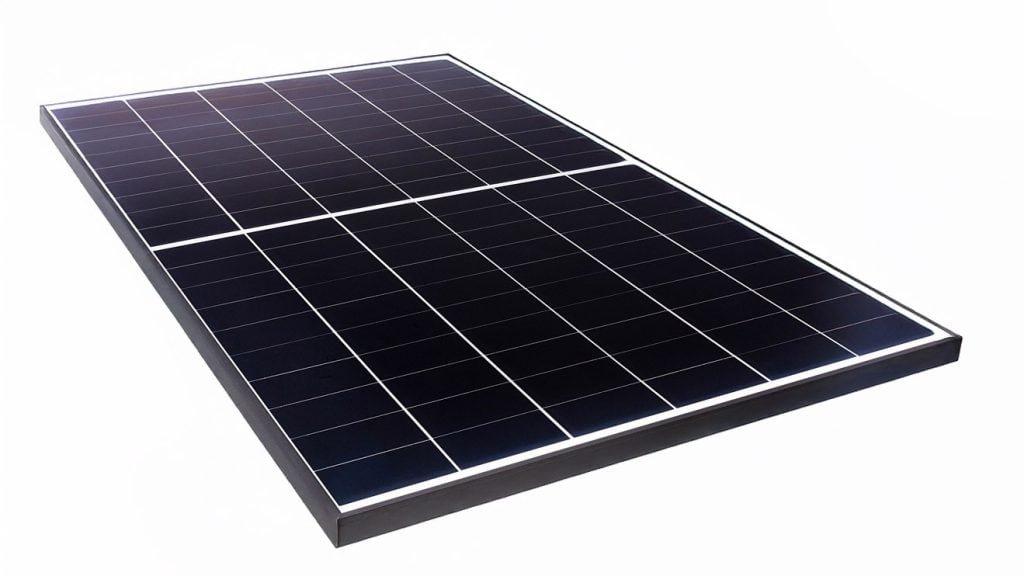
HPBC Technology: The Efficiency Record Holder
What Does HPBC Stand For?
HPBC stands for “Hybrid Passivated Back Contact.” It’s LONGi’s innovative technology that combines different proven solar technologies into one hybrid design.
How HPBC Works
HPBC takes established technologies like PERC and TOPCon and combines them with back contact design. Think of it as mixing the best parts of different proven technologies to create something even better.
HPBC’s Current Performance (2025)
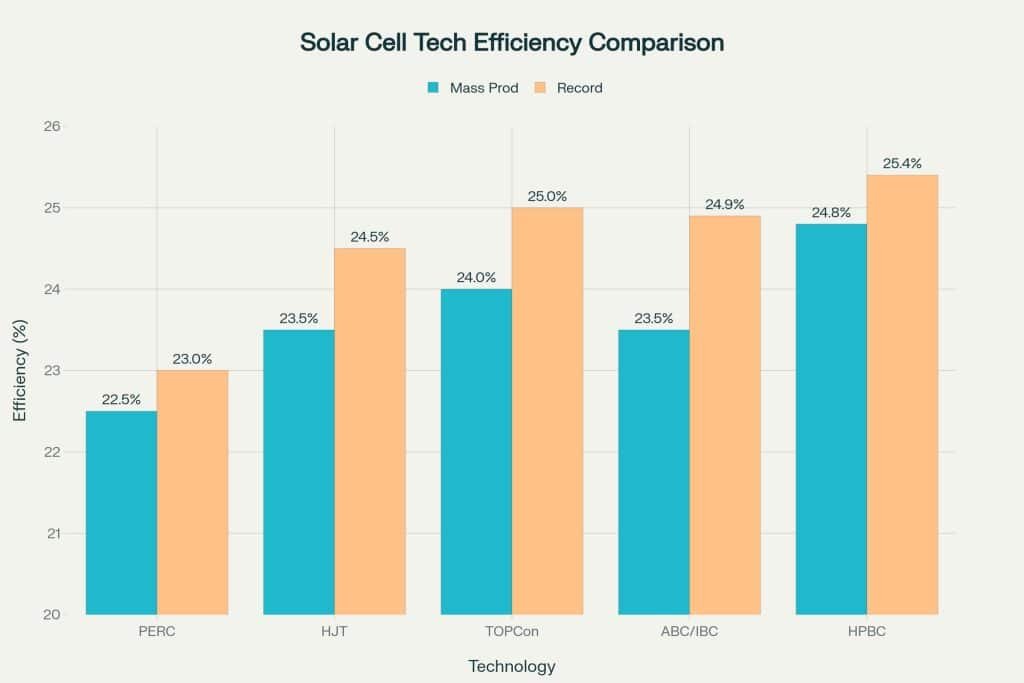
- Module record: 25.4% module efficiency (world record as of 2024)
- Cell lab record: 27.81% cell efficiency achieved with advanced HIBC variant in 2025
- Mass production modules: 24-25% module efficiency in commercial production
- Cost advantage: Uses existing manufacturing equipment with modifications
- Hot weather performance: Superior temperature coefficients for hot climates
HPBC Development Timeline
LONGi launched HPBC 1.0 commercially in 2022. The upgraded HPBC 2.0 entered the market in 2025, showing rapid technological advancement. The company has broken efficiency records 18 times in the past three years.
ABC vs HPBC: The Key Differences (2025 Update)
Efficiency Comparison
Cell Performance (Lab Records): HPBC currently leads with 27.81% for advanced HIBC cells, while ABC cells achieve similar high performance in lab settings.
Module Performance (What You Actually Buy): HPBC holds the module world record at 25.4%, while ABC achieves 24.9% (Maxeon) and 24.3% (Aiko commercial panels).
Important note: Cell efficiency is always higher than module efficiency due to additional losses from framing, glass, and interconnections. Always compare module-to-module when shopping for solar panels.
Cost and Manufacturing
HPBC has the current advantage. It can use existing PERC production lines with modifications, reducing capital investment by up to 40%. ABC requires specialized equipment, resulting in higher manufacturing costs.
Important note: This cost difference may change dramatically in 2028 when key BC technology patents expire, potentially making both technologies more affordable.
Track Record and Reliability
ABC has the proven advantage. With over 20 years of real-world use, ABC has extensive field performance data. Companies like Maxeon offer 40-year warranties. HPBC launched commercially in 2022, so long-term performance data is still developing.
Performance in Different Conditions
Both perform excellently, but they have different strengths:
- ABC: Exceptional in partial shade (70% lower temperature rise than competitors)
- HPBC: Superior performance in very hot weather due to better temperature coefficients
- Both: Excellent aesthetic appeal with no visible front grid lines
Market Leadership and Current Trends (2025)
Who’s Leading Where
- Residential market: Aiko Solar leads with 24.3% ABC panels
- Lab records: LONGi dominates with multiple HPBC efficiency records
- Reliability focus: Maxeon continues leading premium ABC applications
Industry Predictions
Experts predict that back contact technology could reach 1 terawatt (1,000 GW) of manufacturing capacity by 2030. The year 2028 is expected to be crucial for industry growth as most critical patents expire.
Which Technology Should You Choose?
Choose ABC If:
- You want proven, reliable technology with long-term performance data
- You’re installing panels on a premium home or building
- Long-term warranties (up to 40 years) are important
- Your roof has shading issues
- You prioritize established track record over cutting-edge efficiency
Choose HPBC If:
- You want the latest technology with record-breaking efficiency
- Cost-effectiveness is important
- You live in a very hot climate
- You want maximum power output per panel
- You’re comfortable with newer technology that’s rapidly improving
What Does the Future Hold?
Both technologies are advancing rapidly. The solar industry expects dramatic changes around 2028 when key patents expire, potentially reducing costs for both technologies significantly.
ABC technology continues refining its proven designs with companies like Aiko pushing efficiency boundaries and Maxeon focusing on reliability innovations.
HPBC technology shows the fastest development pace, with LONGi advancing from HPBC 1.0 to 2.0 in just three years and achieving multiple world records.
Industry analysts predict that back contact technologies will become mainstream by 2030, potentially replacing current TOPCon technology as the industry standard.
The Bottom Line
ABC and HPBC represent the cutting edge of solar technology, both offering significant advantages over traditional panels. As of 2025:
- HPBC leads in lab efficiency (27.81%) and holds the module world record (25.4%)
- ABC leads in commercial residential efficiency (24.3%) with proven long-term reliability
- Both eliminate front shading and provide superior aesthetics
- Cost advantages vary but may equalize after 2028 patent expirations
Your choice depends on whether you prioritize cutting-edge efficiency (HPBC) or proven reliability (ABC). Either way, you’ll get some of the most advanced solar technology available.
Expert Tip: The solar industry is evolving rapidly. Efficiency records are broken frequently, and manufacturing costs are expected to drop significantly by 2028. Consult with qualified manufacturers/installers about the latest efficiency ratings, warranty terms, and cost projections for your specific location and needs.
Remember to work with a qualified solar manufacturer/installer who can help you choose the best technology for your specific situation, climate, and budget.
Sources & Further Reading
Official Company Announcements
- LONGi: 25.4% Module Efficiency World Record (HPBC 2.0)
- Maxeon: IBC Solar Panel Innovation & Hotspot Risk Elimination
- LONGi: Dual World Records for HIBC Technology
Industry Analysis & Independent Verification
- pv magazine: LONGi World Record Verification (October 2024)
- pv magazine: Solar Cell Efficiency Tables (Version 66, May 2025)
- Clean Energy Reviews: Most Efficient Solar Panels 2025
- TaiyangNews: Top Solar Modules Rankings (January 2025)
Technical Analysis & Market Trends
- Solar Power World: LONGi 27.81% Cell Efficiency Achievement
- pv magazine Australia: Back Contact Technology Predictions to 2030
- Couleenergy: Introduction to HPBC Technology
- Moregosolar: Technology Comparison & Manufacturing Costs
Research & Testing Verification
- Wiley: Solar Cell Efficiency Tables (Academic Publication)
- Technical Deep-Dive: BC Cell Structure Comparison
Verification Note: All efficiency records cited have been independently verified through recognized testing laboratories including Fraunhofer ISE (Germany), NREL (USA), and ISFH (Institute for Solar Energy Research Hamelin). Information is current as of June 2025 and reflects the rapidly evolving solar technology landscape.
Disclaimer: Solar technology advances rapidly. Always consult current manufacturer specifications and certified installers for the most up-to-date information when making purchasing decisions.
 English
  Español
  Français
  Deutsch
  Русский
  العربية
3 Comments
[…] Couleenergy — HPBC or IBC: comparing back-contact technologies […]
[…] The wider engineering picture — layer functions, moisture paths, mechanical loading — is covered in our back-contact technology comparison. […]
[…] One thing worth knowing: HPBC is one manufacturer’s name for this cell architecture. Other companies sell comparable back-contact designs under different names, such as ABC (All Back Contact) or IBC (Interdigitated Back Contact). The shared idea across all of them — no metal contacts on the front of the cell — is what actually drives the efficiency and shading benefits, not the trademark itself. If you want the full side-by-side, we cover it in our HPBC vs IBC technology comparison. […]