

Transform your solar setup with cutting-edge HPBC and ETFE technology that delivers amazing efficiency, tough durability, and incredible flexibility.
🚀 Quick Take: Why This Technology Matters
The Problem: Regular flexible solar panels last only 3-7 years. They have low efficiency at 15-18%. Rigid panels last longer but can’t work on boats, RVs, or curved surfaces.
The Solution: HPBC + ETFE panels deliver 20-22% efficiency in a flexible format. They last 10-15 years. Advanced ETFE coating and HPBC cell design provide the best durability available in flexible panels.
Bottom Line: Excellent efficiency for flexible panels. They last 2-3 times longer than traditional flexible panels. They work where rigid panels simply can’t.
⚠️ Important Note: Flexible panels trade longevity for flexibility. Even the best flexible panels (10-15 years) don’t match rigid panel lifespans (25-30 years). But HPBC + ETFE delivers the longest life available in flexible format.
📊 Performance Snapshot: What You Get
| Feature | HPBC + ETFE Flexible | Traditional Flexible | Traditional Rigid |
|---|---|---|---|
| Cell Efficiency | 25.3% | 20-23% | 20-23% |
| Module Efficiency | 20-22% | 15-18% | 19-21% |
| Expected Lifespan | 10-15 years | 3-7 years | 25-30 years |
| Weight | 4-5 lbs/100W | 4-6 lbs/100W | 15-22 lbs/100W |
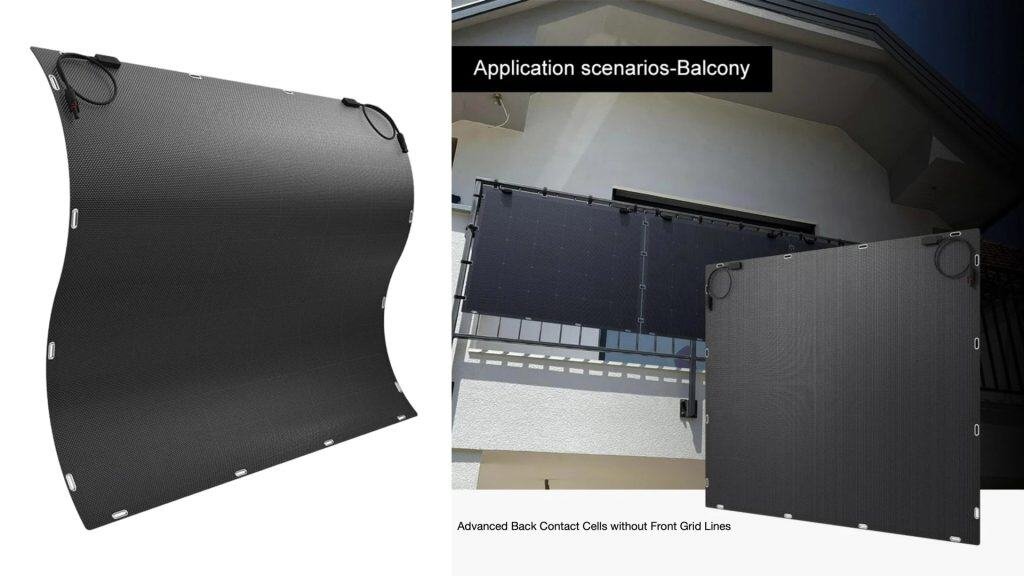
| Flexibility | Bends up to 240° | Bends 15-30° | Rigid only |
Why Everyone’s Talking About HPBC + ETFE Solar Technology
Regular flexible solar panels have problems. They don’t last long. They have poor efficiency. But there’s a revolutionary solution changing everything.
HPBC solar panels with ETFE coating are a breakthrough in flexible solar technology. They work differently from old-style panels. They perform much better in challenging applications where flexibility and durability matter most.
💡 Key Innovation: By moving all electrical contacts to the back of the cell and using advanced ETFE coating, these panels achieve 20-22% module efficiency in a flexible format. This far exceeds traditional flexible panels.
At Couleenergy, we’ve seen these panels transform installations everywhere. From boats and yachts to building rooftops. Here’s why this technology is so exciting.
⭐ What Makes This Technology Amazing:
- 20-22% efficiency – excellent for flexible panels
- 10-15 year lifespan with quality warranty protection
- Up to 70% lighter than heavy glass panels
- Bends up to 240 degrees for curved surfaces
- 95% light gets through the special ETFE coating
🔬 How HPBC Technology Actually Works
📈 Efficiency Note: When we discuss HPBC efficiency, it’s important to understand the difference. Cell efficiency is above 25.3%. Module efficiency is 20-22% for flexible ETFE panels. All our performance comparisons use module efficiency for fair comparison.
What Makes HPBC Different?
HPBC stands for Hybrid Passivated Back Contact. That’s a fancy name for a simple idea. All the metal wires that collect electricity are moved to the back of the panel.
Regular solar panels have metal lines on the front. These lines block sunlight. It’s like putting fence posts in front of a window. HPBC panels have a completely clear front surface. All the electrical connections are hidden on the back.
✅ Here’s what HPBC gives you:
- Front-Contact-Free Design
- Superior Low-Light Performance
- Improved Thermal Stability
- Excellent Shade Tolerance
- Advanced Hotspot Resistance
- Durable Back-Contact Structure
- Ideal for BIPV & Premium Rooftops
🔄 Understanding Cell-to-Module Efficiency
Why Module Efficiency Differs from Cell Efficiency:
When individual solar cells (25.3% efficiency) are put together into flexible modules, some efficiency is lost. This happens due to:
- Cell spacing gaps – Small spaces between cells
- Flexible substrate materials – Different from rigid glass backing
- Electrical connections – Wires between cells
- ETFE coating – Even with 95% transmission, some optical losses occur
- Flexible mounting – Different light properties than glass
The Result: HPBC + ETFE flexible modules achieve 20-22% efficiency. This is still excellent for flexible panels. It’s much better than traditional flexible panels (15-18%).
💡 Quick Takeaway: HPBC cells achieve 25.3% efficiency. But flexible modules achieve 20-22% due to assembly losses. This is still exceptional for flexible applications.
🛡️ Why ETFE Coating Is So Much Better
ETFE is a special plastic coating. It’s much better than the PET plastic used on cheap solar panels. And it’s much lighter than glass.
🏆 ETFE Advantages:
- ✅ 95% of sunlight gets through vs. 90-93% for PET plastic
- ✅ Self-cleaning surface that stays cleaner longer
- ✅ Handles extreme weather from -40°F to 300°F
- ✅ Resists salt water and chemicals perfectly
💪 Flexibility Benefits:
- ✅ Bends without mircocracks
- ✅ Super lightweight for easy installation
- ✅ Tough against impacts better than glass
- ✅ Looks sleek and modern with no visible wires
⚡ Performance That Actually Matters
Efficiency Numbers You Can Trust
Lab tests are nice. But real-world performance pays your bills. Here’s how HPBC + ETFE solar panels perform when it actually matters:
Head-to-Head Module Efficiency Comparison
| Panel Type | Module Efficiency | Cell Efficiency | Notes |
|---|---|---|---|
| HPBC + ETFE Flexible | 20-22% | 25.3% | Best flexible performance |
| HPBC Rigid Module | 24-24.8% | 25.3% | Best rigid performance |
| Traditional Flexible | 15-18% | 20-23% | Standard flexible |
| Traditional Rigid | 19-21% | 20-23% | Standard rigid |
💡 Why the Difference: Flexible ETFE modules have higher losses due to flexible materials and different assembly methods. However, 20-22% efficiency in a flexible, lightweight format is still exceptional.
🎯 Application-Specific Performance
| Panel Type | Module Efficiency | Best Applications |
|---|---|---|
| HPBC + ETFE Flexible | 20-22% | Boats, RVs, curved surfaces |
| HPBC Rigid | 24-24.8% | Rooftops, ground mount |
| Traditional Flexible | 15-18% | Basic portable needs |
| Traditional Rigid | 19-23% | Standard installations |
💰 Key Insight: That 2-4% efficiency advantage over traditional flexible solar panels means much more power in space-limited mobile applications. Every square foot counts.
🧪 Real-World Performance That’s Been Tested
We don’t just make claims. These panels have been tested in tough conditions around the world. Here’s what independent testing shows:
🌡️ Hot Weather Performance:
When it’s 150°F on your roof, HPBC panels keep 93% of their power. Traditional PERC panels drop to just 87%. That’s a significant difference in hot climates like Arizona or Texas.
☁️ Low Light Hero:
These solar panels keep working when others quit. Even on cloudy days or early mornings, you’ll get power when other panel types produce nothing.
🌳 Shade Tolerance Game-Changer:
This is impressive for any solar panel type. When something blocks part of your panel (like a tree branch), you lose up to 70% less power than with regular PV panels. The smart design routes electricity around the blocked area.
🛡️ Understanding Flexible Panel Durability
Solar panels need to work for many years. The HPBC + ETFE combination delivers the best durability available in a flexible format. But it’s important to understand realistic expectations.
Realistic Lifespan Expectations
| Panel Type | Typical Lifespan | Power After 10 Years | Notes |
|---|---|---|---|
| HPBC + ETFE Flexible | 10-15 years | 85-90% | Best available for flexible |
| Traditional Flexible (PET) | 3-5 years | 60-70% | Common budget option |
| Traditional Flexible (ETFE) | 5-10 years | 75-80% | Standard flexible |
| Rigid Glass Panels | 25-30 years | 85-90% | Longest lasting |
⚠️ Why Flexible Panels Have Shorter Lifespans: Flexible solar panels use polymer materials instead of glass. Even advanced polymers like ETFE break down faster than glass under UV exposure and heat cycling. However, HPBC + ETFE represents the best durability available in flexible format.
🔧 How ETFE Thickness Affects Durability
ETFE Film Thickness Options:
- 25-50μm (Ultra-thin): Maximum flexibility, but shorter lifespan
- 100-150μm (Medium): Good flexibility, better durability
- 200-250μm (Thick): Limited flexibility, maximum durability
The Trade-off:
Thicker ETFE lasts longer but bends less. Thinner ETFE is more flexible but breaks down faster. HPBC + ETFE panels typically use optimized thickness (50-150μm) to balance flexibility and durability.
What Protects HPBC + ETFE Solar Panels
Advanced Construction:
- Back-contact design removes 97% of front-side stress points that cause failures
- ETFE coating provides superior UV resistance compared to PET materials
- Improved heat management reduces heat buildup that speeds up breakdown
- Quality cell selection using 25.3% efficiency HPBC cells built for durability
Environmental Protection:
- UV resistance: ETFE handles intense sunlight better than other flexible materials
- Salt water resistance: Proven performance in marine environments
- Temperature cycling: Handles expansion/contraction better than traditional flexible panels
- Impact resistance: Won’t shatter like glass, handles moderate impacts
⚠️ Critical Installation Factors That Affect Lifespan
🔥 Heat Management is Crucial
The biggest threat to flexible solar panel lifespan is overheating. When PV panels are mounted flush against hot surfaces without airflow, temperatures can go way too high.
✅ Proper Installation Guidelines
✅ Do These Things:
- ✅ Maintain air gap: Leave space between panel and mounting surface for cooling
- ✅ Avoid direct gluing: Use mounting systems that allow airflow underneath
- ✅ Consider surface color: Dark surfaces (like black RV roofs) create more heat
- ✅ Plan for expansion: Allow panels to expand/contract with temperature changes
❌ Don’t Do These Things:
- ❌ Gluing directly to hot metal surfaces (causes rapid breakdown)
- ❌ No ventilation underneath (leads to overheating and separation)
- ❌ Over-bending beyond specs (creates stress fractures)
- ❌ Ignoring heat expansion (causes buckling and damage)
💡 Pro Tip: Proper installation can double the lifespan of flexible panels. Many warranty claims result from installation errors, not panel defects.
Why Heat Matters for ETFE Panels
Temperature Effects on Lifespan:
- Below 60°C (140°F): Normal operation, full lifespan expected
- 60-80°C (140-176°F): Faster aging, reduced lifespan
- Above 80°C (176°F): Risk of separation and rapid failure
How HPBC + ETFE Helps:
- Better heat removal through back contact design
- Superior heat stability of ETFE vs PET materials
- Lower operating temperatures due to improved efficiency
🎯 Perfect Applications: Where These Panels Shine
⛵ Boats and Marine Applications
The marine solar market grows about 12% every year through 2030. Boat owners love these panels because they handle salt water and rough conditions.
Why Boats Love Them:
- ✅ Salt water proof – IP68 waterproof rating
- ✅ Flexible for curved decks – bend up to 240 degrees
- ✅ 70% lighter than glass panels (better fuel economy)
- ✅ No wind resistance – low profile design
Perfect for Curved Boat Surfaces:
Most boats have curved decks and surfaces. These panels bend up to 240 degrees to fit perfectly. No more ugly flat panels that stick up and catch the wind.
Weight Matters on Water:
At just 4-5 pounds per 100 watts, these panels are 70% lighter than glass panels. That means better boat balance and less fuel use.
🏢 Building-Integrated Solar (BIPV)
The building solar market will exceed billions by 2026. Architects and builders want panels that look good and work great.
Why Buildings Choose Them:
- ✅ Sleek appearance – no visible grid lines
- ✅ Ultra-thin – only 2-3mm thick
- ✅ Lightweight – less structural support needed
- ✅ Better performance in shaded city conditions
Easy Installation:
Being super lightweight means less structural support needed. You can often install them without reinforcing the building. That saves money and time.
City Performance:
In cities with lots of shadows from other buildings, these PV panels produce more power than regular panels. The smart bypass system keeps working even when partially shaded.
🚐 RVs and Recreational Vehicles
The RV solar market grows 10-15% annually. RV owners want independence from campground hookups.
Perfect for RV Life:
- ✅ Weight critical – 70% lighter than glass
- ✅ Vibration resistant – won’t crack from road bounce
- ✅ Curved roof friendly – fits RV aerodynamics
- ✅ Easy installation – flexible mounting options
Handles Road Vibration:
RVs bounce and shake going down the road. The flexible design and reduced stress points mean these panels won’t crack from vibration like rigid PV panels do.
Curved RV Roofs:
Many RVs have curved roofs. These PV panels bend to fit curves that would be impossible with glass panels. You get better aerodynamics and more power.
🏭 Commercial and Industrial Buildings
For businesses where space costs money, maximum efficiency matters.
Business Benefits:
- ✅ Space efficiency – 20-22% efficiency means more power per square foot
- ✅ Lower installation costs – lighter weight = simpler mounting
- ✅ Better ROI – superior shade tolerance keeps system producing all day
💰 Investment Considerations: Understanding the Value
Investment Reality Check
HPBC + ETFE panels cost more upfront than traditional flexible panels. However, smart buyers consider total value over the panel’s lifespan. Here’s what affects the overall investment:
Value Comparison Over Panel Lifetime
| Factor | HPBC + ETFE | Traditional Flexible | Advantage |
|---|---|---|---|
| Initial Investment | Premium pricing | Lower upfront cost | Traditional wins initially |
| Efficiency | 20-22% | 15-18% | HPBC + ETFE much better |
| Expected Lifespan | 10-15 years | 3-7 years | HPBC + ETFE 2-3x longer |
| Maintenance Needs | Low | Moderate to High | HPBC + ETFE easier |
| Replacement Frequency | Once | 2-4 times | HPBC + ETFE fewer replacements |
💡 Key Insight: While you pay more upfront, HPBC + ETFE panels often provide better long-term value. This comes through higher efficiency and longer lifespan, especially in demanding applications.
Why the Investment Makes Sense
Higher Performance in Critical Applications:
The combination of superior efficiency (20-22% vs 15-18%) and longer lifespan (10-15 years vs 3-7 years) delivers much more energy over time. This matters most in applications where flexible panels are the only choice.
Reduced Replacement Hassles:
The self-cleaning ETFE surface and strong construction reduce maintenance compared to traditional flexible solar panels. More importantly, you’ll likely replace HPBC + ETFE panels only once. Traditional flexible panels may need 2-4 replacements over the same period.
Unique Application Value:
For boats, RVs, and curved surface applications, HPBC + ETFE provides performance levels that simply aren’t available with other flexible technologies. The premium pays for capabilities you can’t get elsewhere.
Market Trends Affecting Investment
Technology Costs Improving:
As production increases, manufacturing costs for HPBC technology continue declining. Major manufacturers are expanding capacity. This makes the technology more accessible.
Performance Advantages Growing:
The gap between HPBC + ETFE and traditional flexible solar panels continues widening as technology improves. This makes the investment case stronger over time.
🔧 Technical Specs Made Simple
Key Performance Numbers
When you’re shopping for panels, focus on these important specs:
Quick Reference Specs
| Specification | HPBC + ETFE Range | Why It Matters |
|---|---|---|
| Module Efficiency | 20-22% | Excellent for flexible panels |
| Cell Efficiency | 25.3% | Industry-leading cell technology |
| Power Output | 50W-200W | Matches mobile power needs |
| Temperature Loss | -0.29%/°C | Keeps working in heat |
| Operating Range | -40°F to 300°F | Works anywhere |
| Water Protection | IP68 | Completely waterproof |
| Wind/Snow Load | Varies by model | Hurricane resistant |
Flexibility Specs
How Much They Bend:
- Maximum curve: 240 degrees
- Recommended use: 10-15 degrees for best life
- Minimum bend radius: 3-10 feet depending on size
Physical Properties:
- Weight: 4-5 pounds per 100 watts (vs 15-22 lbs for glass)
- Thickness: About 1/8 inch total
- Backing material: Strong fiberglass composite
Quality Standards
Warranty Protection:
- Product Warranty: Typically 5-10 years for materials and workmanship (varies by manufacturer)
- Performance Warranty: Varies significantly among manufacturers
- Power Loss Limits: Quality solar panels maintain 80%+ output for rated lifespan
⚠️ Warranty Reality: Flexible solar panel warranties are generally shorter than rigid panels due to material limitations. Always verify specific warranty terms with your supplier.
Safety Certifications/Standards:
- IEC 61215: International panel safety standard
- IEC 61730: Module safety qualification
- UL 1703: US and Canada safety approval (where applicable)
- CE Mark: European safety compliance
Testing Standards:
- Heat Cycling: Extensive freeze-thaw testing
- Salt Water: Thousands of hours of salt spray exposure
- UV Exposure: Intense UV light resistance testing
- Mechanical Load: Wind and snow load certification
🎯 Quick Decision Guide
📋 Technology Comparison: Honest Assessment
| Application Type | Best Choice | Module Efficiency | Expected Lifespan | Key Tradeoff |
|---|---|---|---|---|
| Boats/Marine | HPBC + ETFE Flexible | 20-22% | 10-15 years | Shorter life but handles salt/curves |
| RV/Mobile | HPBC + ETFE Flexible | 20-22% | 10-15 years | Shorter life but ultra-lightweight |
| Curved Surfaces | HPBC + ETFE Flexible | 20-22% | 10-15 years | Only flexible option available |
| Standard Rooftop | HPBC Rigid | 24-24.8% | 25-30 years | Much longer life + higher efficiency |
| Ground Mount | HPBC Rigid | 24-24.8% | 25-30 years | Best performance + longevity |
| BIPV Integration | Depends on surface | Varies | Varies | Flexible for curves, rigid for flat |
💡 Honest Guidance: Choose flexible HPBC + ETFE only when rigid PV panels won’t work. If you can use rigid panels, they offer much longer lifespan and higher efficiency. Flexible panels are premium solutions for applications where rigid solar panels are impossible to install.
✅ When Flexible Makes Sense Despite Shorter Lifespan
Situations Where Flexible is the Only Option:
- ⛵ Curved boat decks – Rigid panels simply won’t fit
- 🚐 RV aerodynamic profiles – Need to follow roof contours
- ⚖️ Weight-sensitive structures – Can’t support rigid panel weight
- 🎒 Portable applications – Need panels that pack and travel
- 🎨 Aesthetic integration – Ultra-thin profile required
When to Choose Rigid Instead:
- 🏠 Flat roof installations – Rigid gives better efficiency and lifespan
- ⚡ Ground-mount systems – Maximum performance needed
- 🏗️ Permanent installations – Long-term value more important
- 💰 Budget priority – Lower cost per watt and longer life
Key Questions to Ask Yourself
Performance Needs:
- Do you need maximum power from limited space?
- Will solar panels face salt water, extreme heat, or frequent shading?
- Do you need panels that bend or look good?
Investment Considerations:
- Can you invest more upfront for better long-term performance?
- Does the realistic lifespan (10-15 years) fit your plans?
- Are there unique benefits that add value to your situation?
Installation Factors:
- Do you need solar panels for curved surfaces?
- Are looks important for your project?
- Will lighter weight help your installation?
📋 What Smart Buyers Do Next
🎯 Step-by-Step Action Plan
1. 🧪 Start with a Small Test (Recommended)
- Install 1-5 panels to test performance in your conditions
- See real-world results before bigger investment
- Most buyers do this for peace of mind
2. 📊 Get Your Custom Analysis
- Request complete performance analysis for your specific situation
- Include installation guidance for your application
- Get realistic projections based on your location
3. 👥 Talk to Real Experts
- Connect with Couleenergy’s technical team
- Discuss your specific needs and constraints
- Get customized recommendations, not generic sales pitches
4. ⏰ Consider Market Timing
- Technology costs dropping as production scales
- Best availability and quality in flexible solar history
- Installation support and expertise widely available
🚀 Ready to Move Forward?
Get Started Today:
- ✅ Free consultation with technical experts
- ✅ Custom performance analysis for your project
- ✅ Pilot program options to test before full commitment
- ✅ Installation guidance for maximum lifespan
🏆 Why Choose Couleenergy
At Couleenergy, we don’t just sell solar panels – we deliver proven solar solutions. Our HPBC + ETFE panels represent years of advanced research and real-world testing.
⭐ What Sets Us Apart:
- ✅ Proven track record – installations in 25+ countries
- ✅ Real performance data – not just lab numbers
- ✅ Expert support – from design through decades of operation
- ✅ Quality focus – testing that exceeds international standards
- ✅ Honest guidance – realistic expectations and honest advice
📈 Proven Results:
Our HPBC + ETFE installations work in extreme conditions worldwide. We have documented performance data proving our specifications work in real applications, not just laboratories.
🎯 Bottom Line: The Best Flexible Solar Technology Available
HPBC + ETFE technology represents the best of flexible solar panel design. While it doesn’t match rigid panels for longevity (10-15 years vs 25-30 years), it delivers exceptional performance for applications where flexibility is essential.
What This Technology Really Delivers:
Best-in-Class Flexible Performance:
- 20-22% efficiency – much better than traditional flexible panels (15-18%)
- 10-15 year lifespan – 2-3x longer than standard flexible options
- Advanced materials – ETFE coating provides superior environmental resistance
- Industry-leading cells – 25.3% HPBC cells in flexible format
Honest Value Proposition:
- Premium pricing justified by unique capabilities not available elsewhere
- Specialized applications where rigid PV panels simply won’t work
- Superior durability in challenging environments (marine, mobile, extreme weather)
- Reduced replacement frequency compared to traditional flexible panels
Smart Application Targeting:
Choose HPBC + ETFE when you specifically need flexible panels and want the best performance available. Don’t choose flexible just because it’s “new”. Choose it because your application demands flexibility, light weight, or environmental resistance that rigid panels can’t provide.
The future of flexible solar is here. For applications that truly need it, Couleenergy delivers the best technology available.
📞 Take Action Now
Ready to transform your solar project?
Contact Couleenergy today for:
- ✅ Free technical consultation
- ✅ Custom performance projections
- ✅ Pilot program options
- ✅ Expert installation guidance
Don’t wait. Solar technology this advanced doesn’t come around often. Get ahead of the curve with panels that deliver on their promises.
Transform your solar vision into reality with technology that actually works as advertised.
📧 Contact Couleenergy Today:
- 📞 Technical Help: Schedule a detailed discussion of your project needs
- 📊 Performance Analysis: Get customized performance and cost projections
- 🧪 Test Programs: Try our technology with pilot installations
- 🌍 Global Support: Access our worldwide network of technical experts


 English
  Español
  Français
  Deutsch
  Русский
  العربية