

Thinking about solar power for your home or business? One of the most important things to understand is solar panel voltage. Getting this right can mean the difference between an okay system and a great one that saves you money for years.
Here at Couleenergy, we’ve helped thousands of customers set up solar systems that really perform. In this guide, we’ll break down everything you need to know about solar panel voltage in simple terms, so you can make smart choices for your solar investment.
What Is Solar Panel Voltage, Anyway?
Solar panel voltage is basically how much electrical pressure your panels produce. Think of it like water pressure in a pipe – higher voltage means electricity flows more forcefully through your system. Before we get into the details, let’s cover the basic terms you’ll see when shopping for solar panels:
The Main Voltage Terms You’ll See
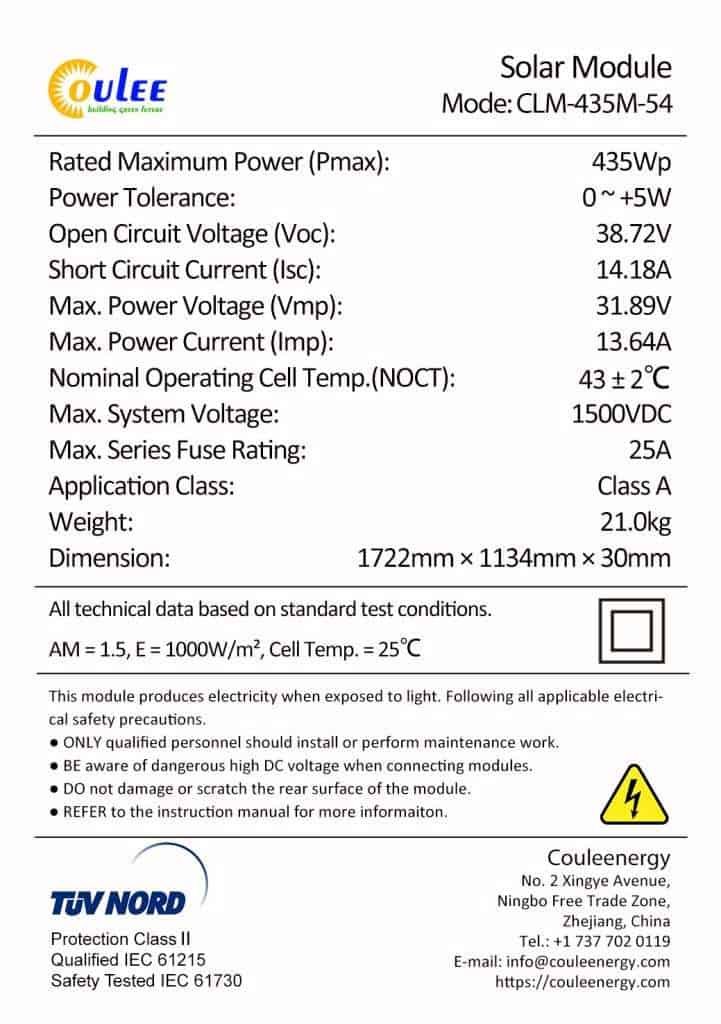
- Open Circuit Voltage (VOC): This is the maximum voltage a panel makes when it’s not connected to anything. It’s usually between 21.7V and 43.2V. This number matters for safety planning.1
- Maximum Power Voltage (Vmp): This is the sweet spot voltage where your panel produces the most power (usually between 18V and 36V). Your system should try to operate at this voltage.
- Nominal Voltage: These are standard classifications like 12V, 24V, or 48V that help match panels with batteries and other equipment. The actual voltage will be different when the system is running.
- Temperature Coefficient: This tells you how voltage changes when temperature goes up or down. Really important if you live somewhere with extreme weather!
Want to see how these specifications look on real panels? Check out our product specifications page to compare different models.
Choosing Between Higher Voltage or Higher Current (Amps)
When setting up your solar system, you’ll need to decide whether to focus on higher voltage or higher current (also called amperage). It’s kind of like choosing between a car with more torque or more horsepower – each has its place.
Why Higher Voltage Systems Are Often Better
Higher voltage setups have some big advantages:
- Less Power Lost Along the Way: Higher voltage systems waste less electricity in the wires. This is super important if your panels are far from your equipment.2
- Cheaper Wiring Costs: You can use thinner, less expensive wires with high-voltage systems, which means a big saving on wiring costs for your solar project installation!
- Easier to Expand Later: Want to add more solar panels in the future? Higher voltage systems make this much easier.
- Works Better Over Long Distances: If you have a large property with solar panels far from your house, high voltage is definitely the way to go.
When Might Higher Current Be Better?
Even though high voltage has lots of benefits, sometimes focusing on higher current makes more sense:
- If You’re Mainly Charging Batteries: Higher current can charge batteries faster in off-grid setups.
- For Small Systems: If you’re just powering an RV or small cabin, the benefits of high voltage might not be worth the extra complexity.
- If You Have Lots of Shade: Systems wired for higher current sometimes handle partial shade better than high voltage systems.
Picking the Right System Voltage for Your Situation
Your system voltage should match what you’re trying to power. Here’s a simple breakdown:
Small 12V Systems
- RVs and campers
- Boats
- Small cabins
- Simple battery charging
Medium 24V Systems
- Average homes
- Small businesses
- Systems with longer distances
- Good balance of cost and performance
Larger 48V Systems
- Larger homes and businesses
- Commercial buildings
- Solar farms
- When you need maximum efficiency
Not sure which voltage is right for you? Just drop an email at info@couleenergy.com to make this decision much easier.
Simple Ways to Calculate the Best Voltage
Getting your voltage calculations right isn’t as hard as it sounds. Here’s how to do it:
Step-by-Step Voltage Planning
- Check Your Inverter First: Look at what voltage range your inverter needs. This sets the boundaries for your system.
- Think About Temperature: Remember that panels produce higher voltage when cold and lower voltage when hot. Use this simple formula:
Adjusted Voltage = Panel Voltage + [Actual Temperature - 77°F] × Temperature CoefficientFor example, if your panel makes 36V normally but it’s going to be 104°F (40°C), and the temperature coefficient is -0.3%/°C:
Adjusted Voltage = 36V + [(40°C - 25°C) × (-0.3%/°C × 36V/100)] = 34.4V- Don’t Forget Voltage Drop: For longer wire runs, you’ll lose some voltage along the way. This is especially important for larger properties.3
- Plan for Cold Weather: Winter can really boost your panel voltage. For safety, calculate:
Maximum Voltage = Open Circuit Voltage × [1 + (Coldest Temperature - 77°F) × Temperature Coefficient]| Panel Type | Typical Voc | Typical Vmp | Temp Coefficient |
|---|---|---|---|
| Standard 60-cell | 38-40V | 30-32V | -0.35%/°C |
| Standard 72-cell | 45-48V | 36-38V | -0.35%/°C |
| High-efficiency | 40-43V | 33-36V | -0.29%/°C |
| Bifacial | 40-45V | 33-37V | -0.30%/°C |
Series vs. Parallel: How to Connect Your Panels
The way you connect your solar panels has a big impact on voltage and current. Let’s break it down:
Series Connections
- Voltages add up (three 24V panels = 72V)
- Current stays the same
- Great for minimizing power loss over distance
- Works better in low light
- Needs fewer, thinner cables
- One shaded panel affects the whole string
Parallel Connections
- Voltage stays the same
- Currents add up (three 5A panels = 15A)
- Handles partial shade better
- Each panel works independently
- Needs thicker cables for the higher current
- Better if one panel has problems
Confused about which connection type is best? The video below might help.
How Weather and Location Affect Your Voltage
Did you know that where you live has a big impact on your solar panel voltage? Here’s how different conditions affect performance:
“Temperature is one of the most critical factors affecting solar panel voltage. For every 1°C increase in temperature above 25°C (77°F), voltage typically drops by 0.3-0.5%.”
– Couleenergy Engineering Team
Temperature Effects
Temperature really changes voltage output:
- Hot weather decreases voltage (and power)
- Cold weather increases voltage
- Panels typically lose 0.3-0.5% of voltage for every degree above 77°F (25°C)
- Good airflow behind panels helps keep them cooler
Sunshine Levels
How bright the sun is affects voltage and current differently:
- Voltage changes only a little with changing sunlight
- Current changes a lot with sunlight intensity
- Even in low light, voltage stays fairly stable until it gets very dark
Height Above Sea Level
For installations at high altitudes:
- Thinner air means less cooling
- More UV exposure can affect panels over time
- Systems need to be designed with bigger temperature swings in mind
Why High-Efficiency Panels Help with Voltage
High-efficiency solar panels like the ones we offer at Couleenergy have several advantages:
Benefits of Better Panels
- More Power in Less Space: Generate more electricity from the same roof area.
- Better Performance in Partial Shade: Higher-efficiency panels maintain better voltage when lighting isn’t perfect.
- Less Affected by Temperature: Our premium panels have a temperature coefficient of just -0.29%/°C, which means they maintain better performance in hot weather.4
- Need Fewer Panels: Get the power you need with fewer panels, which simplifies your system.
Follow us on Facebook and Instagram to see our latest high-efficiency solar products!

Making Sure Everything Works Together
Getting all the parts of your solar system to work together smoothly requires matching voltage properly:
Batteries
- Try to match solar panel voltage with battery bank voltage when possible
- Use the right charge controller if panels and batteries have different voltages
- Different battery types (lithium, lead-acid) have different charging needs
Inverters
- Make sure your panel string voltage works with your inverter’s range
- Calculate the highest possible voltage during the coldest weather
- Position your system to operate at the inverter’s most efficient voltage points
Charge Controllers
- MPPT controllers can convert extra voltage to usable current
- Make sure your controller can handle the maximum voltage your solar panels might produce
- Size the controller for your system’s maximum current
Real-World Advice Based on System Size
Based on our experience installing solar worldwide, here’s what we recommend:
“After installing over 4,00 solar systems, we’ve found that system voltage is one of the most overlooked yet critical factors in long-term performance. Getting it right from the start prevents costly upgrades later.”
– Oliver Schmidt, Lead System Designer
For Business Installations
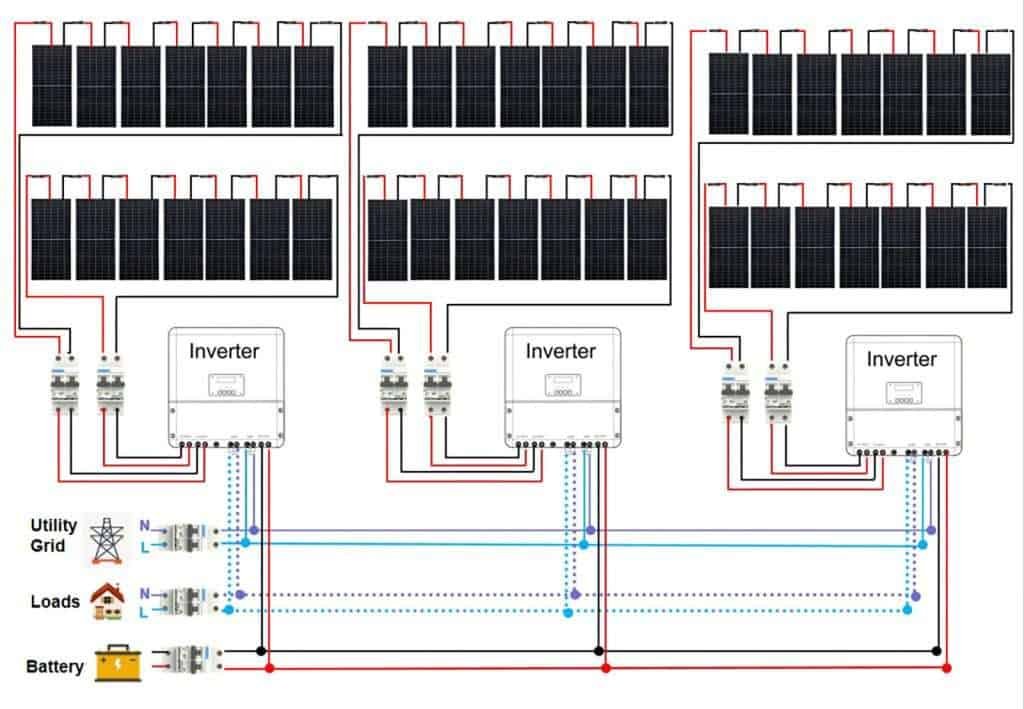
- Use higher voltage systems (typically 600V-1500V) to save money and improve efficiency
- Monitor string voltage to catch problems early
- Design with your local temperature extremes in mind
- Consider mixed series-parallel setups for best performance
For Home Systems
- 24V or 48V systems usually offer the best balance of safety and efficiency
- MPPT charge controllers are worth the extra cost
- Design with future expansion in mind
- Check for shade issues before deciding on your wiring setup
For Off-Grid Systems
- Match system voltage to the battery bank for simpler small systems
- Think about future needs—starting with 24V instead of 12V often pays off later
- MPPT controllers are especially valuable off-grid
- Plan for worst-case voltage during extreme weather5
Customer Success Story
“After struggling with voltage drops in our previous solar setup, Couleenergy recommended a 48V system with their high-efficiency panels. The difference has been remarkable – we’re generating 23% more power and our batteries charge much faster even on cloudy days.”
– Ava Johnson, Commercial Property Owner
Conclusion: Making Smart Voltage Choices
Choosing the right voltage for your solar system doesn’t have to be complicated. By understanding the basics, calculating your needs correctly, and thinking about your local weather, you can design a solar power system that performs great for decades.
At Couleenergy, our team specializes in helping customers figure out the best voltage setup for their specific situation. Our solar panels and equipment are designed to provide stable, efficient voltage in all kinds of conditions.
Contact Our Friendly Team For a Free Consultation Today
Want expert help with your solar system voltage? Contact Couleenergy’s support team at info@couleenergy.com or visit YouTube to learn more about our innovative solar solutions.
References
1 Jackery. (2023). “Ultimate Guide to Solar Panel Voltage.” https://www.jackery.com/blogs/knowledge/solar-panel-voltage
2 Renogy. (2024). “Volts Vs. Amps: What Is The Difference.” https://www.renogy.com/blog/volts-vs-amps-what-is-the-difference
3 Alternative Energy Tutorials. (2023). “Parallel Connected Solar Panels For Increased Current.” https://www.alternative-energy-tutorials.com/solar-power/parallel-connected-solar-panels.html
4 Boston Solar. (2024). “Solar Panel Efficiency: Temperature and Shade Impact.” https://www.bostonsolar.us/solar-blog-resource-center/blog/how-do-temperature-and-shade-affect-solar-panel-efficiency/
5 SolarCtrl. (2023). “What is the Optimal Voltage for a Solar Power System?” https://www.solarctrl.com/blog/optimal-voltage-for-solar-power-system/



 English
  Español
  Français
  Deutsch
  Русский
  العربية