
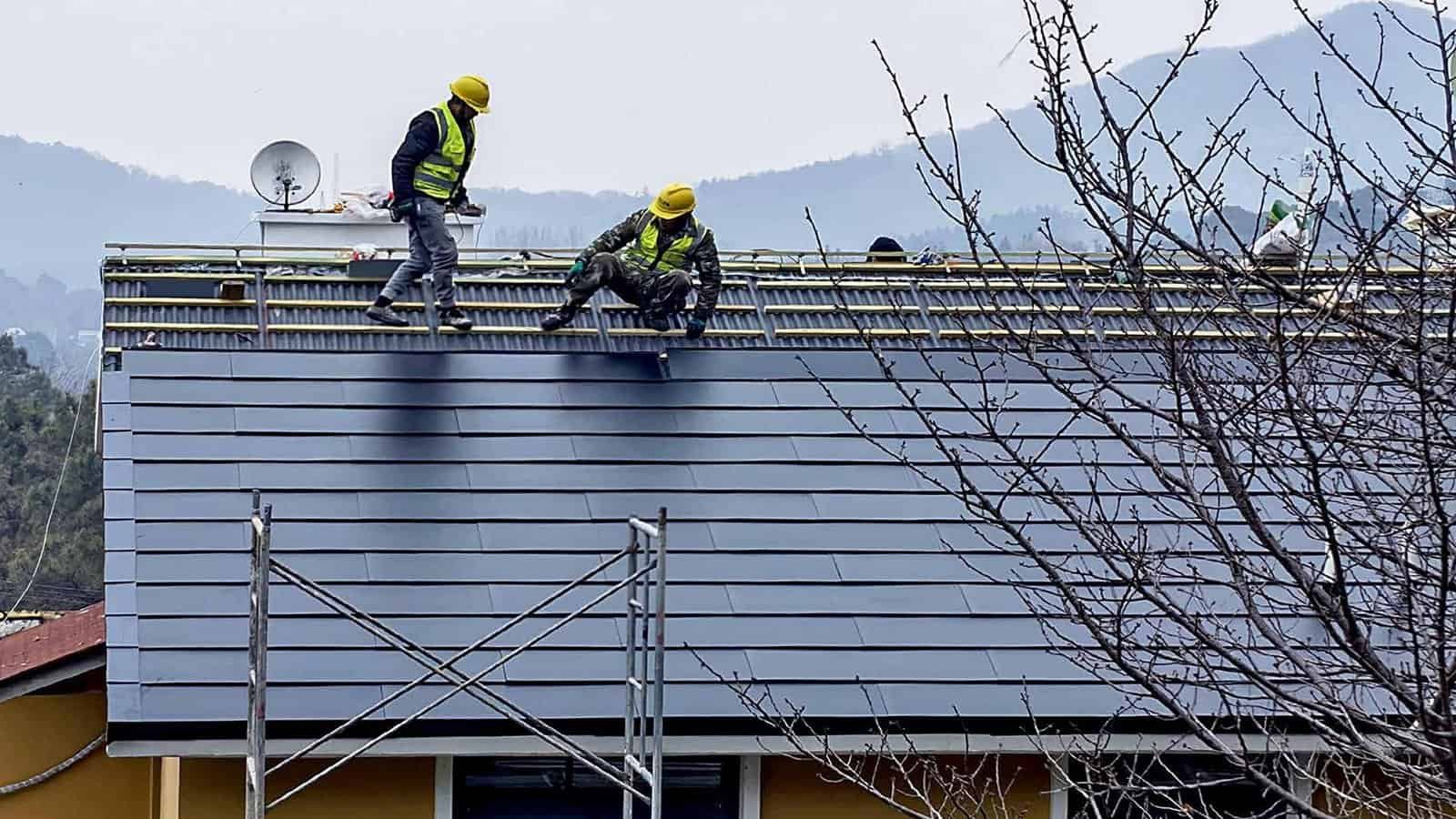
Les modules de tuiles solaires ne sont pas de simples petits panneaux solaires de forme différente. Ce sont avant tout des produits de construction, et ensuite seulement des dispositifs photovoltaïques. Chaque choix de conception, de l'architecture des cellules à l'étanchéité des bords, doit satisfaire aux exigences de performance des toitures. en même temps en tant qu'objectifs de production électrique. Il s'agit d'un défi d'ingénierie très différent de la production d'un module standard monté en rack.
Ce guide s'adresse aux acheteurs, ingénieurs, développeurs de projets et clients OEM qui recherchent des informations pratiques et exploitables. Il couvre l'ensemble du processus de conception : technologie des cellules, dimensions des modules, construction du verre, choix de l'encapsulant, ingénierie des boîtes de jonction, conception électrique et certification. Nous indiquons clairement les évolutions du secteur et exposons les compromis nécessaires.
Qu'est-ce qui différencie un module de tuile solaire ?
Les panneaux solaires conventionnels sont installés sur le toit d'un bâtiment. Modules de tuiles solaires devenir Le bâtiment. Ça change tout.
Une tuile photovoltaïque intégrée au bâtiment (BIPV) doit produire de l'électricité, évacuer l'eau, résister au vent et à la neige, respecter les normes de sécurité incendie et présenter l'aspect d'un matériau de toiture haut de gamme, le tout pendant 25 à 30 ans. La norme IEC 63092 formalise cette double identité en considérant les modules BIPV comme des produits photovoltaïques qui sont aussi des produits de construction, avec des exigences distinctes au niveau du module (Partie 1) et au niveau de l'intégration du système (Partie 2).[1]
Cela signifie que le concepteur ne peut pas se contenter d'optimiser la consommation d'énergie. La tuile doit également être sûre, durable et certifiable en tant qu'élément de construction. Nombreux sont les primo-acquéreurs de systèmes photovoltaïques intégrés au bâtiment qui sous-estiment ces exigences, et c'est la principale cause d'abandon des projets.
Choisir la bonne technologie cellulaire
Le choix de la technologie cellulaire est la décision la plus déterminante dans la conception d'un module de tuile. Il influe sur l'efficacité, l'esthétique, le comportement ombragé, la complexité de fabrication et, en fin de compte, le positionnement du produit sur le marché.
PERC : Une solution éprouvée pour les projets à budget limité
Les cellules PERC (Passivated Emitter Rear Contact) ont dominé le marché mondial du photovoltaïque de 2017 à 2023. Cependant, pour les acheteurs développant aujourd'hui de nouveaux produits photovoltaïques intégrés au bâtiment (BIPV), la disponibilité des cellules PERC se raréfie. Les principaux fabricants – LONGi, JinkoSolar et Trina Solar – ont progressivement abandonné leurs lignes de production PERC depuis 2024, date à laquelle TOPCon a dépassé les cellules PERC pour devenir, pour la première fois, la technologie photovoltaïque leader mondiale en volume. La part de marché mondiale des modules PERC expédiés est passée d'environ 631 000 tonnes en 2023 à environ 40 000 à 431 000 tonnes en 2024, et ce déclin s'accélère.[2]
La technologie PERC se justifie dans les projets à faible coût et aux exigences esthétiques non prioritaires, ou lorsque les stocks de cellules existants le permettent. Le rendement des modules PERC monocristallins commerciaux se situe entre 20 et 221 TP3T. Les barres omnibus et les rubans situés en façade sont visibles à travers la vitre, ce qui constitue un inconvénient esthétique majeur pour les installations photovoltaïques intégrées haut de gamme. Pour le développement de nouveaux produits photovoltaïques intégrés, la plupart des acheteurs avertis privilégieront d'emblée d'autres solutions que la technologie PERC.
TOPCon : La norme de volume actuelle
La technologie TOPCon de type N (contact passivé par oxyde tunnel) est aujourd'hui la technologie dominante pour la production de tuiles solaires grand public. Sa part de marché a dépassé celle de la technologie PERC pour la première fois en 2024 et elle devrait rester l'architecture c-Si de référence jusqu'au début des années 2030.[2] L'efficacité des modules commerciaux se situe désormais entre 22 et 24,5%, les produits de dernière génération des fabricants haut de gamme repoussant la limite supérieure au-delà de ce que la technologie permettait il y a seulement deux ans.[3] TOPCon offre également un meilleur coefficient de température que les anciennes plateformes de type P — généralement autour de −0,29 à −0,30%/°C — ce qui est significatif pour les surfaces de toit orientées au sud qui chauffent considérablement en été.
Les cellules TOPCon sont métallisées sur leur face avant, ce qui les rend moins adaptées à une esthétique haut de gamme entièrement noire. Cependant, pour la plupart des applications photovoltaïques intégrées résidentielles et commerciales, elles offrent un excellent compromis entre performance, disponibilité et coût unitaire.
HJT : Performances optimales pour les climats exigeants
La technologie à hétérojonction (HJT) associe du silicium cristallin à des couches minces amorphes pour offrir des performances exceptionnelles même dans des conditions difficiles. Au niveau des modules, le rendement de production en série des modules HJT varie désormais de 221 TP3T pour les produits standard à 24,51 TP3T pour les produits de pointe tels que le Huasun Himalaya 760 HV, qui délivre 760 W et affiche un rendement de module de 24,51 TP3T.[4] L'efficacité de production de masse au niveau cellulaire est plus élevée, allant de 24% à 26,5% pour les producteurs avancés.
Les principaux avantages du HJT sont son coefficient de température (généralement de −0,24 à −0,26%/°C, le plus bas de toutes les architectures de silicium commerciales) et son facteur de bifacialité, qui dépasse régulièrement 90% — contre environ 80 à 85% pour le TOPCon.[5] Ces deux éléments sont importants pour les applications sur toiture : un coefficient de température plus faible signifie que le rendement se dégrade moins lors des chaudes journées d’été, et une bifacialité élevée permet la capture de la lumière par la face arrière à partir de substrats de toiture de couleur claire.
Le compromis réside dans le coût de fabrication. La technologie HJT requiert des pâtes d'argent à basse température et des procédés de dépôt plus complexes que la technologie TOPCon. Pour les projets BIPV haut de gamme en climats chauds, où les garanties de performance dictent les spécifications, la technologie HJT est un choix judicieux. Pour la production en série, le surcoût par rapport à la technologie TOPCon demeure une contrainte majeure.
Cellules à contact arrière : la solution idéale pour les tuiles de toiture haut de gamme
Les technologies de contact arrière — IBC (Interdigitated Back Contact), ABC (All Back Contact) et HPBC 2.0 — déplacent tous les contacts électriques vers la face arrière de la cellule. Aucune barre omnibus, aucun câble plat, aucune métallisation sur la face avant.
Pour les tuiles solaires, c'est un point crucial. Une cellule à contact arrière offre une surface noire parfaitement lisse et uniforme. Outre son avantage esthétique, elle permet l'application de couches de verre colorées et à motifs sans interruption, pour une intégration architecturale optimale. Elle élimine également les pertes dues à l'ombrage de la face avant des interconnexions en ruban, contribuant ainsi à une densité de puissance effective plus élevée dans les formats de tuiles compacts.
La plateforme HPBC 2.0 (Hybrid Passivated Back Contact Platform de LONGi) atteint une efficacité de module commerciale de 24,8% en production de masse, avec le Hi-MO X10 délivrant jusqu'à 670 W.[6] Cette même plateforme détient le record mondial certifié indépendamment pour l'efficacité des modules en silicium cristallin à 25,4%, vérifié par l'Institut Fraunhofer pour les systèmes d'énergie solaire (Fraunhofer ISE) en Allemagne et confirmé sur le tableau d'efficacité des modules champions du NREL.[7] Le module ABC Gen 3 d'AIKO (série Neostar 3P) atteint une efficacité égale ou supérieure à celle du module 25% — le premier format de module en silicium commercial à franchir ce seuil à l'échelle de la production de masse.[8]
Ce sont des chiffres significatifs pour les tuiles de toiture compactes, où chaque centimètre carré de surface active doit être travaillé au maximum.
Le compromis est évident : les cellules à contact arrière coûtent plus cher et leur fabrication est plus précise que celle des cellules TOPCon. Pour les projets BIPV haut de gamme (résidentiels, patrimoniaux et architecturaux), ce surcoût est pleinement justifié. En revanche, pour les projets à coût maîtrisé et aux toitures simples, les cellules TOPCon constituent la solution la plus pratique.
Note sur les couches minces CIGS
Les cellules à couches minces CIGS (séléniure de cuivre, d'indium et de gallium) offrent une flexibilité inégalée par le silicium cristallin. Elles sont ainsi particulièrement adaptées aux tuiles aux profils courbes ou non plans, incompatibles avec les stratifiés verre-verre rigides. Leur rendement est toutefois inférieur (généralement de 14 à 181 lB/m³ pour les applications photovoltaïques intégrées au bâtiment) et leur densité de puissance est limitée. Le CIGS représente un choix de niche, mais pour les toitures aux géométries complexes, il constitue souvent la seule solution viable.
Aperçu de la technologie cellulaire
| Technologie | Efficacité du module (Production de masse) | Aspect de face | Meilleure application |
|---|---|---|---|
| PERC (type P) | 20–22% | Barres omnibus visibles | Carrelage à budget limité ; projets de déstockage |
| TOPCon (type N) | 22–24.5% | Barres omnibus visibles | Carrelage résidentiel et commercial courant |
| HJT | 22–24.5% | Barres omnibus visibles | Carrelage haut de gamme ; climats chauds ; projets à longue garantie |
| HPBC 2.0 / ABC Gen 3 | 24.8–25%+ | Pas de barres omnibus avant | Dalles BIPV haut de gamme entièrement noires, architecturales et colorées |
| couche mince CIGS | 14–18% | Sombre, flexible | Profils de toiture courbes et non planes |
Tous les chiffres indiqués correspondent au rendement des modules produits en série. Le rendement au niveau des cellules est systématiquement supérieur en raison de la surface inactive du module, des pertes d'interconnexion et de l'absorption de l'encapsulant.
Dimension des modules : Adaptez-les au système de toiture, et pas seulement à la disposition des cellules.
Les tuiles solaires existent en de nombreuses tailles. Les formats de production les plus courants vont d'environ 400 × 360 mm pour les petites tuiles emboîtables jusqu'à 1 260 × 480 mm pour les panneaux BIPV de plus grand format qui imitent encore les toitures traditionnelles.
Choisir la bonne taille de module est plus subtil qu'il n'y paraît.
Les petites tuiles (environ 400 à 600 mm) offrent une véritable intégration à la toiture. Elles s'emboîtent naturellement avec les tuiles en terre cuite ou en ardoise classiques et répondent aux exigences des réglementations d'urbanisme locales qui imposent aux nouvelles toitures de s'intégrer au style des rues existantes. Elles sont également plus faciles à manipuler lors de la pose et plus simples à remplacer en cas de dommages.
En contrepartie, plus il y a d'éléments par toiture, plus il y a de connexions électriques, de boîtes de jonction et de raccords de câbles, et donc une main-d'œuvre d'installation proportionnellement plus élevée. Le coût par watt est généralement plus élevé pour les petites tuiles que pour les grands formats.
Les carreaux de grand format (600 à 1 300 mm) réduisent le nombre de raccords. L'installation est plus rapide et le coût par watt diminue. Cependant, les vitrages de plus grande taille exigent une attention particulière à leur structure : les calculs de résistance au vent et à la neige sont plus complexes, la protection des bords pendant le transport est primordiale et les tolérances de planéité du toit sont plus strictes.
⚠ Point de vue clé d'un praticien
La taille optimale des tuiles ne dépend pas uniquement du panneau photovoltaïque. Elle est déterminée par la combinaison du chevauchement des tuiles, de l'espacement des liteaux, de la disposition des cellules, du dégagement autour de la boîte de jonction et des pratiques d'installation locales. Une tuile, aussi esthétique soit-elle en tant que panneau photovoltaïque, peut s'avérer inadaptée à la toiture si la boîte de jonction est située au niveau d'un liteau.
Commencez par un schéma complet du système de toiture. Déterminez ensuite la taille des modules.
Construction en verre : pourquoi le double vitrage n’est généralement pas une option
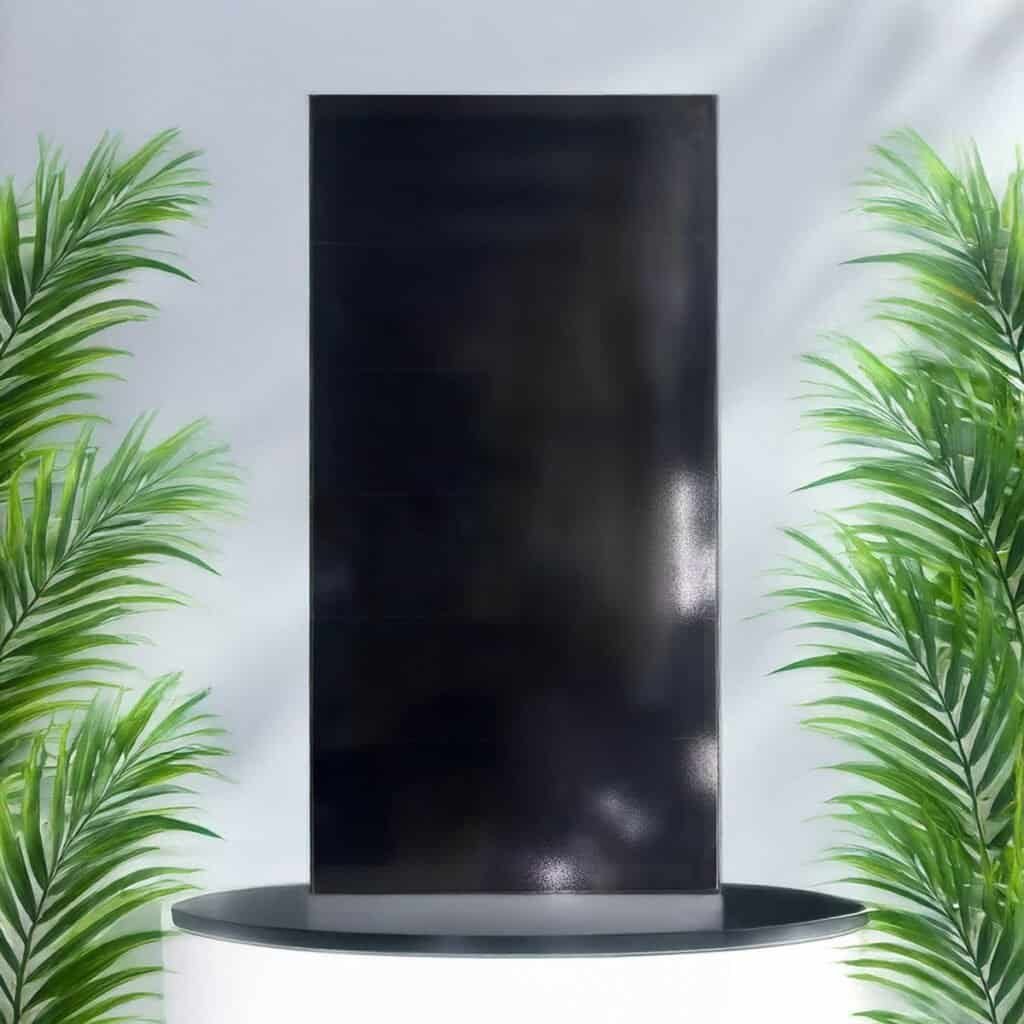
La plupart des modules de tuiles photovoltaïques intégrés au bâtiment (BIPV) utilisent une construction à double vitrage (verre-verre). Il ne s'agit pas d'une option haut de gamme, mais généralement d'une exigence technique liée à l'application.
Un module photovoltaïque standard utilise une feuille arrière en polymère. Cette feuille arrière ne peut pas servir de matériau de toiture. Elle n'évacue pas l'eau aussi efficacement, n'atteint pas les niveaux de résistance au feu exigés par les normes de construction et n'offre pas la rigidité structurelle nécessaire à une tuile lorsqu'on marche dessus lors de l'installation ou de la maintenance.
Quatre avantages clés de la construction à double vitrage
Résistance à l'humidité
Un film stratifié verre-verre avec une étanchéité des bords adéquate constitue une barrière contre l'humidité bien plus efficace qu'une feuille arrière polymère. L'infiltration d'humidité accélère le délaminage, la corrosion des cellules et la défaillance de l'isolation.
Performances de feu
Le verre ne brûle pas. Les modules verre-verre peuvent atteindre la classe de résistance au feu A requise par les normes UL 790 / ASTM E108 pour les applications de toiture sur la plupart des marchés.[11]
Stabilité structurelle
La structure en sandwich de verre rigide conserve une meilleure stabilité dimensionnelle sous l'effet des variations thermiques et des contraintes mécaniques que les constructions en simple vitrage. Pour les tuiles installées sur des toitures inclinées et soumises à des charges de vent soutenues, cet avantage est crucial sur la durée de vie de l'appareil.
Durée de vie à long terme
Les modules à double vitrage bien fabriqués avec des encapsulants appropriés sont conçus pour une durée de vie de 30 ans ou plus avec une dégradation de puissance inférieure à 20%, ce qui correspond aux attentes d'une installation de toiture de qualité.
Caractéristiques du verre qui comptent
Pour le vitre avant (supérieure)Le verre solaire trempé à faible teneur en fer avec revêtement antireflet (AR) est la norme. Ce revêtement AR augmente la transmission lumineuse au-delà de 93%. La teneur en fer doit être inférieure ou égale à 0,02% pour une transparence optimale. L'épaisseur varie généralement de 2,5 mm à 3,2 mm, selon la taille des carreaux et les exigences structurelles.
Pour le vitre arrièreVerre trempé standard sans revêtement antireflet. L'utilisation d'un verre arrière plus fin (2,0 mm au lieu de 3,2 mm) est une méthode courante de réduction du poids qui ne compromet pas sensiblement les performances.
Pour carreaux courbes: le verre trempé cintré à chaud ou le verre mince flexible de moins de 1,5 mm permettent des profils non plans, bien que la complexité et le coût de production augmentent considérablement.
Les bords des tuiles en verre doivent être jointés et chanfreinés afin d'éliminer les microfissures. Ces dernières peuvent se propager sous l'effet de variations thermiques répétées, ce qui représente un risque important pour un produit censé résister aux fluctuations de température sur les toitures pendant 30 ans.
Choix de l'encapsulant : une décision de fiabilité, et non un choix de produit.
Dans un module de toiture en tuiles verre-verre, le choix de l'encapsulant est plus important que beaucoup d'acheteurs ne le pensent. L'encapsulant standard dans l'ensemble du secteur photovoltaïque est l'EVA (acétate d'éthylène-vinyle). L'EVA est peu coûteux et a fait ses preuves depuis longtemps dans les modules monovitre à feuille arrière polymère.
Le problème des modules EVA dans les structures verre-verre réside dans la libération d'acide acétique. Au fil du temps, la dégradation de l'EVA entraîne la libération de cet acide. Dans un module monobloc en verre avec une feuille arrière, cet acide se diffuse. Dans une structure verre-verre scellée, il ne peut s'évacuer. Il s'accumule, corrode la métallisation des cellules et provoque un délaminage. Des tests de durabilité indépendants menés par SoliTek ont révélé que les modules EVA avec feuille arrière en verre présentaient une dégradation de -7,90% après 2 500 heures en environnement chaud et humide, tandis que les modules POE verre-verre ne présentaient qu'une dégradation de -3,50% après 3 500 heures dans les mêmes conditions.[9]
Spécifications recommandées pour les tuiles de toiture en verre
Utiliser POE (élastomère polyoléfine) ou EPE (EVA-POE-EVA). Le POE ne produit pas d'acide acétique, offre une résistance supérieure à l'humidité et une excellente résistance à la dégradation induite par le potentiel (PID). L'EPE combine les propriétés barrières du POE avec l'adhérence éprouvée des couches externes en EVA.
Deux points importants à souligner : premièrement, pour les cellules HJT et à contact arrière en particulier, les structures de métallisation fines sont plus sensibles à l’humidité, ce qui rend l’application d’un produit de protection contre l’humidité (POE) quasiment indispensable. Deuxièmement, la qualité du POE varie considérablement d’un fournisseur à l’autre. Une étude de l’Université de Nouvelle-Galles du Sud (janvier 2026) a révélé que certaines formulations de POE de moindre qualité peuvent provoquer la corrosion de la métallisation des modules TOPCon dans des conditions de chaleur humide prolongées.[10] Spécifiez le POE ou l'EPE provenant de fournisseurs d'encapsulants de premier plan et reconnus — il ne s'agit pas d'un domaine où il faut faire des compromis sur les coûts d'approvisionnement.
Conception des boîtes de jonction : un point faible dans de nombreux projets
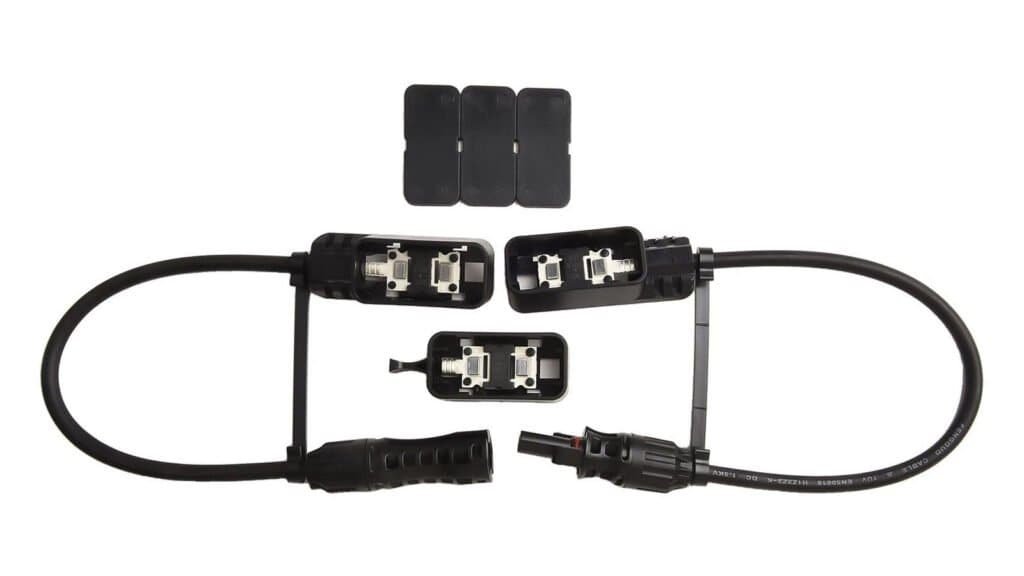
La boîte de jonction est souvent le dernier composant auquel les acheteurs pensent et l'un des premiers à causer des problèmes lors de l'installation ou de l'utilisation à long terme. Pour les tuiles solaires, la conception de la boîte de jonction mérite une attention particulière et précoce.
Le principal défi : une boîte de jonction pour tuiles doit être discrète, car elle se situe entre la tuile et la charpente. Elle doit être parfaitement étanche, car elle sera exposée à des décennies de pluie et de variations de température. Son positionnement doit être précis, car les liteaux, les zones de recouvrement et le cheminement des câbles ne laissent que très peu de marge d’erreur.
Indice de protection IP
Les boîtes de jonction pour tuiles doivent être certifiées IP67 au minimum, l'indice IP68 étant préférable. L'indice IP68 signifie que le boîtier résiste à une immersion continue dans l'eau à plus d'un mètre de profondeur. Les noues, les zones d'accumulation de neige et les zones soumises au nettoyage haute pression créent précisément ces conditions pendant une durée de vie de 25 à 30 ans. L'enrobage silicone de la cavité de la boîte de jonction est la méthode standard pour garantir une performance IP68 durable.
Questions de placement à résoudre avant le verrouillage de la conception
Avant la fabrication du premier prototype, il convient de répondre définitivement à ces questions :
- →Où les carreaux se chevauchent-ils ? La boîte de jonction ne peut pas se trouver dans la zone de chevauchement.
- →Où sont installées les liteaux de toiture ? Le boîtier ne doit pas interférer avec l’emplacement des liteaux.
- →Quelle est la hauteur maximale autorisée sous la tuile ? Les dégagements standard sont plus faibles que ce à quoi s’attendent la plupart des concepteurs de systèmes photovoltaïques intégrés pour la première fois.
- →Les câbles sortent-ils verticalement ou horizontalement ? Une sortie horizontale réduit la hauteur du boîtier mais nécessite un dégagement latéral.
- →La boîte de jonction sera-t-elle accessible après l'installation ? Dans le cas contraire, le niveau de qualité et de fiabilité doit être nettement supérieur.
- →Comment les câbles seront-ils acheminés d'une tuile à l'autre sans créer de points d'infiltration d'eau ?
Diodes de dérivation
Les diodes de dérivation protègent les cellules ombragées contre l'échauffement dû à la polarisation inverse et la formation de points chauds. Pour la plupart des configurations de modules de tuiles photovoltaïques, il faut au moins une diode de dérivation par tuile. La configuration précise (nombre de diodes, intensité nominale, dissipation thermique) dépend du nombre de cellules, de la disposition des chaînes et du niveau de risque d'ombrage sur la toiture.
Remarque importante concernant la conception des circuits : l’utilisation de tuiles interconnectées en forme de tuiles, selon une topologie matricielle série-parallèle, permet de réduire la dépendance aux diodes de dérivation. En effet, l’architecture matricielle autorise la circulation du courant autour des cellules ombragées sans activer de chemin de dérivation. Ceci améliore sensiblement les performances en cas d’ombrage partiel par rapport aux configurations classiques utilisant uniquement des diodes de dérivation.
Conception électrique : Pensez d’abord à la corde, ensuite aux tuiles
Chaque tuile produit une tension modeste, généralement de 5 à 15 V selon le nombre d'éléments, le mode d'interconnexion et le format. Le véritable défi en matière de conception électrique se situe au niveau de la chaîne et du système.
Les modules sont câblés en série pour atteindre la plage d'entrée MPPT de l'onduleur ou de l'optimiseur connecté. La tension cumulée de la chaîne doit rester inférieure aux limites de tension maximales du système : 1 000 V pour la plupart des marchés régis par la norme CEI, avec des limites plus strictes dans certaines juridictions nord-américaines.
L'ombrage du toit complique considérablement la conception des guirlandes lumineuses. Cheminées, lucarnes, antennes, structures adjacentes et angles d'ombre saisonniers peuvent affecter chaque tuile à différents moments. Trois approches principales permettent de résoudre ce problème :
Diodes de dérivation
Fournir une protection de base contre les points chauds, mais ne pas récupérer la sortie des tuiles ombrées ; elles les déconnectent simplement temporairement de la chaîne.
Électronique de puissance au niveau du module (MLPE)
Des micro-onduleurs ou des optimiseurs de puissance CC placés sur chaque module ou petit groupe permettent à chaque unité de fonctionner à son point de puissance maximale, récupérant ainsi l'énergie que les systèmes utilisant uniquement des diodes de dérivation perdraient. En contrepartie, le coût et la complexité du système augmentent.
Topologie d'interconnexion de tuiles matricielles
Répartit les chemins de courant sur l'ensemble des cellules afin que l'ombrage localisé affecte une zone effective plus petite, améliorant ainsi la tolérance à l'ombrage sans électronique de puissance supplémentaire.
Pour la plupart des projets BIPV résidentiels présentant une complexité d'ombrage modérée, une disposition en chaîne bien conçue avec MLPE au niveau de la tuile ou du groupe est une solution pratique et rentable.
Exigences de certification : planifiez tôt, pas après. Outillage
Les modules de tuiles photovoltaïques intégrées au bâtiment (BIPV) sont soumis à un processus de certification plus complexe que les panneaux photovoltaïques classiques. Ils doivent satisfaire simultanément aux normes relatives aux modules photovoltaïques et aux exigences des produits de construction. La combinaison exacte dépend du marché cible.
| Standard | Portée |
|---|---|
| CEI 61215 | Qualification de la conception et homologation de type des modules photovoltaïques |
| CEI 61730 | qualification de sécurité des modules PV |
| CEI 63092-1 [1] | Exigences relatives aux modules BIPV en tant que produits de construction (international) |
| CEI 63092-2 | Exigences d'intégration des systèmes BIPV (internationales) |
| EN 50583-1 [12] | Exigences relatives aux modules BIPV (européennes ; CPR 305/2011 pour le marquage CE) |
| EN 50583-2 | Exigences relatives aux systèmes BIPV (européennes) |
| UL 790 / ASTM E108 [11] | Classe A de résistance au feu pour les revêtements de toiture (marché américain) |
| UL 61730 | Équivalent de sécurité des modules photovoltaïques américains |
| EN 13956 | Étanchéité par feuille flexible (pertinente pour certains modèles de carreaux intégrés de l'UE) |
Note sur la norme EN 50583 par rapport à la norme IEC 63092
La norme EN 50583 est la norme européenne relative aux systèmes photovoltaïques intégrés au bâtiment (BIPV) et a directement influencé la norme IEC 63092 — le texte même de la norme IEC indique qu'elle “ est basée sur la norme EN 50583-1 ”. Pour le marquage CE en vertu du règlement (CE) n° 305/2011 relatif aux produits de construction, la norme EN 50583-1 est la norme applicable sur les marchés européens.[12] Les acheteurs qui ciblent la distribution en Europe doivent s'assurer de la conformité à la norme EN 50583, et pas seulement à la norme IEC 63092.
Les exigences de certification doivent être définies dès le début du projet, et non après la réalisation de l'outillage. Le trempage du verre est irréversible : il est impossible d'y ajouter des trous ou des découpes a posteriori. Si un test structurel ultérieur requiert un point de fixation différent, l'outillage du verre devra être entièrement repensé. C'est une leçon coûteuse et chronophage.
Liste de contrôle pratique pour les acheteurs
Avant de demander un devis ou d'entamer des discussions techniques détaillées, préparez les éléments suivants :
Informations mécaniques
- Dimensions du module extérieur
- Dimensions de la zone active visible
- dimensions de la zone de chevauchement
- Limites d'épaisseur et de poids
- Position et dimensions des trous (le cas échéant)
- Exigence de rayon de courbure
- méthode de fixation de toiture
- Dessin CAO ou fichier 3D si disponible
Cibles électriques
- Puissance cible par carreau
- Plage de tension et de courant cible
- préférence pour la technologie cellulaire
- Type de connecteur
- préférence pour la position de la boîte de jonction
- Exigence de diode de dérivation
- Limite de tension du système
- Compatibilité avec l'onduleur ou l'optimiseur
Matériels
- simple ou double vitrage
- préférence pour l'épaisseur du verre
- Vitres arrière entièrement noires, colorées ou transparentes
- Préférence pour l'encapsulant (POE ou EPE pour le verre-verre)
- Avec ou sans cadre
Marché et certification
- Pays cible et normes applicables
- Exigence de classe de résistance au feu (classe A pour la plupart des habitations)
- paramètres de charge du vent et de la neige
- Attentes en matière de garantie
- Volume annuel
- quantité d'échantillon et de lot pilote
Points clés à retenir
- ✓Les modules de tuiles solaires sont avant tout des produits de construction. Chaque décision de conception doit satisfaire simultanément aux exigences de performance en matière de toiture et de production d'électricité.[1]
- ✓Les cellules à contact arrière (HPBC 2.0, ABC Gen 3) offrent l'esthétique entièrement noire la plus épurée, la densité de puissance la plus élevée et l'efficacité de module certifiée record mondial de 25,4% (HPBC 2.0, Fraunhofer ISE).[7] TOPCon offre un équilibre volume-production solide avec une efficacité de module allant jusqu'à 24,5%.[3]
- ✓La technologie PERC est en déclin et son offre se raréfie.[2] Les nouveaux projets de développement de tuiles BIPV devraient opter par défaut pour le TOPCon ou le contact arrière dès le départ.
- ✓La construction à double vitrage est la solution architecturale idéale pour la plupart des applications de tuiles photovoltaïques intégrées. Elle offre une meilleure résistance à l'humidité, une meilleure tenue au feu et une stabilité dimensionnelle à long terme supérieure aux conceptions à simple vitrage.
- ✓Spécifiez les encapsulants POE ou EPE dans les stratifiés verre-verre, en vous approvisionnant auprès de fournisseurs de premier plan reconnus. Le dégagement d'acide acétique de l'EVA constitue un risque avéré pour la fiabilité à long terme des structures verre-verre scellées.[9]
- ✓La boîte de jonction est un élément de conception essentiel. Son emplacement, sa hauteur, son indice de protection IP et le cheminement des câbles doivent être définis avant la fabrication des outils, et non après.
- ✓La taille des modules doit être déterminée par l'architecture du système de toiture, et non uniquement par la commodité de l'agencement des cellules.
- ✓Pour les marchés européens, vérifiez la conformité à la norme EN 50583-1, et non seulement à la norme IEC 63092-1, pour le marquage CE en vertu du règlement CPR 305/2011.[12]
- ✓Définissez les objectifs de certification dès le début du projet. La mise en conformité a posteriori, une fois l'outillage vitrifié finalisé, est coûteuse et chronophage.
Questions fréquemment posées
Travaillez avec une équipe qui connaît les deux côtés.
Concevoir un module de tuile solaire performant sur le toit et sur le marché exige une connaissance approfondie de l'ingénierie photovoltaïque et de l'intégration au bâtiment. Les choix de conception décrits dans ce guide sont interdépendants. Le choix de la technologie des cellules influe sur les exigences en matière d'encapsulant. L'emplacement de la boîte de jonction influe sur le cheminement des câbles et le processus d'installation. Les spécifications du verre influent sur le poids, qui a une incidence sur le calcul des charges structurelles.
Réussir ces interactions dès le départ permet de réaliser d'importantes économies de temps, d'outillage et de coûts de test.
Couleenergy est spécialisée dans le développement de modules à contact arrière et à haut rendement pour les applications BIPV, sur mesure et OEM. Notre équipe d'ingénieurs accompagne les acheteurs et les développeurs, de la conception initiale à la production en série, en passant par le prototypage et la production pilote.
Pour obtenir des conseils spécifiques à votre projet — notamment sur le choix de la technologie cellulaire, les spécifications des modules, la coordination du système de toiture et la planification de la certification — contactez-nous directement.
Nous mettons des ingénieurs, et pas seulement des équipes commerciales, au premier contact.
Couleenergy (Ningbo Coulee Tech Co., Ltd.) est un fabricant B2B basé dans le Zhejiang, spécialisé dans les modules flexibles et rigides à contact arrière, les solutions BIPV et les configurations OEM personnalisées pour les marchés européens et nord-américains.
Références et notes de bas de page
[1] CEI 63092-1:2020 — Photovoltaïque dans les bâtiments, Partie 1 : Exigences relatives aux modules photovoltaïques intégrés au bâtiment. La norme BIPV définit les modules photovoltaïques intégrés au bâtiment (BIPV) comme des produits photovoltaïques qui fonctionnent simultanément comme des produits de construction, avec des exigences de performance électrotechniques et de bâtiment. La partie 2 (IEC 63092-2) couvre les exigences d'intégration au niveau du système.
https://webstore.iec.ch/en/publication/32158[2] 16e édition de l'ITRPV — Feuille de route technologique internationale pour le photovoltaïque (VDMA, avril 2025). TOPCon a dépassé PERC en tant que technologie de cellules c-Si dominante en 2024, avec une part de marché de 70% pour les plaquettes de type n. La domination de TOPCon devrait se maintenir jusqu'au début des années 2030.
https://vdma.eu/en/viewer/-/v2article/render/143159365[3] Clean Energy Reviews — Les panneaux solaires les plus efficaces 2026 (mars 2026). Classement annuel de l'efficacité des modules commerciaux par technologie. Remarques : “ des plateformes TOPCon de type N de plus en plus optimisées dépassant le niveau 24% ” et un “ écart croissant ” entre les modules BC haut de gamme et les produits TOPCon avancés.
https://www.cleanenergyreviews.info/blog/most-efficient-solar-panels[4] Communiqué de presse de Huasun Energy — Module Himalaya 760 HV HJT (novembre 2025). Huasun présente son module HJT de 760 W, offrant un rendement de 24,51 % TP3T sous une tension système de 2 000 V. À ce jour, il s'agit du module HJT commercialisé le plus performant par un grand fabricant.
https://www.prnewswire.com/news-releases/huasun-energy-launches-760-w-heterojunction-solar-module-with-2000-v-system-voltage-302627830.html[5] Le Watt Vert — Panneaux solaires HJT : efficacité, coefficient de température et fabricants (avril 2026). Confirme l'efficacité des cellules HJT commerciales (24–26%) ; l'efficacité des modules (22–24%) ; le facteur de bifacialité (90–95%) ; et le coefficient de température (environ −0,26%/°C). Analyse l'écart d'efficacité entre les cellules et les modules.
https://www.thegreenwatt.com/hjt/[6] LONGi — Lancement du module Hi-MO X10 HPBC 2.0 (février 2025). Confirme l'efficacité du module de production en série de 24,8% et une puissance de sortie maximale de 670 W pour la série Hi-MO X10, basée sur la technologie de cellule à contact arrière HPBC 2.0 utilisant des plaquettes de type N TaiRay.
https://www.longi.com/eu/news/hi-mo-x10-launch-italy/[7] LONGi — Communiqué de presse sur le record mondial d'efficacité des modules en silicium cristallin (octobre 2024). Annonce de la certification Fraunhofer ISE (Allemagne) d'une efficacité de module de 25,41 TP3T pour la plateforme HPBC 2.0 — une première pour un fabricant chinois depuis 1988. Également confirmé dans le tableau des modules champions d'efficacité du NREL.
https://www.longi.com/us/news/2024-longi-new-world-record-crystalline-silicon-module-efficiency/[8] PV Magazine — AIKO lance un module à contact arrière de 545 W avec une efficacité de 25% (mars 2026). Confirme que le module ABC Gen 3 (Neostar 3P) d'AIKO atteint une efficacité supérieure à celle du 25% dans un format de 1 954 × 1 134 mm, grâce à une surface avant sans grille et une disposition des cellules sans espace.
https://www.pv-magazine.com/2026/03/11/aiko-launches-545-w-back-contact-solar-module-with-25-efficiency/[9] SoliTek — Recherche sur la durabilité des modules EVA et POE (tests de vieillissement accéléré réalisés par le fabricant). Des tests prolongés en conditions de chaleur et d'humidité (85 °C / 851 TP3T HR, au-delà du minimum de 1 000 heures de la norme IEC 61215) ont montré que les modules EVA à face arrière en verre présentaient une dégradation de -7,901 TP3T après 2 500 heures, tandis que les modules POE verre-verre ne présentaient qu'une dégradation de -3,501 TP3T après 3 500 heures. Ces résultats sont corroborés indépendamment par une étude évaluée par des pairs (NCBI/Progress in Photovoltaics) confirmant que le POE limite la migration ionique et surpasse l'EVA dans des conditions de chaleur et d'humidité pour les modules verre-verre. Source principale :
https://www.solitek.eu/en/news/soliteks-research-uncovers-groundbreaking-resultsCouverture secondaire/éditoriale : https://www.pveurope.eu/solar-modules/solar-modules-poe-encapsulated-pv-modules-particularly-durable
[10] PV-Tech / Université de Nouvelle-Galles du Sud — Les matériaux d'encapsulation des modules solaires et la qualité de leur construction affectent leurs performances en matière de chaleur humide (janvier 2026). Des recherches menées par l'UNSW ont révélé que certaines formulations de POE peuvent provoquer une corrosion de la métallisation dans les modules TOPCon dans des conditions de chaleur humide prolongées, soulignant l'importance de la qualité du fournisseur d'encapsulant.
https://www.pv-tech.org/unsw-solar-module-encapsulant-materials-quality-construction-affect-damp-heat-performance/[11] Carlisle SynTec — Classifications UL de résistance au feu pour les toitures : Classe A, B et C. Ce document explique la norme UL 790 / ASTM E108, méthode d'essai standard pour la résistance au feu des couvertures de toiture ; la classe A représente le niveau de protection le plus élevé (extrême). Cette norme est exigée par le Code international du bâtiment (IBC) pour la plupart des applications de toiture commerciales et résidentielles.
https://www.carlislesyntec.com/en/Resources/Media/Blog-Landing-Page/SpecTopics/2020/08/18/UL-Fire-Classifications[12] Flexibilité énergétique UE — Normes pour le photovoltaïque intégré au bâtiment. Ce document résume les normes EN 50583-1 (modules BIPV en tant que produits de construction au sens du règlement (CE) n° 305/2011 et de la directive Basse Tension) et EN 50583-2 (systèmes BIPV), ainsi que les normes IEC 63092-1 et IEC 63092-2. La norme EN 50583 est la norme directement applicable pour le marquage CE sur les marchés européens.
https://www.energyflexibility.org/standards-for-building-integrated-photovoltaics/


 Français
  English
  Español
  Deutsch
  Русский
  العربية