
La mayoría de los compradores asumen que conseguir un pequeño módulo solar es sencillo. Eligen la potencia, encuentran una fábrica y hacen el pedido.
Rara vez funciona así.
Los módulos solares pequeños son algunos de los productos más exigentes desde el punto de vista técnico a la hora de elegir un proveedor. A diferencia de los paneles solares estándar para tejados, donde las fábricas optimizan el coste por vatio en grandes volúmenes, los módulos pequeños se diseñan en función de la aplicación, el voltaje del sistema, el espacio de instalación y el entorno. Esta combinación de variables hace que la preparación sea fundamental en cualquier conversación con un proveedor.
Esta guía abarca todo lo que los compradores B2B necesitan saber: qué aplicaciones utilizan módulos solares pequeños, cómo funcionan en la práctica las soluciones de energía solar pequeñas fuera de la red, qué sucede dentro de una fábrica, cómo encontrar un proveedor confiable para pedidos pequeños personalizados y qué se debe verificar antes de que una sola unidad entre en producción.
¿Qué aplicaciones utilizan módulos solares pequeños?
Los módulos solares pequeños —generalmente de menos de 1 vatio hasta unos 200 vatios— se encuentran en una gama de productos más amplia de lo que la mayoría de los compradores esperan. Aquí te mostramos dónde se pueden encontrar.
Productos de consumo y portátiles
Las luces solares para jardín y las linternas de exterior son el ejemplo más conocido. Los modelos básicos utilizan células policristalinas compactas de entre 1 y 5 W, mientras que los productos de mayor calidad emplean cada vez más células monocristalinas. Los cargadores solares portátiles para dispositivos USB suelen tener una potencia de entre 5 W y 25 W.
Los dispositivos portátiles y los textiles inteligentes representan una nueva frontera. Los micropaneles ultraflexibles se están integrando en mochilas, gorras y ropa para actividades al aire libre, especialmente en dispositivos compatibles con sistemas Bluetooth de bajo consumo. Los kits educativos de ciencia, tecnología, ingeniería y matemáticas (STEM) también utilizan pequeños paneles con frecuencia, lo que permite a los estudiantes familiarizarse de forma práctica con los fundamentos de la energía solar.
IoT y monitorización industrial
El despliegue de IoT en zonas remotas y aisladas de la red eléctrica es uno de los mercados de más rápido crecimiento para la energía solar a pequeña escala. Consideremos las necesidades de estos dispositivos: suministro eléctrico continuo en lugares donde tender cables resulta poco práctico o costoso.
Las aplicaciones comunes incluyen:
- ▸Seguimiento de activos — Etiquetas GPS alimentadas por energía solar en contenedores de envío, flotas de equipos y carga de alto valor
- ▸Monitoreo agrícola — sensores de suelo, controladores de riego, estaciones meteorológicas y monitores de almacenamiento de grano
- ▸Monitoreo ambiental — sensores de calidad del aire, medidores de nivel de agua, grabadoras bioacústicas y rastreadores de vida silvestre
- ▸boyas marinas — sistemas autónomos de monitorización de olas y buques de prospección autopropulsados
Como pauta práctica, la energía solar es recomendable para el IoT cuando la duración estimada de la batería sin energía solar oscila entre cuatro días y un año. Si es inferior a cuatro días, existe riesgo durante periodos prolongados de nubosidad. Si supera el año, el reemplazo anual de la batería puede ser más sencillo que la instalación de un panel. Estos umbrales no son estándares de la industria; considérelos como un filtro inicial útil, no como un límite estricto.
Energía fuera de la red y móvil
Las autocaravanas y furgonetas camperizadas suelen utilizar paneles compactos de 50 W a 200 W en el techo del vehículo, que alimentan un banco de baterías de 12 V. Las instalaciones náuticas requieren paneles compactos rígidos o semiflexibles que toleren vibraciones, salpicaduras y aire salino. Las cabañas y cobertizos pequeños sin conexión a la red eléctrica utilizan kits de paneles y baterías para alimentar cargas básicas. Los kits de preparación para emergencias incluyen cada vez más paneles portátiles plegables.
BIPV y VIPV
Los sistemas fotovoltaicos integrados en edificios (BIPV) y en vehículos (VIPV) representan el segmento más complejo técnicamente del mercado de módulos pequeños. Los BIPV reemplazan o complementan los materiales de construcción convencionales (tejas, paneles de fachada, acristalamiento) a la vez que generan electricidad. Los VIPV integran paneles ligeros directamente en la superficie de los vehículos, lo que a menudo requiere módulos significativamente más delgados y ligeros que los productos estándar, con la flexibilidad suficiente para adaptarse a las curvas de la carrocería.
Ambas aplicaciones requieren formatos personalizados. Rara vez se ajustan a las dimensiones estándar de los catálogos.
Los compradores que trabajan en BIPV o VIPV necesitan un socio OEM/ODM, no un distribuidor de productos en stock. Las dimensiones estándar de los catálogos rara vez se ajustan a estas aplicaciones; la ingeniería a medida comienza en la etapa de especificación.
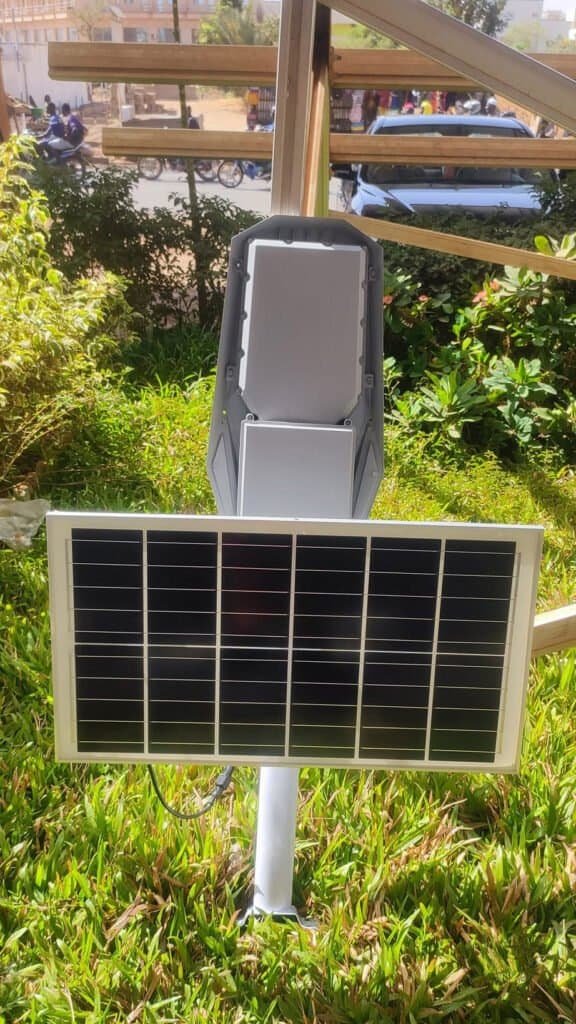
Soluciones de energía solar a pequeña escala para sistemas aislados: Adapte el sistema, no solo el panel.
Este es el error más común que cometen los compradores con las soluciones de energía solar pequeñas para sistemas aislados: especifican la potencia en vatios e ignoran el voltaje.
Un panel de 20 W diseñado para un sistema de batería de plomo-ácido de 12 V es un producto completamente diferente a un panel de 20 W para un dispositivo IoT de litio de 3,7 V. El número de celdas, la tensión en circuito abierto y el rango de tensión de funcionamiento varían según la carga y el controlador de carga.
Antes de solicitar un presupuesto para cualquier aplicación fuera de la red eléctrica, tenga claros estos cinco puntos:
- 1 Perfil de carga — ¿Cuál es el consumo diario de Wh? ¿Cuál es el consumo máximo?
- 2 Voltaje de la batería — ¿3,7 V, 6 V, 12 V, 24 V o química de litio personalizada?
- 3 Tipo de controlador de carga — ¿PWM o MPPT? ¿Cuál es su rango de voltaje de entrada?
- 4 Disponibilidad de luz solar — ¿Cuántas horas de sol intenso recibe el lugar de instalación?
- 5 Escenario del peor caso — ¿Cuántos días nublados consecutivos debe sobrevivir el sistema?
Analizar estos datos le permitirá determinar la potencia real del panel que necesita, no la que parece correcta según las especificaciones. Un panel de potencia insuficiente provoca tiempos de inactividad del sistema. Un panel de potencia excesiva supone un desperdicio de dinero y espacio de instalación.
Para aplicaciones marinas, de vehículos recreativos y de respaldo de emergencia, la resistencia ambiental es tan importante como la potencia de salida. Resistencia a la niebla salina (IEC 61701).[1], La tolerancia a las vibraciones y la estabilidad a los rayos UV se convierten en requisitos innegociables una vez que el panel sale de una azotea protegida.
Fabricación de paneles solares de baja potencia: cómo funciona
Comprender el proceso de producción te ayuda a formular mejores preguntas y a detectar más rápidamente a los proveedores poco fiables.
Tecnologías celulares utilizadas en módulos pequeños
La mayoría de los paneles pequeños utilizan uno de tres tipos de celdas:
- Monocristalino (Mono PERC / TOPCon) — Máxima eficiencia por unidad de área, ideal para aplicaciones con espacio limitado.
- Policristalino — Menor coste, eficiencia ligeramente inferior, todavía presente en productos de consumo de muy bajo coste, como las luces básicas de jardín, aunque en declive en favor de las tecnologías monocromáticas en la mayoría de los segmentos de aplicación.
- Película delgada (a-Si y CIGS) — Ligero y flexible, adecuado para superficies curvas y dispositivos portátiles; el silicio amorfo (a-Si) funciona bien en aplicaciones de consumo de baja potencia e IoT, mientras que el seleniuro de cobre, indio y galio (CIGS) alcanza mayores eficiencias para usos exigentes en BIPV y VIPV flexible.
Las arquitecturas de celdas con contactos posteriores (BC) están ganando terreno en los módulos pequeños de alta gama. Debido a que los contactos eléctricos se ubican en la cara posterior, las celdas BC eliminan las pérdidas por sombreado de la rejilla frontal.[2] y producen una apariencia más limpia y uniforme, una ventaja práctica para los sistemas BIPV y VIPV donde la estética es importante.
El proceso de fabricación a medida
Una fábrica OEM/ODM bien gestionada lleva un pedido de paneles pequeños personalizados a través de cuatro etapas claras:
Apresurarse en las etapas 2 o 3 es la causa principal del fracaso de muchos proyectos de paneles pequeños. Un pequeño retraso durante el muestreo resulta mucho más económico que una producción completa de paneles que no cumplan con las especificaciones.
Controles de calidad en línea para verificar
Antes de aprobar cualquier fábrica para la producción en masa, confirme que se implementan estos controles de calidad:
- Escaneo EL (electroluminiscencia) — revela microfisuras y defectos celulares invisibles a simple vista.
- Pruebas de destello (simulador solar) — confirma que la potencia de salida real coincide con las especificaciones nominales en condiciones de prueba estándar (STC: irradiancia de 1000 W/m², espectro AM1.5G, temperatura de la celda de 25 °C).[3]
- Pruebas en cámara ambiental — 200 ciclos térmicos (TC200) entre −40 °C y +85 °C según IEC 61215[4], además de pruebas de calor húmedo a 85 °C y 851 TP3T de humedad relativa durante 1000 horas continuas.[5]
- Prueba de carga mecánica — verifica la integridad estructural bajo condiciones de carga de viento y nieve.
- Muestreo AQL — Un protocolo estructurado de aceptación/rechazo para productos terminados basado en la norma ISO 2859-1:2026.[6]
Las áreas de manipulación de células deben mantener una temperatura y humedad estables. Las condiciones no controladas durante la laminación introducen defectos latentes que se manifiestan meses después de la entrega, mucho después de que cualquier control de calidad inmediato los detectara.
Dónde comprar paneles solares personalizados para pedidos pequeños
Encontrar una fábrica que trabaje con usted en diseños personalizados, sin exigir un contenedor completo como mínimo, es todo un reto. Aquí le presentamos algunas opciones prácticas.
Fabricantes de equipos originales/fabricantes de diseño original de China: el núcleo del suministro global
China produce la inmensa mayoría de los paneles solares del mundo. Y lo que es aún más importante para los compradores que realizan pedidos pequeños a medida, China alberga un amplio ecosistema de fábricas especializadas en módulos pequeños, no solo los grandes fabricantes que dominan la cobertura de la prensa especializada.
Los principales clústeres de fabricación incluyen:
- Zhejiang (Ningbo, Hangzhou) — Fuerte concentración de especialistas en paneles pequeños personalizados, módulos flexibles y producción orientada al IoT.
- Guangdong (Dongguan, Foshan, Shenzhen) — Fabricantes de equipos originales (OEM) de sistemas híbridos y fuera de la red, precios competitivos, alta densidad de fábricas
- Jiangsu (Changzhou) — Destaca por sus módulos especializados, incluidas las aplicaciones VIPV
- Anhui (Hefei) — fábricas de línea amplia que abarcan múltiples categorías de productos
Para los compradores que se acercan por primera vez al abastecimiento en China, eventos comerciales como la Feria de Cantón y la SNEC siguen siendo valiosos para reunirse cara a cara con representantes de fábricas reales. Las plataformas en línea como Alibaba y Global Sources son puntos de partida accesibles, pero la diligencia del comprador es fundamental: no todos los proveedores que aparecen en la lista son fábricas reales.
Verificación de la realidad del MOQ
Los módulos pequeños personalizados implican un trabajo de ingeniería real: corte de celdas, pruebas de laminación, utillaje, ensayos y embalaje. Esto significa que el coste unitario para una tirada de prototipos de 10 o 50 piezas es significativamente mayor que el de la producción en masa.
La mayoría de las fábricas especializadas en paneles pequeños en China trabajan con cantidades mínimas de pedido (MOQ) que parten de unas 500 unidades para los pedidos de producción, y las muestras están disponibles a un precio superior. Algunas fábricas establecen su mínimo en términos de potencia en vatios en lugar de cantidad de unidades.
Si su proyecto es realmente pequeño (menos de 50 paneles), comprar directamente a una fábrica china rara vez es la opción más rentable. A esa escala, los distribuidores nacionales con stock local o los mayoristas regionales de energía solar suelen ser una mejor opción.
Señales de alerta al evaluar fábricas
Presta atención a estas señales antes de comprometerte con cualquier proveedor:
- No puedo explicar ni mostrar la disposición de las celdas y la pérdida de CTM (celda a módulo) para su diseño.
- Reacio a compartir datos de escaneo EL o informes de pruebas de flash de series de producción anteriores.
- No puede proporcionar certificaciones rastreables verificadas a través del registro en línea del organismo emisor.
- Solicita el pago completo por adelantado sin una relación comercial establecida ni opción de financiación comercial.
- Ofrece un precio significativamente inferior al del mercado sin una explicación clara.
Una fábrica legítima está abierta a preguntas técnicas. Si las preguntas básicas sobre el proceso de producción o las capacidades de prueba obtienen respuestas vagas o evasivas, busque otra opción.
Cómo elegir una fábrica de módulos solares pequeños en China (OEM/ODM): ¿Qué es lo que realmente importa?
Dos fábricas pueden afirmar ofrecer servicios OEM/ODM y, sin embargo, producir resultados radicalmente diferentes. Aquí te mostramos qué distingue a un socio verdaderamente competente de una simple promesa de marketing.
Capacidad técnica por encima del precio
La pregunta correcta no es "¿cuál es su precio por vatio?" La pregunta correcta es:
“¿Podría explicarme las decisiones de ingeniería que se tomaron en el diseño de mi módulo?”
Una fábrica competente puede explicarle el diseño de la cadena de celdas, la justificación de la selección del encapsulante, el grado de protección IP de la caja de conexiones y el proceso de laminación. Pueden indicarle las ventajas y desventajas de cada opción. Una fábrica que solo habla de precios tendrá dificultades cuando surja algún problema.
Opciones de estructura flexible
Los compradores de módulos pequeños suelen necesitar construcciones no estándar. Verifique que su fábrica pueda producir realmente:
- Módulos de vidrio rígido (construcción estándar)
- Módulos flexibles de ETFE (para aplicaciones curvas o ligeras)
- Minimódulos con carcasa de PET (comunes en electrónica de consumo e IoT)
- Módulos semiflexibles (flexión moderada, aptos para vehículos recreativos y aplicaciones marinas).
- Módulos sin marco de doble acristalamiento (para aplicaciones BIPV que requieren transparencia o integración estructural)
No todos los fabricantes que ofrecen estas opciones pueden garantizar una calidad constante. Solicite primero muestras físicas y pruébelas en su entorno de aplicación real.
Cumplimiento de la UFLPA para compradores estadounidenses
Si importa a los Estados Unidos, la documentación de la cadena de suministro no es opcional. La Ley de Prevención del Trabajo Forzoso Uigur (UFLPA), aplicada por la Oficina de Aduanas y Protección Fronteriza de los Estados Unidos desde junio de 2022[7], crea un presunción refutable Se considera que los bienes producidos total o parcialmente en la región china de Xinjiang —o por cualquier empresa incluida en la Lista de Entidades de la UFLPA— implican trabajo forzoso y, por lo tanto, son inadmisibles. El importador tiene la carga de la prueba para refutar esta presunción con evidencia clara y completa de la cadena de suministro. Los paneles solares están explícitamente incluidos en el alcance de la ley, ya que el polisilicio, las obleas y las células han tenido históricamente un importante origen en Xinjiang.
Es fundamental destacar que la exposición a la Lista de Entidades se extiende más allá de las fábricas ubicadas en Xinjiang. Empresas de toda China, e incluso de terceros países como Malasia, Vietnam e India, han sufrido la retención de sus envíos cuando se descubrió que su suministro de polisilicio provenía de Xinjiang.[8] Una fábrica que cumpla con la normativa debe proporcionar documentación completa de la cadena de custodia para el polisilicio, los lingotes, las obleas, las celdas y los módulos. Solicite esta documentación antes de realizar cualquier pedido.
Las importaciones estadounidenses de productos solares chinos también están sujetas a una compleja estructura arancelaria —que incluye aranceles vigentes en virtud de la Sección 301 y órdenes antidumping/compensatorias (AD/CVD)— que opera de forma totalmente independiente de los requisitos de la UFLPA. El panorama arancelario cambió significativamente entre 2025 y 2026, y las tasas varían según la clasificación del producto y el proveedor. Verifique los aranceles aplicables con un agente de aduanas o asesor comercial autorizado antes de finalizar su modelo de costos de importación.[9]
Certificaciones que no te puedes perder
Las certificaciones no son garantía de calidad. Pero carecer de las certificaciones adecuadas bloquea por completo el acceso al mercado. Esto es lo que importa:
| Proceso de dar un título | Qué cubre | Mercado objetivo |
|---|---|---|
| IEC 61215[10] | Calificación de diseño para módulos fotovoltaicos de placa plana; la norma IEC 61215-1-1 cubre el silicio cristalino; las subpartes 1-2, 1-3 y 1-4 cubren las películas delgadas de CdTe, a-Si y CIGS respectivamente, reemplazando a la norma IEC 61646 desde la reestructuración de la serie de 2016. | Línea de base global |
| IEC 61730[11] | Seguridad del módulo: riesgos eléctricos, de incendio y mecánicos. | Línea base global: normalmente se requiere junto con la norma IEC 61215. |
| Marcado CE | Cumplimiento de la normativa de seguridad de productos de la UE | mercados europeos |
| RoHS | Restricción de sustancias peligrosas | UE y en términos generales requeridos |
| UL 61730[12] | Norma de seguridad vigente para módulos fotovoltaicos en Norteamérica; obligatoria para todas las certificaciones de productos nuevos desde diciembre de 2019 (sustituye a la norma UL 1703, que solo se aplica a las certificaciones anteriores a 2019). | Estados Unidos y Canadá |
| IEC 61701 | Resistencia a la corrosión por niebla salina | Marina y costera |
| IEC 62716[13] | resistencia a la corrosión por amoníaco | entornos agrícolas |
Siempre verifique las certificaciones directamente con el organismo emisor: TÜV Rheinland, SGS, Intertek o Bureau Veritas mantienen registros en línea consultables. Una copia de un certificado proporcionada por el proveedor no es lo mismo que un certificado verificado. Si no encuentra el número de certificado en el registro, considérelo inválido.
Tenga en cuenta que las certificaciones IEC cubren una muestra producida en el momento de la prueba. No garantizan automáticamente la calidad del lote que reciba. Los análisis EL a nivel de lote y los informes de pruebas de destello de su producción específica proporcionan evidencia de calidad más directa.
Lista de verificación de preproducción: Ocho cosas que confirmar
Antes de aprobar la producción en masa, verifique como mínimo estas ocho áreas:
Los compradores que se encuentran lejos y no pueden visitar China directamente pueden encargar auditorías de fábrica a terceros. Programar una inspección durante la fase de producción, al finalizar el ciclo 30-50% (y no solo una revisión previa al envío), permite detectar problemas antes de que se complete la producción total.
Reflexiones finales: La preparación es su ventaja competitiva.
Los paneles solares pequeños son accesibles, personalizables y están disponibles en una amplia red de fábricas capacitadas en China. Esto es una excelente noticia para los compradores. Sin embargo, la diferencia entre una producción sin contratiempos y una costosa disputa radica casi exclusivamente en la preparación.
Defina claramente la aplicación. Confirme el diseño eléctrico antes de realizar el muestreo. Pruebe las muestras en condiciones reales. Verifique las certificaciones de forma independiente. Asegure la documentación de la cadena de suministro para su mercado de destino. Y establezca cláusulas contractuales que le brinden soluciones reales en caso de que la calidad o la entrega no sean las esperadas.
Los compradores que realizan ese trabajo previo obtienen paneles de alto rendimiento y relaciones con los proveedores que vale la pena repetir.
Contáctanos
¿Listo para especificar su módulo solar pequeño personalizado?
El equipo de Couleenergy colabora con compradores B2B de toda Europa y Norteamérica en el desarrollo de módulos BC personalizados, paneles ETFE flexibles, soluciones BIPV y producción OEM/ODM. Envíenos sus especificaciones y le ofreceremos una evaluación técnica práctica.
Notas al pie
https://sistinesolar.com/solar-panel-standards-and-certification/ ↩
https://doi.org/10.1002/pssa.202300820 ↩
https://www.energysage.com/solar/solar-panel-testing-certifications/ ↩
https://winaico.com/blog/iec-61215/ ↩
https://sinovoltaics.com/damp-heat-testing/ ↩
https://www.iso.org/standard/85464.html ↩
https://www.dhs.gov/uflpa ↩
https://www.dhs.gov/2025-updates-strategy-prevent-importation-goods-mined-produced-or-manufactured-forced-labor-peoples ↩
https://www.energy.gov/cmei/systems/overview-trade-and-policy-measures-us-solar-manufacturing ↩
https://sinovoltaics.com/learning-center/certifications/iec-certifications/ ↩
https://www.ul.com/news/ul1703-ul-61730-pv-module-safety-standards-updates-making-transition ↩
https://www.ul.com/news/ul1703-ul-61730-pv-module-safety-standards-updates-making-transition ↩
https://tetrainspection.com/solar-panel-inspection/ ↩


 Español
  English
  Français
  Deutsch
  Русский
  العربية