

More Watts per Square Metre, on the Roof You Already Have
Commercial roofs rarely run out of budget first. They run out of area. Fire setbacks, plant rooms, skylights and walkways take their share before a single rail goes down.
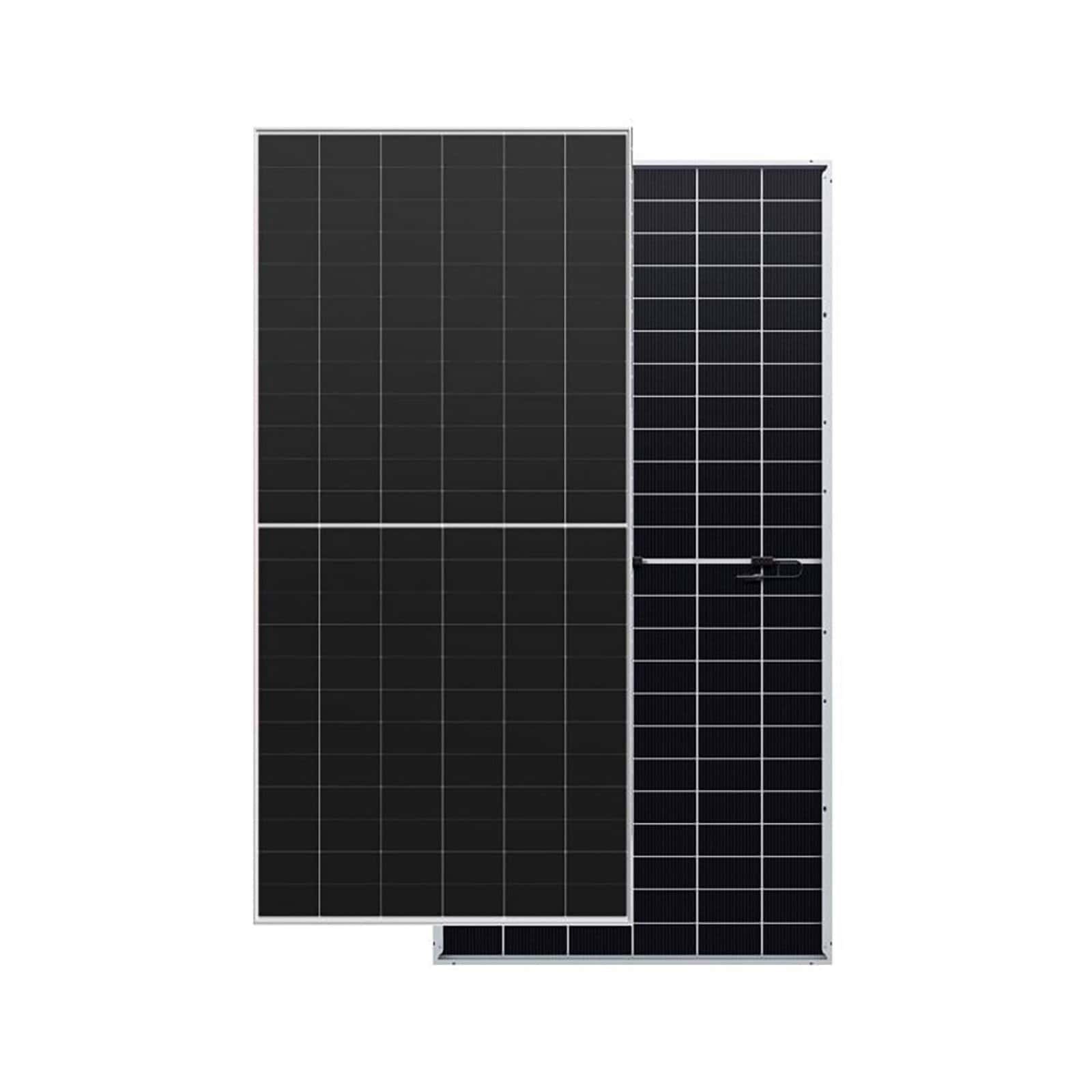
The CLM-650M-72 Series answers that with density. It is an n-type back contact bifacial module in a 2382 × 1134 mm dual-glass format. Every electrical contact sits on the rear of the cell. The front carries no busbars and no gridlines, so more of the surface collects light.
Module efficiency runs from 23.7% at 640 W to 24.6% at 665 W. In practical terms that is 237 to 246 watts per square metre of module.
Typical uses are warehouse and factory roofs, solar carports, agricultural buildings and small ground-mount arrays. Anywhere the available area is fixed and the yield target is not.
What That Density Is Actually Worth
Watt ratings alone mislead, because higher-wattage modules are often physically bigger. Compare watts per square metre instead.
A mainstream 144-half-cell n-type module measures about 2279 × 1134 mm and lands between 585 W and 605 W. That is roughly 226 to 234 W/m². The CLM-650M-72 at 650 W gives 241 W/m², and 248 W/m² at the top bin.
So the honest figure is about 3% to 6% more DC power from the same array area. That is a real gain, not a step change. It matters most when the roof is the binding constraint, not the budget.
Power tolerance is 0 to +3%. The band never goes below the label. A 650 W module is at least 650 W and may flash-test higher. Nothing you install is quietly under-rated.
Six Power Bins, One String Design
Open-circuit voltage moves only from 54.02 V to 54.52 V across the published bin table. String length therefore holds steady when you mix bins on one roof.
Cold mornings set the real limit, not the STC figure. The Voc coefficient is −0.200%/°C. At a −30 °C cell temperature the 665 W bin reaches about 60.5 V open circuit. That gives 16 modules per string on a 1000 V system and 24 on a 1500 V system.
A −25 °C design temperature would allow 25 modules, but the result lands within 1 V of the ceiling. We would not recommend it. Always size against your own record low and your inverter’s input window.
Heat, Shade and the Rear Side
Modules almost never operate at 25 °C. The power temperature coefficient is −0.260%/°C. The 655 W bin therefore delivers about 621 W at a 45 °C cell, 604 W at 55 °C and 587 W at 65 °C. Use those figures when you size an inverter for a hot climate.
Bifaciality is 80%, so the rear face is a genuine contributor rather than a marketing line. Real gain still depends on your site. Over natural ground at typical albedo, published field studies put bifacial gain below 10%. A white TPO or PVC membrane, gravel ballast or snow pushes it higher.
The datasheet rear-gain table runs from 0% to 25%. That table is a linear scaling exercise, not a promise. Ask us to model your albedo, mounting height and row pitch before you put a number in a yield report.
On partial shading, back contact cells break down more softly under reverse bias than conventional cells. We do not publish a single percentage for that advantage. Shade response depends on which cells are covered and how the substrings sit relative to the three bypass diodes.
How This Compares to the Modules You Are Cross-Shopping
Most buyers looking at a back contact module in this class have already priced the LONGi Hi-MO X10 Scientist. It is the reference product, and pretending otherwise wastes your time.
The comparison is straightforward. Back contact architecture, dual-glass bifacial construction and the 2382 × 1134 mm format are shared across this product class. Where a specialist supplier differs is in what happens around the module.
- Order size. Tier-one allocation is built around container and multi-megawatt volumes. We quote from pallet scale.
- Whose brand is on it. A tier-one module carries the tier-one label. Ours carries yours, if you want it to.
- Whether the format can change. Catalogue modules come in catalogue sizes. We change dimensions, cell count and voltage when the structure demands it.
- Who answers the engineering question. You reach the people who build the module, not a regional sales tier.
What we will not do is claim identical field performance with any other manufacturer’s module. Two modules can share a datasheet line and behave differently over twenty years. Ask us for flash-test data and electroluminescence images from your own production batch, and judge on that.
LONGi and Hi-MO are trademarks of LONGi Green Energy Technology Co., Ltd. The comparison above is offered for buyer orientation only.
Why Distributors and EPCs Add Back Contact to Their Line
It looks different on a roof. No front gridlines means a uniform black face. Architects notice. Building owners notice. On visible commercial roofs and canopies, appearance alone wins jobs.
Dual glass removes a failure mode. There is no polymer backsheet to crack, chalk or delaminate. Both faces are 2.0 mm semi-tempered glass in an anodized aluminium frame. The trade is weight, at 32.5 kg per module.
It differentiates you from commodity stock. Every competitor in your market quotes the same mainstream modules. A premium back contact line gives your sales team something to defend margin with.
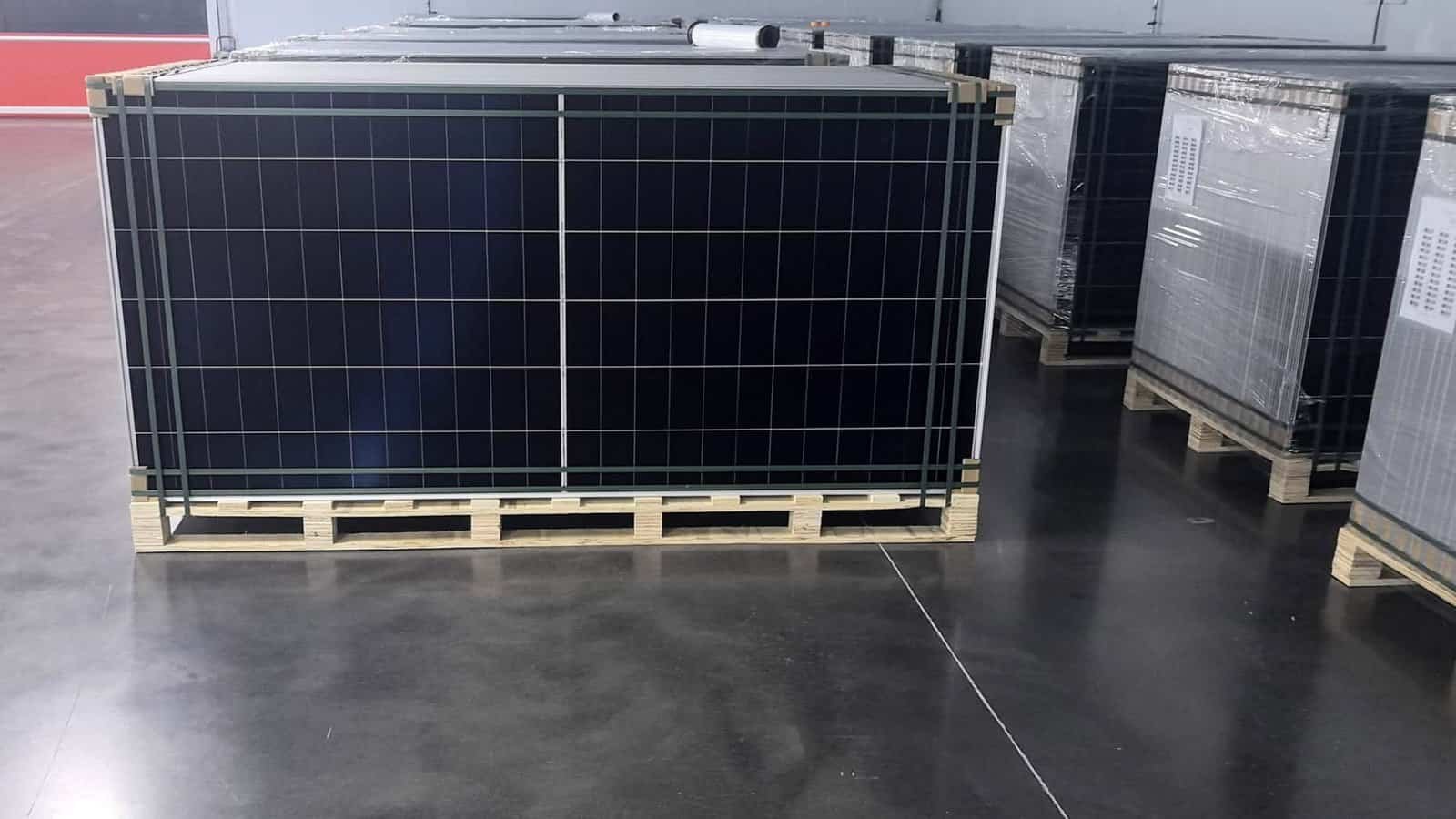
You do not need tier-one volumes. One pallet is 36 modules, about 23.6 kW and 1.2 tonnes. A 40′ HC holds 720, roughly 472 kW. We start conversations well below a full container.
Conçu par Couleenergy — Là où le sur-mesure est la norme
Couleenergy is a Ningbo-based module manufacturer serving customers and projects in 39+ countries. We are 100% employee-owned. Custom work is not a side service here. It is the main line.
Requests fall into three buckets, and it helps to know which one yours is:
- Pre-qualified changes. Frame colour, cable length, connector type, packaging, labelling and documentation. These ship on standard lead times.
- Changes needing retest. A different bin split, an altered junction box or a changed material. Under IEC TS 62915, some material and design changes trigger partial retesting. We tell you which ones before you commit.
- New design. A non-standard size, a different cell count or a special voltage for a specific structure. This starts as an engineering conversation, not a price list.
Private label is straightforward. Your logo goes on the module label, the packaging and the datasheet, and we supply the artwork files your sales team needs.
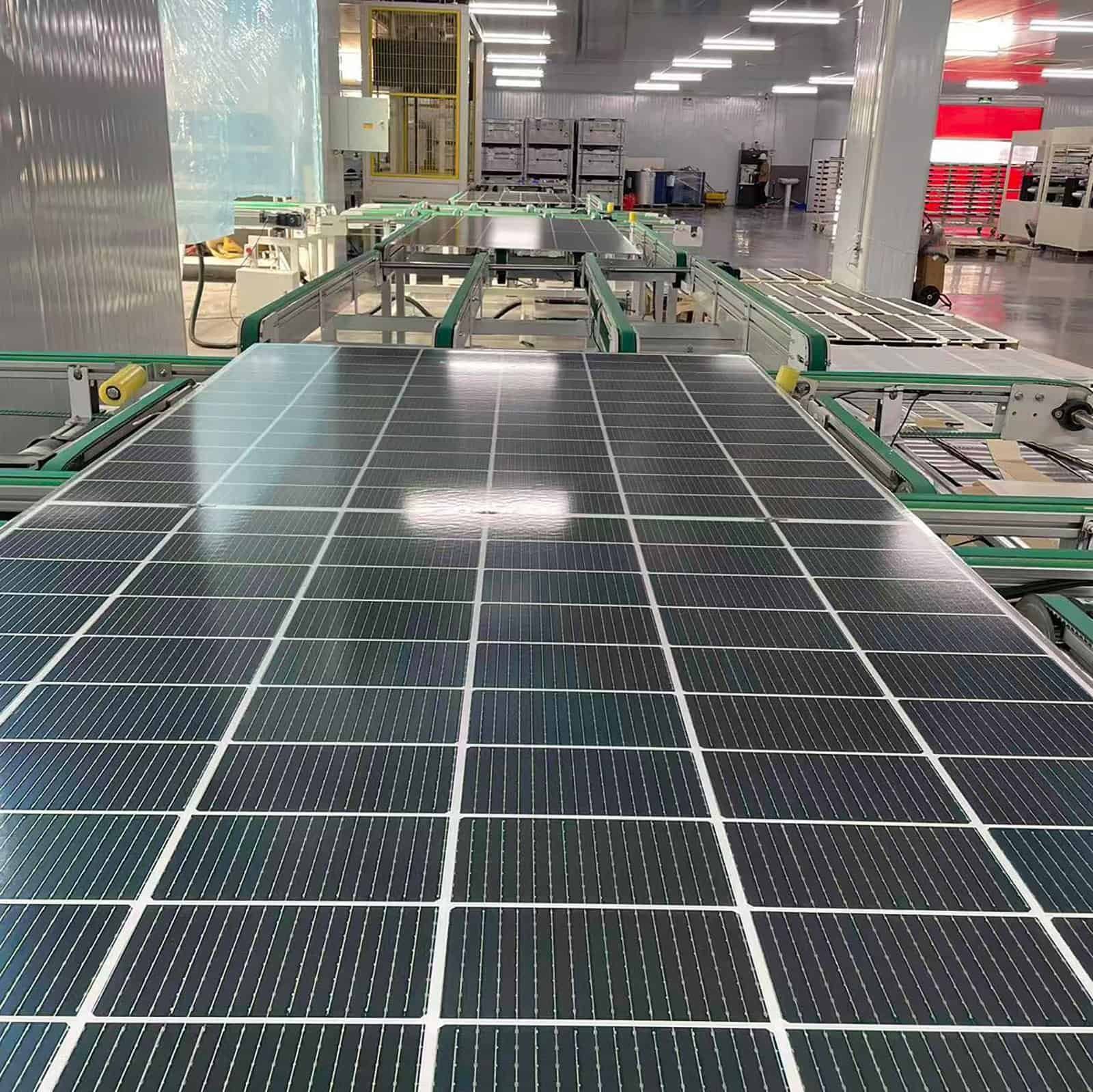
Production is monitored through in-line electroluminescence imaging and end-of-line flash testing. EL imaging finds cell cracks a flash test cannot see. We share both reports for your order on request.
What We Will Not Tell You
We will not quote a shading advantage as a single percentage. We will not promise a bifacial gain figure before we know your site. And we will not call a design “certified” when the honest description is “built to meet the standard”.
Certification status differs by configuration. Ask which test reports cover the exact build you are quoting, and we will tell you plainly.
Questions fréquemment posées
1. How does back contact compare with TOPCon?
Back contact leads on module efficiency, at roughly 24% to 24.8% against 22% to 23.5% for mainstream TOPCon in the same class. The temperature coefficients are close, so heat is not the differentiator some marketing suggests. Under partial shading the two behave differently, and published field studies do not all point the same way. Judge on your own site conditions rather than on a single headline number.
2. Is the CLM-650M-72 Series bifacial?
Yes. It is a dual-glass bifacial module with 80% bifaciality. The rear face converts light reflected from the surface beneath the array. Gain depends on albedo, mounting height and row pitch.
3. How many modules can I fit per string?
Cold-weather Voc decides this. At a −30 °C cell temperature the 665 W bin reaches about 60.5 V, giving 16 modules on a 1000 V system and 24 on a 1500 V system. Confirm against your local record low and your inverter’s window.
4. How much power is lost in hot weather?
The coefficient is −0.260%/°C, so about 2.6% per 10 °C above 25 °C. A 655 W module delivers roughly 604 W at a 55 °C cell temperature.
5. Can I order under my own brand?
Yes. Private label covers the module label, packaging, and a datasheet in your own branding. We supply the source files your sales team needs.
6. What is the minimum order quantity?
We quote from pallet scale, which is 36 modules or about 23.6 kW. The exact minimum depends on your bin, frame colour and branding requirements. Confirmed at inquiry.
7. Can you build a non-standard size?
Yes. Dimensions, cell count, voltage and frame can all change. Send us the space you have and the electrical target, and we will tell you what is achievable and what has to be retested.
8. Is this module suitable for snow-load regions?
The tested front load is 5400 Pa and the rear load 2400 Pa. Those figures apply only to approved mounting configurations. Read them together with the installation manual and your national snow-load code, not on their own.
Produits similaires
-
Module solaire double vitrage à contact arrière entièrement noir 465 W–495 W
$0.13Ce produit a plusieurs variations. Les options peuvent être choisies sur la page du produit -
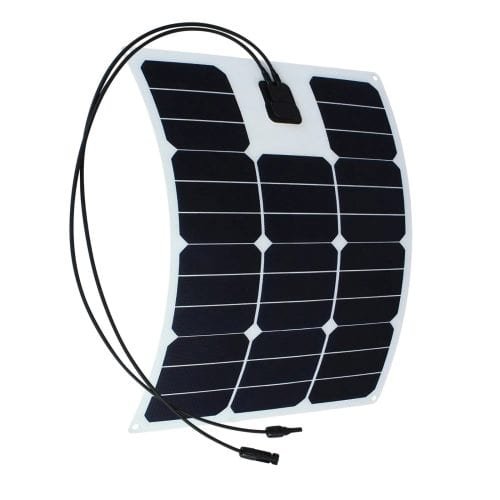
Modules solaires flexibles ETFE 35 W avec cellules à contact arrière Maxeon
$0.46Ce produit a plusieurs variations. Les options peuvent être choisies sur la page du produit -
Tuiles solaires esthétiques à double vitrage BC pour applications BIPV 140 W 145 W
$0.40Ce produit a plusieurs variations. Les options peuvent être choisies sur la page du produit -

Fabricant de panneaux solaires ABC Back Contact | Modules ultra-noirs élégants
$0.12Ce produit a plusieurs variations. Les options peuvent être choisies sur la page du produit
 Français
  English
  Español
  Deutsch
  Русский
  العربية